


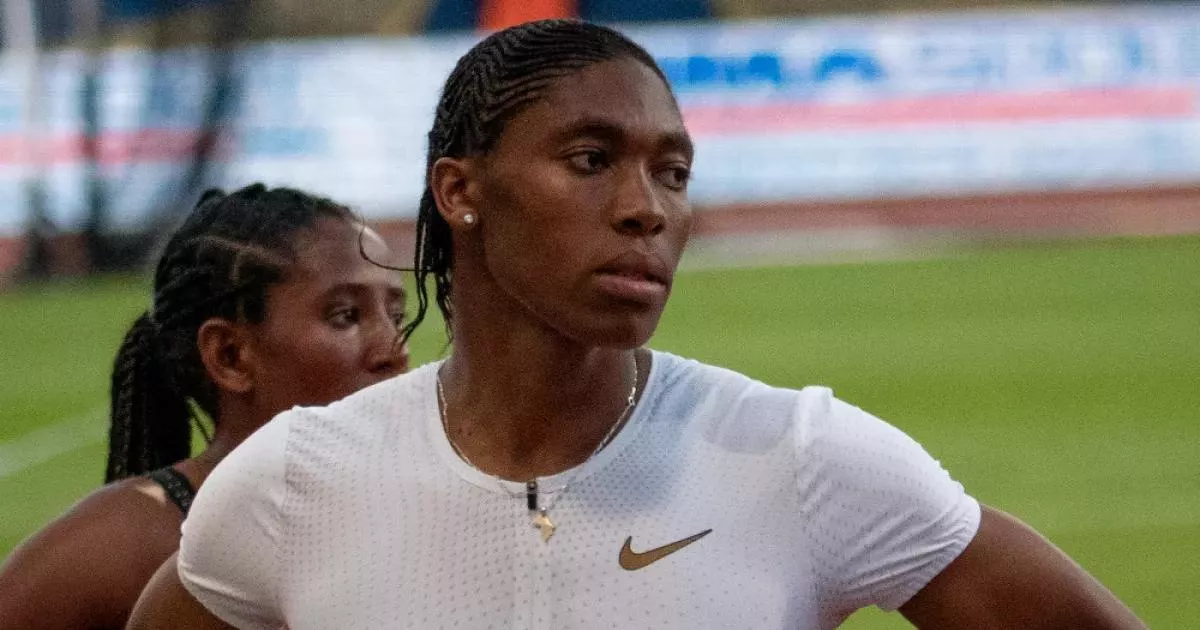
Caster Semenya is a South African middle-distance runner celebrated for her achievements in the 800 metres, including two Olympic gold medals and three World Championships. Her victories include gold at the 2009 World Championships, the 2016 Olympics, and the 2017 World Championships, where she also won a bronze in the 1500 metres. She was later awarded gold medals for the 2011 World Championships and the 2012 Olympics following the disqualification of Mariya Savinova.
January 1991: Caster Semenya Born
In January 1991, Caster Semenya was born. She is a South African middle-distance runner and winner of two Olympic gold medals and three World Championships in the women's 800 metres.


January 1991: Birth and Early Life
On January 7, 1991, Caster Semenya was born in Ga-Masehlong, South Africa, and grew up in Fairlie. She has three sisters and a brother. She later attended Nthema Secondary School and the University of North West.
2008: Participates in World Junior Championships and Wins Commonwealth Youth Games
In July 2008, Caster Semenya participated in the 2008 World Junior Championships in the 800 m but did not qualify for the finals. She won gold at the 2008 Commonwealth Youth Games with a time of 2:04.23.
August 2009: Wins Gold at World Championships
In August 2009, Caster Semenya won gold in the 800 metres at the World Championships with a time of 1:55.45, setting the fastest time of the year.
September 2009: Coach Resigns and ASA President Admits to Testing
In September 2009, Caster Semenya's coach, Wilfred Daniels, resigned, feeling ASA did not advise her properly. ASA President Leonard Chuene admitted to having subjected Semenya to testing and lying about it.
November 2009: Agreement with IAAF and Medal Retention
In November 2009, South Africa's sports ministry issued a statement that Caster Semenya had reached an agreement with the IAAF to keep her medal and award.
December 2009: Voted Number One Women's 800-metre Runner
In December 2009, Track and Field News voted Caster Semenya the Number One Women's 800-metre runner of the year.
2009: Sex Testing Controversy
Following Caster Semenya's victory at the 2009 World Championships, she was made to undergo sex testing, sparking controversy in the sporting world and in her home country of South Africa.
2009: Wins Gold at World Championships
In 2009, Caster Semenya won her first gold medal at the World Championships in the women's 800 metres.
2009: Controversy Surrounding Sex Testing
In 2009, news broke that the IAAF requested sex testing for Caster Semenya before the World Championships 800 m final, leading to negative reactions and accusations of racism and imperialism.
2009: Reference to 2009 World Championships Win
In 2012, during the BBC coverage after the race, it was noted that Semenya had only once in her life run faster than Savinova's winning time, when winning the 2009 World Championships.
March 2010: Denied Opportunity to Compete
In March 2010, Caster Semenya was denied the opportunity to compete in the Yellow Pages Series V Track and Field event in Stellenbosch, South Africa, due to the IAAF's pending findings from her sex test.
July 2010: Cleared to Compete Again
In July 2010, Caster Semenya was cleared again to compete in women's competitions by the IAAF.
July 2010: Opted out of World Junior and African Championships
In July 2010, not being in full form, Caster Semenya did not enter the World Junior Championships or the African Championships.
July 2010: Savinova's Results Disqualified Backdated to July 2010
On 10 February 2017, the Court of Arbitration for Sport (CAS) officially disqualified Mariya Savinova's results backdated to July 2010.
August 2010: Wins ISTAF Meet in Berlin
On 22 August 2010, Caster Semenya won the ISTAF meet in Berlin, running under 2:00 for the first time since the controversy.
October 2010: Forced to skip Commonwealth Games due to injury
In October 2010, Caster Semenya was forced to skip the Commonwealth Games due to an injury.
2010: Testosterone-Suppressing Medication Intake
Caster Semenya claimed that testosterone-suppressing medication, which she had taken from 2010 to 2015, had made her feel "constantly sick" and caused her abdominal pain, and that the IAAF had used her as a "guinea pig" to test the medication's effects.
2011: Awarded Gold Medal for 2011 World Championships
After the doping disqualification of Mariya Savinova, Caster Semenya was awarded a gold medal for the 2011 World Championships.
2011: IAAF Policy on High Testosterone Levels in Place
Since 2011, the IAAF policy on high natural levels of testosterone in women was in place until it was suspended following the case of Dutee Chand v. Athletics Federation of India (AFI) & The International Association of Athletics Federations, in the Court of Arbitration for Sport, decided in July 2015.
2012: Awarded Gold Medal for 2012 Olympics
After the doping disqualification of Mariya Savinova, Caster Semenya was awarded a gold medal for the 2012 Olympics.
2012: Carries Flag and Wins Silver Medal at Summer Olympics
In 2012, Caster Semenya carried the South African flag at the opening ceremony of the Summer Olympics. She later won a silver medal in the women's 800 metres at the same games.
2012: Semenya's Silver Upgraded to Gold
In 2012, after Savinova's disqualification, the International Olympic Committee reallocated the London 2012 medals, and Caster Semenya's silver was upgraded to gold.
April 2014: Semenya Receives Order of Ikhamanga
On April 27, 2014, Caster Semenya received the bronze Order of Ikhamanga as part of Freedom Day festivities in South Africa, recognizing her achievements and contributions.
July 2015: Suspension of IAAF Policy on High Testosterone Levels
In July 2015, the IAAF policy on high natural levels of testosterone in women was suspended following the case of Dutee Chand v. Athletics Federation of India (AFI) & The International Association of Athletics Federations.
November 2015: World Anti-Doping Agency Recommended Savinova be Banned
In November 2015, the World Anti-Doping Agency recommended that Mariya Savinova and four other Russian athletes be given a lifetime ban for doping violations at the Olympics.
2015: Testosterone-Suppressing Medication Intake
Caster Semenya claimed that testosterone-suppressing medication, which she had taken from 2010 to 2015, had made her feel "constantly sick" and caused her abdominal pain, and that the IAAF had used her as a "guinea pig" to test the medication's effects.
2016: Wins Gold at Olympics
In 2016, Caster Semenya won a gold medal at the Olympics in the women's 800 metres.
2016: Wins Three Titles and Gold at Rio Olympics
In 2016, Caster Semenya won all three of the 400 m, 800 m, and 1500 m titles at the South African National Championships, setting world-leading marks in the first two events. On 20 August 2016, she won the gold medal in the women's 800 metres at the 2016 Summer Olympics in Rio. She also set a new personal best for the 400 m of 50.40 at the 2016 Memorial Van Damme track and field meet in Brussels.
February 2017: Court of Arbitration for Sport Disqualified Savinova's Results
On 10 February 2017, the Court of Arbitration for Sport (CAS) officially disqualified Mariya Savinova's results backdated to July 2010.
2017: Wins Gold and Bronze at World Championships
In 2017, Caster Semenya won a gold medal in the 800 metres and a bronze medal in the 1500 metres at the World Championships.
2017: Awarded Gold Medal at the World Championships
In 2017, Mariya Savinova was banned for doping and her results were disqualified, resulting in Caster Semenya being awarded the gold medal for the World Championships.
2017: First Major International Competition Since 2017
In 2022, Caster Semenya ran in the 5000 meter race at the World Athletics Championships in Eugene, Oregon. It was her first major international competition since 2017.
April 2018: IAAF Announces New Rules
In April 2018, the IAAF announced new rules effective 8 May 2019 that applied to athletes with certain disorders of sex development (DSDs) that result in androgen sensitivity and testosterone levels above 5 nmol/L.
June 2018: Announces Legal Challenge to IAAF Rules
In June 2018, Caster Semenya announced that she would legally challenge the IAAF rules, calling them "discriminatory, irrational, [and] unjustifiable".
May 2019: Effective Date of IAAF Rules
In April 2018, the IAAF announced new rules effective 8 May 2019 that applied to athletes with certain disorders of sex development (DSDs) that result in androgen sensitivity and testosterone levels above 5 nmol/L.
September 2019: Joins SAFA Sasol Women's League Football Club
In September 2019, Caster Semenya joined the South African SAFA Sasol Women's League football club JVW owned by Janine van Wyk.
2019: New IAAF Rules and Legal Challenges
In 2019, new IAAF (World Athletics) rules came into force requiring athletes like Caster Semenya with certain disorders of sex development (DSDs) to take medication to suppress testosterone levels to participate in certain women's events. Semenya refused and filed legal cases arguing the rules are discriminatory.
2019: Wins 5000m at South African Championship
In 2020, Caster Semenya announced that she had decided to switch to the 200 meters for the 2020 Tokyo Olympics, in order to avoid the 400 m to one mile ban. She had previously won the 5000 m at the South African championship in 2019.
2020: Decides to Switch to 200 Meters
In 2020, Caster Semenya announced that she had decided to switch to the 200 meters for the 2020 Tokyo Olympics, in order to avoid the 400 m to one mile ban.
April 2021: Confirms She Will Not Try to Make 200 m Qualifying Standard
On 15 April 2021, Caster Semenya confirmed she would not try to make the Tokyo 2020 200 m qualifying standard.
May 2021: Runs Personal Best in 5000m
On 28 May 2021, Caster Semenya ran a personal best of 15:32.15 in the 5000m, 22 seconds slower than the necessary time to be allowed to compete at the Olympics.
2022: Competes in 5000 Meter Race at World Athletics Championships
In 2022, Caster Semenya ran in the 5000 meter race at the World Athletics Championships in Eugene, Oregon. It was her first major international competition since 2017. She finished almost a minute behind first place in her heat of the semifinals and did not advance to the finals.
October 2023: Publication of Semenya's Memoir
In October 2023, Caster Semenya's memoir, titled "The Race to Be Myself", was published by #Merky Books, an imprint of Penguin Random House UK. The memoir addresses the controversies surrounding her running career.
November 2023: Semenya's case referred to the Grand Chamber of the ECtHR
In November 2023, after a request from the Swiss government, Caster Semenya's case was referred to the Grand Chamber of the European Court of Human Rights (ECtHR) for a final ruling.
December 2023: Semenya's Book named a New York Times Book Review Editors' Choice
In December 2023, Caster Semenya's memoir, "The Race to Be Myself", was named a New York Times Book Review Editors' Choice.
July 2025: Grand Chamber of the ECtHR upholds decision
On July 10, 2025, the Grand Chamber of the ECtHR upheld the 2023 decision of the Swiss Federal Tribunal, ruling that Semenya's appeal against World Athletics' regulations for athletes with differences of sexual development "had not been properly heard".
Mentioned in this timeline

The rapid advancement of artificial intelligence continues to dominate the...
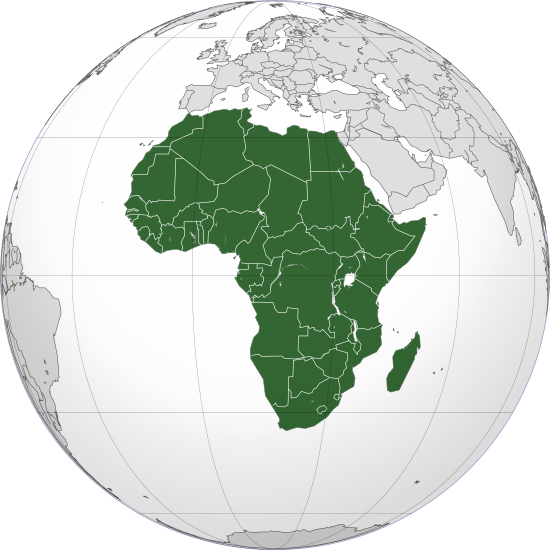
Africa is the second-largest and second-most populous continent home to...

Football commonly known as soccer in many regions is the...

Books are a means of storing information as text or...
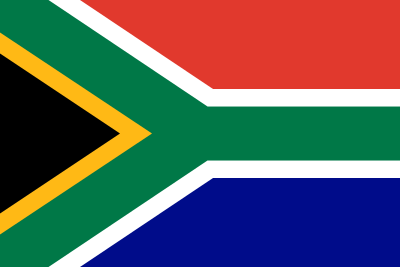
South Africa located at the southern tip of the African...

Tokyo is the capital and most populous city of Japan...
Trending
4 hours ago Bryce Underwood Remains on Sideline as Tommy Carr Starts for Michigan Against Indiana

5 hours ago Troy Aikman Faces Uncertain Future in Broadcasting Following Potential ESPN Departure
5 hours ago Arsenal Fear Long-Term Injury Absence for Bukayo Saka Following Latest Update

5 hours ago Texas Football Faces Uncertainty Amid Arch Manning and Steve Sarkisian Challenges

5 hours ago Millie Bobby Brown Steps Out in Chic Pink Ensemble for Date Night with Husband
6 hours ago Alvin Kamara Cleared to Play Against Steelers in Paris
Popular

Ilhan Omar is a prominent American politician currently serving as...

Ken Paxton is an American politician and lawyer serving as...

Elon Musk is a visionary entrepreneur and engineer known for...

Michael Joseph Jackson the King of Pop was a highly...

Elizabeth Holmes is an American entrepreneur and the founder of...

Cristiano Ronaldo widely considered one of the greatest footballers captains...