


Vi Lyles is an American politician and the current mayor of Charlotte, North Carolina, a position she has held since 2017. As a member of the Democratic Party, her political career includes prior service on the Charlotte City Council. Her election as mayor marked a significant moment in Charlotte's history.
September 28, 1952: Viola Alexander Lyles Born
On September 28, 1952, Viola Alexander Lyles was born. She is an American politician.


1987: Death of Wayne Alexander
In 1987, Wayne Alexander, Vi Lyles' first husband and a North Carolina State Attorney, passed away after running his private practice for 12 years.
2004: Consulting Director roles
In 2004, Vi Lyles started working as a consulting director for the Lee Institute and then for Flynn Heath Holt Leadership.
2012: Community Outreach Director for Democratic National Convention
In 2012, Vi Lyles served as the community outreach director for the Democratic National Convention.
2013: Death of John Lyles
In 2013, John Lyles, the second husband of Vi Lyles, passed away.
2013: Elected to Charlotte City Council
In 2013, Vi Lyles was elected to the Charlotte City Council.
2015: Elected Mayor Pro-Tem
In 2015, Vi Lyles was elected as mayor pro-tem of the Charlotte City Council.
2015: Charlotte Unemployment Rate
In 2015, when Mayor Lyles entered office, Charlotte's unemployment rate averaged 5.30%.
February 2016: Supported LGBTQ non-discrimination ordinance
In February 2016, Vi Lyles supported an LGBTQ non-discrimination ordinance that prohibited discrimination against LGBTQ individuals in public accommodations.
September 2016: Proposed plan to reduce racial and class divisions
Following the shooting of Keith Lamont Scott in September 2016, Vi Lyles proposed a seven-point plan to reduce racial and class divisions in Charlotte; parts of the plan were approved by the council.
2016: Charlotte Unemployment Rate
In 2016, Charlotte's unemployment rate averaged 4.85%.
September 2017: Defeated Jennifer Roberts in Democratic Primary
In September 2017, Vi Lyles defeated Jennifer Roberts in the Democratic Party primary election for Charlotte mayor by a vote of 15,805 to 12,412.
2017: Endorsements Received During Mayoral Election
During the 2017 Charlotte mayoral general election, Vi Lyles received endorsements from various local and national groups, including the Black Political Caucus, Charlotte Firefighters Association, Democracy for America, Human Rights Campaign, MeckPAC, Equality NC, and The Charlotte Observer.
2017: Charlotte Unemployment Rate
In 2017, Charlotte's unemployment rate averaged 4.38%.
2017: Elected as Mayor of Charlotte
In 2017, Vi Lyles became the 59th mayor of Charlotte, North Carolina. She is a member of the Democratic Party.
2017: Won Charlotte Mayoral Election
In 2017, Vi Lyles defeated Kenny Smith in the Charlotte Mayoral Election, becoming the first African-American female mayor of the city and its first former city administrator to serve as mayor.
April 2018: Sought expansion of the Housing Trust Fund
In April 2018, Vi Lyles sought to expand the Housing Trust Fund to promote the construction of public housing for low-income renters through subsidies.
2018: Charlotte Unemployment Rate
In 2018, Charlotte's unemployment rate averaged 3.88%.
2019: Charlotte Unemployment Rate
In 2019, Charlotte's unemployment rate averaged 3.68%.
2019: Won second term as mayor
In 2019, Vi Lyles won the election against Republican David Michael Rice to secure a second term as the Mayor of Charlotte.
April 2020: Charlotte Unemployment Rate
In April 2020, during the COVID-19 pandemic, Charlotte's unemployment rate reached 13.0%.
November 1, 2021: Launched the Racial Equity Initiative
On November 1, 2021, Mayor Vi Lyles launched the Racial Equity Initiative, investing $250 million to address inequities by building a new Center for Digital Equity, investing in Charlotte's six corridors of opportunity neighborhoods, turning Johnson C. Smith University into a top HBCU, and ensuring commitment from organizations to advance black leaders and leaders of color throughout their corporations.
2021: Charlotte Unemployment Rate
In 2021, Charlotte's unemployment rate averaged 4.67%.
2021: Implemented Alternatives to Violence in Charlotte program
In 2021, Mayor Vi Lyles and the city of Charlotte implemented a program called Alternatives to Violence in Charlotte to curb violent crimes and shootings, starting in the Mecklenburg County area before expanding to the Beatties Ford and LaSalle county areas.
2022: Charlotte Unemployment Rate
From January to August 2022, Charlotte's unemployment rate averaged 3.76%.
2022: Won Third Mayoral Term
In 2022, Vi Lyles was re-elected for her third mayoral term after winning against Republican Stephanie de Sarachaga-Bilbao.
2023: Budget Allocation for Fiscal Year 2023
In 2023, the General Fund budget allocations for Charlotte included: Police receiving 40.5% ($317.6 million), Fire receiving 19.7% ($154.8 million), Solid Waste Services receiving 9.6% ($75.3 million), Innovation and Technology receiving 6.2% ($48.8 million), Financial Partners/Other receiving 5.4% ($42.7 million), Internal Services receiving 5.1% ($39.8 million), Transportation receiving 3.9% ($30.4 million), General Services receiving 3.1% ($24.7 million), Housing and Neighborhood Services receiving 2.8% ($21.6 million), Planning receiving 1.6% ($12.8 million), Street Lighting receiving 1.2% ($9.8 million), and Economic Development receiving 0.8% ($6.6 million).
September 9, 2025: Statement on the killing of Iryna Zarutska
On September 9, 2025, Vi Lyles addressed the killing of Iryna Zarutska, attributing it to the justice system's failure and advocating for a bipartisan solution to address repeat offenders and individuals with untreated mental illness.
September 2025: Statement on the killing of Iryna Zarutska
In September 2025, Vi Lyles stated that the killing of Iryna Zarutska was caused in part by the failure of the justice system. On September 9, 2025, she called for a bipartisan solution to address repeat offenders and those who cannot get treatment for their mental illness.
Mentioned in this timeline
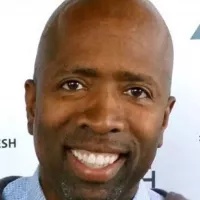
Kenny The Jet Smith is a former professional basketball player...

North Carolina is a diverse U S state situated on...

Justice in its broadest sense is the concept of treating...

Fire is a rapid oxidation process specifically combustion that releases...

September is the ninth month of the year in the...

An election is a structured decision-making process where a population...
Trending
4 hours ago Deadly Crash Shuts Down I-610 East Loop During Friday Rush Hour

4 hours ago Jason Momoa Street Fighter Action Figure Revealed at NYCC 2026

3 hours ago Atlas and Leones Negros to Unveil World-Class Stadium by 2030
4 hours ago Gabby Williams and the Atlanta Dream Secure Close Victory Over New York Liberty

4 hours ago Charles Spencer Praises Kristen Stewart's Portrayal of Princess Diana
4 hours ago George Clooney Addresses Tragic Death of Presley Gerber
Popular
Ken Paxton is an American politician and lawyer serving as...

Cristiano Ronaldo widely considered one of the greatest footballers captains...
Michael Joseph Jackson the King of Pop was a highly...

Elon Musk is a visionary entrepreneur and engineer known for...

Jameis Winston is an American football quarterback currently playing for...

Shakira Isabel Mebarak Ripoll the Queen of Latin Music is...