


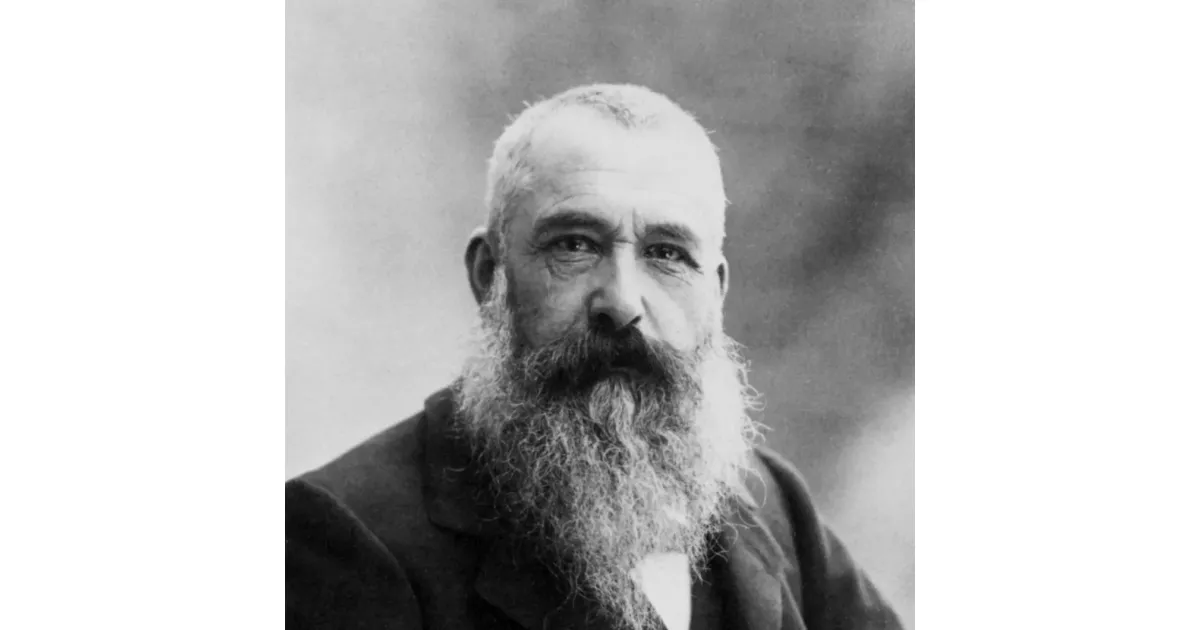
Claude Monet (1840-1926) was a pivotal French painter and a founder of Impressionism, significantly influencing modern art. He dedicated his career to capturing his subjective perceptions of nature, particularly through plein air landscape painting. His painting, *Impression, Sunrise*, lent its name to the Impressionist movement after being exhibited at the First Impressionist Exhibition in 1874, an event organized by Monet and other artists seeking an alternative to the traditional Salon.
March 1900: Return to London Hotel
In March 1900, Monet returned to the same London hotel to paint.


December 1900: Water Lilies Exhibition at Durand-Ruel Gallery
From 22 November to 15 December 1900, another exhibition dedicated to Monet was held at the Durand-Ruel gallery, with around ten versions of the Water Lilies exhibited.
1900: Army conscription account
In 1900, Monet claimed that in 1861, his family required him to renounce his artistic career and take over the family business in return for paying the cost of a substitute for army conscription.
1900: Exhibition of Japanese Bridge paintings
In 1900, Monet exhibited his first group of pictures of the garden, devoted primarily to his Japanese bridge.
March 1901: London Hotel Stay
Monet stayed in a London hotel from January to March 1901, painting Waterloo Bridge, Charing Cross Bridge and the Houses of Parliament. His visit ended due to pleurisy, and he had to spend three weeks in his hotel room.
1901: Enlargement of pond at Giverny
In 1901, Claude Monet expanded the pond on his property by purchasing a meadow situated across the Ru, a local stream. Following this acquisition, he divided his time between working outdoors in nature and working inside his studio.
1902: Expansion of Water Garden
In 1902, Monet expanded the size of his water garden by nearly 4000 square metres.
1903: Creation of paintings for Les Nymphéas
From 1903 to 1908, Claude Monet created paintings for his exhibition Les Nymphéas. These canvases were created with great difficulty: Monet spent a significant amount of time reworking them in order to find the perfect effects and impressions. When he deemed them unsuccessful he did not hesitate to destroy them.
June 1904: Exhibition: Views of the Thames in London
The series Views of the Thames in London — 1900 to 1904 was exhibited in May and June 1904.
1904: Painting of London, the Parliament, Effects of Sun in the Fog
In 2004, Claude Monet's painting, London, the Parliament, Effects of Sun in the Fog (Londres, le Parlement, trouée de soleil dans le brouillard; 1904), was sold for US$20.1 million.
1905: Modification of aesthetics
Around 1905, Claude Monet began to gradually change his painting aesthetics by abandoning the defined perimeter of the water body, leading to a shift in his artistic perspective. He also experimented with different canvas shapes and sizes, transitioning from traditional rectangular stretchers to square and then circular formats.
1906: Postponement of Durand-Ruel exhibition
In 1906, Claude Monet continually postponed his Durand-Ruel exhibition because he was not satisfied with his works. He spent a significant amount of time reworking them in order to find the perfect effects and impressions. When he deemed them unsuccessful he did not hesitate to destroy them.
December 1908: Sale of Venice paintings
In December 1908, on the way home from Venice, Monet and his wife broke their journey for a four-day stay with Renoir at Cagnes. Once back in Giverny and while not finished Monet sold all of his Venice paintings on 12 December 1908 to the Bernheim-Jeune brothers for 12,000 francs each.
1908: Creation of paintings for Les Nymphéas
From 1903 to 1908, Claude Monet created paintings for his exhibition Les Nymphéas. These canvases were created with great difficulty: Monet spent a significant amount of time reworking them in order to find the perfect effects and impressions. When he deemed them unsuccessful he did not hesitate to destroy them.
1908: Stay at the Palazzo Barbaro in Venice
In the autumn of 1908, Monet and his wife Alice accepted Mary Hunter's offer to stay with her in the Palazzo Barbaro in Venice.
May 1909: Opening of Les Nymphéas exhibition
On May 6, 1909, Claude Monet's exhibition, Les Nymphéas, opened to the public after multiple delays since 1906. The exhibition featured 48 paintings, created between 1903 and 1908, showcasing a series of landscapes and water lily scenes, and achieved considerable success.
1909: Exhibition of the first Water Lilies series
In 1909, Monet had a successful exhibition of the first Water Lilies series, consisting of 42 canvases.
1910: Pond Enlargement
In 1910, Monet enlarged the pond in his garden and had easels installed all around it.
1911: Death of Alice Monet
In 1911, Monet's second wife, Alice, passed away.
1913: Consultation with ophthalmologist Richard Liebreich
In 1913, Monet travelled to London to consult the German ophthalmologist Richard Liebreich, who prescribed new glasses and rejected cataract surgery for the right eye.
1914: Panel Paintings for the French Government
From 1914, Monet produced several panel paintings for the French Government to great financial success.
1914: Death of Jean Monet and Studio Plans
In 1914, Monet's oldest son, Jean, died. During this time, Monet began to develop the first signs of possible cataracts. Encouraged by Clemenceau, Monet made plans to construct a new, large studio that he could use to create a "decorative cycle of paintings devoted to the water garden".
1916: Work on Cycle of Paintings
Monet primarily worked on his "cycle of paintings" from around 1916.
1918: Panel Paintings for the French Government
Until 1918, Monet produced several panel paintings for the French Government to great financial success and he would later create works for the state.
1919: Landscape Paintings
In 1919, Monet began a series of landscape paintings, although he was not pleased with the outcome. By October, he ceased plein air painting and sold four of the eleven Water Lilies paintings the next month, despite his reluctance.
1920: Use of large canvases
By 1920, Monet admitted that he had grown too accustomed to broad painting to return to small canvases. He would often work on large canvases due to the deterioration of his eyesight
1921: Work on Cycle of Paintings
Monet primarily worked on his "cycle of paintings" until around 1921.
1922: Prescription of mydriatics
In 1922 a prescription of mydriatics provided short-lived relief.
1923: Return to Earlier Style
Following his optical operation in 1923, Monet returned to his style from before a decade ago, emphasizing color schemes of blue and green.
1923: Cataract Surgery
In 1923, Monet underwent cataract surgery, but experienced persistent cyanopsia and struggled with aphakic spectacles.
1925: Improved Vision and Retouching of Works
By 1925, Monet's visual impairment had improved, and he began to retouch some of his pre-operative works, with bluer water lilies than before.
December 1926: Death
Claude Monet, a French painter and key founder of Impressionism, died in December 1926. His approach to painting nature as he perceived it made him a precursor to modernism. Throughout his long career, he consistently expressed his perceptions of nature through plein air landscape painting. Impressionism as a term is derived from his painting Impression, Sunrise.
December 1926: Death of Claude Monet
On December 5, 1926, Claude Monet passed away from lung cancer at the age of 86. His funeral was a simple ceremony attended by only about fifty people, as he had wished. At the ceremony, Clemenceau replaced the black cloth on Monet's coffin with a flower-patterned one, exclaiming, "No black for Monet!". At the time of his death, Waterlilies was "technically unfinished".
1926: Monet's death
Monet continued to evolve the style of his paintings until the end of his life in 1926. In his later career, Monet "transcended" the Impressionist style and begun to push the boundaries of art.
May 1927: Display of panel paintings at Musée de l'Orangerie
In May 1927, 27 panel paintings were displayed in the Musée de l'Orangerie, following lengthy negotiations with the French government. Due to the neglect of Monet's later works, few people attended the showing.
1933: Looting of Jewish art collectors
From 1933 under the Nazi regime in Germany, Jewish art collectors of Claude Monet were robbed by Nazis and their agents.
1945: Looting of Jewish art collectors
Until 1945 under the Nazi regime in German-occupied countries, Jewish art collectors of Claude Monet were robbed by Nazis and their agents.
1952: Rediscovery of Monet's later works
In 1952, an essay by André Masson helped change the perception of Claude Monet's paintings and inspired an appreciation that began to take shape in 1956–1957.
1952: Tableau Vert homage to Monet
In 1952, following a formative experience at Giverny, Ellsworth Kelly created Tableau Vert as an homage to Claude Monet's works created there.
1956: Appreciation begins to take shape
In 1956, an essay by André Masson helped change the perception of Claude Monet's paintings and inspired an appreciation that began to take shape in 1956–1957.
1957: Appreciation begins to take shape
In 1957, an essay by André Masson helped change the perception of Claude Monet's paintings and inspired an appreciation that began to take shape in 1956–1957.
1978: Restoration and public opening of Monet's garden
In 1978, after having grown decrepit for over 50 years, Claude Monet's garden in Giverny was restored and opened to the public.
1980: Opening of Monet's house and gardens for visits
In 1980, following restoration, Claude Monet's house and gardens were opened to the public for visits through the Fondation Claude Monet. The house displays souvenirs of Monet, objects from his life, and his collection of Japanese woodcut prints, which greatly influenced his art.
1981: Increased scholarly attention to Monet's works
In 1981, Ronald Pickvance noted that Claude Monet's works after 1880 were increasingly receiving scholarly attention.
1998: Theft of Falaises près de Dieppe and curator conviction
In 1998, Falaises près de Dieppe (Cliffs Near Dieppe) was stolen from a museum, leading to the conviction of the museum's curator, who was jailed for five years and two months along with two accomplices.
November 2001: Google Doodle for Monet's 161st birthday
On November 14, 2001, a Google Doodle was created for Claude Monet's 161st birthday. The Doodle depicted the Google logo in Monet's signature style, making it the first Google Doodle made for someone's birthday.
2004: Sale of London, the Parliament, Effects of Sun in the Fog
In 2004, Claude Monet's painting, London, the Parliament, Effects of Sun in the Fog (Londres, le Parlement, trouée de soleil dans le brouillard; 1904), was sold for US$20.1 million.
2006: Publication on Monet's painting location
In 2006, the journal Proceedings of the Royal Society published a paper providing evidence that Claude Monet's paintings of Parliament were painted in situ at St. Thomas' Hospital over the river Thames.
August 2007: Theft of Falaises près de Dieppe
In August 2007, Falaises près de Dieppe (Cliffs Near Dieppe) was stolen from a museum.
May 2008: Record sale for Le Pont du chemin de fer à Argenteuil
On May 6, 2008, Claude Monet's Le Pont du chemin de fer à Argenteuil, an 1873 painting of a railway bridge spanning the Seine near Paris, was bought by an anonymous telephone bidder for a record $41.4 million at Christie's auction in New York. The previous record for a Monet painting was $36.5 million.
June 2008: Record sale for Le bassin aux nymphéas
In June 2008, Claude Monet's Le bassin aux nymphéas (from the water lilies series) sold at Christie's auction in London for £40,921,250 ($80,451,178), nearly doubling the record for the artist. This purchase represented one of the top 20 highest prices paid for a painting at the time.
June 2008: Recovery of Falaises près de Dieppe
In June 2008, the painting Falaises près de Dieppe (Cliffs Near Dieppe), which had been stolen in August 2007, was recovered.
October 2013: Legal case involving Monet paintings
In October 2013, Claude Monet's paintings L'Eglise de Vétheuil and Le Bassin aux Nympheas became subjects of a legal case in New York against Vilma Bautista, one-time aide to Imelda Marcos, after she sold Le Bassin aux Nympheas for US$32 million. The Philippine government sought the return of the painting, alleging it was acquired with the nation's funds.
2014: Discovery of a Monet painting in Munich
In 2014, during the discovery of a hidden trove of art in Munich, a Claude Monet painting that had belonged to a Jewish retail magnate was found in the suitcase of Cornelius Gurlitt, the son of one of Adolf Hitler's official dealers of looted art, Hildebrand Gurlitt.
Mentioned in this timeline

Google LLC is a multinational technology corporation specializing in a...

Germany officially the Federal Republic of Germany is located in...
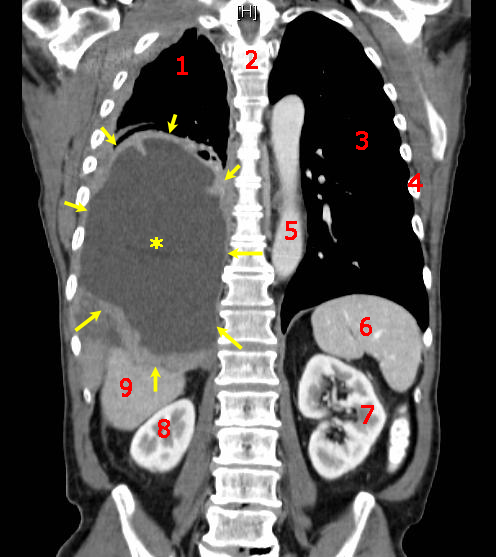
Cancer encompasses over diseases characterized by uncontrolled cell growth leading...
France officially the French Republic is primarily in Western Europe...
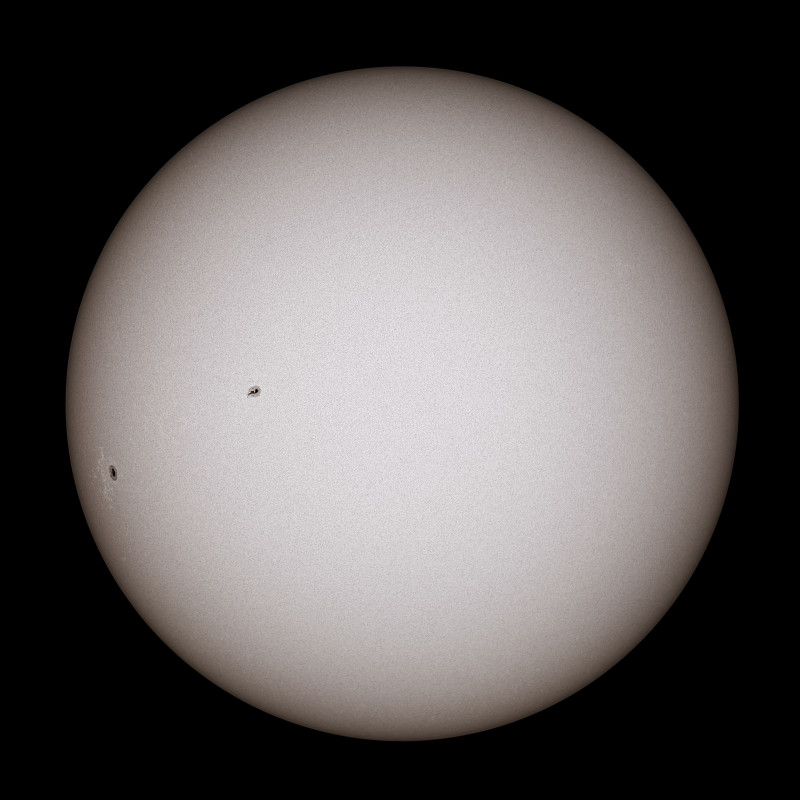
The Sun the star at the center of our Solar...

The Google logo has evolved over time to represent the...
Trending
3 hours ago San Francisco 49ers Linked to Potential Reunion with DeForest Buckner

3 hours ago Trent Williams Critiques Commanders Ahead of 49ers Matchup
3 hours ago Trade Rumors Circulate Regarding Indianapolis Colts Running Back Jonathan Taylor

3 hours ago Treylon Burks Returns to Action for Week 6 Matchup

3 hours ago Brock Purdy Masters Passing Techniques and Credits Defensive Scheme for Growth

4 hours ago Stefon Diggs Injury Status Uncertain Ahead of Monday Night Football Clash
Popular

Ilhan Omar is a prominent American politician currently serving as...

Ken Paxton is an American politician and lawyer serving as...

Elon Musk is a visionary entrepreneur and engineer known for...

Michael Joseph Jackson the King of Pop was a highly...

Cristiano Ronaldo widely considered one of the greatest footballers captains...

MrBeast the professional name of Jimmy Donaldson is the most-subscribed...