


The Crips are a prominent American street gang founded in Los Angeles, California, in 1969 by Raymond Washington and Stanley Tookie Williams. Originally formed as a local alliance to protect neighborhoods, the group evolved into a decentralized network of autonomous 'sets' involved in various criminal activities, including drug trafficking, robbery, and violence. The organization is famously associated with the color blue and maintains a long-standing, intense rivalry with the Bloods. Over the decades, the Crips have expanded across the United States, becoming a significant subject of study in sociology and criminology due to their profound impact on urban culture, the legal system, and public safety. Despite internal fragmentation and law enforcement efforts, the Crips remain a major influence within American gang subculture and have become deeply entrenched in the history of inner-city conflict.
1969: Founding of the Crips
In 1969, Raymond Washington and Stanley Williams founded the Crips in Los Angeles, California, establishing the group as an alliance between two autonomous street gangs that would eventually grow into a network of sets.


1971: Expansion of Crips Notoriety
By 1971, the Crips had significantly increased their influence and presence, with their notoriety spreading throughout the entirety of Los Angeles as their membership grew to outnumber non-Crip gangs by a ratio of 3 to 1.
1971: Formation of the Piru Street Boys
In 1971, a gang originating from Piru Street in Compton, California, known as the Piru Street Boys, was established and initially aligned itself with the Crips as a member set.
February 1972: First Mention of the Term Crips in Los Angeles Times
In February 1972, the Los Angeles Times officially used the term "Crips" in their reporting, marking a documented point in the history of the gang name, which had evolved from the original name "Cribs" due to members carrying canes.
1972: Formation of the Bloods Federation
In 1972, multiple gangs seeking protection from escalating attacks by the Crips united under the Pirus, establishing a new non-Crip federation that eventually became known as the Bloods.
February 23, 1973: Death of Curtis "Buddha" Morrow
On February 23, 1973, Crip founding member Curtis "Buddha" Morrow was shot and killed. Following this event, a blue bandana was worn as a tribute to him, which ultimately led to the color blue becoming synonymous with the Crip gang identity.
1973: The Creation of the Bloods
In 1973, following a period of violent conflict and a strategic meeting between gangs targeted by the Crips, the Piru Street Boys officially severed all ties with the Crips and founded a new organization that would become known as the Bloods.
1973: Adoption of Blue Clothing
Starting around 1973, members of the Crips began the tradition of wearing blue clothing as a primary identifier for the gang's network.
1978: Expansion and Criminal Enterprise of Crip Sets
In 1978, the Crip organization had expanded to 45 distinct sets throughout Los Angeles, shifting their focus toward the production and distribution of illicit substances including PCP, marijuana, and amphetamines.
March 11, 1979: Arrest of Stanley Tookie Williams
On March 11, 1979, Stanley Tookie Williams, a prominent member of the Westside Crips, was apprehended by law enforcement and charged with four counts of murder.
August 9, 1979: The Death of Raymond Washington
On August 9, 1979, Crip co-founder Raymond Washington was fatally shot. His death catalyzed internal fragmentation, leading to the dissolution of original leadership and the start of violent territorial conflicts between various Crip factions.
1979: Escalation of Gang Violence
By the period ending in 1979, the rivalry between the Crips and the Bloods had intensified significantly, resulting in the majority of all gang-related homicides occurring throughout southern Los Angeles during that seven-year span.
1979: Nicaraguan Revolution and the rise of contra drug trafficking networks
Following the 1979 Nicaraguan Revolution, former government officials associated with Anastasio Somoza Debayle sought refuge in the U.S. Supported by the CIA to oppose communist forces, individuals including Enrique Bermúdez, Oscar Danilo Blandón, and Norwin Meneses collaborated to establish drug trafficking operations in 1979 as a means to fund the contra movement, specifically targeting black neighborhoods in South Los Angeles.
1979: Rivalry between Rolling 60s Neighborhood Crips and 83 Gangster Crips
In 1979, the Rolling 60s Neighborhood Crips and the 83 Gangster Crips established a long-standing rivalry, marking the beginning of intense conflict between these two sets within the broader Crip organization.
1980: Systemic Turmoil and Gang Warfare
By 1980, the Crips were experiencing a period of severe instability characterized by ongoing violent warfare against the Bloods as well as destructive infighting between various Crip subsets.
1992: LAPD Estimates of Crips Membership and Set Expansion
In 1992, the Los Angeles Police Department estimated that there were 15,742 Crips members organized into 108 sets, while other sources provided significantly higher figures, estimating between 30,000 and 35,000 members across 600 sets throughout California.
1999: Peak Membership and Expansion in 1999
By 1999, the Crips street gang had expanded significantly, consisting of at least 600 distinct sets and a total membership exceeding 30,000 individuals actively involved in the distribution and transportation of drugs across the United States.
2008: Membership Estimates for the Crips
In 2008, it was estimated that the Crips gang association consisted of between 30,000 and 35,000 members across the United States.
2010: Continued Gang-Related Homicides
As of 2010, the ongoing conflict between the Crips and the Bloods remained a primary driver of gang-related murder statistics within the city of Los Angeles.
2015: Crips Membership and Geographic Scope Assessment
As of 2015, the Crips gang reached an estimated membership of 30,000 to 35,000 individuals distributed across 800 sets throughout 221 cities and 41 U.S. states, with the highest concentration of sets found in California, Texas, Oklahoma, and Missouri.
2022: Sacramento Shooting Incident
In 2022, a mass shooting in Sacramento that resulted in the deaths of six individuals was attributed by authorities to the long-standing rivalry between the Bloods and the Crips.
June 15, 2025: West Valley City Festival Shooting
On June 15, 2025, a suspected Titanic Crip Gang member allegedly opened fire at a festival in West Valley City, Utah, killing four people (including an unborn fetus) and wounding two others during a confrontation involving gang epithets and disputes with Bloods-affiliated individuals.
Mentioned in this timeline
The United States of America is a federal republic primarily...
California is a U S state on the Pacific Coast...
Texas is the second-largest U S state by area and...
Oklahoma is a U S state located in the South...
Los Angeles California's most populous city and Southern California's hub...
Fire is a rapid oxidation process specifically combustion that releases...
Trending

3 hours ago Melania Trump Joins Executive Order Establishing New Women's Health Task Force
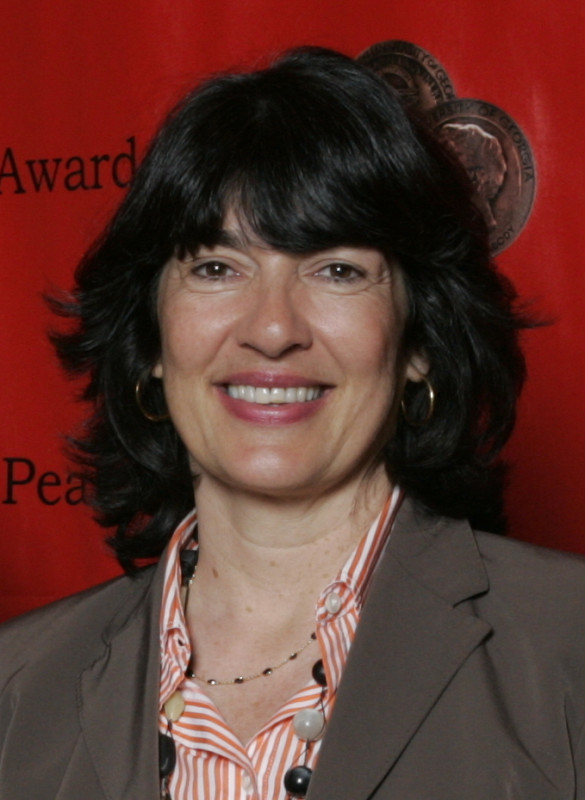
3 hours ago Christiane Amanpour Announces Departure From CNN After 43 Years

3 hours ago Growing Landslide Tsunami Risks Threaten Alaska Fjords
3 hours ago Scott Jennings Addressed Speculation Regarding White House Press Secretary Role

3 hours ago Jason Segel Marries Longtime Partner Kayla Radomski in Botanical Garden Ceremony

4 hours ago Jalen Hurts Out For Season Following Discovery Of Blood Clots
Popular

Ilhan Omar is a prominent American politician currently serving as...
Ken Paxton is an American politician and lawyer serving as...
Michael Joseph Jackson the King of Pop was a highly...

Elon Musk is a visionary entrepreneur and engineer known for...

Cristiano Ronaldo widely considered one of the greatest footballers captains...

Jameis Winston is an American football quarterback currently playing for...