History of España-class battleship in Timeline


The España-class battleships were a trio of dreadnoughts built for the Spanish Navy between 1909 and 1921: España, Alfonso XIII, and Jaime I. These were Spain's only dreadnoughts, constructed with British support as part of a defense agreement. World War I significantly delayed the completion of Jaime I due to material shortages. They were the smallest dreadnoughts ever built, a consequence of Spain's economic constraints and limited naval infrastructure. The design prioritized a main battery of eight 12-inch guns, resulting in compromises on armor and speed.


1905: Fleet Plan of 1905
In 1905, the Fleet Plan of 1905 proposed eight battleships, torpedo boats, and submarines, but it failed due to the government's weaknesses and lack of public support.
1906: Dreadnought Commissioned
In late 1906, the revolutionary "all-big-gun" HMS Dreadnought was commissioned.
March 1907: Design Revision Requested
In March 1907, Commodore José Ferrándiz y Niño prompted the Junta Técnica de la Armada to revise battleship designs following the commissioning of the HMS Dreadnought.
September 1907: Vickers Provides Battleship Design
In September 1907, Vickers presented a design for a 15,000-ton battleship with eight 12-inch guns, which became the basis for the design competition requirements.
January 1908: Fleet Plan of 1907 Signed Into Law
On January 7, 1908, the Fleet Plan of 1907 was officially signed into law, proposing the construction of three battleships and other vessels.
April 1908: Design Competition Issued
On April 21, 1908, the Spanish government issued a design competition for the construction of new battleships, requiring builders to modernize Spanish shipyard facilities.
October 1908: Artillery Committee Recommendations
In October 1908, the Artillery Committee found the SECN and Schneider proposals superior, but without a marked advantage, during evaluations for battleship construction.
February 1909: Navy Requests Revised Design from SECN
In February 1909, the Navy requested SECN to revise its battleship design, including increased freeboard and armor, based on strategic needs against Italian and Austro-Hungarian fleets.
July 1914: World War I Causes Delays
In July 1914, the outbreak of World War I caused delays in the completion of the España-class battleships, particularly Jaime I, due to material shortages from Britain.
August 1914: España at outbreak of WWI and Panama Canal opening
In August 1914, at the outbreak of World War I, España was the only member of her class completed, though Spain remained neutral, so she saw no action. Also in August 1914, España participated in the opening ceremonies for the Panama Canal.
May 1915: Jaime I Completed Except for Armament
In May 1915, Jaime I was completed except for its main guns, which were delayed due to World War I.
May 1915: Jaime I Almost Complete
In May 1915, Jaime I was nearly finished, but its guns were not delivered until 1919 due to material shortages from the UK during World War I.
August 1915: Alfonso XIII joins 1st Squadron
In August 1915, Alfonso XIII joined España in the 1st Squadron of the Spanish fleet.
1915: España at Panama Canal Opening and Training
In 1915, España represented Spain at the opening of the Panama Canal and later conducted training exercises with Alfonso XIII.
1919: Jaime I Receives Guns
In 1919, the guns for Jaime I were finally delivered, completing the ship after delays due to World War I material shortages.
1919: Main Guns Delivered to Jaime I
In 1919, the main guns for Jaime I were finally delivered, completing the ship's construction.
1920: Long-Range Voyages
In 1920, España and Alfonso XIII undertook long-range voyages to North and South America. España was damaged in an accidental grounding off Chile.
1920: España's cruise to the Americas
In 1920, España was sent on a long-distance cruise to North and South America. During the voyage, España was damaged off the coast of Chile and required extensive repairs before she could return home.
1921: España Class Completion
In 1921, the España-class battleships, consisting of España, Alfonso XIII, and Jaime I, were completed for the Spanish Navy.
1921: Jaime I completion and Alfonso XIII cruise
In late 1921, Jaime I was completed. Also, in 1921, Alfonso XIII was sent on a long-distance cruise to North and South America.
August 1923: España runs aground
In August 1923, while bombarding Rif positions, España ran aground off Cape Tres Forcas.
1923: España Runs Aground
In 1923, España ran aground off Cape Tres Forcas while bombarding Rif positions.
November 1924: España Destroyed After Grounding
In November 1924, España was destroyed by storm damage after running aground off Cape Tres Forcas in 1923 while bombarding Rif positions. Some of her guns were salvaged for coastal artillery.
November 1924: España declared a complete loss
In November 1924, severe storms battered the wreck of España, which had run aground in August 1923, breaking the hull in half and rendering her a complete loss.
1925: Alfonso XIII flagship at Alhucemas landing
In 1925, Alfonso XIII served as the flagship of the Spanish fleet during the landing at Alhucemas.
1931: Alfonso XIII Renamed España
In 1931, after King Alfonso XIII was deposed and the Second Spanish Republic was proclaimed, Alfonso XIII was renamed España, and both ships were put in reserve to cut costs.
1931: Overthrow of King Alfonso XIII and renaming of battleship
In 1931, after the overthrow of King Alfonso XIII and the establishment of the Second Spanish Republic, his namesake battleship was renamed España. Both vessels were immediately decommissioned to reduce costs during the Great Depression.
1933: Jaime I Returns to Service
In 1933, Jaime I was brought back into service to serve as the fleet flagship.
1933: Jaime I recommissioned
In 1933, Jaime I was recommissioned to serve as the fleet flagship.
July 1936: Modernization Interrupted by Civil War
In July 1936, the Spanish Civil War began, halting the ambitious modernization plans for the surviving España-class battleships.
July 1936: Outbreak of the Spanish Civil War
In July 1936, the outbreak of the Spanish Civil War prevented modernization programs for the surviving battleships from coming to fruition. España was undergoing a limited refit in anticipation of the modernization when the Spanish coup of July 1936 initiated the conflict.
September 1936: Republican fleet sortie to disrupt blockade
In September 1936, Jaime I sortied with a pair of cruisers and four destroyers to disrupt the blockade imposed by España. The Republicans withdrew in October 1936, having achieved nothing.
1936: Ships Re-equipped During Civil War
In 1936, after being seized by the Nationalists, Alfonso XIII (renamed España) had its 76.2 mm guns replaced with German 88 mm flak guns and 20 mm anti-aircraft guns. Jaime I, retained by the Republicans, was re-equipped with Vickers 47 mm anti-aircraft guns and a twin 25 mm Hotchkiss mounting.
1936: Start of Nationalist uprising and naval divisions
In 1936, at the start of the Nationalist uprising led by General Francisco Franco, most of the Spanish Navy's fleet remained loyal to the Republican government. The crew of España killed most of the ship's officers, who had declared support for Franco, but surrendered the ship to Nationalist control after a duel with coastal artillery. Jaime I remained under Republican control. Also in 1936, the Republican fleet attempted to block the crossing of Franco's Army of Africa from Morocco to mainland Spain.
April 1937: España Lost to a Mine
In April 1937, España was lost after striking a mine during the Spanish Civil War, though nearly all her crew was saved.
April 1937: Loss of España
On 30 April 1937, España was lost off the coast of Santander while on blockade duty, having struck a mine laid by a Nationalist minelayer. Most of her crew was rescued by the destroyer Velasco.
May 1937: Jaime I attacked at Cartagena
In May 1937, while under repair at Cartagena after running aground, Jaime I was attacked by five Savoia-Marchetti SM.79 bombers of the Italian Aviazione Legionaria, sustaining damage.
June 1937: Jaime I Destroyed by Explosion
In June 1937, Jaime I was destroyed by an accidental explosion during the Spanish Civil War after being attacked by German and Italian bombers. Guns from Jaime I were later used for coastal batteries.
July 1939: Hull of Jaime I discarded
On 3 July 1939, the hull of Jaime I, which had been damaged by fire and determined to be beyond economical repair, was discarded.
May 1984: Expeditions to survey wreck of España
Several expeditions to survey the wreck of the second España (formerly Alfonso XIII) took place between February and May 1984.
1999: Decommissioning of coastal fortifications
In 1999, some of the guns from the first España, which had been recovered and used in coastal fortifications, were decommissioned.
Mentioned in this timeline
Morocco a North African country in the Maghreb region boasts...
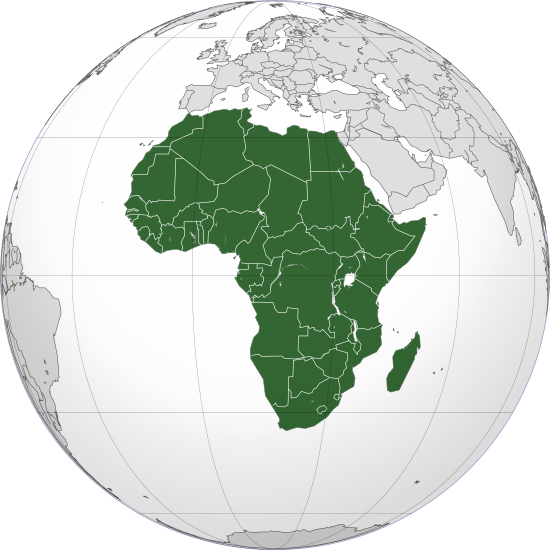
Africa is the second-largest and second-most populous continent home to...
France officially the French Republic is primarily in Western Europe...
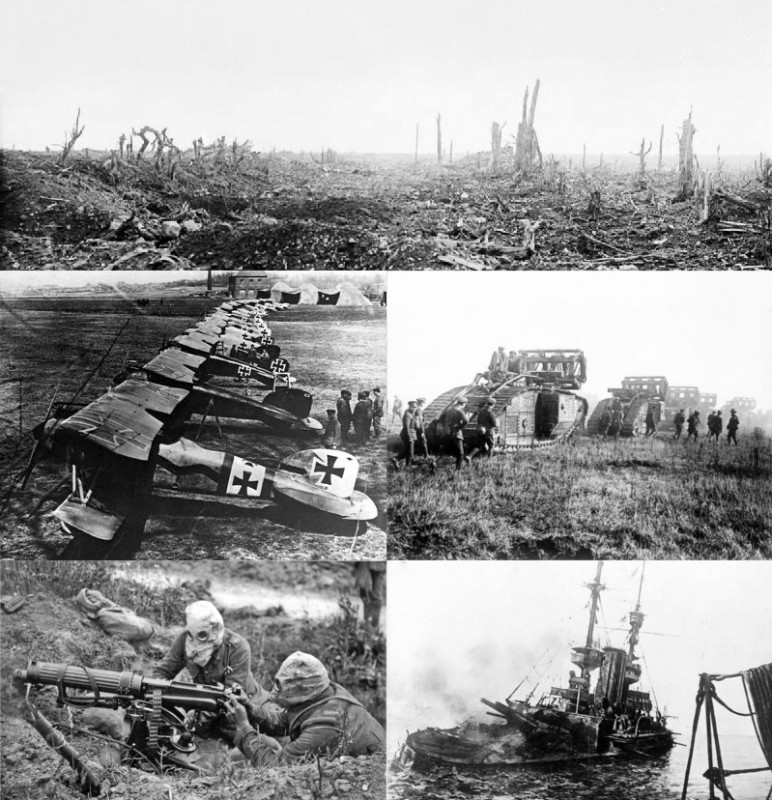
World War I a global conflict between the Allies and...
Spain officially the Kingdom of Spain is a large country...
War is defined as an armed conflict involving the armed...
Trending

3 hours ago Ryan Fitzpatrick and Vince Wilfork Star in New NFL-Themed Men v. Food Series

3 hours ago Veteran Reporter Recalls Unusual Michael Irvin Interview Held at Strip Club

3 hours ago Wizards Rookie AJ Dybantsa Gains Recognition in ESPN Top 100 NBA Player Rankings
3 hours ago Buccaneers Plan Three-Way Split for Running Back Reps Including Sean Tucker

3 hours ago Real Madrid Secures First EuroLeague Victory Against Partizan

3 hours ago Donovan Mitchell Defends James Harden Against Unfair Championship Narratives
Popular

Ken Paxton is an American politician and lawyer serving as...

Cristiano Ronaldo widely considered one of the greatest footballers captains...

Elon Musk is a visionary entrepreneur and engineer known for...

Jameis Winston is an American football quarterback currently playing for...

Shakira Isabel Mebarak Ripoll the Queen of Latin Music is...

Michael Joseph Jackson the King of Pop was a highly...