



AMC Theatres, founded in 1920, is the largest movie exhibition company in the world. Headquartered in Leawood, Kansas, the organization operates a massive network of cinemas across the United States and internationally. AMC is known for pioneering the multiplex concept, significantly shaping the modern theatrical experience through innovations like stadium seating and premium large-format screens such as IMAX and Dolby Cinema. In recent years, the company has gained widespread attention for its status as a 'meme stock,' characterized by high retail investor engagement and significant volatility. Despite challenges posed by the rise of streaming services and the impact of the global pandemic, AMC remains a dominant force in the film industry, focusing on enhancing the immersive nature of the big-screen experience. The company continues to implement strategic initiatives, including expanded food and beverage offerings and loyalty programs, to maintain its position as a leader in the global entertainment sector.
December 20, 1920: Founding of AMC Theatres
On December 20, 1920, the company now known as AMC Theatres (originally American Multi-Cinema) was founded in Kansas City, Missouri, marking the start of its expansion through Missouri and Kansas.


1920: Founding of AMC Theatres
In 1920, the Dubinsky brothers—Maurice, William, Irvin, Edward, and Barney—founded what would become AMC Theatres after purchasing the Regent Theatre in Kansas City, Missouri.
1929: Death of Maurice Dubinsky
In 1929, Maurice Dubinsky, the eldest of the brothers who founded the theater company, passed away.
1936: Departure of Barney Dubinsky
Following an automobile accident in 1936, Barney Dubinsky sustained injuries that led to his departure from the company.
1945: Stanley Durwood joins the family business
In 1945, after completing his service in the U.S. Air Force following World War II, Stanley Durwood joined his father's company and successfully influenced the expansion into drive-in theaters across St. Joseph, Jefferson City, and Leavenworth.
1947: Expansion and acquisition of the Liberty Theater
During 1947, the company expanded its operations by acquiring the Liberty Theater in downtown Kansas City. After remodeling the venue and renaming it the Roxy, they won an antitrust lawsuit that granted them the right to screen first-run movies, which led to the subsequent acquisition of several other major local cinemas.
1961: Stanley Durwood Assumes Control
Following the death of Ed Durwood in 1961, Stanley Durwood took full control of the ten-theater chain known as Durwood Theatres.
1962: Conceptualization of the Multiplex Model
In 1962, Stanley Durwood conceived the idea of the multiplex theater while standing in his Roxy theater in Kansas City, realizing that adding a second screen could double box office returns without increasing staff requirements.
1963: Opening of the Parkway Twin Theatre
In 1963, Durwood Theatres opened the Parkway Twin Theatre at a shopping center in Kansas City, marking the company's first successful implementation of the multiplex cinema model.
1966: Opening of Metro Plaza
In 1966, AMC expanded its cinema footprint by launching the Metro Plaza, a four-screen movie theater located in Kansas City.
October 1, 1968: Renaming of Durwood Theatres
On October 1, 1968, Stanley rebranded Durwood Theatres to American Royal Cinema in honor of the American Royal livestock and horse show. However, due to legal challenges from the show's producers, the company was subsequently renamed to American Multi-Cinema, Inc.
1969: Expansion into Omaha
Continuing its strategy of building multi-screen complexes, AMC opened a new six-screen theater in Omaha in 1969.
1983: Initial Public Offering
In 1983, AMC Theatres reached a significant corporate milestone by conducting its initial public offering as the company experienced a period of strong financial growth.
1985: First Overseas Multiplex Opening
In 1985, AMC Theatres expanded its international footprint by launching its first overseas multiplex, a 10-screen theater located at The Point in Milton Keynes, United Kingdom.
October 1988: International Joint Venture Announcement
In October 1988, AMC Theatres announced a joint venture with United Artists Theaters and Cinema International Corporation to manage their combined cinema assets across the UK and Ireland under the AMC brand.
1988: Opening of Kinepolis Brussels
In 1988, the Kinepolis Group officially opened Kinepolis Brussels, which is recognized as the world's first megaplex theater, featuring 25 individual screens and a total seating capacity of 7,600.
April 1996: Opening of Canal City 13
In April 1996, AMC successfully brought its megaplex theater concept to Japan with the opening of the Canal City 13 location in Fukuoka.
December 13, 1996: Opening of Ontario Mills 30
On December 13, 1996, AMC established the Ontario Mills 30 in Ontario, California, a 30-screen theater that stood as the world's largest multiplex at that time.
December 20, 1996: Opening of AMC Arrábida 20
On December 20, 1996, AMC expanded its international presence by opening the AMC Arrábida 20, a 20-screen cinema located in Porto, Portugal.
1999: Leadership Transition at AMC
In 1999, AMC Theatres saw a significant change in leadership following the death of Stanley Durwood. He was succeeded by Peter Brown, who became the first CEO in the company's history not related to the founding Dubinsky or Durwood families.
January 2002: Return to the UK Market
In January 2002, AMC re-entered the UK market by opening the 16-screen Great Northern theater in Manchester, ending a 14-year hiatus in the region.
October 2003: Opening of Broadway Plaza Cinema
In October 2003, AMC expanded its UK footprint by launching a 12-screen cinema complex situated at the Broadway Plaza site in Birmingham.
2004: Acquisition of AMC Theatres by Marquee Holdings Inc.
In 2004, AMC Theatres was purchased by Marquee Holdings Inc., which was an investment entity managed by affiliates of Apollo Global Management and the private equity division of JPMorgan Chase known as J.P. Morgan Partners, LLC. During this period, the company was listed for public trade on the American Stock Exchange under the ticker symbol AEN.
2006: Initial Public Offering Announcement
In 2006, AMC Theatres announced plans for an initial public offering (IPO) that was projected to be valued at approximately $789 million.
May 3, 2007: Withdrawal of Initial Public Offering
On May 3, 2007, AMC Theatres management decided to withdraw its planned initial public offering due to unfavorable market conditions.
March 2, 2009: Gerardo I. Lopez Appointed CEO
On March 2, 2009, Gerardo I. Lopez officially succeeded Peter Brown to become the president and CEO of AMC Theatres, bringing experience from his previous executive roles at Starbucks.
July 14, 2010: Third IPO Filing
On July 14, 2010, AMC Theatres filed for a $450 million initial public offering, marking the third time the company had attempted to go public since 2006.
September 2011: AMC Theatres Headquarters Relocation Announcement
In September 2011, AMC Theatres announced a transition of its corporate headquarters from downtown Kansas City to a newly constructed $30 million facility in Leawood, Kansas. The move, supported by $47 million in state incentives, involved relocating 400 positions to the Park Place development.
April 2012: Settlement Regarding Accessibility Services
In April 2012, AMC Theatres reached a legal settlement with a disability rights organization in Illinois, committing to expand accessibility features across its locations in the state.
May 2012: Wanda Group Acquisition Announcement
In May 2012, Wanda Group, headquartered in Dalian, agreed to acquire AMC Theatres for $2.6 billion, encompassing 5,048 screens across 347 locations in the United States and Canada.
July 2012: AMC Theatres Canadian Divestment
In July 2012, AMC Theatres reduced its Canadian footprint by selling four of its theater locations to Cineplex Entertainment and two additional locations to Empire Theatres, the latter of which were subsequently acquired by Landmark Cinemas.
September 4, 2012: Finalization of Wanda Group Acquisition
On September 4, 2012, the acquisition of AMC Theatres by the Chinese conglomerate Wanda Group was officially finalized, positioning the company as the largest cinema chain globally.
2012: Wanda Group Acquires Majority Stake
Beginning in 2012, the Chinese conglomerate Wanda Group established its role as the majority stakeholder in AMC, a position it held until 2018.
2012: Completion of Digital Cinema Transition
By 2012, AMC Theatres completed a major collaborative project with Sony to replace all of its traditional reel projectors with modern digital cinema projectors, an initiative that had commenced in the second quarter of 2009.
2014: Completion of Accessibility Upgrades
As part of the settlement agreement, AMC pledged to have captioning and audio description services fully operational in all of its Illinois theaters by 2014.
August 2015: Resignation of Gerardo I. Lopez
In August 2015, Gerardo I. Lopez officially resigned from his position as the CEO of AMC Theatres, leading the company board to appoint Craig Ramsey as the interim CEO.
December 2015: Adam Aron Appointed as CEO
During December 2015, AMC announced the appointment of Adam Aron to serve as the company's president and chief executive officer, with his official tenure beginning in January 2016.
January 4, 2016: Adam Aron Begins Tenure as CEO
Effective January 4, 2016, Adam Aron officially assumed the roles of president and chief executive officer of AMC, while also joining the company's board of directors.
March 2016: Announcement of Acquisition of Carmike Cinemas
In March 2016, AMC Theatres publicly announced its intention to acquire its industry competitor, Carmike Cinemas.
July 2016: Acceptance of Revised Acquisition Offer
During July 2016, the management team of Carmike Cinemas formally accepted a revised acquisition offer from AMC Theatres, contingent upon receiving the necessary regulatory and shareholder approvals.
December 25, 2016: Completion of Carmike Cinemas Acquisition
The acquisition deal was officially finalized on December 25, 2016, a move that resulted in AMC Theatres becoming the largest cinema chain operating within the United States.
2016: Global Expansion and Market Leadership
In 2016, AMC Theatres became the world's largest movie theater chain following the strategic acquisitions of Odeon Cinemas, UCI Cinemas, and Carmike Cinemas.
March 1, 2017: AMC Theatres Rebranding Initiative
On March 1, 2017, AMC Theatres CEO Adam Aron announced a comprehensive rebranding strategy. This included converting Carmike Cinemas locations to the AMC brand, introducing the 'AMC Classic' banner for smaller theaters, and designating kitchen-equipped locations as 'AMC Dine-In'.
July 2017: AMC Theatres Announces Cost-Cutting Measures
In July 2017, AMC Theatres declared a plan to reduce company expenses by $30 million before the conclusion of the year. The strategy involved decreasing staffing levels and operating hours to achieve these financial goals.
September 2018: Silver Lake Partners Invests in AMC
In September 2018, private equity firm Silver Lake Partners executed a $600 million investment in AMC, though the corporate structure ensured Wanda Group maintained control over the board of directors.
January 2021: Dilution of Wanda's Ownership
During January 2021, financial pressures from COVID-19 lockdowns led to a dilution of Wanda Group's ownership as AMC pursued new financing and Silver Lake Partners converted their $600 million debt into equity.
February 2021: Reduction of Wanda Group's Voting Power
In early February 2021, Wanda Group converted its Class B shares to Class A shares, an action that successfully reduced its voting control of the company to below 50%.
May 21, 2021: Wanda Group Ends Majority Stake in AMC
On May 21, 2021, Wanda Group filed documents with the SEC indicating they held only a 0.002% stake in AMC, marking the formal conclusion of their significant ownership and involvement in the company.
Mentioned in this timeline
The United States of America is a federal republic primarily...
California is a U S state on the Pacific Coast...
Sony is a Japanese multinational conglomerate based in Tokyo It...

Earvin Magic Johnson Jr is a celebrated American businessman and...
Texas is the second-largest U S state by area and...

Coronaviruses are a family of RNA viruses affecting mammals and...
Trending

3 hours ago Corey Day Secures Stunning Back-to-Back O'Reilly Series Victories at Charlotte

4 days ago Tanner Scott Faces Postseason Pressure During NLDS Opening Game
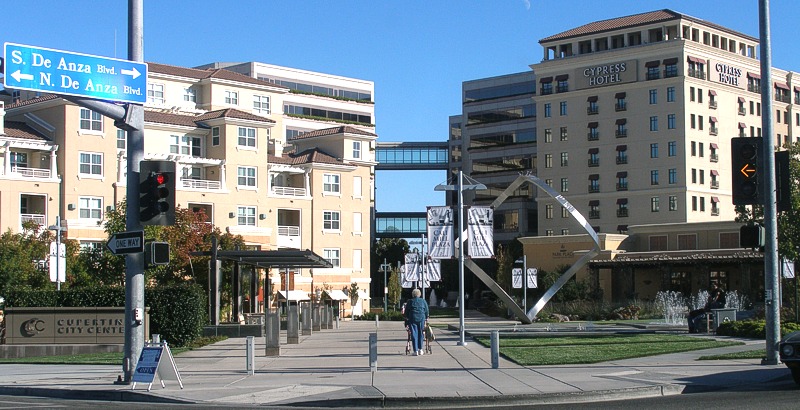
5 hours ago Hashi Market Opens First West Coast Grocery Store in Cupertino
5 hours ago Updates on NFL Injury Reports and Roster Changes Across Several Teams

5 hours ago Mike Tomlin Receives Praise Following Steelers Departure and Coaching News

5 hours ago Justin Hartley Returns as Colter Shaw in Action-Packed Tracker Season 4
Popular

Ken Paxton is an American politician and lawyer serving as...

Jameis Winston is an American football quarterback currently playing for...

Cristiano Ronaldo widely considered one of the greatest footballers captains...

Michael Joseph Jackson the King of Pop was a highly...

Elon Musk is a visionary entrepreneur and engineer known for...

Bernie Sanders is a prominent American politician and the senior...