


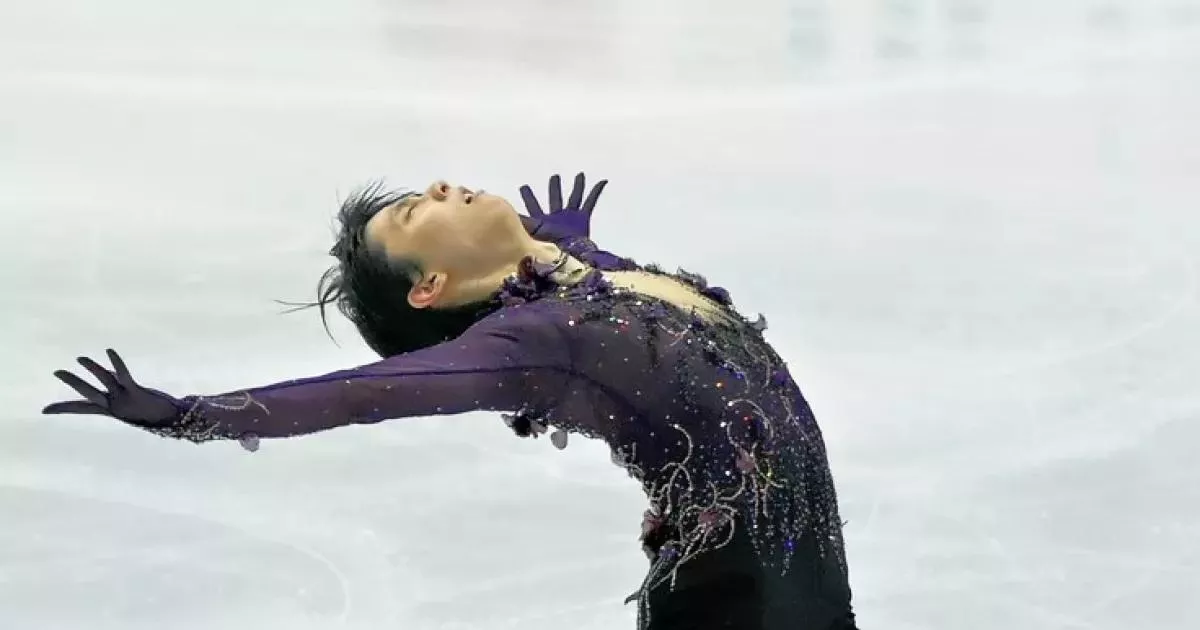
Figure skating is a winter sport where individuals, pairs, or groups perform on ice skates. It debuted at the 1908 Olympics and includes men's singles, women's singles, pair skating, and ice dance, plus a team event since 2014. Non-Olympic disciplines exist like synchronized skating. Competitions involve two programs with elements such as spins, jumps, lifts, and other complex moves.
1902: Madge Syers Competes at World Championships
In 1902, British female skater Madge Syers entered the World Championships, competing in the men's competition and finishing in second place behind Sweden's Ulrich Salchow, a groundbreaking moment for women in figure skating.


1906: Ladies Competition Established
In 1906, following Madge Syers's participation in the men's competition at the World Championships, the ISU banned women from competing against men and established a separate "ladies" competition.
1908: Figure Skating Olympic Debut
Figure skating made its Olympic debut at the 1908 Summer Olympics in London, marking the first time a winter sport was contested at the Olympics.
1908: Figure skating introduction at the Olympic Games
In 1908, figure skating was introduced as the first winter sport in the Olympic Games, which were held in London.
1908: Pair Skating Introduced at World Championships
In 1908, pair skating was introduced at the World Championships, with the title won by Anna Hübler and Heinrich Burger of Germany.
March 20, 1914: International Figure Skating Championship in New Haven
On March 20, 1914, an international figure skating championship was held in New Haven, Connecticut, serving as the forerunner to both the United States and Canadian National Championships.
1948: Dick Button Wins Olympic Gold
In 1948, Dick Button won the Olympic gold medal and was the first skater to perform the double Axel.
1952: Dick Button Wins Olympic Gold
In 1952, Dick Button won his second Olympic gold medal and was also the first skater to perform the triple loop jump and the flying camel spin.
1952: Ice Dance Included in World Figure Skating Championships
In 1952, ice dance was included in the World Figure Skating Championships for the first time, expanding the disciplines recognized at the event.
1960: Last Time Non-Soviet/Russian Team Won Gold Before 2010 Olympics
2010 was the first time since 1960 that a non-Soviet/Russian team had won the gold medal in pair skating at the Olympics.
1960: British Domination of Ice Dance World Title
Until 1960, the world ice dance title was won every year by a British couple, beginning with Jean Westwood and Lawrence Demmy, highlighting British dominance in the discipline.
February 15, 1961: U.S. Figure Skating Team Killed in Plane Crash
On February 15, 1961, the entire U.S. figure skating team and their coaches were killed in the crash of Sabena Flight 548 in Brussels, Belgium, en route to the World Championships in Prague, a tragic event that devastated the U.S. skating program.
1965: Soviet Domination Begins
From 1965 the Soviet Union rose to become a dominant force in pair skating and ice dance.
1967: Last World Championship on Outdoor Rink
The 1967 World Championships was the last event held on an outdoor rink, marking a transition to indoor facilities for major competitions.
1968: ISU Reduces Weighting of Compulsory Figures
Beginning in 1968, the ISU progressively reduced the weighting of compulsory figures in singles figure skating competitions, shifting the emphasis towards free skating.
1971: Janet Lynn's Performance at World Championships
At the 1971 World Championships, Janet Lynn missed out on a podium place despite winning the free skate competition decisively, leading to an uproar and loud booing from the audience during the medal ceremony and highlighting the controversial nature of the scoring system at the time.
1973: Short Program Introduced
In 1973, the ISU introduced the short program to singles figure skating competitions, further reducing the importance of compulsory figures.
1980: Mandatory covered rinks for competitions
In 1980, a rule was established mandating that all figure skating competitions must be held in completely covered and enclosed rinks.
1982: ISU rule on triple jump repetition
In 1982, the ISU enacted a rule limiting skaters to performing each type of triple jump only once in a program, or twice if one of them is incorporated into a combination or sequence.
1984: Torvill and Dean Earn Perfect Scores
In 1984, ice dance pair Jayne Torvill and Christopher Dean earned unanimous 6.0s for presentation, the only perfect score in Olympic skating history, which was ranked the 8th greatest sporting moment in a UK poll.
1984: Covered rinks rule expanded to practice rinks
In 1984, the rule requiring completely covered and enclosed rinks was expanded to include practice rinks.
1986: Jozef Sabovčík Lands Quad Toe Loop
At the 1986 European Championships, Jozef Sabovčík of Czechoslovakia landed a quad toe loop, which was initially recognized at the event but then ruled invalid three weeks later due to a touchdown with his free foot.
1988: Kurt Browning Lands First Ratified Quad Toe Loop
At the 1988 World Championships, Kurt Browning of Canada landed the first quad toe loop which has remained ratified, marking a significant milestone in men's figure skating.
1988: Midori Ito Lands First Triple Axel
In 1988, Japan's Midori Ito became the first woman to land a triple Axel, pushing the athletic and technical level for women's programs.
1988: First quadruple jump landed
In 1988, Kurt Browning from Canada landed the first-ever quadruple jump, a quad toe loop, at the World Figure Skating Championships.
1988: Costume rule established due to Katarina Witt's performance
In 1988, a costume rule was created in response to Katarina Witt's costume and performance at the Winter Olympics.
1989: Compulsory Figures Worth Only 20%
By 1989, compulsory figures were only worth 20% of the total score, reducing the emphasis on this aspect of singles figure skating.
May 1990: ISU Allows Skaters to Return from Professional Status
In May 1990, the ISU voted to allow skaters intending to skate professionally to return to ISU competition, provided that they obtained their national association's permission, opening the door for professional skaters to compete in ISU events.
1990: Natasha Kuchiki Allowed to Compete at World Championships
In 1990, American pair skater Natasha Kuchiki was exceptionally allowed to compete at the World Championships despite being two years too young, marking a deviation from the ISU's age eligibility rules.
1990: Compulsory Figures Eliminated
In 1990, compulsory figures were eliminated from international competition, marking a significant shift in the focus of competitive figure skating.
1991: Midori Ito Collides with Laetitia Hubert
At the 1991 World Championships, Midori Ito collided with Laetitia Hubert during practice, but both skaters were able to continue and compete.
1991: Irina Rodnina Admits to Soviet Skaters' Doping
In a 1991 interview, three-time Olympic champion Irina Rodnina admitted that Soviet skaters used doping substances in preparation for the competitive season, particularly in August or September during training.
1993: Women's Figure Skating Ranks High in Popularity
In the 1993 National Sports Study II, women's figure skating was the second most popular spectator sport in America, just behind NFL football. Dorothy Hamill, Peggy Fleming, and Scott Hamilton were among the most popular athletes in the United States.
1994: Oksana Baiul and Tanja Szewczenko Collide at Olympics
During the 1994 Olympics, Oksana Baiul and Tanja Szewczenko collided during practice, but both skaters were able to continue and compete.
1994: Increased Interest in Figure Skating Due to Tonya Harding Scandal
In 1994, the Tonya Harding scandal increased interest in figure skating. The first night of the women's figure skating competition in the 1994 Winter Olympics achieved higher Nielsen TV ratings than the Super Bowl three weeks earlier.
1995: ISU Introduces Prize Money
In 1995, the ISU introduced prize money at its major competitions, funded by revenues from selling the TV rights to those events, in an effort to retain skaters who might otherwise have given up their eligibility to participate in lucrative professional events.
July 1, 1996: Adelina Sotnikova birthdate
Adelina Sotnikova was born a few hours into July 1, 1996, in Moscow and, as a result, was not eligible to compete at Junior Worlds until 2011 and senior Worlds until 2013.
1996: New age rules introduced for competitions
In 1996, new rules were introduced, requiring skaters to be at least 15 before July 1 of the preceding year to compete at the Olympics, Worlds, Europeans, or Four Continents.
1996: Tara Lipinski Grandfathered into Eligibility
In 1996, when the age rules were introduced, American single skater Tara Lipinski, who was 13 at the time, was grandfathered into remaining eligible for future events, along with other skaters who had already competed at the World Championships.
1997: Lyrics allowed in ice dance music
Beginning in the 1997–98 season, the ISU decided to allow lyrics or words in ice dance music.
2000: Delayed Medical Response at World Championships
At the 2000 World Championships in Nice, France, a pair skater who was injured in a lift accident lay on the ice for several minutes and had to get up and leave the ice on his own before being offered medical attention, illustrating concerns about medical response times.
2002: Judging controversy during the Winter Olympics
In 2002, the judging controversy during the Winter Olympics lead to ISU adopting the International Judging System (IJS) in 2004.
October 2004: Estimated Annual Expense for Figure Skating
In October 2004, a U.S. Figure Skating article estimated the annual expenses at US$9,000–$10,000 for pre-juvenile, US$18,000 for juvenile, US$35,000–$40,000 for novice level skaters, with junior and senior levels being somewhat more expensive, illustrating the financial commitment required for the sport.
2004: ISU adopts the International Judging System
In 2004, in response to the judging controversy during the 2002 Winter Olympics, the ISU adopted the International Judging System (IJS).
2004: Women allowed to wear trousers
In 2004, the costume rule was extended to allow women to wear trousers in competition.
2005: Mao Asada age-eligible for Grand Prix Final
In 2005, Mao Asada of Japan was age-eligible to compete at the Grand Prix Final, where she won the title. However, she was not permitted to compete at the Olympics due to age restrictions.
2006: IJS becomes mandatory
In 2006, the International Judging System (IJS) became mandatory at all international competitions, including the 2006 Winter Olympics.
2007: Exception for original dance costumes
In 2007, the ISU allowed an exception for accessories or props for the original dance, but not since.
2008: US Skaters Sent to World Championships Due to Age Restrictions
At the 2008 World Championships, the United States sent skaters who had placed 5th and 7th at nationals because higher-placed skaters were too young, including one who missed the cutoff by 20 days, highlighting the ISU's strict enforcement of age rules.
2009: ISU awards small medals for segment results
Since 2009, the ISU has awarded small medals for segment results (short and free program) at the World, European, Four Continents, and World Junior Championships.
2009: Small medals awarded at ISU Championships
Small medals have been awarded at ISU Championships, likely since 2009.
2010: Shen Xue and Zhao Hongbo Win Gold at Olympics
At the 2010 Olympic Games, Shen Xue and Zhao Hongbo of China won the gold medal, marking the first time since 1960 that a Russian, Soviet, or Unified Team (CIS) flagged team did not win the gold medal in pair skating.
2010: Minimum Scores Introduced for Championships
Beginning in the 2010-11 season, minimum scores were introduced for the World, European, and Four Continents Championships, setting a benchmark for qualification.
2010: Compulsory and original dances merged into short dance
Beginning in the 2010-11 season, the compulsory and original dances in ice dance competitions were merged into the short dance.
2010: ISU Regulations on Representing Another Country
In 2010, the ISU regulations stipulated a waiting period of 24 months or more from the date of the last ISU Championship for skaters switching countries to compete internationally.
2010: Permitted two quads in the short program
Starting in the 2010–11 season, skaters were permitted to perform two quads in the short program.
February 14, 2011: Questions Emerge Surrounding Chinese Skaters' Ages
On February 14, 2011, The Associated Press reported questions surrounding the ages of nine Chinese skaters based on birthdates listed on the Chinese Skating Association's website, suggesting some skaters may have been younger or older than their ISU ages.
April 6, 2011: Approval of figure skating team event
On April 6, 2011, the International Olympic Committee officially confirmed the approval of a figure skating team event, which was introduced at the 2014 Winter Olympics. The elimination of the compulsory dance segment provided space for the team event.
December 2011: ISU releases details of qualifying system
In December 2011, the ISU released details of the qualifying system and the competition format for the figure skating team event.
December 2011: Prize Money for Senior Grand Prix Final Winner
In December 2011, the winner of the senior Grand Prix Final earned US$25,000, highlighting the relatively low prize money compared to other sports.
2011: Limited training opportunities in South Asia
As of 2011, South Asia faced limited training opportunities in Figure Skating due to a scarcity of ice rinks. India had only four major indoor ice rinks in 2011, but planned to build ten more, mostly in malls, over the following five years.
2011: Death spiral rule change
As of 2011, a rule change dictated that the woman's head in a death spiral must at some point reach her skating knee.
2011: Judges did not penalize vocal music
At the 2011 World Championships, Florent Amodio's long program music included words, but an insufficient number of judges voted for a deduction.
2011: Adelina Sotnikova eligible to compete at Junior Worlds
In 2011, Adelina Sotnikova became eligible to compete at Junior Worlds, due to her birth date of July 1, 1996.
2011: Minimum Scores Introduced for Grand Prix Series
In the 2011-12 season, different minimum scores were introduced for the Grand Prix series, establishing specific qualification standards for the event.
June 2012: Music with words allowed in all disciplines
In June 2012, the ISU voted to allow skaters from all figure skating disciplines to choose music with words in their competitive programs, starting in the 2014-15 season.
2012: Revised ISU Regulations on Representing Another Country
In 2012, the ISU regulations reduced the waiting period for skaters switching countries to compete internationally to a minimum of 18 months for singles and 12 months for pairs/ice dancers from the date of their last ISU Championships.
2012: Spiral sequences replaced by choreographic sequences
Starting in the 2012 season, spiral sequences were replaced by choreographic sequences in women's and pair skating. Choreographic sequences were required for the men's, women's and pair free program.
2013: Adelina Sotnikova eligible to compete at Senior Worlds
In 2013, Adelina Sotnikova became eligible to compete at Senior Worlds, due to her birth date of July 1, 1996.
July 2014: Minimum age raised to 15 for senior internationals
In July 2014, the minimum age for senior international figure skating competitions was raised to 15.
2014: Yuzuru Hanyu and Han Yan Collide at Cup of China
At the 2014 Cup of China, Yuzuru Hanyu and Han Yan collided during the warm up of the free program. Despite being visibly injured, both skaters finished the competition.
2014: Music with words allowed in all disciplines starting this season
Beginning in the 2014–15 season, skaters from all disciplines were permitted to use music with lyrics in their programs.
2014: Team event inclusion in the Winter Olympics
In 2014, the Winter Olympics included the team event, which combines the four individual figure skating disciplines.
2014: Introduction of figure skating team event at the Winter Olympics
In 2014, the figure skating team event was introduced at the Winter Olympics. Each team is composed of a men's and women's singles skater, a pair, and an ice dance duo.
2015: Estimated Expenses for Canadian Pair Team
In 2015, CBC Sports estimated that a Canadian pair team had expenses of about Can$100,000 per year, demonstrating the high cost associated with competing in figure skating.
2016: Expansion of indoor ice rinks in India
In 2016, three of the ten planned indoor ice rinks were built at Neptune Magnet Mall, Atria Millennium Mall, and Lulu Mall in India.
June 2018: Short dance renamed to rhythm dance
In June 2018, the short dance in ice dance competitions was renamed the rhythm dance, before the 2018-19 season.
2020: Increased reliance on off-ice training due to COVID-19
In 2020, due to COVID-19 related rink closures, many athletes relied more on off-ice training and conditioning methods.
2021: Continued reliance on off-ice training due to COVID-19
In 2021, due to COVID-19 related rink closures, many athletes continued to rely more on off-ice training and conditioning methods.
2022: First clean quadruple Axel landed
In 2022, Ilia Malinin, an American skater, successfully landed the first clean and fully-rotated quadruple Axel at the CS U.S. Classic.
2022: Valieva doping allegations
The 2022 Winter Olympics was marked by a scandal involving Kamila Valieva's doping allegations and controversy over her responsibility as a minor, which triggered discussions on age limits.
2023: Age limit raised to 16
For the 2023–24 season, the age limit was raised to 16 years old.
2024: Age limit increasing to 17
The age limit is set to increase to 17 for the 2024-25 season.
Mentioned in this timeline
The United States of America is a federal republic primarily...

The Union of Soviet Socialist Republics USSR existed from to...

India officially the Republic of India is a South Asian...

The Super Bowl is the annual championship game of the...

Kamila Valieva is a Russian figure skater notable for her...

Germany officially the Federal Republic of Germany is located in...
Trending
5 hours ago Yunus Akgün Makes History During Galatasaray UEFA Champions League Match Against Lille
6 hours ago Federal Prosecutors Dismantle Massive Alleged Marriage Fraud Ring in Massachusetts
6 hours ago Nico Paz reveals inspiration for his headers

6 hours ago Kelly Ripa and Mark Consuelos Finally Welcome Home Their New Puppy After Health Scare
7 hours ago Maryland Terrapins Fire Head Football Coach Mike Locksley

7 hours ago Stefanos Tsitsipas Targets Grand Slam Glory Amidst Renaissance
Popular

Ilhan Omar is a prominent American politician currently serving as...

Ken Paxton is an American politician and lawyer serving as...

Michael Joseph Jackson the King of Pop was a highly...

Elon Musk is a visionary entrepreneur and engineer known for...

Cristiano Ronaldo widely considered one of the greatest footballers captains...

Linda Ronstadt is a versatile American singer renowned for her...