History of Keir Starmer in Timeline


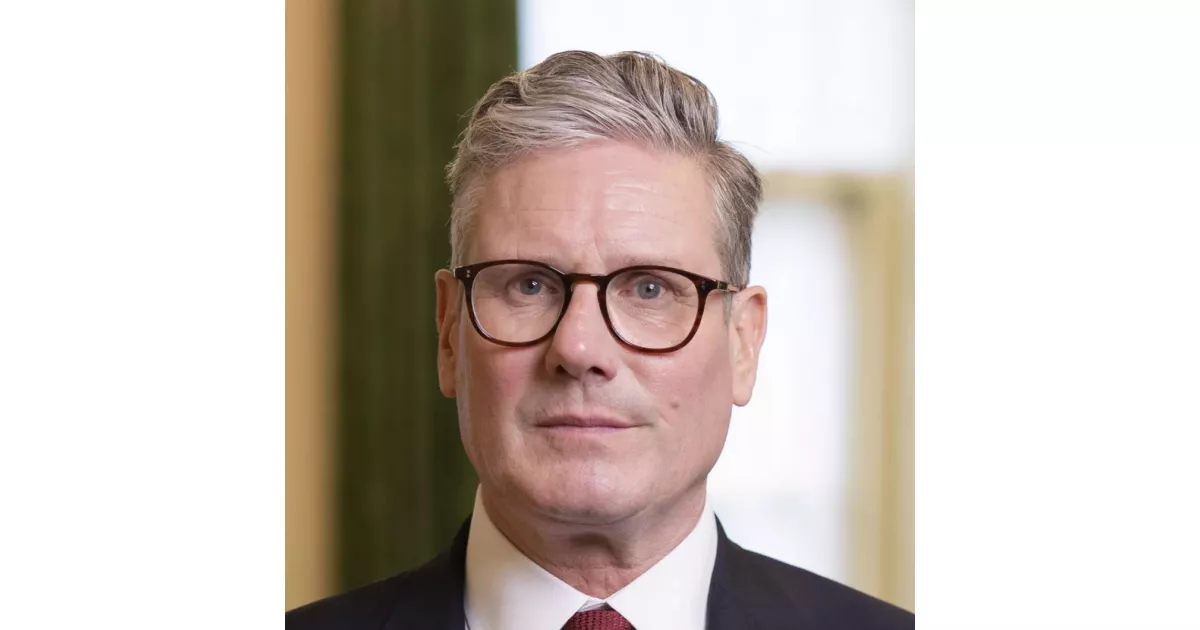
Sir Keir Starmer is a British politician and lawyer, currently serving as Prime Minister of the United Kingdom since 2024. He has been the Leader of the Labour Party since 2020, and previously served as Leader of the Opposition from 2020 to 2024. Starmer has been the Member of Parliament for Holborn and St Pancras since 2015. Prior to his political career, he was the Director of Public Prosecutions from 2008 to 2013.
September 1962: Keir Starmer's Birth
In September 1962, Keir Rodney Starmer was born. He is now a British politician and lawyer.


September 1962: Birth of Keir Starmer
On 2 September 1962, Keir Rodney Starmer was born in Southwark, south east London. He was raised in Oxted, Surrey.
1976: Reigate Grammar School Became Independent
In 1976, Reigate Grammar School, which Keir Starmer attended, converted into an independent fee-paying school while he was a student.
1977: Starmer is the most unpopular prime minister since Ipsos's records began in 1977
A poll by Ipsos indicates that Keir Starmer is the most unpopular prime minister since Ipsos's records began in 1977.
1985: Graduated with Bachelor of Laws Degree
In 1985, Keir Starmer graduated with a Bachelor of Laws degree from the University of Leeds.
1985: Graduated with LLB from University of Leeds
In 1985, Keir Starmer graduated with a first class LLB in law from the University of Leeds.
1986: Received Postgraduate Degree from Oxford
In 1986, Keir Starmer received a postgraduate Bachelor of Civil Law degree from St Edmund Hall, Oxford.
1986: Studied at St Edmund Hall, Oxford
In 1986, Keir Starmer studied at St Edmund Hall to pursue postgraduate studies in jurisprudence, taking a Bachelor of Civil Law (BCL) degree from the University of Oxford.
1987: Editor of Socialist Alternatives
From 1986 to 1987, Keir Starmer served as an editor of Socialist Alternatives, a Pabloite-Trotskyist magazine.
1987: Became a Barrister
In 1987, Keir Starmer became a barrister at the Middle Temple.
1988: Secretary of the Haldane Society
From 1988 to 1992, Keir Starmer served as the secretary of the Haldane Society of Socialist Lawyers.
1990: Served as a Legal Officer
In 1990, Keir Starmer served as a legal officer for the campaign group Liberty until 1990 and also joined Doughty Street Chambers.
1991: Academic Trip to the Soviet Union
In 1991, Keir Starmer participated in an academic trip to the Soviet Union on the eve of its collapse.
1992: Treasurer of the Haldane Society
From 1992 to 1995, Keir Starmer served as the treasurer of the Haldane Society of Socialist Lawyers.
1996: Organized Delegation to Cape Town
In 1996, Keir Starmer organised the UK delegation to the 14th Congress of the International Association of Democratic Lawyers in Cape Town, meeting President Nelson Mandela.
1997: Labour's third-best result in terms of seat-share following the 1997 general elections
Labour party had its third-best result in terms of seat-share following the 1997 general elections.
1999: Junior Barrister on Lee Clegg's Appeal
In 1999, Keir Starmer was a junior barrister on Lee Clegg's appeal.
2001: Gary McKinnon hacked into US military databases
In 2001, Scottish IT expert Gary McKinnon hacked into US military databases, and the US Attorney General reportedly secured Keir Starmer's support for McKinnon's extradition.
2001: Labour's third-best result in terms of seat-share following the 2001 general elections
Labour party had its third-best result in terms of seat-share following the 2001 general elections.
April 2002: Appointed Queen's Counsel
On 9 April 2002, Keir Starmer was appointed Queen's Counsel at the age of 39 and also became joint head of Doughty Street Chambers.
2002: Member of the Death Penalty Advisory Panel
In 2002, Keir Starmer became a member of the Foreign, Commonwealth and Development Office's Death Penalty Advisory Panel, serving until 2008.
2002: Became Queen's Counsel
In 2002, Keir Starmer took silk as a Queen's Counsel.
2002: Labour becomes the largest party in local government in 2002
In 2002, Labour became the largest party in local government.
2004: Starmer and Victoria Alexander become engaged
In 2004, Keir Starmer and Victoria Alexander became engaged after meeting in the early 2000s while working on a case together.
2005: Called Queen's Counsel appointment "odd"
In 2005, Keir Starmer called his Queen's Counsel appointment "odd" as he had previously expressed support for the abolition of the monarchy.
2005: Received the Bar Council's Sydney Elland Goldsmith Award
In 2005, Starmer received the Bar Council's Sydney Elland Goldsmith Award for his pro bono work challenging the death penalty in Uganda, Kenya, Malawi, and the Caribbean, marking a significant achievement in his career.
2005: The party became the largest in England for the first time since 2005
In 2005, the Labour party became the largest in England.
2005: First Labour prime minister since Tony Blair in 2005
Keir Starmer became the first Labour prime minister since Tony Blair in 2005.
May 2007: Starmer marries Victoria Alexander
On 6 May 2007, Keir Starmer married Victoria Alexander at the Fennes Estate just north of Bocking, Essex.
July 2008: Named Head of the Crown Prosecution Service
In July 2008, Keir Starmer was named the new Head of the Crown Prosecution Service (CPS) and Director of Public Prosecutions (DPP) by Baroness Scotland.
November 2008: Took Office as Head of the Crown Prosecution Service
On 1 November 2008, Keir Starmer took office as Head of the Crown Prosecution Service (CPS) and Director of Public Prosecutions (DPP), succeeding Ken Macdonald.
2008: Appointed Director of Public Prosecutions
In 2008, Keir Starmer was appointed as the Director of Public Prosecutions.
2008: End of term as a member of the Death Penalty Advisory Panel
In 2008, Keir Starmer's term as a member of the Foreign, Commonwealth and Development Office's Death Penalty Advisory Panel concluded.
2009: Became a Bencher
In 2009, Keir Starmer became a bencher at the Middle Temple.
February 2010: Prosecution of MPs for false accounting announced
In February 2010, Keir Starmer announced the CPS's decision to prosecute three Labour MPs and a Conservative peer for offences relating to false accounting in the aftermath of the parliamentary expenses scandal.
2010: The party became the largest in Scotland for the first time since 2010
In 2010, the Labour party became the largest in Scotland.
2010: First Labour prime minister since Gordon Brown in 2010
Keir Starmer became the first Labour prime minister since Gordon Brown in 2010.
2011: Awarded honorary degrees
Between 2011 and 2014, Keir Starmer was awarded several honorary degrees.
2011: Prioritized rapid prosecutions of rioters
During the 2011 England riots, Keir Starmer prioritized rapid prosecutions of rioters over long sentences, which he later concluded helped to bring "the situation back under control".
2011: Introduced paperless hearings
In 2011, Keir Starmer introduced changes to the Crown Prosecution Service (CPS) that included the "first test paperless hearing".
February 2012: Chris Huhne to be prosecuted for perverting the course of justice
In February 2012, Keir Starmer announced that Chris Huhne would be prosecuted for perverting the course of justice, stating that "[w]here there is sufficient evidence we do not shy away from prosecuting politicians".
2012: Allegations Regarding "Twitter joke trial" and Savile case
In 2012, Nick Cohen alleged that Keir Starmer was personally responsible for allowing the prosecution of Paul Chambers to proceed, in what became known as the "Twitter joke trial", with the CPS denying his involvement. Also in 2012, Starmer addressed the Jimmy Savile scandal, stating that people rightfully wanted to know why Savile had been allowed to get away with it for so long.
November 2013: Stepped down as Director of Public Prosecutions
In November 2013, Keir Starmer stepped down as Director of Public Prosecutions and was succeeded by Alison Saunders.
2013: Changes to sexual abuse investigation handling announced
In 2013, Keir Starmer announced changes to how sexual abuse investigations were to be handled amid Operation Yewtree, including a panel to review complaints.
2013: End of tenure as Director of Public Prosecutions
In 2013, Keir Starmer's tenure as Director of Public Prosecutions came to an end.
December 2014: Selected as Labour Candidate
In December 2014, Keir Starmer was selected as the Labour parliamentary candidate for the constituency of Holborn and St Pancras.
2014: Represented Croatia at the International Court of Justice
In 2014, Keir Starmer represented Croatia at the genocide hearings before the International Court of Justice at The Hague, arguing that Serbia aimed to seize Croatian territory and eradicate its population during the 1990s war.
2014: Appointed Knight Commander of the Order of the Bath
In the 2014 New Year Honours, Keir Starmer was appointed Knight Commander of the Order of the Bath (KCB) for "services to law and criminal justice".
2014: Knighted in the New Year Honours
In the 2014 New Year Honours, Starmer was knighted as a Knight Commander of the Order of the Bath (KCB) for "services to law and criminal justice."
May 2015: Maiden speech to the House of Commons
In May 2015, Keir Starmer delivered his maiden speech to the House of Commons.
September 2015: Appointed Shadow Home Office Minister
In September 2015, Keir Starmer was appointed to Jeremy Corbyn's Shadow Cabinet as Shadow Home Office Minister.
2015: Confirmation of Keir Hardie Naming
In 2015, Keir Starmer was asked about whether he was named after Keir Hardie, the Labour Party's first parliamentary leader, but he did not confirm this.
2015: Elected as MP for Holborn and St Pancras
In 2015, Keir Starmer was elected as the MP for Holborn and St Pancras with a majority of 17,048 (52.9 per cent).
2015: Elected to the House of Commons
In 2015, Keir Starmer was elected to the House of Commons at the general election.
2015: Declined to stand in Labour Party leadership election and supported Andy Burnham
In 2015, Keir Starmer was urged to stand in the Labour Party leadership election but ruled this out. He supported Andy Burnham, who finished second to Jeremy Corbyn.
June 2016: Resigned from Shadow Cabinet
In June 2016, Keir Starmer resigned from his role as Shadow Home Office Minister as part of the widespread Shadow Cabinet resignations in protest at Corbyn's leadership following the 2016 EU Referendum result.
September 2016: Accepted post as Shadow Secretary of State for Exiting the European Union
Following Corbyn's re-election, in September 2016 Keir Starmer accepted a new post from Corbyn as Shadow Secretary of State for Exiting the European Union.
2016: Supported Britain Stronger in Europe campaign
During the 2016 European Union membership referendum, Keir Starmer supported the Britain Stronger in Europe campaign for the UK to remain in the European Union (EU).
2016: Supported Remain Campaign in EU Referendum
In 2016, Keir Starmer supported the Remain campaign in the European Union membership referendum.
July 2017: Sworn of the Privy Council
In July 2017, Starmer was sworn of the Privy Council, granting him the honorific prefix "The Right Honourable."
2017: Re-elected as MP for Holborn and St Pancras
In 2017, Keir Starmer was re-elected as the MP for Holborn and St Pancras with an increased majority of 30,509 (70.1 per cent).
2019: Peak in party membership
During Starmer's tenure as leader, Labour saw a drop in party membership from a peak of 532,000 after the 2019 election to 370,450 in the runup to the 2024 election.
2019: Labour's Defeat at General Election
Following Labour's defeat at the 2019 general election, Jeremy Corbyn resigned.
2019: Acknowledged future loss
Following defeat at the 2019 general election, Corbyn announced he would not lead Labour at the next general election after "a process of reflection". Starmer began to distance himself from Corbyn's leadership and policies.
2019: Re-elected as MP for Holborn and St Pancras
In 2019, Keir Starmer was re-elected as the MP for Holborn and St Pancras with a reduced majority of 27,763 (64.9 per cent).
January 2020: Announced candidacy for Labour leadership
On 4 January 2020, Keir Starmer announced his candidacy for the Labour leadership election, gaining support from figures like Gordon Brown and Sadiq Khan.
April 2020: Keir Starmer's acceptance speech
In April 2020, Keir Starmer delivered his acceptance speech after winning the Labour leadership contest.
April 2020: Declared winner of Labour leadership contest
On 4 April 2020, Keir Starmer was declared the winner of Labour's leadership contest, defeating Rebecca Long-Bailey and Lisa Nandy with 56.2 per cent of the vote in the first round.
October 2020: Accepted EHRC report on antisemitism and apologized
In October 2020, following the release of the Equality and Human Rights Commission (EHRC)'s report into antisemitism in the Labour Party, Keir Starmer accepted its findings in full and apologized to Jews on the Party's behalf.
2020: Won Labour Leadership Election
Following Jeremy Corbyn's resignation, Keir Starmer won the 2020 Labour leadership election.
2020: Became Leader of the Labour Party
In 2020, Keir Starmer became the Leader of the Labour Party and Leader of the Opposition.
2020: Starmer wins Labour Party leadership election
In 2020, Keir Starmer won the Labour Party leadership election on a left-leaning platform with ten pledges. Most of these pledges were later abandoned or substantially changed during his tenure as leader.
March 2021: Starmer calls for longer sentences for rape and sexual violence
In March 2021, following the murder of Sarah Everard, Keir Starmer advocated for longer sentences for rape and sexual violence, aiming to reduce crime and increase public safety.
May 2021: Shadow cabinet reshuffle
In May 2021, Keir Starmer had his first reshuffle of his shadow cabinet which reduced the representation of the left and soft left on the opposition frontbench.
November 2021: Shadow cabinet reshuffle
In November 2021, Keir Starmer had his second reshuffle of his shadow cabinet which increased the representation of the party's right.
2021: Starmer considered resigning after Labour's mixed results in the 2021 local elections
In 2021, Keir Starmer considered resigning from his position after Labour's mixed results in the local elections, the first local elections of his leadership. He ultimately decided to stay on, feeling "vindicated" in his decision.
2021: Loss of a previously safe Labour seat at the 2021 Hartlepool by-election
In 2021, during Keir Starmer's tenure as Opposition Leader, his party suffered the loss of a previously safe Labour seat at the Hartlepool by-election, followed by holds at the Batley and Spen by-election.
May 2022: Pledged to resign over COVID-19 regulation breach
In May 2022, Keir Starmer said he would resign if he received a fixed penalty notice for breaching COVID-19 regulations during campaigning.
July 2022: Proposed vote of no confidence in the Government
Amidst the historic number of ministers resigning from Boris Johnson's government in July 2022, Keir Starmer proposed a vote of no confidence in the Government and criticized Johnson.
July 2022: Cleared by Durham Police in "Beergate" investigation
In July 2022, Durham Police cleared Keir Starmer in the "Beergate" investigation, stating that he had "no case to answer".
August 2022: Found to have breached MPs' code of conduct
In August 2022, the Parliamentary Commissioner for Standards, Kathryn Stone, found that Keir Starmer had breached the MPs' code of conduct on eight occasions by failing to register interests.
2022: Holds at the 2022 Birmingham Erdington and City of Chester by-elections, as well as a gain from the Conservatives at the 2022 Wakefield by-election
In 2022, Labour held seats at the Birmingham Erdington and City of Chester by-elections, and gained a seat from the Conservatives at the Wakefield by-election.
2022: Elected Honorary Fellow of St Edmund Hall, Oxford
In 2022, Starmer was elected an Honorary Fellow of St Edmund Hall, Oxford, further acknowledging his contributions and standing.
2022: Labour entered the general election with a large lead over the Conservatives in opinion polls
Since 2022, Labour entered the general election with a large lead over the Conservatives in opinion polls, and the potential scale of the party's victory remained a topic of discussion throughout the campaign.
February 2023: EHRC ended monitoring of Labour Party
In February 2023, the EHRC said that changes the Labour Party had made to its complaints and training procedures meant that the Labour Party no longer needed to be monitored by them.
April 2023: Starmer defines Starmerism in interview with The Economist
In April 2023, Keir Starmer outlined two key strands of 'Starmerism' in an interview with The Economist. One strand focused on critiquing the British state and advocating for governance based on five main missions. The second strand involved an economic policy of "modern supply-side economics".
May 2023: Starmer discusses Labour's Leaders
In a speech in May 2023, Starmer discussed the successful Labour leaders.
June 2023: Record net migration figure updated from the previously estimate of 728,000 to 906,000 for the year to June 2023
For the year to June 2023, the net migration figure was 906,000.
June 2023: Starmer defines Starmerism in an interview with Time
In June 2023, Starmer provided a definition of Starmerism in an interview with Time, emphasizing the need to fix the economy, address climate change, reform public services, and ensure a safe environment.
September 2023: Shadow cabinet reshuffle
In September 2023, Keir Starmer had his third reshuffle of his shadow cabinet which reduced the representation of the left and soft left on the opposition frontbench.
September 2023: Reshuffled his shadow cabinet
In September 2023, Keir Starmer reshuffled his shadow cabinet, which was seen as a promotion of Blairites and demotion of those on the soft left.
October 2023: Expressed support for Israel during Hamas-Israel War
During the October 2023 Hamas-Israel War, Keir Starmer emphasized his support for Israel, called the actions of Hamas terrorism, and initially stated Israel had the right to cut off power and water supplies to Gaza, later clarifying his position.
October 2023: Starmer's comments on Israel's response to Hamas attack spark controversy
In October 2023, Keir Starmer stated that Israel had the right to defend itself and take necessary actions after the Hamas attack, sparking controversy within the Labour party. His comments about Israel's right to cut off food and water led to resignations and required him to clarify his position, emphasizing adherence to international law.
November 2023: Suffered defeat on Gaza ceasefire vote
On 15 November 2023, Keir Starmer suffered his largest defeat as leader when 56 of his MPs defied a three-line whip in voting for an SNP motion to support an immediate ceasefire in Gaza.
December 2023: Changed stance on Gaza ceasefire
In December 2023, Keir Starmer followed Rishi Sunak in changing his stance by calling for a "sustainable ceasefire" in relation to the conflict in Gaza.
December 2023: Starmer cites Thatcher, Blair, and Attlee as examples of effecting meaningful change
In December 2023, Starmer referenced Margaret Thatcher, Tony Blair, and Clement Attlee as examples of politicians who effected "meaningful change" by serving the British people, rather than dictating to them.
2023: Labour gains more than 500 councillors and 22 councils in the 2023 local elections
During the 2023 local elections, the Labour Party gained more than 500 councillors and 22 councils, becoming the largest party in local government for the first time since 2002.
2023: Labour Party Made Gains at Local Elections
In 2023, Keir Starmer's Labour Party made significant gains at the local elections.
2023: The Tobacco and Vapes Bill
In 2023, The Tobacco and Vapes Bill, which featured in the 2023 King's Speech, but had been abandoned when the election was called.
May 2024: Prime Minister Rishi Sunak announced that a general election would be held on 4 July 2024
In May 2024, Prime Minister Rishi Sunak announced that a general election would be held on 4 July 2024.
June 2024: Net migration figure was 728,000 for the year to the end of June 2024
For the year to the end of June 2024 the net migration figure was 728,000 as a result of rule changes by the then Conservative government.
June 2024: Starmer pledges to reduce legal immigration to the UK
In June 2024, Keir Starmer pledged to reduce the record high level of legal immigration to the UK by improving training and skills for British workers, aiming to reduce net migration.
June 2024: Starmer released the Labour Party's 2024 manifesto, Change
In June 2024, Keir Starmer released the Labour Party's 2024 manifesto, "Change," which focused on various aspects including economic growth, planning, infrastructure, clean energy, healthcare, education, childcare, and workers' rights.
July 2024: Starmer appointed as prime minister in July 2024
Following Keir Starmer's appointment as prime minister in July 2024, he received congratulations from world leaders, declared the Rwanda asylum plan "dead," established a Border Security Command, toured the UK, met with leaders and regional mayors, established the Council of the Nations and Regions, and attended his first Prime Minister's Questions.
July 2024: Keir Starmer on 5 July 2024, following his general election victory
In July 2024, Keir Starmer delivered a speech following his general election victory.
July 2024: Starmer expresses Labour Party support for LGBT rights
In July 2024, Keir Starmer stated the Labour Party's support for LGBT rights, including strengthening protections against hate crimes, "modernising" the gender recognition framework, and a "trans-inclusive" ban on conversion therapy.
July 2024: General election to be held on 4 July 2024
On July 4, 2024 a general election was scheduled.
July 2024: Starmer appointed prime minister, First Lord of the Treasury and Minister for the Civil Service by King Charles III on 5 July 2024
On July 5, 2024, Keir Starmer was appointed prime minister, First Lord of the Treasury, and Minister for the Civil Service by King Charles III.
August 2024: Agreement to increase public-sector worker pay by 5 to 7 per cent
In August 2024, Keir Starmer's government agreed to increase public-sector worker pay by 5 to 7 per cent.
September 2024: UK suspends some arms sales to Israel
In September 2024, under Starmer's premiership, the UK government suspended some British arms sales to Israel due to concerns about violating international law. Foreign Secretary David Lammy announced the suspension of 30 of 350 arms export licenses, affecting equipment such as parts for fighter jets, helicopters and drones.
September 2024: Starmer family gets a cat
Since September 2024, Starmer and his family have kept a Siberian cat, named Prince, at 10 Downing Street.
October 2024: Introduction of the Employment Rights Bill
On 10 October 2024, the Government introduced the Employment Rights Bill. The government's inaugural International Investment Summit was held on 14 October 2024 at the Guildhall in London.
October 2024: The October 2024 budget was presented to the House of Commons by Chancellor of the Exchequer Rachel Reeves on 30 October 2024
On 30 October 2024, the October 2024 budget was presented to the House of Commons by Chancellor of the Exchequer Rachel Reeves. It covered Labour's fiscal plans, with a focus on investment, healthcare, education, childcare, sustainable energy, transport, and worker's rights enrichment.
November 2024: Starmer's government warns Netanyahu of arrest upon UK travel
In November 2024, Starmer's government declared that Benjamin Netanyahu would be arrested if he traveled to the UK, following the International Criminal Court's issuance of an international arrest warrant for him on alleged war crimes.
November 2024: Publication of record net migration figure updated from the previously estimate of 728,000 to 906,000 for the year to June 2023
In November 2024, a record net migration figure was published, updated from the previous estimate of 728,000 to 906,000 for the year to June 2023. Keir Starmer said he would introduce policies aimed at reducing immigration levels.
December 2024: Starmer appointed Peter Mandelson to serve as British ambassador to the United States.
In December 2024, Keir Starmer appointed Peter Mandelson as the British ambassador to the United States.
December 2024: Death of Starmer's brother, Nick
On 26 December 2024, Starmer's brother Nick died following a cancer diagnosis. Starmer issued a statement the following day, paying tribute to him.
2024: Loss of members after Gaza stance
During Starmer's tenure as leader, Labour saw a drop in party membership to 370,450 in the runup to the 2024 election. More than 20,000 members left the party within two months in 2024, with blame placed on the party's stance on the Gazan genocide and green investment.
2024: Starmer discusses family life and work-life balance during campaign
During the 2024 general election campaign, Starmer shared his biggest fear about becoming prime minister was the impact on his children. He also mentioned his intention to observe Shabbat dinners and spend time with family on Friday evenings.
2024: Became Prime Minister
In 2024, Keir Starmer became the Prime Minister of the United Kingdom.
2024: Certainty of 2019 defeat
In 2024, Keir Starmer revealed that he was "certain that we would lose the 2019 election".
2024: State Opening of Parliament outlined 39 bills
In 2024, Keir Starmer said that his primary concerns would be economic growth, reforming the planning system, infrastructure, energy, healthcare, education, childcare, and strengthening workers' rights. The 2024 State Opening of Parliament outlined 39 bills that Labour proposed to introduce.
2024: Re-elected as MP for Holborn and St Pancras
In 2024, Keir Starmer was re-elected as the MP for Holborn and St Pancras with a further reduced majority of 18,884 (48.9 per cent).
2024: Labour Party Made Gains at Local Elections
In 2024, Keir Starmer's Labour Party made significant gains at the local elections.
2024: Labour gains in the 2024 local elections
In 2024, Labour made further gains at the local elections, gaining from the Conservatives at the Blackpool South by-election and narrowly winning the West Midlands mayoral election.
2024: Led Labour to Landslide Victory
In 2024, Starmer led Labour to a landslide victory at the general election, ending 14 years of Conservative government. Under his premiership, several policies were implemented, including changes to social welfare, prisoner release, border security, and foreign policy initiatives.
2024: Labour's 2024 election manifesto commitments on House of Lords reform
Labour's 2024 election manifesto committed to the removal of the remaining hereditary peers from the House of Lords, setting a mandatory retirement age of 80, and beginning a consultation on replacing the Lords with a "more representative" body.
January 2025: Starmer's average approval rating fell from 5% after the election to −30% by January 2025
By January 2025, Keir Starmer's average approval rating had fallen from 5% after the election to -30%.
April 2025: Starmer responds to Supreme Court decision on gender definition
Following the Supreme Court decision of For Women Scotland Ltd v The Scottish Ministers on 16 April 2025, Starmer stated that he no longer believed that transgender women could be considered women, in accordance with the Court's ruling that the definition of a woman in the Equality Act 2010 only constituted "biological women".
April 2025: Starmer's average approval rating decline further, reaching −46% by November that year
In April 2025, Keir Starmer's average approval rating began to decline further, reaching −46% by November that year.
May 2025: Speech on immigration
In May 2025, Keir Starmer gave a speech on immigration, saying that the UK risked becoming an "island of strangers", and that high immigration had done "incalculable damage" to society. In June, Starmer apologised for his "island of strangers" comment.
May 2025: Starmer condemns Israel's offensive against Gaza
In May 2025, Keir Starmer, along with Emmanuel Macron and Mark Carney, issued a joint statement condemning Israel's renewed offensive against Gaza. He called for an immediate cessation of military operations and the allowance of humanitarian aid. Netanyahu accused Starmer of siding with Hamas.
June 2025: The June 2025 Spending Review was presented to the House of Commons by the Chancellor
In June 2025, the Spending Review was presented to the House of Commons by the Chancellor, allocating budgets for various years.
July 2025: Starmer announces conditional recognition of the State of Palestine
On 29 July 2025, Keir Starmer announced that the United Kingdom would conditionally recognise the State of Palestine at the September opening of the United Nations General Assembly. This was contingent on Israel's compliance with a ceasefire, facilitating humanitarian aid, and committing to a two-state solution.
September 2025: Angela Rayner resigned over a tax scandal
In September 2025, Angela Rayner resigned as deputy over a tax scandal, dealing a major blow to Keir Starmer's leadership. Following Rayner's resignation, Starmer conducted the first major reshuffle of his premiership.
September 2025: Starmer dismissed Mandelson in September 2025 over his association with Jeffrey Epstein
In September 2025, Keir Starmer dismissed Peter Mandelson from his position as British ambassador to the United States due to his association with Jeffrey Epstein.
September 2025: Plans to replace Starmer had begun among groups of MPs
In September 2025, The Guardian reported that plans to replace Keir Starmer had begun among groups of MPs.
September 2025: Protests continue against banning Palestine Action
In September 2025, protests against the banning of Palestine Action continued, resulting in 890 arrests in one weekend. The government had previously made Palestine Action a "proscribed organisation" under the Terrorism Act 2000, following its vandalism of military aircraft at RAF Brize Norton.
November 2025: Unpopularity with the Public
By November 2025, Starmer's net approval rating had fallen to an average of -46%, making him the least popular prime minister since 1977 according to Ipsos records.
November 2025: Reports emerged that plans to replace Starmer with Wes Streeting could be enacted after the November 2025 United Kingdom budget.
In November 2025, further reports emerged that plans to replace Keir Starmer with Wes Streeting could be enacted after the November 2025 United Kingdom budget.
December 2025: Starmer's Defra announces animal welfare changes
In December 2025, Starmer's Defra announced a large suite of animal welfare changes, including bans on hen cages, pig farrowing crates, and low-welfare chicken breeds on farms.
December 2025: The Employment Rights Bill became an Act of Parliament in December 2025.
In December 2025, the Employment Rights Bill became an Act of Parliament.
2025: Editorial positions on Starmer's Anglo-American stance
A 2025 pre-conference Guardian editorial stated Starmer generally took an Anglo-American not European position, and had referenced the American centrist Abundance book and buzzword for developing prosperity by deregulation, rapid infrastructure development and market-led growth.
2025: Starmer's unpopularity has been tied to poor results for Labour in the 2025 United Kingdom local elections
In 2025, Keir Starmer's unpopularity was linked to poor results for Labour in the United Kingdom local elections.
2025: Listed as one of Time magazine's 100 most influential people
In 2025, Time magazine listed Starmer as one of the world's 100 most influential people, highlighting his global impact.
2025: Pressure mounts on Starmer's government to suspend arms sales to UAE
In late 2025, Starmer’s government faced growing pressure to suspend arms sales to the United Arab Emirates following reports that British-made military equipment was being diverted to the Rapid Support Forces (RSF) in Sudan, which had been accused of committing war crimes and genocide.
2025: The government plans to allocate £5 billion for housing investment in the fiscal year 2025–26
The government plans to allocate £5 billion for housing investment in the fiscal year 2025–26, with a focus on enhancing the availability of affordable housing.
February 2026: YouGov poll on the Peter Mandelson scandal
In February 2026, a YouGov poll indicated that 51% of respondents thought Keir Starmer was either more sleazy or as sleazy as Boris Johnson, and that 43% of participants did not think Starmer had handled the Peter Mandelson scandal well.
February 2026: Mandelson scandal
In February 2026, during Prime Minister's Questions, Keir Starmer stated that Peter Mandelson had "lied repeatedly" during vetting about his long-term relationship with Epstein. Starmer regretted the appointment and announced that Mandelson had been removed from the Privy Council. The Mandelson scandal has been significant for his premiership and led to resignations.
2026: Poor polling numbers ahead of the 2026 United Kingdom local elections and 2026 Senedd election
In 2026, the Labour Party garnered poor polling numbers ahead of the United Kingdom local elections and Senedd election.
2026: Starmer's Defra announces animal welfare changes
In early 2026, Starmer's Defra continued to announce a large suite of animal welfare changes, including bans on hen cages, pig farrowing crates, and low-welfare chicken breeds on farms.
2028: The June 2025 Spending Review was presented to the House of Commons by the Chancellor, allocating day-to-day budgets for the years between 2025/26 and 2028/29
The Spending Review presented to the House of Commons in June 2025 by the Chancellor, allocated day-to-day budgets for the years between 2025/26 and 2028/29.
2029: Capital budgets for the years between 2025/26 and 2029/30
The Spending Review presented to the House of Commons in June 2025 by the Chancellor allocated capital budgets for the years between 2025/26 and 2029/30.
2030: Starmer commits to eliminate fossil fuels from UK electricity grid by 2030
Keir Starmer has committed to eliminate fossil fuels from the UK electricity grid by 2030, supporting green policies to tackle climate change and decarbonise the British economy.
Mentioned in this timeline
Ukraine is a country in Eastern Europe the second-largest on...
Boris Johnson a British politician and writer served as Prime...

Iraq officially the Republic of Iraq is a country in...
Hamas is a Sunni Islamist Palestinian nationalist political organization with...
Jimmy Savile was a British media personality and DJ famous...
Rishi Sunak is a British politician who served as Prime...
Trending

11 months ago Margot Robbie in 'Wuthering Heights' adaptation: Provocative scenes spark mixed reactions.
2 months ago Terry Bradshaw Announces Partnership and Avoids Loss on Saturday: Career Updates

3 months ago Jaylen Brown prepares for playoffs, challenges Walsh, and embraces 'Knicks villain' role.
3 months ago Jackson and Kavanaugh clash over Supreme Court's handling of Trump emergency cases.
Chick-fil-A is a prominent American fast food chain known for its chicken sandwiches With headquarters in College Park Georgia they...
4 months ago Alan Greenspan's Influence Highlighted Alongside Birthday Celebrations with David Gilmour and Millicent Simmonds.
Popular

Cristiano Ronaldo widely considered one of the greatest footballers captains...
Michelle Obama is an American attorney and author best known...
Peter Thiel is a German-American entrepreneur venture capitalist and conservative...

Michael Joseph Jackson the King of Pop was a highly...
J D Vance is an American politician and author He...
Elon Musk is a businessman and public official primarily known...