Rise to Success: Career Highlights of Mike Sullivan (Wyoming politician)


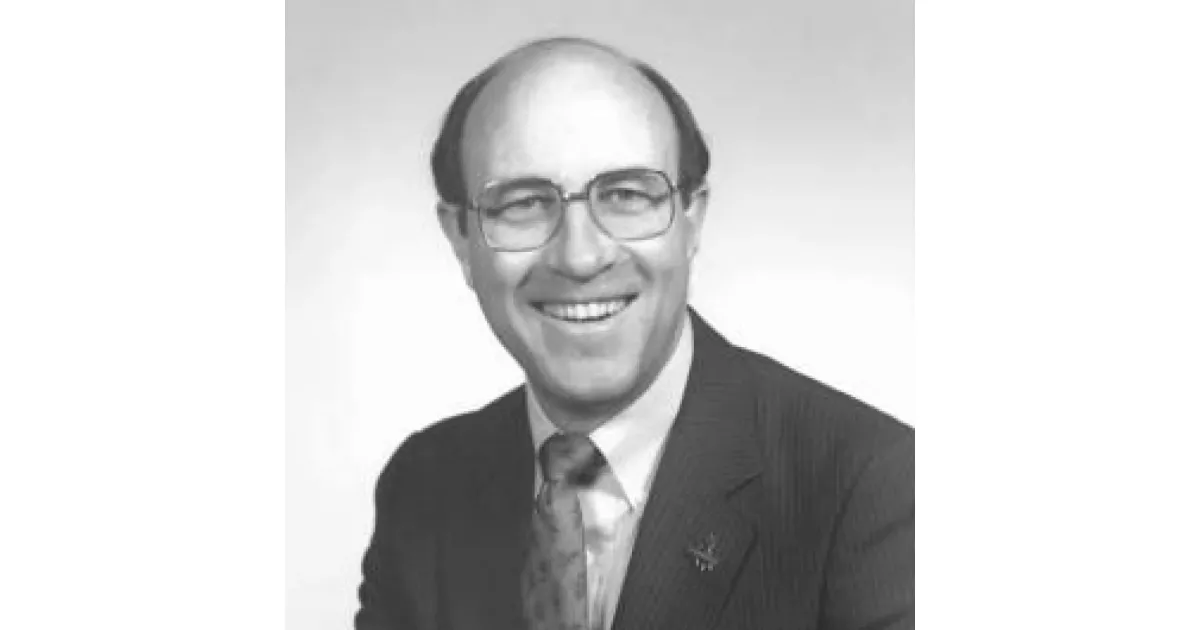
How Mike Sullivan (Wyoming politician) built a successful career. Explore key moments that defined the journey.
Michael John Sullivan is an American lawyer, diplomat, and politician notable for serving as the 29th Governor of Wyoming from 1987 to 1995. As a member of the Democratic Party, Sullivan also served as the United States Ambassador to Ireland from 1998 to 2001. Before becoming governor, he was involved in local politics in Natrona County, Wyoming. His career demonstrates a sustained commitment to public service at both the state and federal levels.
1968: Worked as an attorney
From 1968 to 1986, Sullivan worked as an attorney for Brown, Drew, Massey & Sullivan.


1974: Speculation as Attorney General Nominee
In 1974, Sullivan was speculated as a possible nominee for Wyoming's Attorney General by Governor-elect Edgar Herschler.
1977: Sullivan opposes non-therapeutic abortions at Natrona County Memorial Hospital
In 1977, during a vote by the Natrona County Memorial Hospital board, Sullivan voted against allowing non-therapeutic abortions in the hospital, resulting in a two-to-two tie. Bill Muller broke the tie by voting to allow non-therapeutic abortions.
1977: Natrona County Memorial Hospital prohibits tobacco sales
In 1977, the Natrona County Memorial Hospital board, with Sullivan voting in favor, unanimously voted to prohibit the sale of tobacco within the hospital premises.
January 16, 1986: Considered Running for Governor
On January 16, 1986, Sullivan announced that he was considering running for the Democratic gubernatorial nomination.
March 8, 1986: Sullivan Criticizes Reagan Administration at Democratic Convention
On March 8, 1986, Sullivan delivered the keynote address at the Natrona County Democratic convention. During this speech, he criticized the Reagan administration for its handling of fraud allegations against President Ferdinand Marcos during the 1986 Philippine presidential election and its support of military aid to the Contras during the Nicaraguan Revolution.
September 16, 1986: Sullivan opposes drug testing for state employees
On September 16, 1986, Sullivan announced that he would not mandate general drug testing for state employees.
January 1987: Sullivan Supports Reorganization of Department of Health and Social Service
In January 1987, during his state-of-the-state address, Governor Sullivan expressed his support for reorganizing the Department of Health and Social Service into four distinct departments. However, the proposed legislation, introduced by Senator Win Hickey, ultimately failed in committee.
January 21, 1987: Chairman of Economic Development and Stabilization Board
On January 21, 1987, Sullivan was selected to replace Dave Freudenthal as the chairman of the Economic Development and Stabilization Board.
1987: Sullivan Opposes Coal Tax Decrease and Proposes Tax Increases
In 1987, Sullivan opposed the Wyoming Legislature's vote to decrease the coal tax and proposed increasing taxation on alcohol, from 2¢ to 20¢ per gallon, and cigarettes, from 8¢ to 28¢ per pack.
1987: Sullivan Vetoes Rubella and Rh Factor Test Repeal
In 1987, Sullivan vetoed legislation that would have repealed a 1985 law mandating rubella tests and Rh factor tests for marriage licenses.
1987: Appointment of Nicholas Kalokathis and Joseph Meyer
In 1987, Sullivan's first judicial appointment was Nicholas Kalokathis to the First Judicial District. He also appointed Joseph Meyer as Attorney General in 1987.
May 6, 1988: Endorsed Michael Dukakis
On May 6, 1988, Sullivan endorsed Michael Dukakis during the Democratic presidential primaries, remaining neutral until this point.
1988: Appointment of Michael Golden
In 1988, Sullivan appointed Michael Golden to the Wyoming Supreme Court to replace Charles Stuart Brown.
1988: Elected to National Governors Association Executive Committee
In 1988, Sullivan was elected to the National Governors Association Executive Committee.
December 7, 1989: Citizens for Sullivan Registered
On December 7, 1989, Citizens for Sullivan was registered by Marilyn Lyle and Mark Gifford to allow campaign donations to be sent to Sullivan.
1989: Sullivan declares Martin Luther King Jr. Equality Day
In 1989, Governor Sullivan signed an executive order declaring that Martin Luther King Jr. Equality Day would be observed on January 15, 1990.
1989: Endorsed John Vinich
In 1989, Sullivan endorsed John Vinich in the special election for Wyoming's at-large congressional district.
1989: Established Trade Office in Taipei
In 1989, Sullivan established a trade office in the Taipei World Trade Center.
January 15, 1990: Martin Luther King Jr. Equality Day
On January 15, 1990, Martin Luther King Jr. Equality Day was observed in Wyoming, following an executive order signed by Sullivan in 1989.
May 1, 1990: Announcement of Reelection Campaign
On May 1, 1990, Sullivan announced his reelection campaign.
1990: National Organization for Women rates Sullivan as anti-choice
During the 1990 election, the National Organization for Women rated Sullivan as anti-choice due to his stance on abortion.
1991: Chair of Western Governors Association
In 1991, Sullivan succeeded South Dakota Governor George S. Mickelson as chair of the Western Governors Association.
1991: Organized Wyoming Chapter of Democratic Leadership Council
In 1991, a Wyoming chapter of the Democratic Leadership Council was organized, with Sullivan and Kathy Karpan as co-chairs.
January 22, 1992: Mark Hopkinson executed
On January 22, 1992, Mark Hopkinson was executed, becoming the first person executed in Wyoming since 1965, and the only person executed in Wyoming after Furman v. Georgia. Sullivan did not grant clemency to Hopkinson despite requests from various individuals and groups.
February 17, 1992: Sullivan vetoed redistricting legislation
On February 17, 1992, Governor Sullivan vetoed the redistricting legislation that had been approved by the state legislature, which reduced the state house from 64 members to 62 members, created 16 single-member and 23 two-member House districts, and had the entirety of the state senate elected from single-member districts.
1992: Appointment of William A. Taylor
In 1992, Sullivan appointed William A. Taylor to the Wyoming Supreme Court to replace Steve Urbigkit.
1992: Endorsed Bill Clinton
In 1992, Sullivan endorsed Clinton during the Democratic presidential primaries and co-chaired Clinton's campaign in Wyoming.
1992: Declined Presidency of Council of State Governments
In 1992, Sullivan was offered the presidency of the Council of State Governments but declined, stating, "I have enough outside activities".
1992: John Fanos criticizes Sullivan
In 1992, Wyoming Senate Democratic Minority Whip John Fanos criticized Sullivan for lacking the leadership skills to prevent budget cuts and promote tax increases.
1992: Cato Institute gives A grade to Sullivan
In 1992, the Cato Institute gave Sullivan an A grade of 75, which was ahead of every other state governor and only behind Massachusetts Governor Bill Weld's score of 85. This was due to Sullivan's handling of Wyoming's energy industry growth.
1993: Appealed to President Bill Clinton
In 1993, Sullivan appealed to President Bill Clinton to appoint a Wyomingite to the United States Court of Appeals for the Tenth Circuit.
March 15, 1994: Sullivan signs 1995-1996 budget
On March 15, 1994, Sullivan signed the 1995–1996 budget into law, but used his line-item veto against thirteen parts of the legislation.
April 11, 1994: Announced Senate Candidacy
On April 11, 1994, Sullivan announced that he would seek the Democratic nomination for the Senate election to succeed Republican Senator Malcolm Wallop.
1994: Sullivan Opposes Abortion Ban Initiative
During the 1994 elections, Sullivan opposed a ballot initiative that aimed to ban abortion in Wyoming, except in cases to save the mother's life or in instances of rape or incest, and proposed to punish physicians who perform abortions with up to fourteen years in prison.
1994: Appointment of Larry Lehman
In 1994, Sullivan appointed Larry Lehman to the Wyoming Supreme Court to replace G. Joseph Cardine.
1995: Sullivan signs 1995-1996 budget
In 1995, Sullivan signed the 1995-1996 budget into law.
1996: Sullivan opposes term limits in state legislature
During the 1996 election, Sullivan, along with fellow governors Clifford Hansen, Stanley K. Hathaway, and Jim Geringer, voiced his opposition to ballot proposals that sought to institute term limits in the state legislature.
1996: Sullivan signs 1995-1996 budget
In 1996, Sullivan signed the 1995-1996 budget into law.
June 10, 1998: Candidate for Ambassador to Ireland
On June 10, 1998, The Washington Post reported that Sullivan was the leading candidate for Ambassador to Ireland.
January 21, 1999: Presented Credentials to President of Ireland
On January 21, 1999, Sullivan presented his credentials to President of Ireland Mary McAleese.
June 20, 2001: End of Ambassadorship
On June 20, 2001, Sullivan's service as the United States Ambassador to Ireland came to an end.
February 28, 2008: Appointed to Hillary Clinton Steering Committee
On February 28, 2008, Sullivan was appointed onto a Wyoming steering committee for Hillary Clinton's campaign during the 2008 Democratic presidential primaries.
Mentioned in this timeline
Bill Clinton served as the nd U S President from...
Hillary Diane Rodham Clinton is a prominent American politician lawyer...
Martin Luther King Jr was a pivotal leader in the...
The United States of America is a federal republic primarily...
Massachusetts officially the Commonwealth of Massachusetts is a state located...
Martin Luther a German priest theologian and author was a...
Trending
4 hours ago Fed Official John Williams Debates Potential Interest Rate Adjustments for 2027
4 hours ago Apple Prepares to Debut New iPad Mini and Touchscreen MacBook in Late October
4 hours ago Caty McNally Stages Comeback Win Over Yuliia Starodubtseva at WTA Wuhan Open

4 hours ago Bleach Celebrates Anime Finale With New Apparel Collection and Special Nationwide Promotional Campaign

4 hours ago Dayana Yastremska Faces Iva Jovic at WTA Wuhan Open

5 hours ago Hugh Jackman's Cinematic Legacy and Humanitarian Efforts with Laughing Man Foundation
Popular

Ken Paxton is an American politician and lawyer serving as...

Ilhan Omar is a prominent American politician currently serving as...

Jameis Winston is an American football quarterback currently playing for...

Cristiano Ronaldo widely considered one of the greatest footballers captains...

Michael Joseph Jackson the King of Pop was a highly...
Kimberly Guilfoyle is an American television personality and former prosecutor...