History of National Hurricane Center in Timeline


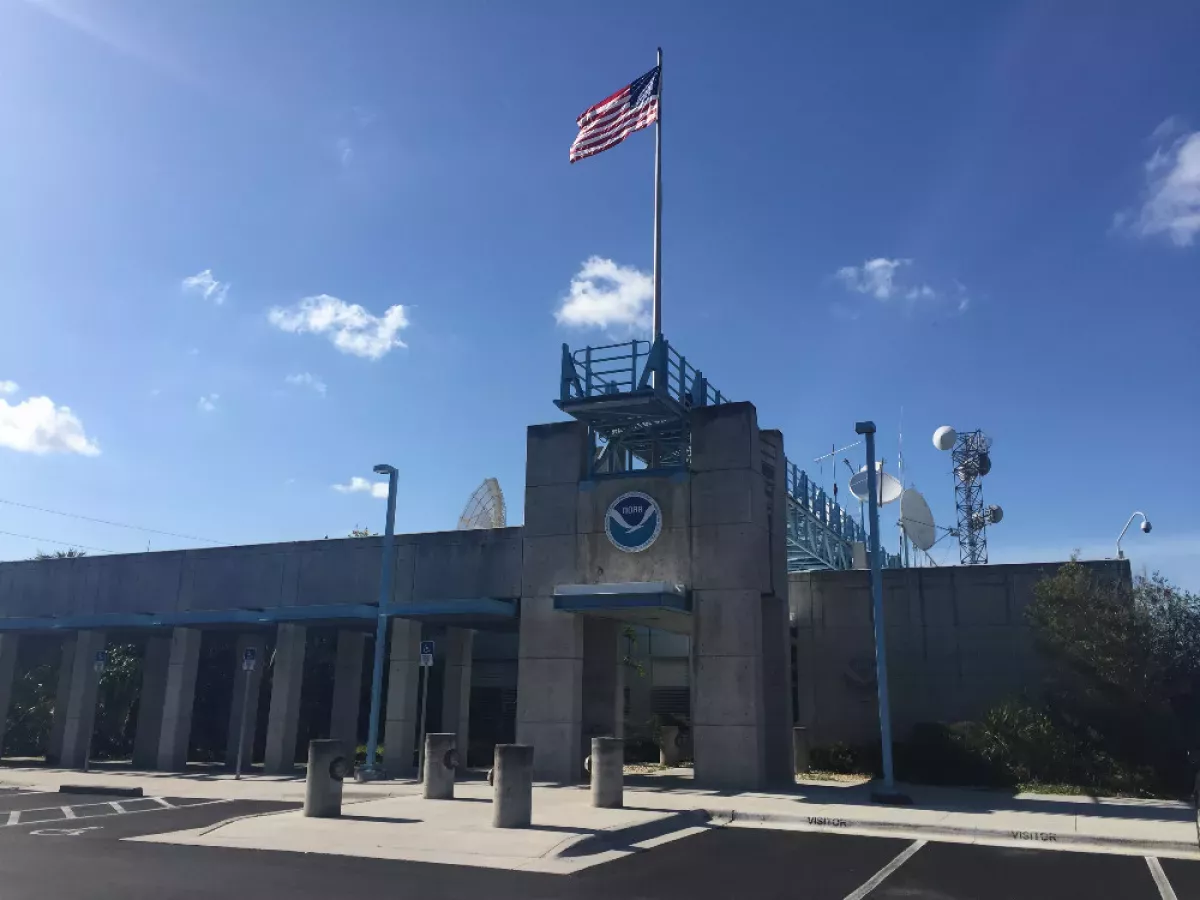
The National Hurricane Center (NHC), a division of the National Weather Service, is the primary agency responsible for tracking and predicting tropical weather systems in the Atlantic and East Pacific basins. Its core mission is to save lives and mitigate property damage by issuing timely watches, warnings, and forecasts for hurricanes, tropical storms, and cyclones. By utilizing advanced satellite imagery, reconnaissance aircraft, and sophisticated computer modeling, the NHC provides critical data to emergency management officials and the public. Based in Miami, Florida, the organization plays a vital role in disaster preparedness and public safety, maintaining constant surveillance throughout the hurricane season to ensure that coastal communities remain informed of potential threats from severe tropical weather events.
6 hours ago : National Hurricane Center Tracks Three Potential Disturbances in the Atlantic Basin
The National Hurricane Center is currently monitoring three atmospheric disturbances in the Atlantic. Forecasters indicate a high probability of development, with one system likely to strengthen into a tropical depression as meteorological conditions evolve throughout the week.


1902: Relocation of Hurricane Warning Operations to Washington, D.C.
In 1902, the administrative base for hurricane warning services was shifted to Washington, D.C., following a period where operations were managed by the United States Signal Corps and United States Weather Bureau in Jamaica and Cuba.
1935: Decentralization of Hurricane Forecasting
In 1935, the responsibility for issuing hurricane warnings and advisories was transferred from the central office in Washington to regional hurricane offices. During this same year, the Atlantic hurricane season was officially established, and regional offices began the practice of issuing hurricane advisories every six hours to better track tropical cyclones.
1947: Introduction of Atlantic Tropical Cyclone Naming
By 1947, the practice of naming Atlantic tropical cyclones was established, utilizing the Joint Army/Navy Phonetic Alphabet for identification purposes.
1950: Commencement of Annual Hurricane Season Summaries
Starting in 1950, the Miami Hurricane Warning Office took on the responsibility of preparing and publishing annual articles that summarized the hurricane season.
1953: Adoption of Human Names for Storms
During the 1953 Atlantic season, the United States Weather Bureau implemented a new naming protocol where storms reaching tropical storm intensity were assigned human names.
1954: Implementation of One-Day Hurricane Forecasts
In 1954, the agency initiated the practice of issuing hurricane advisory forecasts that extended one day into the future.
1958: Commencement of Atlantic Tropical Cyclone Reports
Starting in 1958, the agency began issuing comprehensive tropical cyclone reports for every storm occurring in the Atlantic Ocean basin, providing detailed synoptic history and meteorological data.
1961: Extension of Forecast Period to Two Days
During 1961, the forecasting capability for hurricane advisories was enhanced, allowing for projections to extend two days into the future.
1964: Advancement of Forecasting and Operational Changes
In 1964, the hurricane advisory forecast period was extended to three days, the Miami Hurricane Warning Office moved to the University of Miami campus, and hurricane reporting transitioned to its modern standardized format.
1965: Adoption of the NHC Designation
In 1965, the Miami Hurricane Warning Office began to be officially referred to as the National Hurricane Center (NHC).
1967: Creation of the Tropical Analysis and Forecast Branch
In 1967, the Tropical Analysis and Forecast Branch (TAFB) was officially established as a key division within the National Hurricane Center to provide specialized meteorological support for tropical regions.
1973: Expansion of National Meteorological Center Duties
In 1973, the National Meteorological Center took on the responsibility for tracking and providing public updates regarding inland tropical depressions.
1977: WMO Assumes Control of Hurricane Naming
The World Meteorological Organization officially took over the management and oversight of the Atlantic hurricane naming list in 1977.
1978: NHC Office Relocation
In 1978, the National Hurricane Center moved its operations from the University of Miami campus to a new facility located in the IRE Financial Building across U.S. Highway 1.
1979: Inclusion of Male Names in Hurricane Lists
Beginning with the 1979 hurricane season, the list of storm names was expanded to include male names for the first time.
1983: Continuity of Hurricane Warning Offices
Following the year 1983, the established hurricane warning offices continued to remain active and operational.
1984: NHC Administrative Separation
In 1984, the National Hurricane Center underwent an organizational change where it was separated from the Miami Weather Service Forecast Office, resulting in the hurricane center director no longer being supervised by the meteorologist in charge at the Miami office.
1987: Start of Lixion Avila's Tenure
In 1987, Lixion Avila began his career as a hurricane specialist at the National Hurricane Center, a role he held until his retirement in 2020.
1988: Assumption of Eastern Pacific Responsibilities
During 1988, the National Hurricane Center took over the responsibility for monitoring eastern Pacific tropical cyclones following the decommissioning of the Eastern Pacific Hurricane Center located in San Francisco.
1988: Expansion of Tropical Cyclone Reporting to Eastern Pacific
In 1988, the agency expanded its record-keeping process to include the issuance of tropical cyclone reports for all storms identified in the Eastern Pacific Ocean basin.
1992: Hurricane Andrew Damage
In 1992, Hurricane Andrew caused significant physical damage to the National Hurricane Center and the Miami State Weather Forecast offices by blowing the WSR-57 weather radar and the anemometer off the facility's roof.
April 1993: Installation of NEXRAD System
In April 1993, the damaged radar equipment was replaced by a WSR-88D NEXRAD system, which was installed near the Metro Zoo in the area where Hurricane Andrew had previously made landfall.
1995: Facility Relocation and Name Change to Tropical Prediction Center
In 1995, the National Hurricane Center moved into a new hurricane-resistant building located on the Florida International University campus, designed to endure wind speeds of up to 130 mph. During the same year, the organization underwent a rebranding, officially becoming known as the Tropical Prediction Center, which led to the reorganization of hurricane specialists into a distinct unit separate from the Tropical Analysis and Forecast Branch.
1995: NHC Designation Established
In 1995, the organization officially began being referred to as the National Hurricane Center (NHC), a designation it maintained while its Hurricane Specialist Unit meteorologists monitored Atlantic and Pacific weather patterns.
1999: Renaming of Preliminary Reports
As of 1999, the documentation formally referred to as Preliminary Reports was updated and rebranded as tropical cyclone reports to better reflect the agency's post-analysis process.
1999: Start of Stacy Stewart's Tenure
Stacy Stewart commenced his employment as a senior hurricane specialist at the National Hurricane Center in 1999, serving until his retirement in early 2022.
2001: Extension of Forecasts to Five Days
By 2001, the capacity for hurricane advisory forecasting had significantly improved, enabling meteorologists to issue predictions extending five days into the future.
2001: Establishment of the Joint Hurricane Testbed
In 2001, the Joint Hurricane Testbed (JHT) was established as a collaborative effort between NOAA and the United States Weather Research Program to transition research into practical tropical cyclone forecast operations. Since 2001, the program has successfully funded 62 initiatives.
2008: NHC Fiscal Year 2008 Budget and Staffing
During the 2008 fiscal year, the National Hurricane Center operated with a total budget of $6.8 million and maintained a staff of 66 personnel, which included a management team of 12 individuals.
October 1, 2010: Renaming of the Tropical Prediction Center to NHC
On October 1, 2010, the organization reverted to its former designation, as the Tropical Prediction Center was renamed the National Hurricane Center. Simultaneously, the internal division previously referred to as the NHC was formally redesignated as the Hurricane Specialist Unit.
2010: Conclusion of NHC Designation Period
The year 2010 marked the end of the specific period during which the agency was widely known by the NHC acronym, continuing its mission of forecasting tropical cyclone activity through the end of the year.
2013: Hydrometeorological Prediction Center Renaming
In 2013, the organization previously known as the National Meteorological Center underwent its second name change, officially becoming the Hydrometeorological Prediction Center.
2015: HFIP Numerical Prediction Goal
By 2015, the Hurricane Forecast Improvement Program aimed to achieve a 20 percent improvement in the numerical weather prediction models supplied to the National Hurricane Center by the National Centers for Environmental Prediction.
April 30, 2020: Retirement of Lixion Avila
On April 30, 2020, senior hurricane specialist Lixion Avila officially retired from the National Hurricane Center, concluding a tenure that began in 1987.
2020: HFIP Forecast and Intensity Goal
The Hurricane Forecast Improvement Program set a goal to reach a 50 percent improvement in tropical cyclone track forecasting and intensity guidance by the year 2020.
January 3, 2022: Retirement of Stacy Stewart
On January 3, 2022, the National Hurricane Center announced the retirement of senior hurricane specialist Stacy Stewart. Stewart, a veteran of the U.S. Navy reserves who was injured in Iraq, retired following medical complications from surgeries.
Mentioned in this timeline
Radar Radio Detection and Ranging is a detection system that...

San Francisco is the fourth-most populous city in California and...

Washington D C the capital of the United States is...
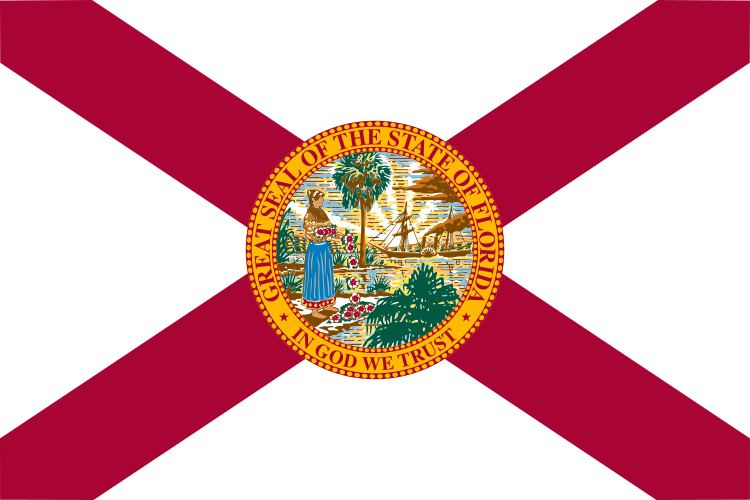
Florida the southernmost state in the contiguous United States is...

Miami is a major coastal city in Florida and the...
Weather radar also known as weather surveillance radar or Doppler...
Trending
4 hours ago Active Weather Patterns Bring Humid Conditions and Storm Chances Midweek
4 hours ago Inscription Fragments Reveal Severe Tax Fraud Penalties in Ancient Rome

4 hours ago Remembering Legacy of Iconic Actor and Comedian Robin Williams

2 days ago Donald Trump Joins Yasir Al-Rumayyan at LIV Golf New York Event

4 hours ago K-pop Influencer Mina Chan Dies at 26 Amidst ENHYPEN Ni-ki Controversy

5 hours ago Stock Markets Waver Amid Rising Iran Tensions and Spiking Oil Prices
Popular

Mario Armando Lavandeira Jr better known as Perez Hilton is...

Rand Paul is an American politician and the junior United...
Buc-ee's is an American chain of large country stores gas...

Ken Paxton is an American politician and lawyer serving as...

Marsha Blackburn is a prominent American politician serving as the...

Anthony Stephen Fauci is a prominent American physician-scientist and immunologist...