


North Korea, officially the Democratic People's Republic of Korea (DPRK), is located in East Asia, occupying the northern half of the Korean Peninsula. It shares borders with China and Russia to the north via the Yalu and Tumen rivers, and South Korea to the south at the Korean Demilitarized Zone (DMZ). The Yellow Sea forms its western border, while the Sea of Japan defines its eastern edge. Pyongyang serves as its capital and largest city.
7 hours ago : North Korea Fires Ballistic Missile Amid Upcoming US-South Korea Military Drills
North Korea has launched a ballistic missile into the sea, escalating tensions ahead of scheduled large-scale military exercises involving the United States and South Korea.


1910: Start of Japanese Rule
In 1910, Japanese rule began in Korea, leading to a cultural assimilation policy.
1919: March First Movement
In 1919, the March First Movement took place as Koreans protested against Japanese rule, leading to the formation of resistance groups in exile.
October 1945: Establishment of the Soviet Civil Administration
In October 1945, Soviet general Terentii Shtykov recommended the establishment of the Soviet Civil Administration in the northern part of the Korean peninsula.
1945: Division of the Korean Peninsula
After the peninsula was divided in 1945, two distinct cultures formed out of the common Korean heritage.
1945: End of Japanese Rule
In 1945, Japanese rule over Korea ended, but the peninsula was then divided.
1945: Division of Korea
In 1945, following Japan's surrender in World War II, Korea was divided into two zones along the 38th parallel. The north was occupied by the Soviet Union, and the south was occupied by the United States, setting the stage for future conflict and division.
February 1946: Kim Il Sung becomes chairman
In February 1946, Kim Il Sung was supported to become the chairman of the Provisional People's Committee of North Korea.
September 1946: Uprising against the Allied Military Government
In September 1946, South Korean citizens rose up against the Allied Military Government.
April 1948: Jeju islanders uprising
In April 1948, an uprising of the Jeju islanders was violently crushed.
May 1948: South Korea declares statehood
In May 1948, South Korea declared its statehood.
July 1948: Establishment of the Democratic People's Republic of Korea
On 10 July 1948, the Democratic People's Republic of Korea was established in the North.
1948: Adoption of Official Name
In 1948, North Korea adopted the official name Democratic People's Republic of Korea (DPRK).
1948: Soviet forces withdraw from North Korea
In 1948, Soviet forces withdrew from the North of Korea.
1948: Formation of Separate Governments
In 1948, separate governments were established in Korea. The Democratic People's Republic of Korea, aligned with the Soviet Union, was formed in the north, while the Republic of Korea, aligned with the West, was formed in the south, formalizing the division of the peninsula.
1949: American forces withdraw from South Korea
In 1949, most American forces withdrew from the South of Korea.
June 1950: North Korean Invasion of the South
On 25 June 1950, the military of North Korea invaded the South, marking the beginning of the Korean War.
1950: North Korean Invasion of South Korea
In 1950, the North Korean invasion of South Korea initiated the Korean War, a major conflict that would reshape the geopolitical landscape of the peninsula.
1950: Social Class Status
In 1950, the highest status was accorded to individuals descended from those who participated with Kim Il Sung in the resistance against Japanese occupation before and during World War II and to those who were factory workers, laborers, or peasants.
July 1953: Korean Armistice Agreement Signed
On 27 July 1953, fighting ended with an armistice that approximately restored the original boundaries between North and South Korea, though no peace treaty was signed.
1953: Korean Armistice Agreement
In 1953, the Korean Armistice Agreement led to a ceasefire and the establishment of a demilitarized zone (DMZ), officially halting the Korean War but not providing a peace treaty.
1955: Pronouncement of Juche
In 1955, Juche was pronounced in a speech called On Eliminating Dogmatism and Formalism and Establishing Juche in Ideological Work to emphasize a Korea-centered revolution.
1956: August Faction Incident
During the 1956 August faction incident, Kim Il Sung purged rival Soviet and Yan'an factions and resisted efforts by the Soviet Union and China to depose him.
1957: Industrial Production Returns to Pre-War Levels
By 1957, industrial production in North Korea returned to pre-war levels, indicating recovery efforts.
October 1958: Withdrawal of Chinese troops
In October 1958, the final withdrawal of Chinese troops from North Korea occurred. Many scholars consider this date to be the moment when North Korea became effectively independent.
1958: Kim Il Sung Speech on Social Classes
In 1958, Kim Il Sung stated that the loyal "core class" constituted 25% of the North Korean population, the "wavering class" 55%, and the "hostile class" 20%.
1959: Establishment of Mansudae Art Studio
In 1959, Mansudae Art Studio was established, becoming a major art production center.
1960: Shift to Intensive Development Stage
Around 1960, North Korea's economy shifted from an extensive to an intensive development stage, leading to systematic inefficiency due to shortages.
1964: First Olympics Appearance
In 1964, North Korea made its first appearance in the Olympics.
1968: Assassination attempt on South Korean leaders
In 1968, North Korea failed in an assassination attempt on South Korean leaders.
1971: Secret contacts begin
In 1971, secret, high-level contacts began to be conducted between the North and the South.
1971: Premiere of Sea of Blood
In 1971, the opera "Sea of Blood" premiered and became the most widely performed of the Five Great Operas.
1972: Introduction of Juche into the Constitution
In 1972, Juche was introduced into the constitution of North Korea.
1972: Agreement on Peaceful Reunification
In 1972, North and South Korea agreed in principle to achieve reunification through peaceful means and without foreign interference.
1972: July 4 South-North Joint Statement
In 1972, the July 4 South–North Joint Statement that established principles of working toward peaceful reunification was signed.
1972: Summer Olympics Debut
The 1972 Olympics saw North Korea's summer games debut and five medals, including one gold.
1973: South Korea declares preference for separate memberships
In 1973, South Korea declared its preference that the two Koreas should seek separate memberships in international organizations.
1973: Separation of State Security Ministry
In 1973, the Ministry of State Security was separated from the Ministry of Social Security to handle domestic and foreign intelligence, counterintelligence, and manage the political prison system.
1974: Assassination attempt on South Korean leaders
In 1974, North Korea failed in another assassination attempt on South Korean leaders.
1974: Abolishment of Taxes
In 1974, the payment of taxes was officially abolished in North Korea.
1976: Axe Murder Incident at Panmunjom
In 1976, tensions flared over the axe murder incident at Panmunjom.
1976: GDP per capita equal to South Korea
Until the 1960s, economic growth was higher than in South Korea, and North Korean GDP per capita was equal to that of its southern neighbor as late as 1976.
1978: Compulsory Language Studies
In 1978, the study of Russian and English was made compulsory in upper middle schools in North Korea.
1980: Kim Il Sung Proposes Federation
In 1980, Kim Il Sung proposed a federation between North and South Korea in which the respective political systems would initially remain.
1983: Rangoon Bombing
In 1983, North Korea failed in an assassination attempt on South Korean leaders with the Rangoon bombing.
1987: Economy begins to stagnate
By 1987, the North Korean economy had begun to stagnate, marking the start of a long decline.
December 1991: Dissolution of the Soviet Union
On 26 December 1991, the Soviet Union was dissolved, ending its aid and support to North Korea.
1991: UN Membership
In 1991, North Korea became a member of the United Nations, marking a step towards international engagement.
1991: North Korea Joins the United Nations
In 1991, North Korea joined the United Nations together with South Korea.
1991: Collapse After Dissolution of Soviet Union
In 1991, the North Korean economy almost completely collapsed after the dissolution of the Soviet Union, when all Soviet aid was suddenly halted.
1991: Fall of the Soviet Union
In 1991, the fall of the Soviet Union triggered a sharp decline in the North Korean economy due to the loss of crucial support and trade relationships.
1992: Kim Jong Il Begins Taking Over State Tasks
In 1992, as Kim Il Sung's health began deteriorating, his son Kim Jong Il slowly began taking over various state tasks.
December 1993: Failure of the Seven-Year Plan
In December 1993, North Korea declared its last seven-year plan unsuccessful and ceased announcing subsequent plans.
1994: North Korea Famine
From 1994, North Korea experienced a severe famine, resulting in widespread malnutrition and hardship for its population.
1994: Death of Kim Il Sung
In 1994, Kim Il Sung died of a heart attack, leading to a period of national mourning and the eventual succession of Kim Jong Il.
1994: Kim Jong Il Succeeds Kim Il Sung
In 1994, Kim Jong Il succeeded Kim Il Sung as the leader of North Korea.
1994: Agreed Framework Signed
In 1994, North Korea promised to halt its development of nuclear weapons under the Agreed Framework, which was subsequently rejected in 2002.
1995: Start of North Korean Famine
In 1995, the North Korean famine began, lasting for three years and resulting in the deaths of between 240,000 and 420,000 North Koreans.
1996: Government Accepts UN Food Aid
In 1996, the government accepted UN food aid, acknowledging the severity of the ongoing famine.
1997: International Food Shipments Initiated
In 1997, international donors led by the United States initiated shipments of food through the World Food Programme to combat the famine in North Korea.
1998: End of North Korean Famine
By 1998, North Korea's famine ended, although the population continued to grapple with the long-term impacts of malnutrition and economic instability.
1998: Number of Malnourished Children
In 1998, 60% of North Korean children were malnourished.
1998: Start of Structural Reforms
In 1998, the North Korean government began structural reforms, formally legalizing private ownership of assets and decentralizing control over production, in an attempt to recover from economic collapse.
1998: Institution of the Sunshine Policy
In 1998, the Sunshine Policy was instituted by South Korean president Kim Dae-jung, marking a watershed in inter-Korean relations.
2000: Improvement Due to International Food Assistance
By 2000, the situation in North Korea improved owing to a massive international food assistance effort, though the economy continued to suffer.
2000: Inter-Korean Summit
Following the 2000 inter-Korean summit, there was a decline in direct ideological messages in North Korean pop songs.
2000: Population Estimate
In 2000, demographic experts estimated that North Korea's population would grow to 25.5 million by 2000, but this increase never occurred due to the North Korean famine.
2001: George W. Bush Becomes U.S. President
In 2001, the international environment changed once George W. Bush became U.S. President, whose administration rejected South Korea's Sunshine Policy and the Agreed Framework.
2002: Axis of Evil
In 2002, Bush included North Korea in his axis of evil in his State of the Union Address.
2002: Increase in Mobile Phone Subscribers
In 2002, North Korea had 3,000 mobile phone subscribers.
2002: Second Round of Reforms
In 2002, North Korea implemented a second round of reforms, leading to an expansion of market activities, partial monetization, flexible prices and salaries, and the introduction of incentives and accountability techniques.
2002: Population Growth Rate
In 2002, the North Korean famine caused the population growth rate to decline to 0.9% annually.
2003: Access to Water and Sanitation
According to a 2003 report by the United States Department of State, almost 100% of the North Korean population had access to water and sanitation.
2003: United Nations Environmental Programme report on forest cover
In 2003, a United Nations Environmental Programme report indicated that forests covered over 70 percent of North Korea, mainly on steep slopes.
July 2004: Goguryeo Tombs Registered as UNESCO World Heritage Site
In July 2004, the Goguryeo tombs were registered as the first World Heritage property of North Korea in the UNESCO World Heritage Committee (WHC).
2004: South Korean Assessment of Chemical and Biological Weapons
According to a 2004 South Korean assessment, North Korea possesses a stockpile of chemical weapons and the ability to cultivate and produce biological weapons.
2004: Start of U.S. State Department Estimation of Military Spending
In 2004, the U.S. State Department started estimating that North Korea's military spending averaged 23% of its GDP from 2004 to 2014, the highest level in the world.
October 2006: First Nuclear Weapons Test
On 9 October 2006, North Korea announced it had conducted its first nuclear weapons test, escalating international tensions.
2007: Peace Agreement Signed
In 2007, South Korean president Roh Moo-hyun and Kim Jong Il signed an eight-point peace agreement.
2007: Decline in Lower Respiratory Infection Deaths
Since 2007, deaths attributed to lower respiratory infection in North Korea declined by six percent as of 2016.
2008: Literacy and Education Statistics
In 2008, a census reported that the entire North Korean population was literate. An 11-year free and compulsory education cycle was provided, and 77% of males and 79% of females aged 30–34 had completed secondary school.
2008: Child Mortality Rate
In 2008, the child mortality rate in North Korea was estimated to be 45 per 1,000 live births.
2009: Joining the Outer Space Treaty
In 2009, North Korea joined the Outer Space Treaty.
2009: North Korea Ends Agreements with South
In 2009, North Korea responded to a more hard-line approach from South Korea by ending all of its previous agreements with the South.
2009: Constitution Drops References to Communism
In 2009, the North Korean constitution dropped references to communism and elevated the Songun military first policy while explicitly confirming the position of Kim Jong Il.
2009: Government Attempts to Stem Free Market
In 2009, the North Korean government attempted to stem the expanding free market by banning jangmadang and the use of foreign currency, heavily devaluing the won and restricting the convertibility of savings in the old currency, but the resulting inflation spike and rare public protests caused a reversal of these policies.
2010: Military expenditure at 15.8 percent of the state budget
In 2010, North Korean state media reported that military expenditure amounted to 15.8 percent of the state budget.
2010: Population Estimate
In 2010, demographic experts estimated that North Korea's population would grow to 28 million by 2010, but this increase never occurred due to the North Korean famine.
2010: Increased Tensions with South Korea and the United States
In 2010, tensions with South Korea and the United States increased with the sinking of the South Korean warship Cheonan and North Korea's bombardment of Yeonpyeongdo.
2010: FIFA World Cup Appearance
In 2010, the North Korean national football team, Chollima, competed in the FIFA World Cup, losing all three matches against Brazil, Portugal, and Ivory Coast.
2010: "Sea of Blood" Tour in China
In 2010, the opera "Sea of Blood" toured in China and was a major success.
December 2011: Death of Kim Jong Il
On 17 December 2011, Kim Jong Il died from a heart attack, leading to the succession of his youngest son Kim Jong Un.
2011: Kim Jong Un Succeeds Kim Jong Il
In 2011, Kim Jong Un succeeded Kim Jong Il as the leader of North Korea.
December 2012: Launch of Kwangmyŏngsŏng-3 Unit 2
In December 2012, North Korea became the tenth spacefaring nation with the launch of Kwangmyŏngsŏng-3 Unit 2, which successfully reached orbit.
2012: Kim Un-guk World Record
At the 2012 Summer Olympics in London, weightlifter Kim Un-guk broke the world record in the Men's 62 kg category.
2012: Associated Press Bureau in Pyongyang
In 2012, The Associated Press opened the first Western all-format, full-time bureau in Pyongyang.
April 2013: Management of Space Program Change
In April 2013, the management of North Korea's national space program was changed from the Korean Committee of Space Technology to the National Aerospace Technology Administration.
December 2013: Dennis Rodman Visits North Korea
In December 2013, former American basketball professional Dennis Rodman visited North Korea to help train the national team after developing a friendship with Kim Jong Un.
2013: Mobile Phone Subscribers reach almost two million
By 2013, North Korea had almost two million mobile phone subscribers with cellular coverage using a 4G network operated by Koryolink and Kangsong NET.
2013: Approval of High-Speed Railway Construction
In 2013, North Korea approved the construction of a high-speed railway connecting Kaesong, Pyongyang and Sinuiju with speeds exceeding 200 kilometers per hour.
2013: Leading Cause of Death
In 2013, cardiovascular disease was reported as the largest single cause of death in North Korea.
2013: Situation Gradually Improved
In 2013, the number of malnourished children in North Korea declined from 60% in 1998 to 28%, and domestic food production almost recovered to the recommended annual level.
2014: UN Inquiry on Human Rights Violations
In 2014, a UN inquiry into North Korea's human rights record found evidence for "systematic, widespread and gross human rights violations", stating their severity had no parallel in the contemporary world.
2014: End of U.S. State Department Estimation of Military Spending
In 2014, the U.S. State Department estimated that North Korea's military spending averaged 23% of its GDP from 2004 to 2014, the highest level in the world.
2014: Moranbong Band Popularity
In 2014, the all-girl Moranbong Band was described as the most popular musical group in North Korea.
2014: North Korea Rejects Human Rights Abuse Claims
In a 2014 report to the UN, North Korea dismissed accusations of atrocities as wild rumors, rejecting human rights abuse claims and calling them a smear campaign.
2015: Diplomatic Relations with 166 Countries
As of 2015, North Korea had diplomatic relations with 166 countries and embassies in 47 countries.
2015: Access to Sanitation Facilities
By 2015, 80% of the population in North Korea had access to improved sanitation facilities.
2016: Mortality Report
According to the World Bank report of 2016 (based on WHO's estimate), only 9.5% of the total deaths recorded in North Korea are attributed to communicable diseases and maternal, prenatal and nutrition conditions, a figure which is slightly lower than that of South Korea (10.1%) and one fifth of other low-income countries (50.1%) but higher than that of high income countries (6.7%).
2016: Kim Jong Un Appointed SAC President
In 2016, Kim Jong Un was appointed as the SAC president.
2017: Election of Moon Jae-in
In 2017, Moon Jae-in was elected president of South Korea with a promise to return to the Sunshine Policy.
2017: Strained Relations with Malaysia
In 2017, relations between North Korea and Malaysia were strained due to the assassination of Kim Jong-nam.
2017: Worsening Relations with the United States
Throughout 2017, following Donald Trump's ascension to the US presidency, relations between the United States and North Korea worsened, leading to heightened tensions.
2018: Détente at the Winter Olympics
In 2018, a détente developed at the Winter Olympics held in South Korea, and the South Korean president Moon Jae-in and Kim Jong Un met at the DMZ.
2018: Détente with South Korea and the United States
In 2018, tensions substantially decreased, and a détente developed with South Korea and the United States, leading to a series of summits.
2018: North Korea Ranked Highest in Modern Slavery
In 2018, the Walk Free's Global Slavery Index ranked North Korea highest in the world in terms of the percentage of population in modern slavery, with 10.4 percent enslaved.
2019: Choe Ryong-hae Heads the Standing Committee
In 2019, Choe Ryong-hae became the chairman of the Standing Committee, making him the second-ranked official in North Korea.
2019: Life Expectancy
In 2019, North Korea had a life expectancy of 72.3 years, according to HDR 2020.
2019: Forest Landscape Integrity Index Ranking
In 2019, North Korea's Forest Landscape Integrity Index mean score was 8.02/10, ranking it 28th globally out of 172 countries.
2019: Constitutional Amendment and Re-election of Kim Jong Un
In 2019, a constitutional amendment conferred authority to the SAC president to promulgate laws and ordinances of the SPA, appoint or recall diplomatic representatives, and Kim Jong Un was re-elected as "the supreme representative of all the Korean people and supreme leader of the country".
2020: Life Expectancy Reported
According to HDR 2020, North Korea's life expectancy in 2019 was 72.3 years.
2020: Religious Demographics Study
In 2020, a study by the Centre for the Study of World Christianity indicated that 73% of North Korea's population is irreligious, with 13% practicing Chondoism, 12% practicing Korean shamanism, 1.5% identifying as Buddhist, and less than 0.5% practicing other religions.
2021: WPK Reasserts Commitment to Communism
In 2021, the WPK (Workers' Party of Korea) reasserted its commitment to communism.
2022: North Korea Supports Russian Invasion of Ukraine
In 2022, North Korea voiced support for the Russian invasion of Ukraine.
December 2023: Kim Jong Un departs from position of mutual claims
On 30 December 2023, Kim Jong Un marked a significant departure from the longstanding position of mutual claims over the entire Korean Peninsula by both North and South Korea.
June 2024: Estimate of Nuclear Warheads
As of June 2024, North Korea was estimated to possess 50 nuclear warheads.
December 2024: Pak Thae-song Heads the Cabinet
Since December 29, 2024, Pak Thae-song has headed the Cabinet of North Korea as premier.
2024: Abandonment of claim to entire Korean Peninsula
In 2024, North Korea abandoned its historical claim to be the legitimate government of the entire Korean Peninsula and adjacent islands.
2024: Defense Agreement with Russia
2024: North Korea Abandons Reunification
In 2024, North Korea officially announced that it would no longer seek reunification with South Korea, identifying the country as a 'hostile state'.
2024: Gross National Income per Capita
In 2024, North Korea's gross national income per capita was $1,261, compared to $36,760 in South Korea.
2024: DPRK abandons reunification efforts
In 2024, the DPRK formally abandoned efforts to reunify Korea, marking a significant shift in its long-standing policy.
2024: Population Growth Rate
In 2024, the North Korean population growth rate was 0.4%.
2025: World Press Freedom Index Ranking
In 2025, North Korea ranked 179th out of 180 countries in Reporters Without Borders' annual World Press Freedom Index.
2044: Objective for Renewable Energy Output
North Korea's long-term objective is to curb fossil fuel usage and reach an output of 5 million kilowatts from renewable sources by 2044, up from its current total of 430,000 kilowatts from all sources.
Mentioned in this timeline

Basketball is a team sport played on a rectangular court...

Donald John Trump is an American politician media personality and...
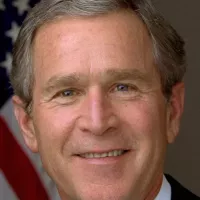
George W Bush the rd U S President - is...

Dennis Rodman nicknamed the Worm is a retired American professional...
Sony is a Japanese multinational conglomerate based in Tokyo It...
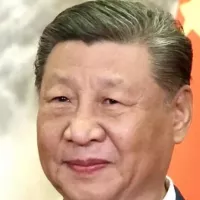
Xi Jinping is the paramount leader of China holding the...
Trending

5 hours ago Netflix Documentary Reveals New Insights Into Jose Mourinho's Controversial Career And Personality

6 hours ago Actor Aaron Pierre Discusses Career Projects and Personal Life Updates

6 hours ago Update on Sports Figures, Academic Leadership Activities, and Death of Jorge Messi
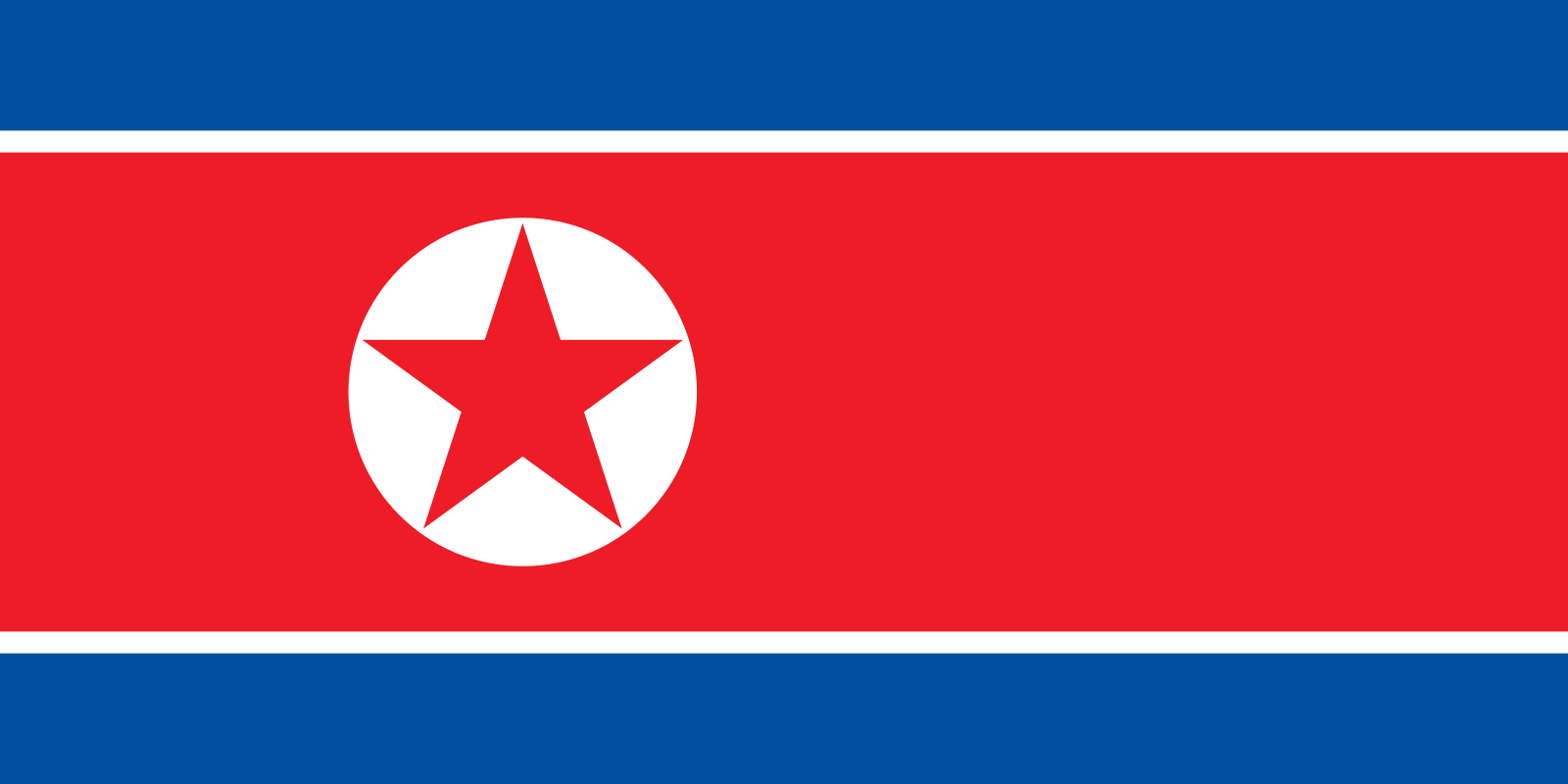
7 hours ago North Korea Fires Ballistic Missile Amid Upcoming US-South Korea Military Drills

7 hours ago Ilhan Omar Secures Democratic Nomination for Minnesota's Fifth Congressional District Primary

7 hours ago Elle Fanning Stars in New Apple TV Series Margo a des problèmes d’argent
Popular

Mario Armando Lavandeira Jr better known as Perez Hilton is...

Rand Paul is an American politician and the junior United...
Buc-ee's is an American chain of large country stores gas...

Ken Paxton is an American politician and lawyer serving as...
Anthony Stephen Fauci is a prominent American physician-scientist and immunologist...

Marsha Blackburn is a prominent American politician serving as the...