


The Ohio-class submarine is the largest submarine ever built for the US Navy, displacing 18,750 tons submerged. There are 18 total, with 14 configured as ballistic missile submarines (SSBNs) capable of carrying 24 Trident II missiles and 4 configured as cruise missile submarines (SSGNs) carrying 22 tubes with 7 Tomahawk cruise missiles apiece. It is the third-largest submarine ever constructed, behind the retired Soviet-era Typhoon class and the Borei class.


November 2002: Ohio Enters Dry-Dock
In November 2002, the Ohio submarine entered a dry-dock, beginning her 36-month refueling and missile-conversion overhaul.
2003: SSGN Conversion Advance Procurement Funding
In fiscal year 2003, $825 million was budgeted for advance procurement for the SSGN conversion program.
2004: SSGN Conversion Advance Procurement Funding
In fiscal year 2004, $936 million was budgeted for advance procurement for the SSGN conversion program.
2005: SSGN Conversion Advance Procurement Funding
In fiscal year 2005, $505 million was budgeted for advance procurement for the SSGN conversion program.
February 2006: Ohio Rejoined Fleet
In February 2006, the converted Ohio submarine rejoined the fleet.
April 2006: Florida Rejoined Fleet
In April 2006, the converted Florida submarine rejoined the fleet.
November 2006: Michigan Delivered
In November 2006, the converted Michigan submarine was delivered.
2006: SSGN Conversion Advance Procurement Funding
In fiscal year 2006, $170 million was budgeted for advance procurement for the SSGN conversion program.
October 2007: Ohio Goes to Sea
In October 2007, the converted Ohio submarine went to sea for the first time.
March 2008: Georgia Returned to Fleet
In March 2008, the Georgia submarine returned to the fleet at Kings Bay.
2008: Conversion to D5 Missiles Completed
In mid-2008, the Navy completed the conversion of its remaining ballistic missile submarines armed with C4 missiles to carry D5 missiles.
2011: Deterrent Patrols
In 2011, Ohio-class submarines carried out 28 deterrent patrols.
June 2014: Longest Patrol
From January to June 2014, the Pennsylvania submarine carried out a 140-day-long patrol, the longest to date.
2014: Scheduled Design Phase
By 2014, the new vessel for the Ohio-class replacement was scheduled to enter the design phase.
December 2016: Columbia Class Designation
On 14 December 2016, the Columbia class was officially designated by Secretary of the Navy Ray Mabus, and the lead submarine will be USS District of Columbia (SSBN-826).
2016: Initiation Deadline
If a new hull design was to be used for the Ohio-class replacement, the program needed to be initiated by 2016 to meet the 2029 deadline.
2017: Deactivation of Missile Tubes
In 2017, as part of the New START treaty, four missile tubes on each SSBN were deactivated, reducing the number of missiles to 20 per boat.
2023: Expected End of Service for SSGNs
The four SSGNs are expected to remain in service until about 2023–2026, after which their capabilities will be replaced with Virginia Payload Module-equipped Virginia-class submarines.
2026: Expected End of Service for SSGNs
The four SSGNs are expected to remain in service until about 2023–2026, after which their capabilities will be replaced with Virginia Payload Module-equipped Virginia-class submarines.
2029: Expected Retirement of First Ohio-class SSBN
In 2029, the first of the current Ohio-class SSBNs was expected to be retired, necessitating a replacement submarine to be seaworthy by that time.
2029: Target Service Date
The target service date for the Ohio-class replacement program was set for 2029.
2031: Columbia Class Submarine Introduction
In 2031, the Columbia class is scheduled to begin gradually replacing the Ohio class submarines.
2031: Expected Service Entry
The Navy wants to procure the first Columbia-class boat in FY2021, though it is not expected to enter service until 2031.
Mentioned in this timeline
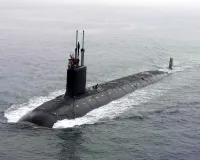
Submarine is a coming-of-age comedy-drama directed by Richard Ayoade based...

The rapid advancement of artificial intelligence continues to dominate the...
Florida the southernmost state in the contiguous United States is...
Pennsylvania is a U S state located in the Mid-Atlantic...
Michigan is a state in the Great Lakes region of...
Virginia a state in the Southeastern and Mid-Atlantic regions of...
Trending

Boxing is a combat sport and martial art contested in a ring Two participants typically wearing protective gear like gloves...

3 hours ago Ben Simmons Set to Make Highly Anticipated Kings Debut Against Golden State Warriors

3 hours ago Michael Douglas Defends Nepo Baby Label on Real Time with Bill Maher
3 hours ago Sherrod Brown Campaigns on Datacenter Regulation in Tightening Ohio Senate Election Race

3 hours ago Kalshi Offers $55 Bonus Promo Codes for Major College Football and Sports Betting Events

3 hours ago Bron Breakker Hailed as Unpredictable Force Ahead of WWE Money in the Bank Event
Popular

Ken Paxton is an American politician and lawyer serving as...

Cristiano Ronaldo widely considered one of the greatest footballers captains...

Michael Joseph Jackson the King of Pop was a highly...

Elon Musk is a visionary entrepreneur and engineer known for...

Shakira Isabel Mebarak Ripoll the Queen of Latin Music is...

Bernie Sanders is a prominent American politician and the senior...