History of Pablo Escobar in Timeline


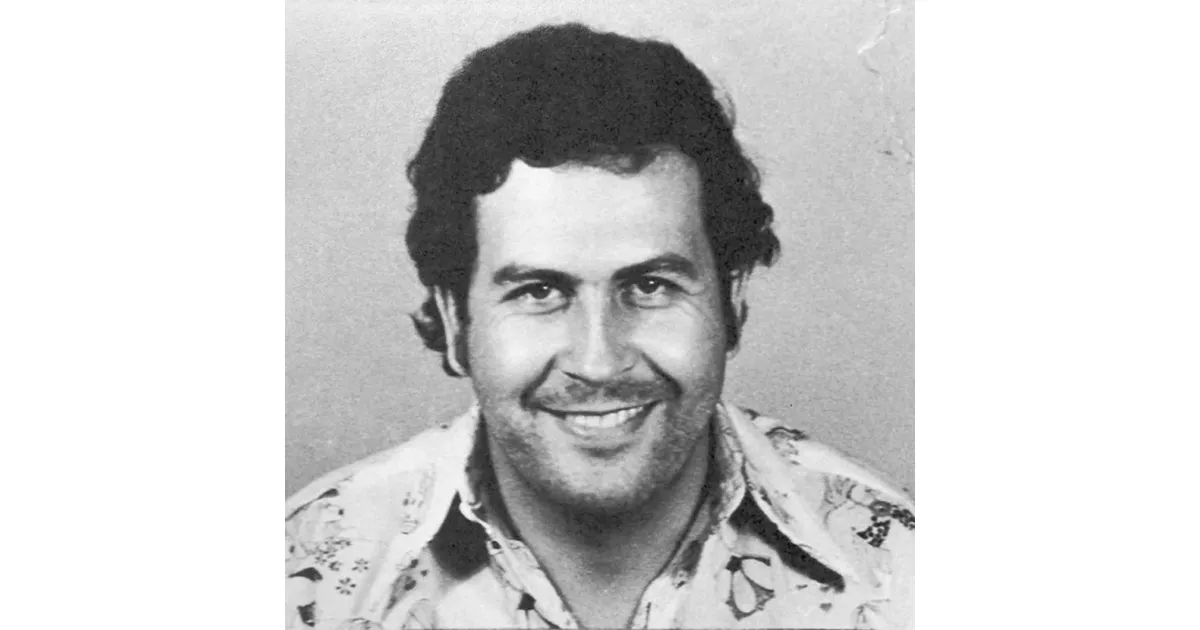
Pablo Escobar was a Colombian drug lord and the leader of the Medellín Cartel. Known as the "King of Cocaine," he amassed a vast fortune, estimated at $30 billion, by monopolizing the cocaine trade into the United States during the 1980s and early 1990s. His cartel's operations involved widespread violence and corruption, making him a notorious figure in history.
6 hours ago : Pablo Escobar's Son, Hippos, and a Tycoon's Offer: The Drug Lord's Lingering Impact
The life of Pablo Escobar's son, Sebastián Marroquín, is examined alongside the controversy surrounding Escobar's hippos. An Indian tycoon offered refuge for the hippos, as Colombians debate their fate.


December 1949: Birth of Pablo Escobar
In December 1949, Pablo Emilio Escobar Gaviria was born in Rionegro, Antioquia Department, Colombia, into a family of Spanish origin with Basque roots. He was the third of seven children and grew up in poverty in Medellín.
December 1949: Pablo Escobar's Birth
In December 1949, Pablo Emilio Escobar Gaviria was born. He later became a notorious Colombian drug lord, narcoterrorist, politician, and the founder and leader of the Medellín Cartel.
1966: Escobar Drops Out of High School
In 1966, Pablo Escobar dropped out of high school shortly before his 17th birthday, before returning two years later with his cousin Gustavo Gaviria.
1971: Kidnapping of Diego Echavarria
In the summer of 1971, Pablo Escobar's gang kidnapped businessman Diego Echavarria and eventually killed him after receiving a $50,000 ransom from the Echavarria family. This incident made Escobar's gang well known for kidnapping.
March 1976: Escobar's Marriage to María Victoria Henao
In March 1976, 26-year-old Pablo Escobar married 15-year-old María Victoria Henao. The relationship was initially discouraged by the Henao family, but the pair eloped.
May 1976: Escobar's Arrest in Ecuador
In May 1976, Pablo Escobar was arrested in Ecuador on his return from drug trafficking. Agents found 39 kg of cocaine hidden in his car's spare tire, though he later bribed a judge to secure his release.
1976: Founding of the Medellín Cartel
In 1976, Pablo Escobar founded the Medellín Cartel, a powerful drug trafficking organization. The cartel established the first smuggling routes from Peru, Bolivia, and Ecuador, through Colombia, and eventually into the United States, distributing powder cocaine.
1976: Investigation of Escobar's Arrest
In 1976, Rodrigo Lara-Bonilla's subordinates investigated Pablo Escobar's arrest. Lara-Bonilla later became a strong opponent of Escobar.
April 1978: Meeting of Drug Lords
In April 1978, Pablo Escobar met several drug lords on a farm, leading to the expansion of the Medellín Cartel. By the end of the year, they had transported approximately 19,000 kilograms of cocaine to the United States.
1978: Development of Norman's Cay
In 1978, Pablo Escobar and Carlos Lehder began developing Norman's Cay in the Bahamas as a trans-shipment point for the Medellín Cartel, purchasing land to construct an airstrip, harbor, hotel, and a refrigerated warehouse to store cocaine.
1982: Escobar Enters Politics and is Elected to Colombian Congress
In 1982, Pablo Escobar entered politics and was elected to the Colombian Congress. He was an alternate, automatically granted parliamentary immunity and a diplomatic passport. Simultaneously, he became known as the "Paisa Robin Hood" due to his charitable work.
1982: Purchase of Hacienda Nápoles
In 1982, Pablo Escobar purchased 20 square kilometers of land in Antioquia to build the Hacienda Nápoles, a luxurious estate featuring a zoo, a lake, a sculpture garden, and a private bullring.
1982: Escobar elected to Chamber of Representatives
In 1982, Pablo Escobar was elected as an alternate member of the Chamber of Representatives in the Colombian parliamentary election as part of the Liberal Party. This role allowed him to initiate community projects but also made him a target for government opposition.
January 1984: Escobar Announces Retirement from Politics
In January 1984, after being expelled from the Liberal Party, Pablo Escobar announced his retirement from politics, although this did not end his involvement in criminal activities.
1984: Assassination of Rodrigo Lara
In 1984, Rodrigo Lara, Colombia's justice minister, was assassinated. Sebastián Marroquín sought forgiveness from Lara's sons in the documentary "Sins of My Father".
November 1985: Escobar Requests Conditional Surrender
In the fall of November 1985, Pablo Escobar requested the Colombian government to allow his conditional surrender without extradition to the United States. The proposal was rejected and Escobar subsequently supported the Los Extraditable Organization, which fought against the extradition policy.
1986: Colombia's Supreme Court Declares Extradition Treaty Illegal
In late 1986, Colombia's Supreme Court declared the previous extradition treaty illegal because it had been signed by a presidential delegation and not the president. This was a short-lived victory for Escobar, as the new president quickly renewed the agreement with the United States.
1988: Car Bombing of Edificio Mónaco
In 1988, the Edificio Mónaco, built for Escobar's wife, was gutted by a Cali Cartel car bomb and remained unoccupied until it was demolished in 2019.
August 1989: Assassination of Luis Carlos Galán
On August 18, 1989, Luis Carlos Galán was assassinated on Pablo Escobar's orders. Escobar also planted a bomb on Avianca Flight 203 in an attempt to assassinate Galán's successor, César Gaviria Trujillo, resulting in the deaths of all 107 people on board.
1989: Assassination of Luis Carlos Galán
In 1989, presidential candidate Luis Carlos Galán was assassinated. Sebastián Marroquín sought forgiveness from Galán's sons in the documentary "Sins of My Father".
1991: Escobar Surrenders to Authorities
In 1991, Pablo Escobar surrendered to Colombian authorities after negotiating a deal for a reduced sentence and preferential treatment during captivity. The extradition of Colombian citizens to the United States was prohibited by the newly approved Colombian Constitution of 1991.
July 1992: Escobar Escapes from La Catedral
On July 22, 1992, Pablo Escobar escaped from his luxurious private prison, La Catedral, after the government attempted to move him to a more conventional jail due to reports of his continued criminal activities.
1992: Escobar Escapes From Prison
In 1992, Pablo Escobar escaped from La Catedral when authorities attempted to move him to a standard holding facility, leading to a nationwide manhunt and the eventual crumbling of the Medellín Cartel.
December 1993: Pablo Escobar's Death
In December 1993, Pablo Escobar, the notorious Colombian drug lord, died, marking the end of his reign as the "King of Cocaine" and the Medellín Cartel's dominance.
December 1993: Death of Pablo Escobar in Medellín
On December 2, 1993, Pablo Escobar was killed in Medellín by Colombian special forces, who were using technology provided by the United States to track him down after he made a call to his family. He was shot while trying to escape from the roof.
1993: Death of Pablo Escobar
In 1993, Pablo Escobar was killed in his hometown by the Colombian National Police, one day after his 44th birthday, marking the end of his reign and the downfall of the Medellín Cartel.
1995: Family Flees Colombia
In 1995, Escobar's widow, son, and daughter fled Colombia due to safety concerns. The Cali Cartel spared them, due to Maria's demonstrated loyalty to Pablo.
July 2006: Virginia Vallejo Offers Testimony
On July 4, 2006, Virginia Vallejo, who had a romantic relationship with Escobar from 1983 to 1987, offered her testimony to Attorney General Mario Iguarán in the trial against former Senator Alberto Santofimio, accused of conspiracy in the 1989 assassination of Luis Carlos Galán.
October 2006: Exhumation of Escobar's Body
On October 28, 2006, Escobar's body was exhumed to confirm paternity and remove doubts about the body's identity, leading to controversy and accusations of exploitation by relatives.
2007: Hippo Population Growth
By 2007, the hippos at Hacienda Nápoles had multiplied to 16 and were roaming the Magdalena River in search of food.
2007: Publication of "Amando a Pablo, odiando a Escobar"
In 2007, Virginia Vallejo published her memoir "Amando a Pablo, odiando a Escobar" (Loving Pablo, Hating Escobar), detailing her relationship with Escobar and his connections to various politicians and dictators.

2007: Announcement of Escobar Films
In 2007, two major feature films on Escobar, Escobar and Killing Pablo, were announced.
2009: Release of Argentinian filmmaker Nicolas Entel's documentary Sins of My Father
In 2009, Argentinian filmmaker Nicolas Entel released the documentary Sins of My Father chronicles Marroquín's efforts to seek forgiveness, on behalf of his father, from the sons of Rodrigo Lara, Colombia's justice minister who was assassinated in 1984, as well as from the sons of Luis Carlos Galán, the presidential candidate who was assassinated in 1989.
2009: Hippo Escape and Killing
In 2009, some hippos escaped, leading to attacks on humans and cattle; one adult hippo ("Pepe") was killed by hunters under authorization of the local authorities.
2009: Release of the movie Escobar
In 2009, the movie Escobar was released.
October 2010: Sins of My Father Premieres on HBO
In October 2010, Nicolas Entel's documentary "Sins of My Father", chronicling Sebastián Marroquín's efforts to seek forgiveness for his father's actions, premiered in the U.S. on HBO.
August 2011: Santofimio Sentenced
In August 2011, Santofimio was sentenced to 24 years in prison for his involvement in Galán's assassination.
2011: Release of the movie Killing Pablo
In 2011, the movie Killing Pablo was released.
2014: Hippo Population Increase
As of early 2014, approximately 40 hippos were reported to exist in Puerto Triunfo, Antioquia Department, descended from Escobar's original four.
2014: Purchase by Christian de Berdouare
In 2014, Christian de Berdouare, proprietor of the Chicken Kitchen fast-food chain, bought the dilapidated Miami Beach mansion that was previously owned by Pablo Escobar.
2014: Publication of Pablo Escobar, My Father
In 2014, Sebastián Marroquín published the book "Pablo Escobar, My Father", providing a firsthand account of his father's life and its impact on their family. He hoped to resolve inaccuracies regarding Escobar's excursions during the 1990s.
2016: Hippo Population Expected to Double
As of 2016, the hippo population, without management, is likely to more than double in the next decade.
2017: Release of the movie Loving Pablo
In 2017, the movie Loving Pablo was released, inspired by Virginia Vallejo's memoir "Amando a Pablo, odiando a Escobar".
June 2018: Accusation of Money Laundering
On June 5, 2018, María Isabel Santos Caballero (formerly María Henao) and her son, Sebastián Marroquín Santos, were accused by Argentine federal judge Nestor Barral of money laundering with two Colombian drug traffickers, leading to the seizing of assets.
2018: National Geographic article on the hippos
In 2018, National Geographic published an article on the hippos which found disagreement among environmentalists on whether they were having a positive or negative impact but that conservationists and locals – particularly those in the tourism industry – were mostly in support of their continued presence.
February 2019: Demolition of Edificio Mónaco
On February 22, 2019, Medellín authorities demolished the Edificio Mónaco, a former apartment complex of Escobar, to honor cartel victims and showcase the city's evolution.
October 2021: Government Sterilization Program
By October 2021, the Colombian government had initiated a program of chemically sterilizing the hippos.
Mentioned in this timeline

Home Box Office HBO is an American pay television service...
The United States of America is a federal republic of...
California is a U S state on the Pacific Coast...
Colombia is a country in South America with insular regions...
Florida located in the southeastern United States is a peninsula...
Virginia a state in the Southeastern and Mid-Atlantic regions of...
Trending

2 hours ago Alex de Minaur Competes in Italian Open Against Matteo Arnaldi: Odds and Preview
3 hours ago North Korea Threatens Seoul with New Artillery; Kim Inspects Weapons.
3 hours ago Aaron Rodgers to visit Steelers, potential to play for them in 2026.
5 hours ago Jennifer Meyer, 49, Expecting Third Child with Billionaire Heir; Feels Awesome
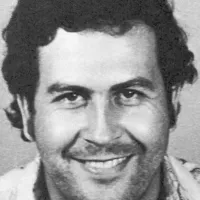
6 hours ago Pablo Escobar's Son, Hippos, and a Tycoon's Offer: The Drug Lord's Lingering Impact
6 hours ago Zelenskyy Responds to Russian Threats Amid Escalating Conflict and Victory Day Concerns.
Popular
Ted Turner is an American entrepreneur and media mogul best...

Michael Joseph Jackson the King of Pop was a highly...
Graham Cunningham Platner is an American oyster farmer and Marine...
Rudy Giuliani is an American politician and disbarred lawyer best...
Elizabeth Warren is a prominent American politician currently serving as...
William Franklin Graham III known as Franklin Graham is an...