How Pablo Escobar Shaped the Future: A Legacy Timeline


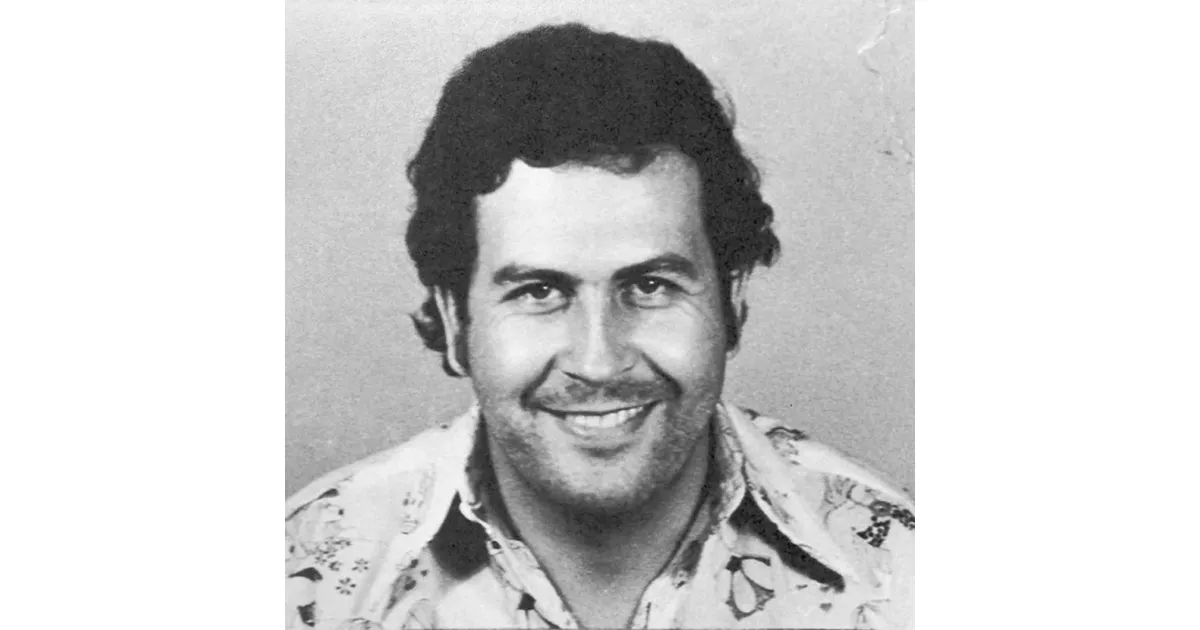
A detailed timeline of the impact and legacy of Pablo Escobar across different fields.
Pablo Escobar was a Colombian drug lord and the leader of the Medellín Cartel. Known as the "King of Cocaine," he amassed a vast fortune, estimated at $30 billion, by monopolizing the cocaine trade into the United States during the 1980s and early 1990s. His cartel's operations involved widespread violence and corruption, making him a notorious figure in history.
July 2006: Virginia Vallejo Offers Testimony
On July 4, 2006, Virginia Vallejo, who had a romantic relationship with Escobar from 1983 to 1987, offered her testimony to Attorney General Mario Iguarán in the trial against former Senator Alberto Santofimio, accused of conspiracy in the 1989 assassination of Luis Carlos Galán.


2007: Hippo Population Growth
By 2007, the hippos at Hacienda Nápoles had multiplied to 16 and were roaming the Magdalena River in search of food.
2007: Publication of "Amando a Pablo, odiando a Escobar"
In 2007, Virginia Vallejo published her memoir "Amando a Pablo, odiando a Escobar" (Loving Pablo, Hating Escobar), detailing her relationship with Escobar and his connections to various politicians and dictators.

2007: Announcement of Escobar Films
In 2007, two major feature films on Escobar, Escobar and Killing Pablo, were announced.
2009: Release of Argentinian filmmaker Nicolas Entel's documentary Sins of My Father
In 2009, Argentinian filmmaker Nicolas Entel released the documentary Sins of My Father chronicles Marroquín's efforts to seek forgiveness, on behalf of his father, from the sons of Rodrigo Lara, Colombia's justice minister who was assassinated in 1984, as well as from the sons of Luis Carlos Galán, the presidential candidate who was assassinated in 1989.
2009: Hippo Escape and Killing
In 2009, some hippos escaped, leading to attacks on humans and cattle; one adult hippo ("Pepe") was killed by hunters under authorization of the local authorities.
2009: Release of the movie Escobar
In 2009, the movie Escobar was released.
October 2010: Sins of My Father Premieres on HBO
In October 2010, Nicolas Entel's documentary "Sins of My Father", chronicling Sebastián Marroquín's efforts to seek forgiveness for his father's actions, premiered in the U.S. on HBO.
2011: Release of the movie Killing Pablo
In 2011, the movie Killing Pablo was released.
2014: Hippo Population Increase
As of early 2014, approximately 40 hippos were reported to exist in Puerto Triunfo, Antioquia Department, descended from Escobar's original four.
2014: Publication of Pablo Escobar, My Father
In 2014, Sebastián Marroquín published the book "Pablo Escobar, My Father", providing a firsthand account of his father's life and its impact on their family. He hoped to resolve inaccuracies regarding Escobar's excursions during the 1990s.
2016: Hippo Population Expected to Double
As of 2016, the hippo population, without management, is likely to more than double in the next decade.
2017: Release of the movie Loving Pablo
In 2017, the movie Loving Pablo was released, inspired by Virginia Vallejo's memoir "Amando a Pablo, odiando a Escobar".
2018: National Geographic article on the hippos
In 2018, National Geographic published an article on the hippos which found disagreement among environmentalists on whether they were having a positive or negative impact but that conservationists and locals – particularly those in the tourism industry – were mostly in support of their continued presence.
February 2019: Demolition of Edificio Mónaco
On February 22, 2019, Medellín authorities demolished the Edificio Mónaco, a former apartment complex of Escobar, to honor cartel victims and showcase the city's evolution.
October 2021: Government Sterilization Program
By October 2021, the Colombian government had initiated a program of chemically sterilizing the hippos.
Mentioned in this timeline

Home Box Office HBO is an American pay television service...
The United States of America is a federal republic primarily...
California is a U S state on the Pacific Coast...
Colombia is a country in South America with insular regions...
Florida the southernmost state in the contiguous United States is...
Miami is a major coastal city in Florida and the...
Trending
3 hours ago Arnold Schwarzenegger Childhood Home Transformed Into Dedicated Museum in Austria

1 day ago Iga ?wi?tek Competes at Wuhan Open Tournament
1 day ago Austin Faces Major Temperature Drop Following Hot and Humid Week

4 hours ago Rafael Jódar Faces Daniil Medvedev in Shanghai Masters Semifinal Clash
4 hours ago Alex Bowman Apologizes After Charlotte Wreck During NASCAR Chase Broadcast on USA Network

4 hours ago Medvedev Defeats Paul to Secure Shanghai Masters Semi-Final Berth
Popular

Ilhan Omar is a prominent American politician currently serving as...

Ken Paxton is an American politician and lawyer serving as...
Elon Musk is a visionary entrepreneur and engineer known for...

Michael Joseph Jackson the King of Pop was a highly...

Jameis Winston is an American football quarterback currently playing for...

Cristiano Ronaldo widely considered one of the greatest footballers captains...