


In the United States, a recess appointment is the presidential appointment of a federal official while the U.S. Senate is in recess. The Constitution's Appointments Clause empowers the president to nominate and, with Senate confirmation, appoint officials to high-level federal positions. However, a recess appointment, as outlined in Article II, Section 2, Clause 3, offers an alternative method for temporarily filling vacancies when the Senate is unavailable. This provision was considered crucial to maintain government functionality during extended Senate absences, as explained by Alexander Hamilton in Federalist No. 67.


1992: Eagleburger's Appointment as Secretary of State
In 1992, President George H.W. Bush appointed Lawrence Eagleburger as Secretary of State during a recess. Eagleburger had effectively been serving in the role after James Baker's resignation.
2000: Recess Appointments of Judges
Before 2000, presidents frequently used recess appointments to appoint judges, including ten Supreme Court justices.
November 2007: Reid Blocks Bush's Recess Appointments
In November 2007, Senate Majority Leader Harry Reid used pro forma sessions to prevent President George W. Bush from making recess appointments during the Thanksgiving break.
March 2010: Craig Becker Appointment
Craig Becker was appointed to the NLRB in March 2010 via recess appointment. This appointment was later deemed invalid by the Third Circuit Court.
2011: Cordray's Blocked Appointment
In 2011-2012, the Republican-controlled House used pro forma sessions to block Richard Cordray's appointment as Director of the Consumer Financial Protection Bureau.
January 4, 2012: Obama's Recess Appointments Despite Pro Forma Sessions
On January 4, 2012, President Obama made recess appointments despite pro forma sessions, arguing the sessions were designed to obstruct executive power. This led to Republican disputes and anticipated legal challenges.
January 6, 2012: DOJ Opinion on Recess Appointments
On January 6, 2012, the Department of Justice Office of Legal Counsel issued an opinion regarding recess appointments and pro forma sessions.
April 2012: Challenge to NLRB Ruling
In April 2012, a legal challenge disputed a National Labor Relations Board ruling made following Obama's recess appointments.
January 25, 2013: D.C. Circuit Court Ruling
On January 25, 2013, the U.S. Court of Appeals for the D.C. Circuit ruled on the validity of the January 4, 2012 recess appointments.
March 16, 2013: Third Circuit Court Ruling
On March 16, 2013, the Third Circuit Court of Appeals joined the D.C. Circuit in ruling against the validity of a recess appointment made in March 2010, stating it was invalid because it did not occur between sessions.
June 26, 2014: Supreme Court Upholds Pro Forma Sessions
On June 26, 2014, the Supreme Court ruled 9-0 that Congress can use pro forma sessions to block recess appointments, affirming that the Senate determines its sessions and recesses. The decision does allow for recess appointments during intra-session breaks for pre-existing vacancies.
2014: NLRB v. Noel Canning Supreme Court Case
On June 26, 2014, the Supreme Court affirmed the use of pro forma sessions by the Senate to prevent recess appointments, addressing intricacies of the practice in NLRB v. Noel Canning.
February 1, 2015: Obama's Recess Appointments
As of February 1, 2015, President Obama had made 32 recess appointments, all to full-time positions.
August 2017: Pro Forma Sessions to Block Trump
In August 2017, nine pro forma sessions were scheduled to prevent President Trump from making recess appointments, particularly out of concern he might dismiss Attorney General Jeff Sessions.
December 31, 2018: Pro Forma Sessions to Block Trump
On December 31, 2018, pro forma sessions were held to prevent President Trump from making recess appointments.
January 2, 2019: Pro Forma Sessions Continue
Pro forma sessions continued into January 2, 2019, the last day of the 115th Congress, to prevent potential recess appointments by President Trump.
January 2019: Pro Forma Sessions Continue
Pro forma sessions continued until January 2019 to prevent potential recess appointments by President Trump.
April 15, 2020: Trump Threatens to Adjourn Congress
On April 15, 2020, President Trump threatened to adjourn Congress to make recess appointments, but lacked the constitutional authority to do so without disagreement between the House and Senate on adjournment dates.
January 3, 2021: Planned Adjournment Date
January 3, 2021 was the planned adjournment date for Congress, agreed upon by both the House and Senate, preventing President Trump from using his adjournment authority.
Mentioned in this timeline
George W Bush the rd U S President - is...

Syria officially the Syrian Arab Republic is a West Asian...
Justice in its broadest sense is the concept of treating...

Thanksgiving is a holiday celebrated in the United States Canada...
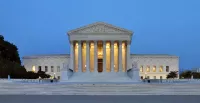
A supreme court the highest court in a legal jurisdiction...
Trending

4 hours ago Halle Berry Denies Abuse Allegations Amid Custody Dispute with Ex-Husband Olivier Martinez

4 hours ago Jasmine Paolini Faces Sonay Kartal in WTA Wuhan Open Round of 16 Match

5 hours ago Jelena Ostapenko Stuns Jessica Pegula in Thrilling Wuhan Open Comeback
5 hours ago Leylah Fernandez Advances to Third Round at the Wuhan Open

4 hours ago Riot Games Announces Closure of League of Legends Classic Mode in January

5 hours ago Sonay Kartal achieves major upset victory against Belinda Bencic at the Wuhan Open
Popular

Ilhan Omar is a prominent American politician currently serving as...

Ken Paxton is an American politician and lawyer serving as...

Jameis Winston is an American football quarterback currently playing for...

Elon Musk is a visionary entrepreneur and engineer known for...

Cristiano Ronaldo widely considered one of the greatest footballers captains...

Michael Joseph Jackson the King of Pop was a highly...