


Retirement marks the transition from a structured working life to a period of withdrawal from professional employment, typically occurring in later adulthood. It is often facilitated by financial structures such as pensions, social security, or personal savings, which allow individuals to sustain their lifestyle after exiting the workforce. Beyond financial considerations, retirement represents a significant life milestone that necessitates psychological and social adjustment. For many, it offers the opportunity to pursue leisure, hobbies, volunteer work, or travel, shifting the focus from career-driven productivity to personal fulfillment. However, successful retirement planning requires a balance of health management, social engagement, and stable financial oversight to ensure security and well-being. Ultimately, retirement is a personal journey that varies widely based on individual health, economic status, and personal goals, representing a fundamental change in one's daily routine and long-term societal contributions.
1992: Inauguration of the Health and Retirement Study (HRS)
In 1992, the Health and Retirement Study (HRS) was first fielded as a nationally representative longitudinal survey in the United States, designed to track adults aged 51 and older to better understand the complexities of retirement, including health, financial stability, and employment.


2002: Introduction of the English Longitudinal Study of Ageing
In 2002, the English Longitudinal Study of Ageing (ELSA) was introduced as a research initiative modeled after the Health and Retirement Study (HRS) framework to better understand aging and retirement behaviors.
2003: Discontinuation of MHAS
The MHAS (Mexican Health and Aging Study) was officially discontinued in 2003, marking a shift in the data collection timeline.
2004: Commencement of Data Collection Phase
In 2004, the longitudinal data collection regarding health, aging, and retirement trends in Europe began, serving as the start of the study period described in the 2008 report.
2004: Launch of the Survey of Health, Ageing and Retirement in Europe
The Survey of Health, Ageing and Retirement in Europe (SHARE) was introduced in 2004, encompassing 14 continental European nations and Israel to provide a comparative, cross-national analysis of retirement patterns.
2005: Publication of OECD Pensions at a Glance
In 2005, the OECD released the 'Pensions at a Glance' report, which served as a comprehensive source for pension data, including specific eligibility ages for retirement across different populations, noting distinctions for women and specific public sector employees.
2007: Conclusion of Longitudinal Study Period
The study period analyzing health and retirement trends across European nations concluded in 2007, capturing data for the longitudinal analysis published the following year.
November 2008: Publication of Health, Ageing and Retirement in Europe
In November 2008, the publication Health, Ageing and Retirement in Europe (2004–2007): Starting the Longitudinal Dimension was released, providing a comprehensive analysis of retirement data.
2008: Impact of the Financial Crisis on Retirement Trends
During the 2008 financial crisis, research based on the Health and Retirement Study (HRS) and the Current Population Survey (CPS) analyzed how economic instability affected retirement timing. While conventional wisdom suggested people would delay retirement due to depleted savings, studies indicated that mass layoffs in 2008 actually drove an increase in retirements that outweighed the impact of stock market declines on pension plan participation.
2008: Calculation of Retirement Lump Sum Requirements
In 2008, financial modeling established that an individual earning 60,000 per year, aiming to replace 80% of their income for 30 years with a 2% real return on investments, would require a lump sum of 806,272 to cover non-housing living expenses.
2010: Retirement Funding Valuation Metrics
By 2010, the required lump sum of 806,272 was standardized as a benchmark equivalent to 13.43 years of retirement age salary to supplement existing employer or government pension plans.
2010: French Retirement Age Reform
In 2010, France implemented a policy change that raised the retirement age from 60 to 62 and increased the full pension entitlement age from 65 to 67, with these adjustments taking effect progressively over an eight-year period.
December 2011: Real Yields of Inflation-Linked Bonds
In December 2011, United States Treasury Inflation Protected Securities (TIPS) displayed distinct real yield patterns: the 30-year maturity bonds provided a real return of approximately 0.8% per annum, while 7-year maturity bonds experienced a slightly negative real return.
December 2011: US Bond Market and Retirement Calculator Adjustments
In December 2011, analysis of the US nominal and inflation-protected bond markets suggested that financial planning tools, such as the MSN retirement calculator, needed to adjust their default projections. While the calculator initially defaulted to an 8% return, data from December 2011 indicated that a more accurate model required lowering the expected investment return to 4% while maintaining a 3% inflation rate to align with current market conditions.
2011: Global Retirement Age Statistics
In 2011, statistics indicated that the standard retirement age across various countries typically ranged between 50 and 70 years old, with ongoing efforts in nations like Austria to address discrepancies between retirement ages for men and women.
2013: Initiation of Spanish Retirement Age Increase
Starting in 2013, Spain began a progressive transition to increase the official retirement age from 65 to 67 years old, a process scheduled to conclude in 2027.
2022: Iranian Retirement Age Adjustment
In 2022, Iranian authorities initiated an increase in the required years of work insurance payments to 42 years as a strategic move to prevent the insolvency of the government's social security system.
March 2023: Decline of Traditional Pension Plans in US Private Industry
As of March 2023, only approximately 15% of private industry workers in the United States had access to traditional defined benefit pension plans, highlighting a significant shift toward defined contribution plans like 401(k)s.
2023: Extension of Iranian Insurance Payment Requirements
Continuing efforts started in the previous year, Iran officially maintained and solidified the requirement for 42 years of work insurance payments throughout 2023 to address long-term social security financial stability.
2024: Kamal et al. Study on Retirement Lifestyle Changes
In 2024, Kamal et al. published research highlighting how retirement often triggers significant life adjustments, including relocation to retirement communities and the adoption of new social and lifestyle patterns, such as increased volunteer work or retirement migration to warmer climates.
2027: Completion of Spanish Retirement Age Adjustment
By the year 2027, Spain is set to complete the policy change that gradually shifts the mandated retirement age from 65 to 67.
2027: Full Retirement Age Adjustment
By the year 2027, the normal retirement age for receiving unreduced Social Security benefits in the United States will have completed its gradual increase to 67 years of age.
2034: Projected Depletion of Social Security Trust Funds
As of 2034, it is projected that the Social Security trust funds will be depleted, a critical milestone that significantly impacts retirement planning for individuals who rely on these benefits as their primary source of income.
Mentioned in this timeline
The United States of America is a federal republic primarily...

An electronic calculator is a portable electronic device designed for...
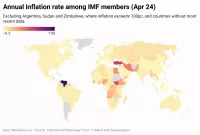
Inflation in economics signifies a rise in the average price...

Iran formerly known as Persia is a sovereign state in...
France officially the French Republic is primarily in Western Europe...
Spain officially the Kingdom of Spain is a large country...
Trending

3 hours ago LIV Golf Players Face Backlash Seeking DP World Tour Return Amid Future Uncertainty

3 hours ago Experts Warn Byron Donalds' Energy Plan May Increase Florida Electric Bills

4 hours ago 49ers Open Practice Window for Wide Receiver Christian Kirk
4 hours ago Cade Smith Secures Crucial Six Outs in Guardians' ALCS Game 3 Victory

4 hours ago Cole Palmer Key Figure in Chelsea's Tactical Clash Against Everton
4 hours ago Analysis of America's Global Standing and Trump's Political Legacy
Popular

Ilhan Omar is a prominent American politician currently serving as...

Ken Paxton is an American politician and lawyer serving as...

Jameis Winston is an American football quarterback currently playing for...

Elon Musk is a visionary entrepreneur and engineer known for...

Michael Joseph Jackson the King of Pop was a highly...

Cristiano Ronaldo widely considered one of the greatest footballers captains...