Career Timeline of Samuel Alito: Major Achievements and Milestones


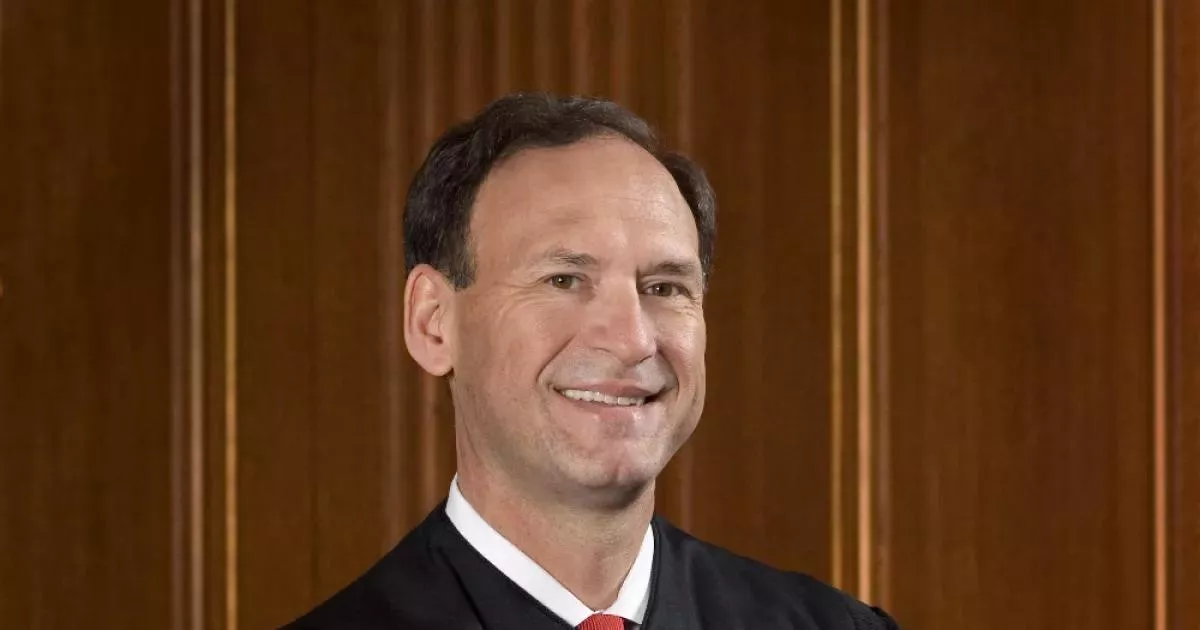
How Samuel Alito built a successful career. Explore key moments that defined the journey.
Samuel Alito is an Associate Justice of the Supreme Court of the United States, nominated by President George W. Bush and serving since 2006. He is the second Italian American justice to serve on the U.S. Supreme Court.
1952: Alito's Father Appointed Director of NJ Office of Legislative Services
In 1952, Samuel A. Alito Sr., Samuel Alito Jr.'s father, became the first director of the New Jersey Office of Legislative Services, a state government position.


1971: Chaired Student Conference on Privacy
In 1971, while at Princeton, Samuel Alito chaired a student conference titled "The Boundaries of Privacy in American Society". The conference supported curbs on domestic intelligence gathering and anticipated the need for a statute to oversee national security surveillance. It also called for decriminalizing sodomy and ending discrimination against gay people in hiring.
1976: Clerked for Judge Leonard I. Garth
In 1976, Samuel Alito clerked for Third Circuit appeals judge Leonard I. Garth in Newark, New Jersey.
1977: Clerked for Judge Leonard I. Garth and assistant U.S. Attorney
In 1977, Samuel Alito clerked for Third Circuit appeals judge Leonard I. Garth and between 1977 and 1981, Alito was Assistant United States Attorney, District of New Jersey.
1981: Assistant to U.S. Solicitor General
From 1981, Samuel Alito served as Assistant to U.S. Solicitor General Rex E. Lee. In this role, he argued 12 cases before the Supreme Court.
1981: Assistant United States Attorney
In 1981, Samuel Alito was Assistant United States Attorney, District of New Jersey.
1984: Alito's Father Retirement
In 1984, Samuel A. Alito Sr., Samuel Alito Jr.'s father retired from his position as the first director of the New Jersey Office of Legislative Services.
1985: Deputy Assistant Attorney General
From 1985, Samuel Alito served as Deputy Assistant Attorney General under Charles J. Cooper in the Office of Legal Counsel during Attorney General Edwin Meese's tenure.
1985: Assistant to U.S. Solicitor General
In 1985, Samuel Alito served as Assistant to U.S. Solicitor General Rex E. Lee. In this role, he argued cases before the Supreme Court.
1986: Authored Memoranda as Deputy Assistant Attorney General
Between 1986 and 1987, Samuel Alito authored nearly 470 pages of memoranda, in which he argued for expanding his client's law enforcement and personnel authorities, while serving as Deputy Assistant Attorney General.
1986: Thornburgh v. American College of Obstetricians & Gynecologists
In 1986, in the case of Thornburgh v. American College of Obstetricians & Gynecologists, the Supreme Court ruled against Solicitor General Charles Fried, who had rejected a memo by Samuel Alito urging him to avoid directly attacking the constitutional right to an abortion.
1987: United States Attorney for the District of New Jersey
From 1987, Samuel Alito served as the United States Attorney for the District of New Jersey.
1987: Deputy Assistant Attorney General
Until 1987, Samuel Alito served as Deputy Assistant Attorney General under Charles J. Cooper in the Office of Legal Counsel during Attorney General Edwin Meese's tenure. Between 1986 and 1987, Alito authored nearly 470 pages of memoranda, in which he argued for expanding his client's law enforcement and personnel authorities.
March 1988: Rehearing of Extradition Proceedings
In March 1988, Samuel Alito, as the U.S. Attorney for the District of New Jersey, sought a rehearing of extradition proceedings against two Indian men accused of being terrorist assassins, after discovering that the death threats his prosecutor had received had been sent by herself.
August 1988: Acquittal in Mob Affiliates Trial
In August 1988, the two-year trial of 20 defendants accused of being mob affiliates of Anthony Accetturo, then the longest federal criminal trial in history, ended in the acquittal of all 20 after less than two days of jury deliberations, during Samuel Alito's tenure as United States Attorney for the District of New Jersey.
1989: Prosecution of Japanese Red Army Member
In 1989, Samuel Alito prosecuted a member of the Japanese Red Army for planning a terrorist bombing in Manhattan while serving as U.S. Attorney for the District of New Jersey.
February 20, 1990: Nomination to U.S. Court of Appeals
On February 20, 1990, President George H. W. Bush nominated Samuel Alito to the United States Court of Appeals for the Third Circuit.
April 27, 1990: Confirmation to U.S. Court of Appeals
On April 27, 1990, Samuel Alito was confirmed by unanimous consent in the Senate to the United States Court of Appeals for the Third Circuit.
1990: Appointed Judge on U.S. Court of Appeals
In 1990, Samuel Alito was appointed as a judge on the U.S. Court of Appeals for the Third Circuit. He served in this position until he joined the Supreme Court.
1990: United States Attorney for the District of New Jersey
Until 1990, Samuel Alito served as the United States Attorney for the District of New Jersey.
1999: Adjunct professor at Seton Hall University School of Law
From 1999 to 2004, Alito was an adjunct professor at Seton Hall University School of Law in Newark, teaching courses in constitutional law and an original course on terrorism and civil liberties.
October 31, 2005: Nomination to the Supreme Court
On October 31, 2005, Samuel Alito was nominated to the Supreme Court of the United States by President George W. Bush.
January 31, 2006: Service on the Supreme Court Begins
On January 31, 2006, Samuel Alito began his service as an associate justice of the Supreme Court of the United States.
February 1, 2006: First decision on the Supreme Court
On February 1, 2006, in his first decision on the Supreme Court, Alito voted with the majority (6–3) to refuse Missouri's request to vacate the stay of execution issued by the Eighth Circuit for death-row inmate Michael Taylor.
May 1, 2006: First Written Supreme Court Opinion
On May 1, 2006, Samuel Alito delivered his first written Supreme Court opinion in Holmes v. South Carolina, a case about the right of criminal defendants to present evidence that a third party committed the crime.
2006: Confirmation Hearing
Samuel Alito's confirmation hearing was held from January 9 to 13, 2006. Active and retired judges testified, and Alito answered around 700 questions during the hearing.
April 18, 2007: Partial-Birth Abortion Ban Act ruling
On April 18, 2007, the Supreme Court handed down a decision ruling the Partial-Birth Abortion Ban Act constitutional. Kennedy wrote for the five-justice majority that Congress was within its power to generally ban the procedure.
2007: Morse v. Frederick decision
In 2007, Alito joined Roberts's majority decision in Morse v. Frederick that speech advocating drug use can be banned in public schools, but also warned that the ruling must be circumscribed so as not to interfere with political speech.
2008: Gomez-Perez v. Potter ruling
In 2008, Alito's majority opinion in the worker protection case Gomez-Perez v. Potter cleared the way for federal workers who experience retaliation after filing age discrimination complaints to sue for damages.
2008: Supreme Court Historical Society's Annual Lecture
In 2008, Samuel Alito delivered the Supreme Court Historical Society's Annual Lecture, titled "The Origin of the Baseball Antitrust Exemption".
2010: Majority Opinion in McDonald v. Chicago
In 2010, Alito wrote the majority opinion in the case of McDonald v. Chicago regarding firearm rights.
2011: Visiting professor at Duke University School of Law
In fall 2011, Alito was a visiting professor at Duke University School of Law, where he taught Current Issues in Constitutional Interpretation.
2012: Visiting professor at Duke University School of Law
In summer 2012, Alito was a visiting professor at Duke University School of Law, teaching a course in the Master of Laws in Judicial Studies program.
2014: Majority Opinion in Burwell v. Hobby Lobby
In 2014, Alito wrote the majority opinion in the case of Burwell v. Hobby Lobby, which concerned insurance coverage.
2018: Majority Opinion in Janus v. AFSCME
In 2018, Alito wrote the majority opinion in Janus v. AFSCME, which dealt with public-sector union security agreements.
2020: Reactions to Alito's Actions
In 2020, reactions to Alito's actions were divided, with Democrats condemning and Republicans defending him. Dick Durbin requested Alito's recusal from cases involving the January 6 Capitol attack or the 2020 presidential election. Steve Cohen introduced a resolution to censure Alito. A letter requesting Alito's recusal was signed by forty-five representatives. Tom Cotton called the controversy an intimidation attempt, and Lindsey Graham criticized Alito's judgment.
June 24, 2022: Overturning of Roe v. Wade
On June 24, 2022, the Supreme Court handed down the ruling in Dobbs v. Jackson Women's Health Organization, overturning Roe v. Wade. Alito wrote that "Roe was egregiously wrong from the start".
2022: Majority Opinion in Dobbs v. Jackson Women's Health Organization
In 2022, Alito wrote the majority opinion in Dobbs v. Jackson Women's Health Organization, a case concerning abortion.
April 21, 2023: Dissent on mifepristone ruling
On April 21, 2023, Alito dissented when the Supreme Court reversed a ruling by Judge Matthew Kacsmaryk that would have banned mifepristone (an emergency contraception medication) nationwide.
Mentioned in this timeline
George W Bush the rd U S President - is...

Amy Coney Barrett is an American jurist and Associate Justice...
Sandra Day O'Connor was a pioneering American jurist who served...
Virginia a state in the Southeastern and Mid-Atlantic regions of...

South Carolina located in the Southeastern South Atlantic and Deep...

Justice in its broadest sense is the concept of treating...
Trending

4 hours ago Corey Day Secures Stunning Back-to-Back O'Reilly Series Victories at Charlotte

4 days ago Tanner Scott Faces Postseason Pressure During NLDS Opening Game
6 hours ago Hashi Market Opens First West Coast Grocery Store in Cupertino
6 hours ago Updates on NFL Injury Reports and Roster Changes Across Several Teams
6 hours ago Mike Tomlin Receives Praise Following Steelers Departure and Coaching News
6 hours ago Justin Hartley Returns as Colter Shaw in Action-Packed Tracker Season 4
Popular

Ken Paxton is an American politician and lawyer serving as...

Jameis Winston is an American football quarterback currently playing for...

Cristiano Ronaldo widely considered one of the greatest footballers captains...

Michael Joseph Jackson the King of Pop was a highly...

Elon Musk is a visionary entrepreneur and engineer known for...

Bernie Sanders is a prominent American politician and the senior...