


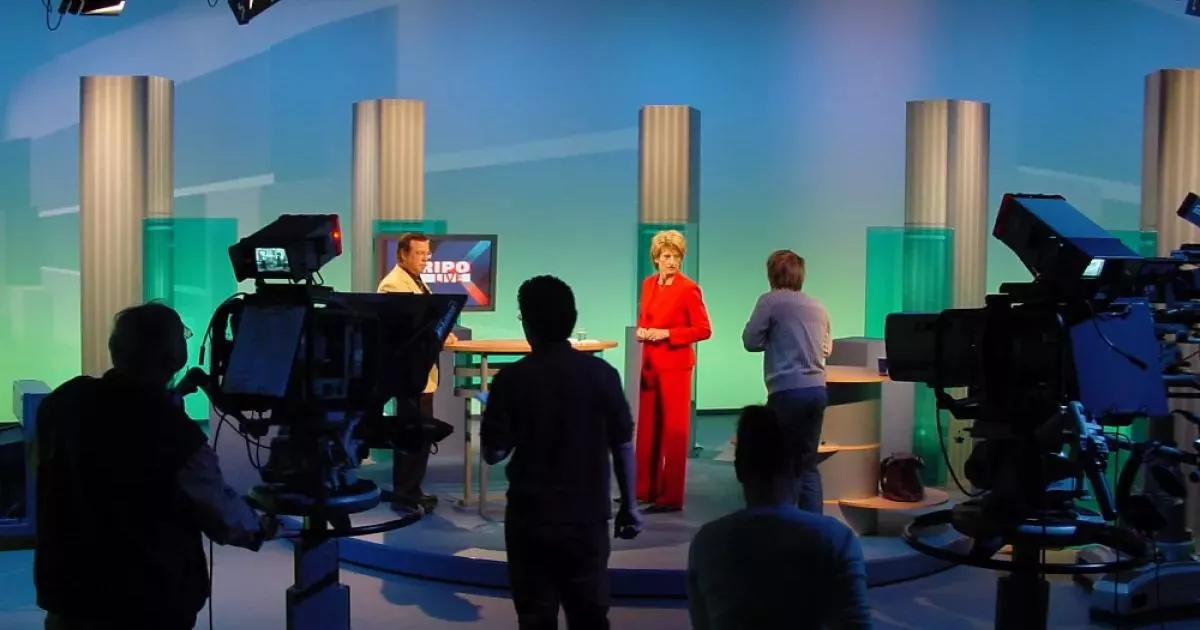
A television show refers to content made for viewing on television sets and distributed through various means like over-the-air, satellite, cable, or streaming. It excludes news and ads. Recurring shows are called television series, with segments known as episodes, often broadcast in annual seasons. One-off shows are television specials, while shows with a limited run are miniseries. Television films, or telefilms, are feature films produced for television broadcast. Content can be produced in-house or by film production companies. This encapsulates the core components that constitute a television show.
1936: 1936 Summer Olympics Televised
In 1936, the Summer Olympics in Germany were televised, contributing to the early growth of television as a medium.


1937: 1937 Coronation of King George VI Televised
In 1937, the coronation of King George VI in the United Kingdom was televised, spurring growth in the television medium.
1939: David Sarnoff's Introduction at 1939 New York World's Fair
In 1939, David Sarnoff's introduction at the New York World's Fair in the United States was televised, further contributing to the growth of television.
1947: 1947 World Series Inspires Television Purchases
In 1947, the World Series inspired many Americans to purchase their first television sets.
1948: Texaco Star Theater moves to Television
In 1948, the radio show Texaco Star Theater transitioned to television, becoming the first weekly televised variety show. This move demonstrated that television was a stable and modern form of entertainment, earning Milton Berle the title "Mr. Television".
September 4, 1951: First National Live Television Broadcast
On September 4, 1951, the first national live television broadcast in the US occurred. President Harry Truman's speech at the Japanese Peace Treaty Conference in San Francisco was transmitted over AT&T's transcontinental cable and microwave radio relay system to broadcast stations in local markets.
January 1, 1954: First National Color Broadcast
On January 1, 1954, the first national color broadcast, the 1954 Tournament of Roses Parade, took place in the US.
1963: Doctor Who Series
In 1963, the first series of Doctor Who featured forty-two 25-minute episodes.
1965: Color Transition Announced
In 1965, the color transition was announced for the fall, with over half of all network prime-time programming set to be broadcast in color.
1970: Doctor Who Episodes Reduced
In 1970, Doctor Who's episode count was reduced to twenty-five to accommodate production changes and reduce actors' workload.
1972: First Completely All-Color Network Season
In 1972, the last holdout among daytime network shows converted to color, resulting in the first completely all-color network season.
1984: Doctor Who Continues
In 1984, Doctor Who continued with a similar number of episodes as in 1970.
1986: Doctor Who Shorter Episodes
In 1986, Doctor Who returned to shorter episodes, but fewer were commissioned due to lack of support within the BBC.
1989: Doctor Who Cancelled
In 1989, Doctor Who was cancelled after only fourteen 25-minute episodes due to a lack of support.
2004: Lost Pilot Cost
In 2004, the two-hour pilot episode for "Lost" cost between $10 and $14 million to produce.
2005: Doctor Who Revival
In 2005, Doctor Who was revived and comprised thirteen 45-minute installments.
2007: Advertising Rates for Grey's Anatomy and CSI in 2007-08
During the 2007-08 season, "Grey's Anatomy" was able to charge $419,000 per commercial, while "CSI" charged $248,000 per commercial, even though "CSI" had more viewers.
2008: Fringe Pilot Cost
In 2008, the two-hour pilot episode for "Fringe" cost $10 million to produce.
2009: Advertising Rates for Glee, The Office and NCIS in 2009-10
During the 2009-10 season, "Glee" earned an average of $272,694 per commercial, "The Office" earned $213,617, and "NCIS" earned $150,708.
2010: Boardwalk Empire Pilot Cost
In 2010, the first episode of "Boardwalk Empire" cost $18 million to produce.
2011: Pilot Episode Costs in 2011
In 2011, the pilot episode of "Game of Thrones" cost between $5 and $10 million, "Pan Am" cost an estimated $10 million, and the two-hour pilot for "Terra Nova" cost between $10 and $20 million.
2012: Television's Growing Importance
In 2012, it was reported that television was growing into a larger component of major media companies' revenues than film. Steven Soderbergh noted the increase in quality of television programs and stated that television provides the ambiguity and complexity of character and narrative.
Mentioned in this timeline
The United States of America is a federal republic primarily...
San Francisco is the fourth-most populous city in California and...

Germany officially the Federal Republic of Germany is located in...
A star is a self-gravitating luminous plasma spheroid exemplified by...

The World Series is Major League Baseball's championship series held...

AT T Inc is a leading American multinational telecommunications holding...
Trending

4 hours ago Macklin Celebrini Returns to Action in Unique Elevated Cupcake Experience

3 hours ago Lindsay Lohan Films New Netflix Rom-Com Return to You in Toronto

3 hours ago Iva Jovic Faces Dayana Yastremska at the WTA Dongfeng Voyah Wuhan Open Tournament
3 hours ago ASML Reports Strong Earnings Amid Sustained AI Demand Through 2030

4 hours ago Marie Bouzková Faces Maja Chwalinska at WTA Wuhan Open

4 hours ago Lakers Face Speculation Regarding Future of Rookie Dalton Knecht Amidst Trade Rumors
Popular

Ken Paxton is an American politician and lawyer serving as...

Ilhan Omar is a prominent American politician currently serving as...

Jameis Winston is an American football quarterback currently playing for...

Cristiano Ronaldo widely considered one of the greatest footballers captains...
Michael Joseph Jackson the King of Pop was a highly...

Elon Musk is a visionary entrepreneur and engineer known for...