


Torino FC, founded in 1906, is a professional Italian football club based in Turin, currently competing in Serie A. Historically successful, they boast seven league titles, with a significant portion earned during the 'Grande Torino' era of the 1940s. Their last Serie A victory was in 1976. Torino has also secured five Coppa Italia titles and one Mitropa Cup in 1991.
4 hours ago : Torino FC faces Udinese in intense Serie A clash
Torino FC takes on Udinese in a Serie A match featuring high pressure from the home side. Key players are held on the bench as both teams compete in this live football event.


1900: Absorption of Internazionale Torino
In 1900, Football Club Torinese absorbed Internazionale Torino.
December 1906: Formation of Foot-Ball Club Torino
On December 3, 1906, Foot-Ball Club Torino was formed through a merger at the Voigt brewery.
1906: Foundation of Foot-Ball Club Torino
In 1906, Foot-Ball Club Torino was founded, marking the beginning of the club's history.
1906: Founding year added to badge
The "1906" was later added to the left side of the shield, to denote the founding year of the historic Foot-Ball Club Torino.
January 1907: First Derby Victory
In January 1907, Torino won the first derby against Juventus with a score of 2–1.
January 1907: First Official Match
On 13 January 1907, Torino played their first official match after the club's foundation, a derby match against Juventus at the Stadio Velodrome Umberto.
1908: Torino Withdrew
In 1908 Torino withdrew in various championships that preluded the single round format.
1908: Participation in Minor Tournaments
In 1908, Torino did not participate in the Italian Football Championship due to a rule limiting foreign players and instead played in two minor tournaments, winning the Palla Dapples against Pro Vercelli and losing in the final of an international tournament organized by La Stampa to Swiss side Servette.
January 1911: Move to Piazza d'armi (Lato Ferrovia)
On 23 January 1911, Torino moved to the Piazza d'armi, specifically the Lato Ferrovia pitch.
February 1911: Move to Piazza d'armi (Lato Crocetta)
On 26 February 1911, Torino played at the Lato Crocetta pitch at Piazza d'armi.
1913: Move to Stradale Stupinigi
Towards the end of 1913, Torino moved to the Stradale Stupinigi, which was later requisitioned for military purposes due to the outbreak of the First World War.
1914: First Italian Club to Tour South America
In 1914, Torino became the first Italian club to travel South America on tour, playing six friendly matches, including two against Corinthians, and establishing friendly relationships.
1915: Championship Attempt Interrupted
In 1915, Torino's attempt to win their first championship was interrupted by World War I. They were two points behind Genoa with one match left to play.
1915: Coppa Federale
In the 1915-16 Coppa Federale that is not recognised
1923: Heinrich Schönfeld top scorer
In 1923–24, the Austrian Heinrich Schönfeld was the first Torino player to win the Capocannoniere award for league top scorer in the Italian top flight with 22 goals.
October 1925: Home Games at Motovelodromo Corso Casale
From 11 October 1925 until the end of the 1925–26 season, Torino played their home games at Motovelodromo Corso Casale (now restored, it is dedicated to Fausto Coppi and also hosts American football matches) while awaiting their move to the Stadio Filadelfia.
October 1926: Inauguration of Stadio Filadelfia
On 17 October 1926, the Stadio Filadelfia was opened with a match against Fortitudo Roma. It hosted Torino's games continuously until 1958.
1926: Stadio Filadelfia Serves as Training Ground
From 1926 to 1993, the Stadio Filadelfia also served as the training ground of Torino.
1926: Revoked Title
Torino won the title in the 1926–27 season, but it was later revoked.
November 1927: Revocation of Scudetto
On November 3, 1927, Torino's scudetto title was revoked due to the "Allemandi Case".
1927: Winners with Italy at the Central European International Cup
Adolfo Baloncieri, Antonio Janni, Julio Libonatti and Gino Rossetti won with Italy at the Central European International Cup 1927–30.
1927: Julio Libonatti top scorer
In 1927–28, Julio Libonatti scored 35 goals and became league top scorer .
1927: Reconfirmed Champions of Italy 1927-28 Season
In the 1927-28 season, Torino were reconfirmed champions of Italy.
1928: Bronze Medals at the Summer Olympics
Adolfo Baloncieri, Antonio Janni, and Gino Rossetti won bronze medals at the 1928 Summer Olympics.
1928: Gino Rossetti top scorer
In 1928–29, Gino Rossetti scored 36 goals and became league top scorer .
1932: Adolfo Baloncieri Ends Torino Career
In 1932, Adolfo Baloncieri, the player and club icon, ended his Torino career. The players developed in the Torino youth system were nicknamed "Balon-Boys" in his honor.
1935: Third-Place Finish and Coppa Italia Victory
In 1935, Torino finished third in the league and won the Coppa Italia for the first time.
1938: Second-Place Finish
In the 1938-39 season, Torino finished in second place under technical director Ernest Erbstein.
1939: Fifth-Place Finish and Ferruccio Novo's Arrival
In 1939-40, Torino finished in fifth place, and Ferruccio Novo became the club president.
1942: Grande Torino's Success
Between 1942 and 1949, the Grande Torino team won five league titles in a row (not considering the interruption to the league in the 1944 Campionato Alta Italia).
1943: Coppa Italia Win
In 1943, the Grande Torino team won the Coppa Italia, achieving the coveted scudetto and Coppa Italia "double" in Italy during the same season.
1944: Campionato Alta Italia
In 1944, the Italian Football Federation (FIGC) recognized only honorary value to Spezia in the Campionato Alta Italia.
1945: Eusebio Castigliano top scorer
In 1945–46, Eusebio Castigliano was the leading scorer (13) of the first season after the Second World War
1946: Valentino Mazzola top scorer
In 1946–47, Valentino Mazzola was the leading scorer (29)
May 1949: River Plate Charity Match
On 26 May 1949, River Plate flew to Turin to play a friendly charity match organized by the FIGC, along with a selection of the strongest Italian players of the era, gathered under the name of "Torino symbol", to support Torino after the Superga disaster.
May 1949: Corinthians' Tribute to Grande Torino
On 4 May 1949, after the Superga air disaster, Corinthians paid tribute to the Grande Torino team by taking to the field in Torino's kit for a friendly match against Portuguesa.
May 1949: Superga Air Disaster
On May 4, 1949, the Fiat G.212 airliner carrying the Grande Torino team crashed against the Basilica of Superga in Turin, killing the entire team, coaches, officials, journalists, and crew.
1949: Grande Torino's Success
Between 1942 and 1949, the Grande Torino team won five league titles in a row (not considering the interruption to the league in the 1944 Campionato Alta Italia).
1951: Foundation of Fedelissimi Granata
In 1951, the Fedelissimi Granata, the first ever organized supporters group in Italy, was founded.
January 1953: Debut of River Plate homage shirt
On January 6, 1953, Torino debuted a shirt with a diagonal maroon band as an homage to River Plate, the Argentine club with close ties to Torino since the Superga air disaster. The debut match was a 1–1 league draw against Milan.
May 1958: Final Match at Stadio Filadelfia
On 11 May 1958, Torino played their final match at the Stadio Filadelfia, securing a 4–2 victory over Genoa before moving to Stadio Comunale.
1958: First Relegation to Serie B
In 1958-59, Torino experienced their first relegation to Serie B, under the name "Talmone Torino".
1959: Giorgio Ferrini Started His Career
Giorgio Ferrini started his career in 1959.
1959: Season at the Filadelfia
Torino played the entirety of the 1959–60 season and the next at the Filadelfia.
1960: Return to Top Flight
In 1960-61, Torino returned to the top flight after a season in Serie B.
1961: Use of Comunale for Special Matches
In 1961–62 and 1962–63, Torino began to use the Comunale for "special" matches.
1962: Use of Comunale for Special Matches
In 1961–62 and 1962–63, Torino began to use the Comunale for "special" matches.
1963: Use of Comunale for Special Matches
In 1961–62 and 1962–63, Torino began to use the Comunale for "special" matches.
1963: Orfeo Pianelli Assumes Presidency
In 1963, Orfeo Pianelli became the president of Torino and appointed Nereo Rocco as manager, also signing Gigi Meroni.
1963: First Away Trip by Plane
In 1963, Torino fans organized the first away trip by plane in Italian football for a game against Roma.
1964: Third Place Finish
In 1964-65, Torino finished in third place in Serie A.
October 1967: Death of Gigi Meroni
On October 15, 1967, Gigi Meroni was killed while crossing the street after a league game.
1967: Paolo Pulici Started His Career
Paolo Pulici started his career in 1967.
1968: European Championship with the Azzurri
In 1968, Lido Vieri and Giorgio Ferrini won the European Championship with the Azzurri.
1970: Coppa Italia Win
In the 1970-71 season, Torino won another Coppa Italia.
1971: Third-Place Finish
In the 1971-72 season, Torino finished in third place, just one point behind Juventus.
1972: Paolo Pulici top scorer
In 1972–73, Paolo Pulici broke his low-scoring streak and won the award with 17 goals.
1974: Paolo Pulici top scorer
In 1974–75, Paolo Pulici won the award with 18 goals.
1975: Giorgio Ferrini ended his career
Giorgio Ferrini held the club's official appearance record with 566 appearances (plus 56 goals) accumulated between 1959 and 1975.
1975: Paolo Pulici top scorer
In 1975–76, Paolo Pulici won the award with 21 goals.
1975: Seventh Serie A Title
In the 1975-76 season, Torino won their seventh Serie A title.
1978: Second-Place Finish
In 1978, Torino finished second in Serie A, tied with Vicenza.
1982: FIFA World Cup Winner
Giuseppe Dossena won the FIFA World Cup in 1982.
1982: Paolo Pulici ended his career
The record for the most goals scored is held by Paolo Pulici, with 172 official goals (in 437 appearances) between 1967 and 1982.
1988: Relegation to Serie B
At the end of the 1988-89 season, Torino were relegated to Serie B for the second time in their history.
1989: Promotion to Serie A
In the 1989-90 season, Torino were promoted back to Serie A.
May 1990: Abandonment of Stadio Comunale
On 27 May 1990, Torino abandoned the Stadio Comunale in favor of the Stadio delle Alpi.
1990: Badge recalled Grande Torino era
From 1990 until the bankruptcy, the badge in use recalled the one used at the time of the Grande Torino, with the important difference that the right side of the oval crossed the letter "T" and "C" (initials of "Torino Calcio") instead of the letters "A", "C" and "T" (initials of "Associazione Calcio Torino").
1990: Move to Stadio delle Alpi
In 1990, Torino moved to the Stadio delle Alpi, which was built specifically for the 1990 FIFA World Cup.
1991: Mitropa Cup Win
In 1991, Torino won the Mitropa Cup, an international tournament that is now defunct.
1992: Fifth Coppa Italia Win
In the 1992-93 season, Torino won their fifth Coppa Italia after defeating Roma.
1993: End of Filadelfia as Training Ground
From 1926 to 1993, the Stadio Filadelfia also served as the training ground of Torino.
1994: Club Record Points
Torino finished the 2018-19 season on 63 points, a club record since the introduction of the three points system in 1994.
1995: Economic Difficulties
After the 1992-93 season, Torino went through a period of severe economic difficulties which resulted in changing presidents and managers several times.
1997: Promotion and Relegation
In the 1997-98 season, Torino lost a play-off on penalties to Perugia.
1998: Promotion and Relegation
In the 1998-99 season, Torino returned to Serie A.
1999: Promotion and Relegation
In the 1999-2000 season, Torino were relegated to Serie B.
2000: Promotion and Relegation
In the 2000-01 season, Torino was promoted back to Serie A.
2002: FIGC Recognition of Campionato Alta Italia
In 2002, the Italian Football Federation (FIGC) recognized only honorary value to Spezia in the 1944 Campionato Alta Italia.
2004: Promotion and Relegation
Under Renato Zaccarelli, Torino achieved promotion in the 2004-05 season.
2005: River Plate Homage Kit
During the 2005–06 season, River Plate donned away jersey of the Argentine club that has been maroon on several occasions
2005: Adoption of current club badge
In 2005, the current Torino club badge, featuring a rampant bull (the symbol of Turin), was adopted following the bankruptcy of Torino Calcio.
2005: Promotion via Play-offs
In the 2005-06 season, Torino achieved immediate promotion to Serie A after winning the play-offs.
2006: Sisport Becomes Training Base
From 2006 to 2017, the team's training base was the Sisport di Corso Unione Sovietica.
2006: Stadio Olimpico Grande Torino
In 2006, Torino's home stadium was renamed Stadio Olimpico Grande Torino, previously known as Stadio Comunale "Vittorio Pozzo".
2006: Return to Stadio Comunale (renamed Stadio Olimpico)
In 2006, following reconstruction for the 2006 Winter Olympics, Torino returned to the Stadio Comunale, which was renamed the Stadio Olimpico.
2006: Torino played at a level higher than Juventus
In the 2006–07 season, Torino, for the first time in history played at a level higher than Juventus: while the Granata competed in Serie A, Juventus took part in Serie B following the aftermath of the Calciopoli scandal.
May 2009: Torino's Relegation and Friendship with Genoa Turned Negative
Torino's friendship with Genoa turned negative during the Torino–Genoa match on 24 May 2009 when Genoese festivities after their win contributed to Torino's relegation to Serie B.
2009: Gianluca Petrachi Appointed
During the 2009-10 season, Cairo named Gianluca Petrachi as the new sporting director at Torino.
June 2011: Gian Piero Ventura Appointed Manager
On June 6, 2011, Gian Piero Ventura was announced as the new manager of Torino.
December 2012: Clashes Between Supporters of Torino and Genoa
On 16 December 2012, clashes erupted between the organized supporters of Torino and Genoa when the two clubs met for the first time after Torino's return to Serie A.
2013: Secured Safety from Relegation
After achieving safety from relegation in the 2012-13 season.
2013: Badge voted most beautiful club logo
In 2013, the Torino badge from the 1980s, a square shape with a stylized bull and the words "Torino Calcio", was voted by Guerin Sportivo readers as the most beautiful club logo of all time.
2013: Ciro Immobile top scorer
In 2013–14, Ciro Immobile established himself as the league's top scorer with 22 goals.
2014: Europa League Round of 16
In the 2014-15 season, Torino reached the round of 16 of the Europa League.
2014: Europa League Qualification
The 2013-14 season marked a sharp upturn for Torino, who finished seventh place, and qualified for the 2014-15 Europa League.
2015: First Derby Win in 20 Years
In the spring of 2015, Torino won their first derby in 20 years.
April 2016: Rename of Stadio Olimpico in honor of Grande Torino
In April 2016, the Stadio Olimpico was renamed in honor of the Grande Torino.
2016: Ventura Departs, Mihajlović Appointed
At the end of the 2015-16 season, Ventura left the club to manage the Italy national football team and was replaced by Siniša Mihajlović.
June 2017: Hundredth Goal of a Torino Player in an Azzurri Shirt
On 11 June 2017, Andrea Belotti scored the hundredth goal of a Torino player in an Azzurri shirt during a 2018 FIFA World Cup qualification match against Liechtenstein.
2017: Wexford Youths renamed and adopted Torino-inspired crest
In 2017, the Irish club Wexford Youths renamed itself Wexford F.C. and adopted a new crest with a rampant bull, inspired by Torino's. Club chairman Mick Wallace is known to be a Torino fan.
2017: Mihajlović Replaced by Mazzarri
In January 2017, Walter Mazzarri replaced Siniša Mihajlović as manager.
2017: Return to Training at Reconstructed Filadelfia
In the 2017–18 season, Torino returned to training at the reconstructed Filadelfia.
2018: 2018 FIFA World Cup qualification match
On 11 June 2017, Andrea Belotti scored the hundredth goal of a Torino player in an Azzurri shirt during a 2018 FIFA World Cup qualification match against Liechtenstein.
2019: Europa League Play-off Elimination
In 2019-20, Torino failed to enter the group stages of the Europa League after being eliminated in the play-offs by Wolverhampton Wanderers.
Mentioned in this timeline
Serie A is the top-tier professional football league in Italy...
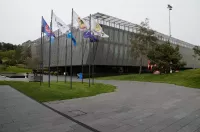
FIFA or the F d ration Internationale de Football Association...
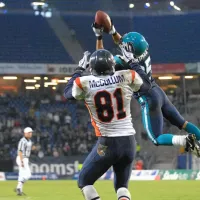
Football commonly known as soccer in many regions is the...
France officially the French Republic is primarily in Western Europe...
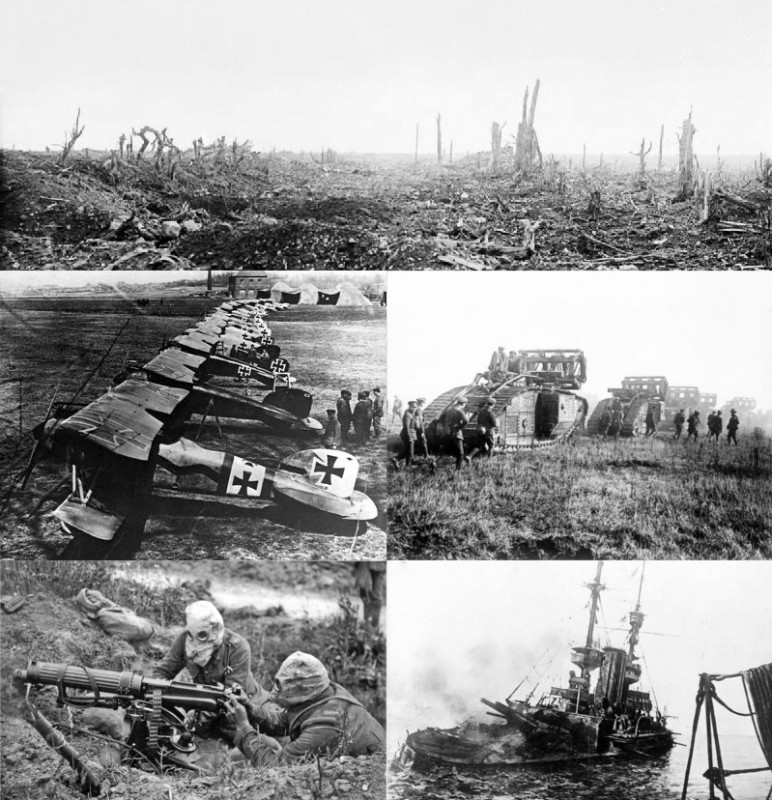
World War I a global conflict between the Allies and...
Italy officially the Italian Republic is a country in Southern...
Trending

3 hours ago Julio Iglesias Rethinks Property Holdings as Son Launches Successful New Music Tour

3 hours ago Salma Hayek's 1996 Classic Recognized as Top Western Horror Movie

4 hours ago Canelo Álvarez Fight Uncertainty Follows Security Incident in Saudi Arabia

4 hours ago Jeremy Renner Confirms Absence From Upcoming Avengers: Doomsday Movie
4 hours ago Trump Defends Controversial Diesel Trade Deal With Russia Amid Bipartisan Backlash
4 hours ago Torino FC faces Udinese in intense Serie A clash
Popular

Ken Paxton is an American politician and lawyer serving as...

Jameis Winston is an American football quarterback currently playing for...

Cristiano Ronaldo widely considered one of the greatest footballers captains...

Michael Joseph Jackson the King of Pop was a highly...

Elon Musk is a visionary entrepreneur and engineer known for...

Marco Rubio is a prominent American politician serving as the...