


Milan is the capital of the Lombardy region in northern Italy and the country's second-most populous city. As of 2025, it has an estimated population of 1.36 million. The Metropolitan City of Milan is the largest in Italy by urban area, and its wider metropolitan area, with an estimated 6.1 million residents, ranks as the largest in Italy and the fourth-largest in the European Union.
1901: Construction of Palazzo Castiglioni
In 1901, architect Giuseppe Sommaruga began building Palazzo Castiglioni, a notable example of Art Nouveau, also known as Liberty, in Italy.


1902: Establishment of Bocconi University
In 1902, Bocconi University, a private management and finance university, was established in Milan.
1903: Completion of Palazzo Castiglioni
In 1903, the Palazzo Castiglioni, designed by Giuseppe Sommaruga, was completed. The building is a recognizable example of Art Nouveau, also known as Liberty, in Italy.
1904: Premiere of Madama Butterfly by Giacomo Puccini
In 1904, Milan hosted the premiere of Madama Butterfly, a major opera by Giacomo Puccini, at La Scala opera house.
1906: Simplon Railway Tunnel Opening in 1906
In 1906, the Simplon railway tunnel opened, solidifying Milan's role as a major South European rail hub for goods and passenger transport.
1906: Milan Hosted Universal Exposition in 1906
Milan hosted the Universal Exposition in 1906.
1909: Marinetti's "Manifesto of Futurism"
In 1909, Filippo Marinetti wrote his "Manifesto of Futurism," describing Milan as "grande...tradizionale e futurista" (grand...traditional and futuristic).

1919: Orient Express Stop in Milan in 1919
In 1919, Milan and Venice were among the main stops of the Orient Express.
October 1922: Mussolini Launched March on Rome in October 1922
In October 1922, Benito Mussolini launched his March on Rome from Milan.
1923: Construction of Galleria del Corso Started in 1923
The Galleria del Corso, an arcade in Milan, was built between 1923 and 1931.
1924: Foundation of the University of Milan
In 1924, the University of Milan, also known as the "State University", was founded as the largest public teaching and research university in the city.
1926: Premiere of Turandot by Puccini
In 1926, Milan hosted the premiere of Turandot, a major opera by Puccini, at La Scala opera house.
1927: Amatori Rugby Milano was founded
In 1927, Amatori Rugby Milano, the most decorated rugby team in Italy, was founded in Milan.
1931: Inauguration of the Central Railway Station
In 1931, the Central railway station, an important example of Art Deco that blended architectural styles with Fascist architecture, was inaugurated.
1931: Foundation of the Pontifical Ambrosian Institute of Sacred Music
In 1931, the Pontifical Ambrosian Institute of Sacred Music was founded by cardinal A.I. Schuster, archbishop of Milan.
1931: Completion of Galleria del Corso in 1931
The Galleria del Corso, an arcade in Milan, was built between 1923 and 1931.
1934: Milan hosted matches at the FIFA World Cup
In 1934, Milan hosted matches at the FIFA World Cup, marking one of the city's early involvements in major international sporting events.
1940: Pontifical Ambrosian Institute of Sacred Music raised by the Holy See
In 1940, the Pontifical Ambrosian Institute of Sacred Music was raised according to the rules by the Holy See and authorised to confer university qualifications.
1943: End of Italian Colonies in East Africa
In 1943, the East African campaign ended, marking the end of Italian colonies in the Horn of Africa, which influenced the later establishment of an African community in Milan.
1943: German Forces Occupied Northern Italy in 1943
In 1943, when Italy surrendered, German forces occupied and plundered most of northern Italy, fueling the birth of a massive resistance guerrilla movement.
April 1945: Italian Resistance Seized Control of Milan in April 1945
On 29 April 1945, the Italian resistance seized control of Milan and executed Mussolini.
1951: Milan's Population in 1951
In 1951, Milan's population was 1.3 million.
1952: Milan's fashion exports reach US$726 million
In 1952, Milan experienced a revolutionary change as its fashion exports reached US$726 million, marking the city's rise as a global capital in fashion and design.
1955: Milan's fashion exports grow to US$72.5 billion
By 1955, Milan's fashion exports had grown to US$72.5 billion, further solidifying its position as a world capital of design and architecture during the dynamic period of the 1950s and 60s.
1956: Construction of Pirelli Tower and Velasca Tower
In 1956, the construction of Gio Ponti's Pirelli Tower (1956–60) and Velasca Tower (1956–58) began, marking significant milestones in Milan's architectural history.
1958: Foundation of Pallacanestro Milano 1958
In 1958, Pallacanestro Milano 1958, one of the four professional Lega Basket clubs in Milan, was founded.
1960: Bresso Airfield serves general aviation
Since 1960, Bresso Airfield has primarily served as a general aviation airfield for flying club activity, touristic flights, and air taxi services.
1961: Historic average snowfall period begin in 1961
The historic average snowfall of Milan's area is 25 centimetres (10 in) in the period between 1961 and 1990.
1964: Milan Metro architectural project receives Compasso d'Oro award
In 1964, the architectural project of the Milan Metro, created by Franco Albini and Franca Helg, and the signs, designed by Bob Noorda, received the Compasso d'Oro award.
1967: Milan's Population in 1967
In 1967, Milan's population grew to 1.7 million.
1968: Establishment of University Institute of Languages and Communication
In 1968, the University Institute of Languages and Communication (University IULM) was established, initially known as the "University Institute of Languages of Milan".
December 1969: Bombing at the National Agrarian Bank in December 1969
On 12 December 1969, a bomb exploded at the National Agrarian Bank in Piazza Fontana, killing 17 people and injuring 88.
1970: Start of Conservative Governance in 1970
The conservatives have governed the Lombardy region almost uninterruptedly since 1970.
1973: Peak Population in Milan
In 1973, during rapid industrialization in post-war years, the population of Milan peaked at 1,743,427.
1975: Establishment of Parco Nord Milano
In 1975, the farmlands and woodlands north of the urban area were protected as Parco Nord Milano, a regional park.
1980: Milan hosted matches at the UEFA European Championship
In 1980, Milan hosted matches at the UEFA European Championship, adding to its history of hosting major international sporting events.
1980: Monza Circuit did not host the Formula One Italian Grand Prix
In 1980, the Monza Circuit, located near Milan, did not host the Formula One Italian Grand Prix, making it the only exception since the first year of competition.
January 1985: Record Snowfall in Milan in January 1985
In January 1985, Milan experienced a record snowfall of 90 centimetres (35 in).
1990: Milan hosted matches at the FIFA World Cup
In 1990, Milan hosted matches at the FIFA World Cup, further cementing its role as a host city for significant international sporting events.
1990: Establishment of Parco Agricolo Sud Milano
In 1990, the farmlands and woodlands south of the urban area were protected as Parco Agricolo Sud Milano, a regional park.
1990: Historic average snowfall period end in 1990
The historic average snowfall of Milan's area is 25 centimetres (10 in) in the period between 1961 and 1990.
1995: Closure of Falck Steel Group Site in Sesto San Giovanni
In 1995, the Falck steel group closed its site in Sesto San Giovanni, impacting the industrial landscape of Milan.
1997: Renovation of the Hechal David u-Mordechai Temple
In 1997, the interior of the Hechal David u-Mordechai Temple, the main synagogue of Milan, was renovated.
1998: Establishment of the University of Milano-Bicocca
In 1998, the University of Milano-Bicocca was established as the city's newest institution of higher education, focusing on science and technology.
1999: Administrative Reform in 1999
The municipality of Milan is subdivided into nine administrative Borough Councils (Consigli di Municipio), down from the former twenty districts before the 1999 administrative reform.
2000: Legislative Decree 267/2000 (Unified Text on Local Administration)
The urban organisation is governed by the Legislative Decree 267/2000 or Unified Text on Local Administration (Testo Unico degli Enti Locali).
2003: Milan held the 2003 World Rowing Championships
In 2003, Milan hosted the World Rowing Championships, showcasing its capability to host diverse international sporting competitions.
2004: Closure of Alfa Romeo Site in Arese
In 2004, the Alfa Romeo automobile company closed its site in Arese, where it had employed thousands of workers.
2007: Premiere of Teneke by Fabio Vacchi
In 2007, Milan hosted the premiere of Teneke, a major opera by Fabio Vacchi, at La Scala opera house.
2008: Implementation of city-wide network of bike paths initiated
Since 2008, Milan has been implementing a city-wide network of bike paths to combat congestion and air pollution.
2009: Milan held the 2009 World Boxing Championships
In 2009, Milan held the World Boxing Championships, further demonstrating its role as a host for various international sporting events.
2009: High-speed train lines link Milan to major cities
In 2009, high-speed train lines began linking Milan to Rome, Naples, and Turin, significantly reducing travel times.
2010: Milan held games of the Men's Volleyball World Championship
In 2010, Milan hosted some games of the Men's Volleyball World Championship, continuing its tradition of hosting international sports events.
2011: Milan had 185,000 university students
In 2011, Milan's higher education system included 185,000 university students, approximately 11 percent of the national total, highlighting its status as a major global center for higher education.
2011: Trenord operates regional trains in Lombardy
Since 2011, Trenord has operated both Trenitalia and LeNord regional trains in Lombardy, carrying over 750,000 passengers daily.
January 2012: Foehn winds Temperature Peak in January 2012
On 22 January 2012, the Foehn winds caused the daily high temperature to reach 16 °C (61 °F).
February 2012: Foehn winds Temperature Peak in February 2012
On 22 February 2012, Foehn winds caused the daily high temperature to reach 21 °C (70 °F).
2012: Partnership with Saint Petersburg suspended
In 2012, Milan suspended its partnership with Saint Petersburg due to the Russian government's prohibition on "homosexual propaganda".
2012: Opening of a new section at the Gallerie di Piazza Scala
In 2012, a new section was opened in the Palazzo della Banca Commerciale Italiana at the Gallerie di Piazza Scala.
2013: Mediolanum Forum hosted the final of the Euroleague
In 2013, the Mediolanum Forum in Milan hosted the final of the Euroleague, a major basketball event.
2014: Milan has 157 Michelin-selected restaurants
As of 2014, Milan boasts 157 Michelin-selected restaurants, including Cracco, Sadler and il Luogo di Aimo e Nadia, highlighting its innovative cuisine scene.
2014: Kingsgrove Milan won the Serie A championship
In 2014, Kingsgrove Milan cricket team won the Serie A championship.
2014: Milan held the final games of the Women's Volleyball World Championship
In 2014, Milan hosted the final games of the Women's Volleyball World Championship, adding to its profile as a host city for major sporting events.
2014: City Council Agreed on New Mosque Construction
In 2014, the Milan City Council agreed on the construction of a new mosque, which faced opposition from right-wing parties.
January 2015: Metropolitan Municipalities Operative Since January 2015
According to the last governmental dispositions concerning administrative reorganisation, the urban area of Milan is one of the 15 Metropolitan municipalities (città metropolitane), new administrative bodies fully operative since 1 January 2015.
April 2015: Opening of Museo delle Culture (MUDEC)
In April 2015, the Museo delle Culture (MUDEC) opened in Milan.
2015: Population of Milan's contiguous built-up urban area
In 2015, Milan's contiguous built-up urban area was home to 5.27 million people.
2015: Milan Hosted Universal Exposition in 2015
Milan hosted the Universal Exposition in 2015.
2015: Milan Expo 2015
Milan's successful re-branding of the city as a global capital of innovation has been instrumental in its successful bids for hosting large international events such as the 2015 Expo.
June 2016: Giuseppe Sala Becomes Mayor of the Metropolitan City in June 2016
Since 21 June 2016, Giuseppe Sala, as mayor of the capital city, has been the mayor of the Metropolitan City.
2016: Administrative Reform in 2016
After the 2016 administrative reform, the Borough Councils have the power to advise the Mayor with nonbinding opinions on a large spectrum of topics and are responsible for running most local services
2016: High-speed line connects Milan to Brescia
In 2016, a high-speed train line connected Milan to Brescia, as part of the line towards Verona and Venice.
2016: Giuseppe Meazza Stadium hosted the Champions League final
In 2016, the Giuseppe Meazza Stadium in Milan hosted the European Cup/Champions League final, where Real Madrid defeated Atlético Madrid 5–3 in a penalty shoot-out.
2017: Bocconi University's MBA course ranked fifth-best worldwide
According to the Forbes 2017 ranking, Bocconi University's one-year MBA course ranked as the fifth-best in the world.
March 2018: Centre-Right Coalition Won the Regional Election in March 2018
On 26 March 2018, a list of candidates of the centre-right coalition, led by Attilio Fontana, largely won the regional election.
2018: Muslim Population in Milan
As of 2018, the Muslim population in Milan was estimated at 9% of the city's population.
2018: Milan's public transport carries 776 million passengers
In 2018, Azienda Trasporti Milanesi (ATM) reported that Milan's public transport network carried approximately 776 million passengers.
2018: Milan hosted the World Figure Skating Championships
In 2018, Milan hosted the World Figure Skating Championships, further solidifying its reputation as a venue for international sporting competitions.
2018: International Arrivals in Milan
In 2018, Milan ranked as the world's 15th-most-visited city with 8.81 million registered international arrivals, a 9.92% increase from the previous year.
2018: Trade Fairs in Milan
In 2018, international exhibitions like Milan Furniture Fair, EICMA, and EMO took place at Fiera Milano in Rho, attracting more than 4 million visitors.
2018: Bocconi University ranked the sixth-best business school in Europe
In 2018, the Financial Times ranked Bocconi University as the sixth-best business school in Europe.
2019: Milan's cost of living ranking
According to the Economist Intelligence Unit, Milan was the 11th-most-expensive city in Europe and the 22nd-most-expensive city in the world in 2019.
2019: Bike lanes realized during the COVID pandemic
During the COVID pandemic in 2019, 35 km of bike lanes were quickly created to reduce pressure on the subway system.
2020: Bocconi University ranked seventh worldwide for business and management studies
In 2020, the QS World University Rankings ranked Bocconi University seventh worldwide and third in Europe for business and management studies.
2020: University of Milano-Bicocca ranked 82nd in Times Higher Education World University Rankings
In 2020, the University of Milano-Bicocca ranked 82nd among young colleges in the Times Higher Education World University Rankings.
2022: Saint Petersburg still listed as twin town
As of 2022, St. Petersburg is still listed on Milan's official list of twin towns, despite a previous suspension.
2022: Milan was one of the host cities of the EuroBasket
In 2022, Milan served as one of the host cities for the EuroBasket tournament, showcasing its involvement in major basketball events.
2022: Polytechnic University of Milan ranked 13th worldwide in Engineering & Technology
In 2022, the Polytechnic University of Milan ranked as the 13th best in the world for the subject area 'Engineering & Technology' according to the QS World University Rankings.
2023: Milan's GDP in 2023
As of 2023, Milan and its special metropolitan authority have the largest GDP and the highest per-capita GDP of any Italian province.
2023: Far East Asian Community in Milan
As of 2023, Milan has the second-largest Far East Asian community in Europe after Paris, with the Philippines and China making up about a quarter of its foreign population (around 76,000 out of 301,000).
2023: Milan airport system passenger volume
In 2023, the Milan airport system handled 44.4 million passengers, making it the first in Italy in terms of passenger volume.
2023: Seamen Milano joined the European League of Football
In 2023, the Seamen Milano American football team joined the professional European League of Football.
2024: Milan's Metropolitan Region GDP
According to Eurostat, Milan's metropolitan region GDP was €228 billion ($265 billion) in 2024.
2024: Milan Classified as an "Alpha" City in 2024
As of 2024, Milan was classified as an "Alpha" city by the Globalization and World Cities Research Network.
2024: Foreign Residents in Milan
As of 2024, approximately 269,397 foreign residents lived in the municipality of Milan, representing 19.6% of the total resident population.
2024: Population of Metropolitan City of Milan in 2024
In 2024, the administrative Metropolitan City of Milan had a population estimated at 3,245,459.
2024: Via Monte Napoleone as the most expensive street in the world
Via Monte Napoleone has been defined as the most-expensive street in the world in 2024.
May 2025: High-speed line construction underway
As of May 2025, parts of the high-speed train line towards Genoa are underway.
September 2025: Milan suburban railway service comprises 12 S lines
As of September 2025, the Milan suburban railway service, operated by Trenord, comprises 12 S lines connecting the metropolitan area with the city centre.
2025: Milan Population
As of 2025, 1,366,155 people live in Milan's city proper, while 3,247,623 people live in the province-level municipality.
2025: Population of Milan's metropolitan area
As of 2025, Milan's wider metropolitan area, the largest in Italy and fourth largest in the EU, is estimated to have a population in excess of 6.1 million.
2025: Polytechnic University of Milan is the best university in Italy and Southern Europe
As of 2025, the Polytechnic University of Milan is recognized as the best university in Italy and Southern Europe according to the QS Top Universities list, maintaining its top rank for many years.
2025: University of Milan ranked 1st in Italy and 80th in the world for Medicine
In 2025, the University of Milan ranked 1st in Italy and 80th in the world in the field of Medicine according to the QS World University Rankings.
2026: Milan will host the 2026 Winter Olympics and Paralympics
In 2026, Milan is set to co-host the Winter Olympics and Winter Paralympics with Cortina d'Ampezzo, marking a significant future event in the city's sporting history.
2026: Milan to host Winter Olympics in 2026
In 2026, Milan will host the Winter Olympic and Paralympic games for the first time, together with Cortina d'Ampezzo.
2030: Plan to plant three million trees
By 2030, Milan's authorities planned to plant three million trees as part of their pledge to develop the city's green areas.
Mentioned in this timeline
Serie A is the top-tier professional football league in Italy...
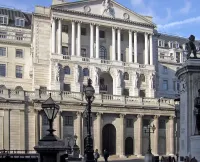
A bank is a regulated financial institution licensed to accept...
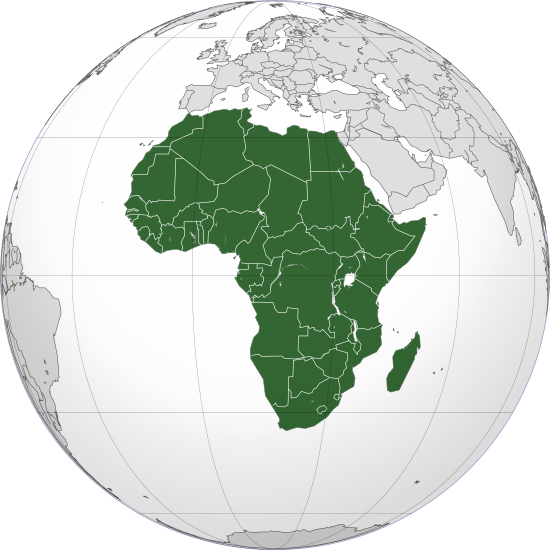
Africa is the second-largest and second-most populous continent home to...
FIFA or the F d ration Internationale de Football Association...
Football commonly known as soccer in many regions is the...
Music involves arranging sounds to create form harmony melody rhythm...
Trending
4 hours ago Ryan Day Supports Son RJ Day at High School Senior Night
5 hours ago Vivek Ramaswamy's Nuclear Startup Atlas Atomics Reaches $1.9 Billion Valuation

5 hours ago José Mourinho Defends Kylian Mbappé Against Ridiculous Criticism at Real Madrid
5 hours ago Oregon QB Dante Moore Ruled Out Against UCLA; Dylan Raiola Named Starter
5 hours ago Robert Lewandowski's Team Secures Remarkable Comeback Win in Major League Soccer
5 hours ago Jimmy Kimmel Live Announces Star-Studded Guest Lineup for October 12-16
Popular

Ken Paxton is an American politician and lawyer serving as...

Cristiano Ronaldo widely considered one of the greatest footballers captains...

Michael Joseph Jackson the King of Pop was a highly...

Elon Musk is a visionary entrepreneur and engineer known for...

Shakira Isabel Mebarak Ripoll the Queen of Latin Music is...

Bernie Sanders is a prominent American politician and the senior...