


Vanderbilt University, located in Nashville, Tennessee, is a private research university established in 1873. It was founded through a significant endowment from Cornelius Vanderbilt, aiming to foster healing after the Civil War. A member of the Southeastern Conference since its inception, Vanderbilt holds the distinction of being the conference's sole private institution since 1966. It is recognized for its academic programs and research contributions.
1902: Robert A. Young Retires from Board of Trust
In 1902, Robert A. Young, a Methodist minister and former Financial Secretary on the Board of Trust, retired from the board after serving since 1874.


1905: Fire at Kirkland Hall
In 1905, a major fire severely damaged Kirkland Hall. It was rebuilt in an Italianate design with only one tower.
1905: Main Building (Kirkland Hall) Burns Down and is Rebuilt
In 1905, the Main Building, also known as Kirkland Hall, was destroyed by a fire. Following the fire, the building was rebuilt in an Italianate design, with a single tower, after the university received over $50,000 in donations.
1910: Board Refuses to Seat Methodist Bishops
In 1910, the Vanderbilt Board of Trust refused to seat three Methodist bishops, leading to a legal dispute with the Methodist Church.
March 21, 1914: Tennessee Supreme Court Rules on Vanderbilt's Founder
On March 21, 1914, the Tennessee Supreme Court ruled that Cornelius Vanderbilt, and not the Methodist Church, was the founder of the university, allowing the board to seat whomever it wished.
1915: Whitefoord Russell Cole Becomes Chairman of the Board of Trust
In 1915, Whitefoord Russell Cole became the chairman of the Board of Trust, serving until 1934. He is known for defending Chancellor Kirkland's decision to split with the Methodist Church.
1925: Frank C. Rand Donates to Vanderbilt University
In 1925, Frank C. Rand donated US$150,000 to Vanderbilt University, which led to Rand Hall being named in his honor.
1928: Construction of Garland, Buttrick, and Calhoun Halls Completed
In 1928, the construction of Garland Hall, Buttrick Hall, and Calhoun Hall was completed, named for Chancellor Landon Garland, Wallace Buttrick, and William Henry Calhoun respectively.
1933: United Daughters of the Confederacy Donate for Confederate Memorial Hall
In 1933, the United Daughters of the Confederacy donated $50,000 for the construction of Confederate Memorial Hall.
1934: Whitefoord Russell Cole Ends Tenure as Chairman of the Board of Trust
In 1934, Whitefoord Russell Cole ended his tenure as chairman of the Board of Trust, a position he had held since 1915.
1935: Confederate Memorial Hall Completed
In 1935, Confederate Memorial Hall was completed after receiving funding from the United Daughters of the Confederacy.
1937: Kirkland leaves Vanderbilt; Main Building Renamed
In 1937, James Kirkland concluded his tenure as chancellor, the longest in Vanderbilt's history, after serving from 1893. Following his departure, the university's Main Building was renamed Kirkland Hall in his honor, marking the end of an era.
1937: End of James Hampton Kirkland's Chancellorship
James Hampton Kirkland served as Vanderbilt's chancellor from 1893 to 1937. Kirkland Hall was named after him.
1937: Carmichael begins term as Vanderbilt Chancellor
Oliver Carmichael began his brief tenure as Vanderbilt's chancellor in 1937, succeeding James Kirkland, who had served for a long time. Carmichael's term would last until 1946.
1940: Max Delbrück Joins the Department of Physics
In 1940, German biophysicist Max Delbrück joined the Department of Physics at Vanderbilt University.
1942: Luria and Delbrück Publish on Bacterial Resistance
In 1942, Max Delbrück and Salvador Luria published their findings on bacterial resistance to virus infection mediated by random mutation.
1945: Start of Radioactive Iron Study on Pregnant Women
In 1945, Vanderbilt University researchers, in conjunction with the Tennessee Department of Health, began a study on iron metabolism during pregnancy. Over 800 pregnant women were given radioactive iron between 1945 and 1949 without informed consent.
1945: Radioactive Iron Experiment Begins
In 1945, researchers at Vanderbilt University began an experiment where 800 pregnant women were given radioactive iron without their consent.
1946: Branscomb begins term as Vanderbilt Chancellor
Harvie Branscomb began his tenure as Chancellor of Vanderbilt in 1946, succeeding Oliver Carmichael. Branscomb's leadership marked a period of significant growth and improvement for the university.
1946: Carmichael ends term as Vanderbilt Chancellor
In 1946, Oliver Carmichael's nine-year tenure as Vanderbilt's chancellor concluded, succeeded by Harvie Branscomb. During his time, Carmichael notably developed the graduate school and established the Joint University Libraries.
1947: Radioactive Iron Experiment Ends
In 1947, researchers at Vanderbilt University concluded an experiment where 800 pregnant women were given radioactive iron without their consent.
1949: End of Radioactive Iron Study on Pregnant Women
Between 1945 and 1949, Vanderbilt University researchers, in conjunction with the Tennessee Department of Health, gave over 800 pregnant women radioactive iron without informed consent. The injections were later suspected to have caused cancer in at least three of the children who were born to these mothers.
1949: Cole Hall Completed
In 1949, Cole Hall was completed and named after Whitefoord Russell Cole.
1951: Maryly Van Leer Peck Graduates as First Female Chemical Engineer
In 1951, Maryly Van Leer Peck graduated as the first female chemical engineer, after being unable to study this field at Georgia Tech.
1952: Memorial Gym Built
In 1952, Memorial Gym was built, and both of Vanderbilt's basketball teams began playing there, giving Vanderbilt home court advantage known as 'Memorial Magic'.
1953: First African American Student Admitted
In 1953, Chancellor Branscomb orchestrated the admission of the first African American student to Vanderbilt, in the School of Divinity.
1956: Langford v. Vanderbilt University
In 1956, the Tennessee court dismissed the lawsuit in Langford v. Vanderbilt University, which was a libel case. The ruling concluded that the university was not the owner of the newspaper, The Vanderbilt Hustler.
1960: James Lawson Expelled
In 1960, under pressure, Chancellor Branscomb expelled Divinity student James Lawson, a Congress of Racial Equality leader organizing sit-ins against segregation. A dozen faculty members resigned in protest.
May 1962: Board Approves Admission of African Americans
In May 1962, the Board of Trustees approved Chancellor Branscomb's recommendation to admit African Americans in all of the university's educational schools.
1963: Heard begins term as Vanderbilt Chancellor
Alexander Heard began his tenure as chancellor in 1963, succeeding Harvie Branscomb. During his time, he would establish the Owen Graduate School of Management and negotiate Vanderbilt's merger with Peabody College.
1963: Branscomb leaves Vanderbilt
In 1963, Harvie Branscomb concluded his tenure as Chancellor of Vanderbilt, a period marked by significant growth and the opening of admissions to all races. His departure concluded a period of major advancement at the university.
1964: First IMPACT Symposium Held
In 1964, Vanderbilt held its first IMPACT Symposium, a multi-day annual event discussing current and controversial topics with notable speakers.
1964: First Black Undergraduates Enter Vanderbilt
In the fall of 1964, the first black undergraduates entered Vanderbilt University.
1965: Historic District Designation
In 1965, the National Historic Landmarks program designated the central lawn and surrounding buildings of the Commons campus as a historic district.
1966: Perry Wallace Recruited to Play Basketball
In 1966, Vanderbilt University recruited Perry Wallace, the first African American to play varsity basketball in the Southeastern Conference (SEC).
1966: Vanderbilt Becomes the Southeastern Conference's Only Private School
In 1966, Vanderbilt became the sole private school within the Southeastern Conference (SEC), marking a distinct position within the athletic conference.
1967: Perry Wallace Begins Playing Varsity Basketball
In 1967, Perry Wallace began playing varsity basketball for Vanderbilt, facing opposition due to segregation.
1969: Max Delbrück and Salvador Luria Awarded Nobel Prize
In 1969, Max Delbrück and Salvador Luria were awarded the Nobel Prize in Physiology or Medicine for their discoveries concerning the replication mechanism and the genetic structure of viruses.
1970: Perry Wallace Ends Basketball Career at Vanderbilt
In 1970, Perry Wallace concluded his varsity basketball career at Vanderbilt University.
1972: Stahlman Professorship Named
In 1972, Vanderbilt University took James G. Stahlman's $5 million donation.
1973: Stahlman Professorship Named
In 1973, Vanderbilt University named a professorship in honor of James G. Stahlman.
March 1978: Davis Cup Match Disrupted by Protests
In March 1978, Vanderbilt hosted the South African tennis team for the Davis Cup, which was disrupted by anti-apartheid protesters.
1979: Vanderbilt Acquires Peabody College
In 1979, Vanderbilt acquired Peabody College, formerly known as the "George Peabody College for Teachers".
1980: Nat Turner Day Protest and Assault
In 1980, several Vanderbilt students held Nat Turner Day to protest Kappa Alpha Order's celebration of Old South Day. The university sided with KA, banning Nat Turner Day. An African-American student was then called a homophobic slur and assaulted by the KA chapter.
1982: Heard leaves Vanderbilt
In 1982, Alexander Heard concluded his tenure as Vanderbilt's chancellor, after a 20-year period during which the Owen Graduate School of Management was founded and Vanderbilt merged with Peabody College.
1982: Wyatt begins term as Vanderbilt Chancellor
Joe B. Wyatt began his term as chancellor in 1982, succeeding Alexander Heard. During his time, he oversaw a significant increase in the university's endowment and improved faculty quality.
1984: Jeff Turner Wins Gold at the Olympics
In 1984, Jeff Turner, who attended Vanderbilt, was a member of the gold medal-winning United States men's Olympic basketball team.
1988: Campus Designated as National Arboretum
In 1988, the Vanderbilt campus was designated as a national arboretum by the Association of Botanical Gardens and Arboreta.
1989: Posse Foundation Scholarships Offered
In 1989, Vanderbilt University began offering Posse Foundation scholarships to increase diversity among students.
1992: Peter Sharis Competes in the Summer Olympics
In 1992, Peter Sharis, who attended Vanderbilt, competed in the men's coxless pair event at the Summer Olympics.
1995: African-American Student Body Percentage
By 1995, 4.23% of the undergraduate student body at Vanderbilt was African-American.
1998: Settlement of Class Action Lawsuit
In 1998, Vanderbilt University settled a class action lawsuit with mothers and surviving children who were part of the radioactive iron study conducted between 1945 and 1949 for $10.3 million.
1998: Lawsuit Settlement for Radioactive Iron Experiment
In 1998, women involved in the radioactive iron experiment received a settlement of $9.1 million from Vanderbilt University and $900,000 from the Rockefeller Foundation.
February 2000: Gee Appointed Chancellor
In February 2000, Gee was appointed as chancellor by the Board of Trust, succeeding Joe B. Wyatt. This marked the beginning of his leadership at Vanderbilt University.
2000: Wyatt Leaves Vanderbilt
In 2000, Joe B. Wyatt concluded his tenure as Chancellor of Vanderbilt, a period marked by significant increases in the university's endowment and student diversity. His focus on faculty quality contributed to Vanderbilt's rise in national rankings.
2001: Academic Residential College System Created
In 2001, Vanderbilt University decided to remodel the undergraduate experience by creating an academic residential college system.
2002: Confederate Memorial Hall Renaming Decided
In 2002, the university decided to rename Confederate Memorial Hall to Memorial Hall, leading to controversy.
2003: Lawsuit Dismissed
In 2003, the Davidson County Chancery Court dismissed the lawsuit regarding renaming Confederate Memorial Hall.
2004: Carter Hawkins Plays Baseball at Vanderbilt
Carter Hawkins, the general manager of the Chicago Cubs, played baseball at Vanderbilt from 2004 to 2007.
2004: Baseball Team Qualifies for NCAA Super Regionals
In 2004, Vanderbilt's baseball team qualified for the NCAA Super Regionals.
2004: Perry Wallace's Jersey Retired
In 2004, a student-led initiative led to the retirement of Perry Wallace's jersey.
2004: Possible Breakthrough in Breeding Blue Roses
In mid-2004, it was announced that Vanderbilt's chemical biology research may have serendipitously opened the door to the breeding of a blue rose, something that has long been coveted by horticulturalists and rose lovers.
May 2005: Court Rules on Confederate Memorial Hall Name
In May 2005, the Tennessee Court of Appeals ruled that Vanderbilt must pay damages if the inscription bearing the name "Confederate Memorial Hall" was removed or altered.
July 2005: University Announces Decision on Confederate Memorial Hall
In late July 2005, Vanderbilt University announced it would not appeal the court's decision regarding Confederate Memorial Hall nor remove the inscription.
2005: Lawson Re-hired as Distinguished University Professor
In 2005, James Lawson was re-hired as a Distinguished University Professor for the 2006–2007 academic year.
2005: Baseball Team Achieves Top Recruiting Class
In 2005, Vanderbilt's baseball team had the nation's top recruiting class, according to Baseball America.
2005: Spending Monitored
In 2005, after allegations of lavish spending, the Board of Trust established a committee to monitor Chancellor Gee's personal spending more closely.
2006: Lawson Re-hired as Distinguished University Professor
In 2006, James Lawson was re-hired as a Distinguished University Professor for the 2006–2007 academic year.
2006: Baseball Team Makes NCAA Field
In 2006, Vanderbilt's baseball team made the NCAA field.
2007: Brandt Snedeker Named PGA Tour Rookie of the Year
In 2007, Brandt Snedeker was named the PGA Tour Rookie of the Year.
2007: Lawson Completes Term as Distinguished University Professor
In 2007, James Lawson completed his term as a Distinguished University Professor, having been re-hired in 2005 for the 2006-2007 academic year.
2007: Baseball Team Wins SEC Championships and Earns Top Seed in NCAA Tournament
In 2007, Vanderbilt's baseball team won the SEC regular-season and tournament championships and secured the top seed in the NCAA tournament, being ranked first in most polls for a large portion of the season.
2007: Zeppos Named Interim Chancellor
In 2007, after Gordon Gee's departure, Zeppos was appointed as the interim chancellor of Vanderbilt University, taking over the leadership responsibilities.
March 1, 2008: Zeppos Named Chancellor
On March 1, 2008, Zeppos was officially named chancellor of Vanderbilt University by the Board of Trust, solidifying his position after serving as interim chancellor.
2008: The Martha Rivers Ingram Commons Opens
In 2008, the first phase of Vanderbilt's residential college system was implemented with the opening of The Martha Rivers Ingram Commons, housing all first-year students in 10 adjacent houses.
2009: No-Loan Policy Instituted
In 2009, Vanderbilt University instituted a no-loan policy, ensuring that admitted students with need-based aid packages would not have any student loans.
November 4, 2010: Allegations of Eviction from Christian Fraternity
On November 4, 2010, two anonymous former members of the Vanderbilt chapter alleged that they were evicted from Beta Upsilon Chi, a Christian fraternity, for being gay.
2010: Poets & Writers MFA Program Ranking
In 2010, Poets & Writers ranked Vanderbilt's English Department's MFA Program in Creative Writing 18th among the top 50 writing programs in the United States.
2010: Exoskeleton Testing Begins
In 2010, the Center for Intelligent Mechatronics at Vanderbilt began testing a powered exoskeleton intended to assist paraplegics, stroke victims and other paralyzed or semi-paralyzed people to walk independently.
2011: Human Resources & Labor Review Ranking
In 2011, Human Resources & Labor Review ranked Vanderbilt as one of the 50 Best World Universities.
2011: Christian Organizations Placed on Probation
In 2011, following a US Supreme Court decision, four Christian student organizations were placed on probation for non-compliance with Vanderbilt's nondiscrimination policy.
2011: Investment in EMVest Exposed
In 2011, the Oakland Institute revealed Vanderbilt's investment in EMVest Asset Management, accused of land grabbing in sub-Saharan Africa.
2012: Shannon Vreeland Wins Gold at the Summer Olympics
In 2012, Shannon Vreeland, who attended Vanderbilt, won a gold medal in the 4×200-meter freestyle relay at the Summer Olympics.
2012: Vanderbilt exoskeleton receives funding
In 2012, The Vanderbilt exoskeleton received funding from Parker Hannifin Corporation and has since gone to market internationally.
2012: Elliston Hall Built
In 2012, Vanderbilt built Elliston Hall in honor of Elizabeth Boddie Elliston of the Burlington Plantation.
2012: Controversy Surrounding Non-Discrimination Policies
In 2012, controversy continued to surround the issue of non-discrimination policies, culminating in a proposed state law exempting student organizations from these policies. Though it passed the legislature, it was vetoed.
2012: Student Protests Against EMVest Investment
In 2012, student protests erupted in response to Vanderbilt's investment in EMVest.
2013: Vanderbilt Divests from EMVest
By 2013, Vanderbilt administrators had divested from EMVest.
2013: National Institutes of Health Funding Ranking
In 2013, Vanderbilt University was ranked 12th in the country in funding from the National Institutes of Health.
2014: Survey Reveals High Rates of Sexual Assault
A 2015 survey reported that 20% of undergraduate students at Vanderbilt were sexually assaulted in 2014-2015.
2014: The Melodores win Sing-Off
In 2014, The Melodores, a male a cappella group from Vanderbilt, won the Sing-Off competition, showcasing the university's strong performing arts presence.
2014: Baseball Team Wins College World Series
In 2014, Vanderbilt's baseball team won the College World Series, marking the school's first national championship in a men's sport.
2014: Warren and Moore College Open
In 2014, Warren College and Moore College opened as the first two upperclass residential colleges, built on the site of the pre-existing Kissam Quadrangle dormitories.
March 2015: Swastikas Found in Jewish Fraternity House
In March 2015, three swastikas were found spray-painted inside the house of Alpha Epsilon Pi, a historically Jewish fraternity on campus. The act was characterized as a "hate crime".
December 2015: Hackberry Tree Fall
In December 2015, a hackberry tree fell on Vanderbilt's campus, leaving 10 students injured with "broken bones and stitches."
2015: Federal Review Due to Sexual Misconduct Cases
As of 2015, Vanderbilt was under review by federal education officials due to complaints from current and former female students about how the university handled cases of sexual misconduct.
2015: The Wond'ry Innovation Center Opens
In 2015, Vanderbilt University opened the Wond'ry, a new innovation center, as part of its Academic Strategic Plan.
2015: Opportunity Vanderbilt Implemented
In 2015, Vanderbilt implemented Opportunity Vanderbilt, committing to need-blind admissions and meeting 100% of demonstrated financial need with grants.
2015: National Merit Scholars Enrollment Ranking
In 2015, Vanderbilt was ranked fifth overall and fourth among private universities in enrollment of National Merit Scholars.
2015: The dollar value of the donation in 1933
In 2015, the $50,000 donation made in 1933 was worth approximately $925,166.
April 2016: Batey Convicted of Charges Related to Videotaped Rape
In April 2016, Cory Batey, a former Vanderbilt football player, was found guilty of charges related to the videotaped rape of an unconscious woman in a dorm room.
April 2016: Vanderbilt University Medical Center Becomes Independent
In April 2016, Vanderbilt University Medical Center (VUMC) became an independent organization, separating from the university. Despite the separation, VUMC continues to collaborate with the university, with many clinical staff serving as faculty members.
June 2016: Vandenburg Convicted of Charges Related to Videotaped Rape
In June 2016, Brandon Vandenburg, a former Vanderbilt football player, was found guilty of charges related to the videotaped rape of an unconscious woman in a dorm room.
August 2016: Confederate Removed from Memorial Hall Name
In August 2016, the university removed the word "Confederate" from Memorial Hall after receiving donations to repay the United Daughters of the Confederacy.
2016: Class Ranking of 2016 Students
For students of the class of 2016 whose schools reported exact class rankings, 93% ranked in the top 10% of their class.
2016: Travel + Leisure Ranking
In 2016, Vanderbilt University was listed by Travel + Leisure as having one of the most beautiful campuses in the country.
2016: Vanderbilt University Medical Center Becomes Separate Institution
In 2016, the Vanderbilt University Medical Center, which was formerly part of Vanderbilt University, became a separate institution.
2016: Tennessine Officially Named
In 2016, the element Tennessine (Ts), element 117 on the periodic table, which Vanderbilt was involved in the discovery of, was officially named after the state of Tennessee by the International Union of Pure and Applied Physics.
2016: Times Higher Education World University Rankings
In the Times Higher Education 2016 World University Rankings, Vanderbilt is 87th.
2017: Princeton Review Rankings
In 2017, Vanderbilt University was ranked first for happiest students, second for quality of life, fifth for most beautiful campus, and fifth for best-run college by The Princeton Review.
2018: Business Insider Ranking
In 2018, Business Insider listed Vanderbilt as the fifth smartest college in America.
2018: E. Bronson Ingram College Opens
In 2018, E. Bronson Ingram College opened on the site of the former Vanderbilt and Barnard Halls, further expanding the academic residential college system at Vanderbilt.
2018: Kiplinger's Best College Values Ranking
In 2018, Kiplinger's Best College Values rankings listed Vanderbilt as one of the top ten "best value" universities and one of the top five private universities for value.
April 2019: Zeppos Announces Resignation
In April 2019, Zeppos announced his intention to resign from the chancellorship, with his departure scheduled for August 1, 2019.
August 1, 2019: Zeppos Resigns From Chancellorship
Zeppos officially resigned from the chancellorship on August 1, 2019.
December 4, 2019: Diermeier Announced as Next Chancellor
On December 4, 2019, Daniel Diermeier was announced as the next chancellor of Vanderbilt University, set to take office on July 1 of the following year.
2019: Baseball Team Wins College World Series Again
In 2019, Vanderbilt's baseball team won the College World Series for the second time.
July 1, 2020: Daniel Diermeier Becomes Chancellor
Daniel Diermeier has served as chancellor of Vanderbilt University since July 1, 2020.
July 2020: "Abolish Greek Life" Movement
In July 2020, a white fraternity member's use of a racial slur sparked a national "Abolish Greek Life" movement at multiple universities. This happened after a video was released of the fraternity member and white Kappa Alpha Theta sisters wearing what appeared to be mock durags.
2020: Money's "Best Colleges in America, Ranked by Value" Ranking
In 2020, Money's "Best Colleges in America, Ranked by Value" rankings listed Vanderbilt as being the eighth-best value university in the nation.
2020: Accreditation as a Level II Arboretum by ArbNet
In 2020, Vanderbilt's campus was accredited as a Level II arboretum by ArbNet.
2020: Zeppos College Opens
In 2020, Zeppos College opened on the former site of the Carmichael Towers, continuing the expansion of Vanderbilt's academic residential college system.
February 2021: Death at Rothschild College Construction Site
In February 2021, the university released a statement regarding the death of a construction worker at the Rothschild College construction site. The university has since stated the death was of natural causes.
July 2021: Death at Owen Graduate School of Management
In July 2021, the university confirmed that there had been another on-campus construction death at the Owen Graduate School of Management. The university has since stated the death was of natural causes.
2021: Research and Development Expenditure
According to the National Science Foundation, Vanderbilt spent $1 billion on research and development in 2021, ranking it 24th among American universities.
2021: Vanderbilt Enrollment Statistics
As of 2021, Vanderbilt had a total enrollment of 13,796 students, comprised of 7,111 undergraduate and 6,685 graduate and professional students. The student body includes individuals from all 50 states and over 100 countries.
2021: Student-to-Faculty Ratio
As of 2021, Vanderbilt has a student-to-faculty ratio of 8:1.
2021: Greek System Involvement
As of the 2021-22 academic year, 23% of total undergraduates were actively involved in Vanderbilt's Greek system, with 20% of men being members of fraternities and 26% of women being members of sororities.
August 2022: Tree Fall on Peabody Lawn
In August 2022, a tree fell on Peabody Lawn at Vanderbilt, leaving two students injured.
November 12, 2022: Fall of the Bicentennial Oak
On November 12, 2022, the Bicentennial Oak, the oldest living thing on Vanderbilt's campus, succumbed to age-related decay and fell.
2022: Rothschild College Opens
In 2022, Rothschild College opened on the former site of the Carmichael Towers, contributing to Vanderbilt's academic residential college system.
2022: Acceptance and Yield Rates
In 2022, Vanderbilt's undergraduate acceptance rate was 6.1%, and its yield rate was 52.3%. This makes Vanderbilt one of the most selective universities in the United States.
2022: ARWU Field Rankings
In 2022, the ARWU Field rankings placed Vanderbilt as fourth best in the world for Education and Library & Information Science, 14th in Law, and 20th in Political Science.
2022: Incoming Undergraduate Class Demographics
In 2022, the incoming undergraduate class was 49% male and 51% female. Moreover, 12.7% of the class was classified as Hispanic, 11.9% Black or African American, 16.9% Asian, 6% other/two or more races, and 10.4% international.
February 2023: University Confirms Construction Death
In February 2023, the university confirmed to The Vanderbilt Hustler that there had been another on-campus construction death in July 2021 at the Owen Graduate School of Management.
2023: QS World University Rankings
The 2023 QS World University Rankings ranked Vanderbilt 199th in the world.
2023: Class of 2023 Academic Achievements
The class of 2023 included 231 National Merit Scholars and 116 valedictorians or salutatorians. Additionally, the class had standardized test scores that were well above average: the interquartile range (25th percentile – 75th percentile) of SAT scores was 1460–1560, while the interquartile range of ACT scores was 33–35.
April 2024: Student Encampment in Support of Palestine
In April 2024, Vanderbilt University students joined other campuses in support of Palestine by setting up an encampment on campus. The protestors demanded the university boycott companies that do business in Israel and an end to what they call a Palestinian genocide. The protests escalated, students were forcibly removed by police, and three were arrested for misdemeanor assault and later expelled. More than 170 faculty members opposed the university's response.
September 6, 2024: Lease Agreement for General Theological Seminary Campus
On September 6, 2024, Vanderbilt University entered into a lease agreement to occupy the General Theological Seminary campus in Chelsea, Manhattan, pending approval from government authorities.
2024: Carmichael College Opens
In 2024, Carmichael College opened on the former site of the Carmichael Towers, completing the planned academic residential college system at Vanderbilt.
2024: Niche Ranking
In 2024, Niche ranked Vanderbilt the 14th best college in America, and the 16th hardest college to get into in America.
2024: Protests and Arrests Following BDS Resolution Block
In 2024, university administrators blocked the Vanderbilt Student Government from voting on a Boycott, Divestment and Sanctions resolution following Israeli invasion of Gaza. The protest resulted in multiple student expulsions and suspensions. A Nashville Scene reporter was arrested while covering the event.
2024: Graduate Program Rankings by U.S. News & World Report
In the 2024 graduate program rankings, U.S. News & World Report ranked the Peabody College of Education the 2nd best national school of education, the Vanderbilt University Law School the 14th best national law school, the Vanderbilt University School of Medicine the 5th best national research-oriented medical school, the Vanderbilt University School of Nursing the 4th best national nursing school, the School of Engineering the 41st best national engineering school, and the Owen Graduate School of Management the 18th best national business school. Additionally, U.S. News & World Report ranked Vanderbilt 1st in the nation in the fields of special education, educational administration, and audiology.
July 28, 2025: Talks with San Francisco about opening a campus
On July 28, 2025, it was revealed that Vanderbilt was in talks with the city of San Francisco about opening a downtown campus.
2025: Value of Vanderbilt's initial endowment in 2025
By 2025, Vanderbilt's initial endowment had increased to $27 million.
2025: Vanderbilt Opens New York City, San Francisco, and West Palm Beach Campuses
In 2025, Vanderbilt University opened campuses in New York City, San Francisco, and West Palm Beach.
2025: Reintroduction of Volleyball
In 2025, Vanderbilt University plans to reintroduce volleyball during the 2025–26 academic year.
January 13, 2026: Acquisition of California College of the Arts Campus
On January 13, 2026, Vanderbilt announced that it would be acquiring the campus of the California College of the Arts.
January 2026: Fundraising Goal for Palm Beach Campus
As of January 2026, Vanderbilt has raised $300 million as part of its fundraising goal for its Palm Beach campus.
2026: Vanderbilt Opens New York City, San Francisco, and West Palm Beach Campuses
In 2026, Vanderbilt University opened campuses in New York City, San Francisco, and West Palm Beach.
2027: Start of Operations at New San Francisco Campus
Vanderbilt announced it would begin operating its new campus in San Francisco in 2027.
2029: Anticipated Completion of Palm Beach Campus Construction
Vanderbilt anticipates completed construction of its Palm Beach campus by 2029.
Mentioned in this timeline
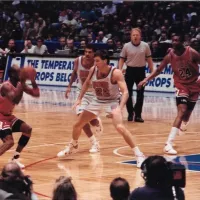
Basketball is a team sport played on a rectangular court...
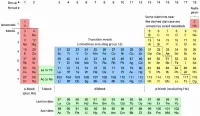
The periodic table organizes chemical elements into rows periods and...
The United States of America is a federal republic primarily...
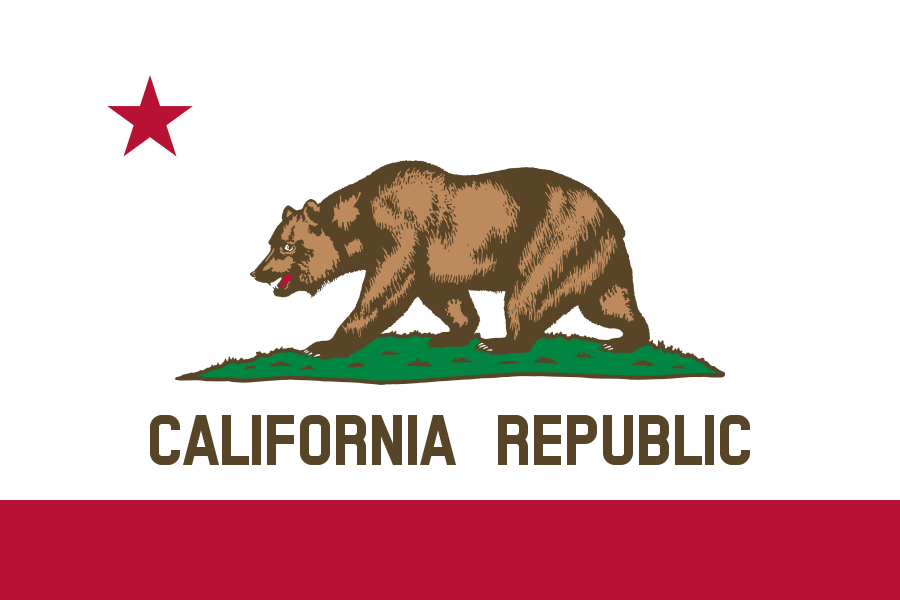
California is a U S state on the Pacific Coast...
The rapid advancement of artificial intelligence continues to dominate the...

San Francisco is the fourth-most populous city in California and...
Trending

3 hours ago Katerina Siniakova Advances to Japan Open Final After Defeating Katie Boulter
3 hours ago Rico Dowdle Listed as Questionable for Steelers Upcoming Matchup Against Saints
3 hours ago Christian Bale's New Gothic Monster Romance Film Streams Now on Prime Video

4 hours ago Ashlyn Krueger and Katerina Siniakova Face Off in WTA Osaka Kinoshita Group Japan Open Final

3 hours ago Zendaya Launches Oscar Campaign for Best Actress Role in Dune 3

5 hours ago Charli XCX Joins Martin Scorsese's New Horror Film Featuring Leonardo DiCaprio
Popular

Ilhan Omar is a prominent American politician currently serving as...

Ken Paxton is an American politician and lawyer serving as...

Elon Musk is a visionary entrepreneur and engineer known for...

Michael Joseph Jackson the King of Pop was a highly...

Elizabeth Holmes is an American entrepreneur and the founder of...

Barack Obama the th U S President - was the...