


Vinod Khosla is a prominent venture capitalist and co-founder of Sun Microsystems. As the founder of Khosla Ventures, he has established himself as a leading figure in Silicon Valley, known for his early-stage investments in disruptive technologies. Khosla is widely recognized for his high-conviction, risk-tolerant investment philosophy, focusing on transformative innovations in areas such as clean energy, sustainable agriculture, and artificial intelligence. He frequently advocates for the role of technology in solving global challenges, emphasizing the importance of long-term vision over immediate profitability. His career is marked by a blend of technical engineering expertise and strategic business acumen, making him a major influence in shaping the modern technology landscape.


1971: Beginning of IIT Delhi Education
In 1971, Vinod Khosla began his undergraduate studies at the Indian Institute of Technology (IIT) Delhi, where he would go on to earn a bachelor's degree in electrical engineering.
1975: Soy Milk Venture Attempt
In 1975, Vinod Khosla attempted to launch a soy milk business aimed at providing a shelf-stable dairy alternative for Indian consumers lacking refrigeration, but the project failed due to a lack of funding and infrastructure challenges.
1976: Graduation from IIT Delhi
By 1976, Vinod Khosla completed his time at IIT Delhi, concluding his bachelor's degree program in electrical engineering.
1976: Emigration to the United States and Academic Pursuit
In 1976, at the age of 21, Vinod Khosla emigrated to the United States to study for a Master's degree in biomedical engineering, supported by a full scholarship.
1976: Commencement of Market Value Creation Period
Starting in 1976, Vinod Khosla began the period of his professional career during which he helped build 40 different companies, ultimately leading to a cumulative market value of $150 billion by the year 2001.
1980: Completion of MBA at Stanford
After an initial period studying at Carnegie Mellon, Vinod Khosla was admitted to the Stanford Business School's MBA program and successfully completed his degree in 1980.
1980: Marriage to Neeru Khosla
In 1980, Vinod Khosla married his longtime girlfriend, Neeru Khosla, whom he had been with since the age of 16.
1980: Transition to Entrepreneurship
In 1980, following the completion of his MBA at Stanford University, Vinod Khosla made the deliberate choice to pursue a career as an entrepreneur by turning down multiple job offers to launch his own business venture.
1981: Founding of Data Dump
In 1981, Vinod Khosla partnered with his former Stanford classmate, Scott McNealy, to co-found a company called Data Dump, which ultimately proved to be an unsuccessful venture.
1982: Co-founding of Sun Microsystems
In 1982, Vinod Khosla co-founded Sun Microsystems alongside Andy Bechtolsheim, Scott McNealy, and later Bill Joy, while securing initial seed funding from Kleiner Perkins Caufield & Byers.
1984: Departure from Sun Microsystems
After serving as the company's first chairman and CEO since its inception, Vinod Khosla stepped down from his role at Sun Microsystems in 1984 to pursue a career in venture capital.
1984: Daisy Systems IPO
In 1984, Daisy Systems, the company Vinod Khosla co-founded, held one of the most successful initial public offerings of the year, though Khosla had already departed the organization prior to this event.
1986: Vinod Khosla joins Kleiner Perkins
In 1986, Vinod Khosla became a general partner at the venture capital firm Kleiner Perkins, working in collaboration with board member John Doerr to oversee investments in the semiconductor and video game industries.
1986: Relocation to current residence
Starting in 1986, Vinod Khosla and his family settled into what has remained their long-term home.
1994: Excite Strategic Advise and Financing
In 1994, Vinod Khosla influenced the direction of Excite by suggesting the company adapt its search engine for the internet and proposing an advertising-based revenue model. To test his technical theories, he provided $5,000 to purchase a larger hard drive to support the search engine's operations.
April 1, 1996: April Fools' IPO Prank
On April 1, 1996, Vinod Khosla executed an April Fools' Day prank on Excite co-founder Joe Kraus by falsely informing him that the company's IPO had been canceled mere hours before trading was set to begin, only to retract the statement thirty minutes later.
1996: Incubation and Investment in Tech Firms
In 1996, Vinod Khosla incubated Cerent Corporation, investing approximately $8 million which eventually saw a 300x return upon its sale to Cisco for $7.8 billion. During this same period, he was also involved with Siara, where he served as the company's chief executive officer for its first year prior to its acquisition by Redback Networks.
May 1999: Sale of Excite to @Home Network
In May 1999, after mentoring the founders throughout the company's growth, Vinod Khosla saw the sale of Excite to @Home Network for $7 billion, marking his first venture capital success of that specific magnitude.
November 1999: Recognition of Venture Capital Success
In November 1999, John Doerr publicly acknowledged that Vinod Khosla had generated $10 billion in profits for Kleiner Perkins through a series of highly successful investments in the fiber-optic and internet sectors throughout the 1990s, including companies like Juniper, Cerent, and Excite.
2001: Commitment to family dinner schedule
During 2001, Vinod Khosla highlighted his dedication to work-life balance by noting that he prioritized eating dinner with his family at least 25 times each month.
2001: Top Venture Capitalist Recognition and Midas List Inclusion
During 2001, Vinod Khosla was named the number one venture capitalist on the planet by Red Herring for his role in creating 40 companies that generated $150 billion in market value between 1976 and 2001. Additionally, he was featured on the inaugural Forbes Midas List that same year.
2001: Critique of Optical Networking Trends
In 2001, Vinod Khosla expressed public disdain for the optical networking sector, characterizing the market behavior as driven by greed in a manner consistent with the recent dot-com bubble collapse.
2001: Recognition as a top-tier Venture Capitalist
In 2001, it was noted that Vinod Khosla had established a record of creating more multibillion-dollar companies than any other venture capitalist with the exception of John Doerr. This achievement placed him in an elite cohort alongside legendary investors like Arthur Rock and Donald Valentine, who were also recognized for their significant investments in industry-defining companies like Intel and Apple.
2004: Transition to Part-Time at Kleiner Perkins and Founding of Khosla Ventures
In 2004, Vinod Khosla transitioned to a part-time role and eventually departed from Kleiner Perkins to dedicate more time to his family and focus on science-based technology startups. Later that same year, he established his own venture capital firm, Khosla Ventures, in Menlo Park, California, specifically to invest in high-risk, experimental technologies with a social impact focus.
September 2009: Expansion of Khosla Ventures
In September 2009, Khosla Ventures secured $750 million for its third fund targeting early and growth-stage companies, while simultaneously raising $250 million for a separate seed fund focused on higher-risk ventures. This period also marked the first time Khosla opened the firm to outside investors.
2020: Publication of Climate Technology Perspective
In 2020, Vinod Khosla authored a blog post titled “A few Critical Climate Technology Breakthroughs Multiplied by “Instigators” is desperately needed,” in which he argued against the narrative that cleantech investing is a failure and emphasized the necessity of breakthrough technologies to address climate change.
May 2026: Forbes Net Worth Valuation
In May 2026, Forbes reported that Vinod Khosla's estimated net worth had reached US$15.6 billion.
July 11, 2026: Purchase Agreement for the Seattle Seahawks
On July 11, 2026, Vinod Khosla finalized a binding agreement to acquire the Seattle Seahawks, marking a significant expansion into professional sports ownership.
2026: Recognition in Forbes 2026 Lists and Midas List
In 2026, Vinod Khosla achieved significant professional recognition by ranking 10th on the Forbes 250 list of America's Greatest Innovators, 14th on the inaugural Forbes list of America's Most Successful Living Immigrants, and securing the #1 spot on the Forbes Midas List.
Mentioned in this timeline
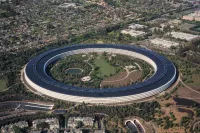
Apple Inc founded in and headquartered in Cupertino California is...
The United States of America is a federal republic primarily...
California is a U S state on the Pacific Coast...

Seattle is the most populous city in Washington and the...
India officially the Republic of India is a South Asian...

The apple is a widely cultivated edible fruit originating from...
Trending

3 hours ago NBA Injury Updates: Keegan Murray Questionable and Kyrie Irving Downgraded to Out
3 hours ago Jackson Chourio Shines During High-Stakes MLB Postseason Performance
4 hours ago Yandy Díaz and Jake Bauers Face Off in World Series Eight Years Post-Trade

3 hours ago Davion Mitchell Delivers Strong Performance Amidst Recent NBA Game Action
4 hours ago Jonathan Aranda Becomes Integral Player During Tampa Bay Rays World Series Run
4 hours ago MLB Stars Willson and William Contreras Garner Attention Amid Silver Slugger Discussions
Popular

Ilhan Omar is a prominent American politician currently serving as...

Ken Paxton is an American politician and lawyer serving as...
Elon Musk is a visionary entrepreneur and engineer known for...

Michael Joseph Jackson the King of Pop was a highly...
Elizabeth Holmes is an American entrepreneur and the founder of...
Kathy Hochul is an American politician and lawyer who has...