


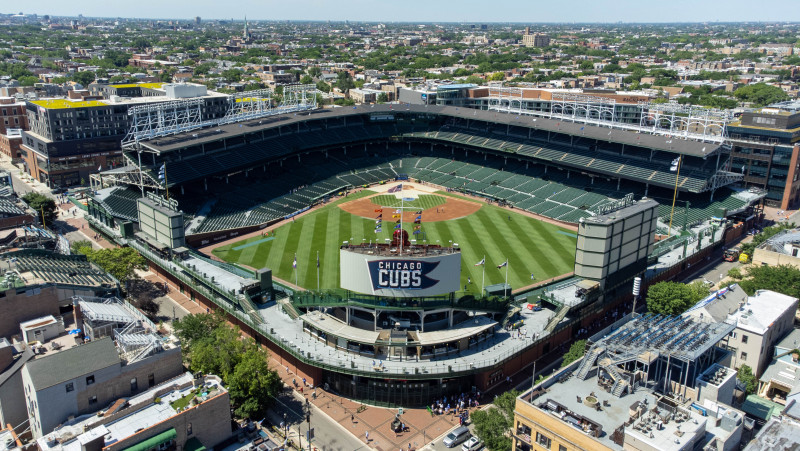
Located in Chicago, Wrigley Field is one of the most iconic and historic ballparks in Major League Baseball. Opened in 1914 as Weeghman Park, it has served as the home of the Chicago Cubs since 1916. The stadium is world-renowned for its charming, vintage architecture, most notably its iconic hand-operated scoreboard and the famous ivy-covered outfield walls. As the second-oldest ballpark in the MLB, Wrigley Field maintains a unique atmosphere characterized by its intimate seating, surrounding neighborhood rooftops, and a traditional feel that contrasts with modern stadium designs. It has hosted countless historical moments, including World Series games and legendary player milestones. Beyond baseball, the venue frequently hosts major music concerts and other public events, cementing its status as a significant cultural landmark and a symbol of enduring sports heritage.
5 hours ago : Wrigley Field Highlights: Memories and Events for Chicago Visitors
Wrigley Field continues to be a central hub for Chicago sports and community events, hosting diverse activities ranging from professional baseball reflections to local festivities including music and cultural festivals.


1912: Construction of Fenway Park
In 1912, Fenway Park was established, marking it as the oldest park in the major leagues, a title that Wrigley Field holds the second-oldest position behind.
April 23, 1914: Opening of Weeghman Park
On April 23, 1914, the ballpark designed by Zachary Taylor Davis for Charles Weeghman was officially opened and ready for its first home game.
1914: Opening of Weeghman Park
In 1914, the ballpark originally known as Weeghman Park first opened its doors to host the Chicago Whales of the Federal League.
1915: The Chicago Cubs transition to Weeghman Park
In 1915, following the collapse of the Federal League, a syndicate led by William Wrigley Jr. and Charles Weeghman purchased the Chicago Cubs for approximately $500,000. As part of this transition, the team relocated from the aging West Side Grounds to the park now known as Wrigley Field.
1915: Chicago Whales League Championship
In 1915, the Chicago Whales, the original tenants of the stadium, secured the Federal League championship title.
1915: Folding of the Federal League
The Federal League, which included the Chicago Whales, officially folded following the conclusion of the 1915 baseball season.
April 20, 1916: Cubs Play First Game at Park
On April 20, 1916, the Chicago Cubs played their inaugural home game at the ballpark, securing a 7–6 victory over the Cincinnati Reds in 11 innings.
1918: Wrigley Acquires Controlling Interest
In 1918, William Wrigley Jr. successfully acquired the controlling interest in the baseball club, setting the stage for future developments at the park.
1920: Renaming to Cubs Park
Starting in 1920, the stadium was officially renamed Cubs Park, a designation it held until 1926.
1921: Acquisition by William Wrigley Jr.
In 1921, chewing gum magnate William Wrigley Jr., owner of the Wrigley Company, acquired the Chicago Cubs franchise.
1921: Chicago Bears Begin Residency
The Chicago Bears of the National Football League began using Wrigley Field as their home stadium in 1921, a residency that would last for nearly five decades.
November 1926: Renaming of the Park
In November 1926, the ballpark was officially renamed Wrigley Field, a moniker that would become iconic in sports history.
1926: End of Cubs Park Designation
In 1926, the stadium concluded its tenure as Cubs Park, paving the way for a name change the following year.
1927: Addition of the Upper Deck
During the 1927 season, the stadium underwent a significant architectural expansion with the addition of an upper deck to increase seating capacity.
1927: Renaming to Wrigley Field
In 1927, the ballpark officially changed its name to Wrigley Field, honoring the owner of the Chicago Cubs.
1937: Planting of the Ivy
In 1937, Bill Veeck, son of the club president, planted the famous ivy vines against the outfield walls, a design choice inspired by the greenery found at Perry Stadium in Indianapolis.
1937: Renovation and Introduction of Outfield Ivy
In 1937, Wrigley Field underwent significant renovations. During this time, P. K. Wrigley and Bill Veeck collaborated on beautification efforts, resulting in the iconic decision to plant ivy along the outfield walls. While initially using English ivy, the team eventually transitioned to Boston ivy to better withstand Chicago's climate.
1939: Conclusion of Chicago Cardinals Residency
The Chicago Cardinals finished their final season playing their home games at Wrigley Field in 1939, bringing their residency at the park to a close.
1970: Installation of the Outfield Basket
One month into the 1970 season, the Chicago Cubs installed a chain-link fence strip known as "the Basket" atop the outfield wall at Wrigley Field. This modification was implemented to deter spectators from jumping onto the field after victories, effectively curbing the trend of post-game field rushes and improving safety for both players and fans.
1970: End of Chicago Bears Residency
The year 1970 marked the conclusion of the Chicago Bears' time as a tenant at Wrigley Field, ending a 49-year tenure at the stadium.
1988: Installation of Stadium Lights
In 1988, Wrigley Field became the final Major League Baseball park to install lights, which finally allowed for the hosting of night games at the historic venue.
2009: Ricketts Family Acquisition of Wrigley Field
In 2009, the Ricketts family completed the purchase of both the Chicago Cubs baseball team and their historic home stadium, Wrigley Field, initiating a period of aggressive planning for stadium renovations.
January 2013: Unveiling of the 1060 Project
During the Cubs Convention in January 2013, the Ricketts family introduced the 1060 Project, a $575-million, five-year private renovation plan for Wrigley Field that included major infrastructure upgrades, new amenities like a jumbotron, and the addition of surrounding hospitality and office complexes.
July 2013: Chicago City Council Approves Wrigley Field Renovation Plan
In July 2013, the Chicago City Council granted final approval for a comprehensive renovation plan for Wrigley Field, following endorsements from the city's Landmarks and Plan Commissions. The project, which involved significant increases in advertising signage, faced opposition from rooftop club owners concerned about obstructed sightlines.
2013: Application for National Historic Landmark Status
In 2013, the Ricketts family initiated a formal application for Wrigley Field to be designated as a National Historic Landmark, a move intended to secure tax credits for stadium renovations while preserving its historic character.
May 2014: Cubs Proceed with Original Stadium Renovation Plans
After failing to reach a private agreement with rooftop club owners regarding signage construction, the Chicago Cubs officially announced in May 2014 that they would move forward with the original 2013 plan to modify the stadium.
September 29, 2014: Commencement of the 1060 Project Phase One
On September 29, 2014, the initial phase of the extensive renovation effort known as the "1060 Project" began at Wrigley Field. This major infrastructure undertaking involved expanding the outfield bleachers, extending the stadium structure onto Waveland and Sheffield Avenues, installing large Jumbotron and video scoreboards, and constructing new underground locker rooms beneath the Clark Street parking area.
2014: Wrigley Field Centennial Celebration
Throughout the 2014 season, Wrigley Field celebrated its 100th anniversary by dedicating 10 homestands to honor each decade of the stadium's history, culminating in a special centennial event on April 23, 2014.
May 26, 2015: Kris Bryant's Landmark Home Run
On May 26, 2015, Chicago Cubs rookie Kris Bryant made history by hitting a 477-foot home run that became the first to strike the newly installed left-field video screen at Wrigley Field.
2015: Phase two of Wrigley Field renovation project begins
Following the conclusion of the extended 2015 baseball season, construction crews initiated phase two of the ongoing renovation project at Wrigley Field in 2015.
2016: Removal of the Schwarber Home Run Ball
In 2016, the commemorative home run ball hit by Kyle Schwarber during the 2015 NLDS, which had been previously encased in plexiglass atop the right-field scoreboard, was removed.
2017: Completion of Phase Three of the 1060 Project
In 2017, Wrigley Field underwent significant renovations as part of the 1060 Project, which included relocating bullpens under the bleachers, extending brick walls, installing new seating, and adding a visiting team batting tunnel. Additionally, the project saw the completion of the Cubs Plaza, the opening of the Park at Wrigley for fans, and ongoing construction of Hotel Zachary, marking a major transformation for the stadium in 2017.
2017: Commencement of Fourth Phase of Wrigley Field Renovations
In 2017, the fourth phase of improvement projects at Wrigley Field began, which involved relocating the dugouts further down the foul lines to create space for new luxury clubs.
2019: Scheduled Completion of Final Upper-Level Club
As part of the ongoing stadium improvements, the final upper-level luxury club was scheduled to be completed and ready for use by the 2019 season.
2020: Designation as a National Historic Landmark
In 2020, Wrigley Field was officially designated as a National Historic Landmark, recognizing its significant role in American baseball history.
2020: Wrigley Field Awarded National Historic Landmark Status
In 2020, Wrigley Field was officially granted National Historic Landmark status, with the U.S. Secretary of the Interior recognizing the stadium's deep historical significance to America's national pastime.
July 14, 2022: U.S. Government Lawsuit Against Chicago Cubs
On July 14, 2022, the United States government initiated a lawsuit against the Chicago Cubs regarding Wrigley Field, alleging that recent renovations failed to meet Americans with Disabilities Act standards. The complaint asserts that wheelchair seating was poorly relocated behind obstructive railings and that premium club areas lack proper accessibility, despite the team's assertion that the stadium is at its most accessible point in 108 years.
2023: Expiration of Rooftop Lease Agreements
The year 2023 marked the scheduled expiration of the lease agreements that had been in place between the Chicago Cubs and surrounding rooftop club owners, under which the owners paid 17% of their gross revenues to the team.
June 2024: Wrigley Field Partnership with Invenergy and Reactivate
In June 2024, Wrigley Field entered into a multiyear partnership with Invenergy and its community solar division, Reactivate. This initiative serves to install clean and renewable energy systems at the stadium, designating the ballpark as an anchor for community solar projects throughout the Wrigleyville neighborhood.
Mentioned in this timeline
Babe Ruth an American professional baseball player - is widely...
The United States of America is a federal republic primarily...
Under Armour is an American sportswear company based in Baltimore...
Roberto Clemente was a celebrated Puerto Rican baseball player for...

Rahm Emanuel is an American politician and diplomat who has...
College football is a popular amateur sport in the United...
Trending

3 hours ago Drew Starkey Discusses Shocking Tragic Scene in Lucky Season 1
3 hours ago Willson Contreras Frustrated with Red Sox Teammates During Recent Slump

3 hours ago First Teaser Trailer Released for Michael B. Jordan's The Thomas Crown Affair Remake

3 hours ago Mark Ruffalo's Hulk Return Teased for MCU Future Projects

4 hours ago Florence Pugh Stuns in Origami-Inspired Couture at Spider-Man London Premiere

4 hours ago Court Dismisses Kash Patel's Defamation Lawsuit Against Blogger
Popular

Rand Paul is an American politician and the junior United...

Anthony Stephen Fauci is a prominent American physician-scientist and immunologist...

Lindsey Graham is a prominent American politician serving as the...

Josh Hawley is an American politician and attorney currently serving...

Johnny Depp is a highly successful American actor musician and...
LeBron James nicknamed King James is an American professional basketball...