


Air India is India's flag carrier, headquartered in Gurugram, Haryana, with its primary hub at Delhi's Indira Gandhi International Airport. Owned by Air India Limited (Tata Group 74.9%, Singapore Airlines 25.1%), it serves 87 domestic and international destinations using Airbus and Boeing aircraft. Air India ranks as the second-largest airline in India by passenger volume, after IndiGo. It became the 27th member of Star Alliance on July 11, 2014.
April 1932: Tata Sons Wins Contract to Carry Mail
In April 1932, Tata won a contract to carry mail for Imperial Airways, and the aviation department of Tata Sons was formed with two single-engine de Havilland Puss Moths.


1932: Tata Airlines Founded
In 1932, Tata Airlines was founded by J. R. D. Tata, who also flew its first single-engine de Havilland Puss Moth carrying air mail from Karachi to Bombay's Juhu aerodrome and Madras.
1938: Airline Renamed and Expands Destinations
In 1938, Tata Air Services was re-christened as Tata Airlines, and Delhi and Colombo were added to the airline's destinations.
July 1946: Tata Airlines Becomes Air India
On 29 July 1946, Tata Airlines became a public limited company under the name Air India.
1947: Indian Independence
Following the Indian independence in 1947, 49% of the airline was acquired by the Government of India in 1948.
1953: Nationalization and Renaming
In 1953, Tata Airlines was nationalized by the Government of India and renamed Air India.
1953: Government Acquires Majority Stake
In 1953, the Government of India passed the Air Corporations Act and purchased a majority stake in Air India from Tata Sons; the company was renamed Air India International Limited.
May 1960: Inauguration of Services to New York
On 14 May 1960, Air India inaugurated services to New York.
June 1962: Name Officially Shortened
On 8 June 1962, the airline's name was officially truncated to Air India, and on 11 June 1962, Air India became the world's first all-jet airline.
1977: J.R.D. Tata leaves as chairman
In 1977, J. R. D. Tata left his position as chairman of Air India.
1988: Delivery of Boeing 747-300M
October 1990: Air India Enters Guinness Book of World Records for Evacuation Efforts
From 13 August to 11 October 1990, lasting 59 days, Air India evacuated over 111,000 people from Amman to Mumbai during the Persian Gulf War, operating 488 flights. This effort earned the airline a place in the Guinness Book of World Records. The event was later featured in the film Airlift.
2000: Air India Introduces Services to Shanghai
2000: Privatisation Attempt
In 2000, attempts were made to privatise Air India.
January 2001: Air India's Ground Services Acquire ISO 9002 Certification
On 31 January 2001, Air India's ground services became the first ground service provider to acquire ISO 9002 certification.
May 2001: Corruption Charges and Suspension of Managing Director
On 23 May 2001, the Ministry of Civil Aviation charged Michael Mascarenhas, the then-managing director of Air India, with corruption, leading to his suspension.
2001: Privatisation Attempt
In 2001, attempts were made to privatise Air India.
May 2004: Launch of Air-India Express
In May 2004, Air India launched a wholly owned low-cost subsidiary called Air-India Express, connecting cities in India with the Middle East and Southeast Asia.
January 2006: Air India Announces Order for 68 Jets
On 11 January 2006, Air India announced an order for 68 jets, including Boeing 777-200LR, Boeing 777-300ER, Boeing 737-800, and Boeing 787-8 Dreamliners. The 18 Boeing 737s ordered were later transferred to Air India Express.
2006: Financial Crisis Signs
Around 2006, both Air India and Indian Airlines showed signs of financial crisis as combined losses were ₹7.7 billion.
2006: Financial Losses After Merger
From 2006 onwards, Air India suffered losses following its merger with Indian Airlines.
2007: Merger and Increased Losses
After the merger of Indian Airlines with Air India in 2007, the losses went up to ₹72 billion by March 2009.
March 2009: Frankfurt Airport as International Hub
On 1 March 2009, Air India made Frankfurt Airport its international hub for onward connections to the United States from India.
October 2010: Closure of Frankfurt Hub
On 30 October 2010, Air India shut down the Frankfurt hub because of high operating costs.
March 2011: Accumulated Debt and Request for Government Aid
By March 2011, Air India had accumulated a debt of ₹426 billion and an operating loss of ₹220 billion, and was seeking ₹429 billion from the government.
March 2011: Air India Evacuates Nationals During Libyan Civil War
In February–March 2011, Air India evacuated more than 15,000 Indian nationals during the Libyan civil war.
August 2011: Data breach start date
The data breach on Air India involved all information which was registered in the SITA data processor between 26 August 2011 and 20 February 2021
2011: Revenue, operating loss and net loss
For FY 2011-12, Air India had revenue of ₹147 billion, an operating loss of ₹5.138 billion and a net loss of ₹7.55 billion
March 2012: Government Infusion
In March 2012, the government pumped ₹32 billion into Air India.
May 2012: Fine by US Transportation Department
In May 2012, Air India was fined $80,000 by the US Transportation Department for failing to post customer service and tarmac delay contingency plans on its website and adequately inform passengers about its optional fees.
March 2013: Positive EBITDA and Operating Revenue Growth
In March 2013, Air India posted its first positive EBITDA after almost six years and 20% growth in its operating revenue since the previous financial year.
December 2013: Appointment of Head of Operations and Criticism
In December 2013, Air India appointed veteran pilot SPS Puri as its head of operations, which was criticized by the Air India pilots union.
April 2014: Air India Decides to Sell Remaining Boeing 777-200LRs and Lease Airbus A320 Aircraft
In April 2014, Air India decided to sell its remaining three Boeing 777-200LRs due to higher operating costs. On 24 April 2014, Air India issued a tender for leasing 14 Airbus A320 aircraft for up to six years to strengthen its domestic network.
April 2015: Air India Involved in Operation Raahat During Yemeni Civil War
In March–April 2015, Air India was involved in Operation Raahat during the Yemeni civil war.
February 2016: Market Share
As of February 2016, Air India was the third largest carrier in India, after IndiGo and Jet Airways with a market share of 15.4%.
June 2017: Government Approves Privatisation
On 28 June 2017, the Government of India approved the privatisation of Air India and set up a committee to decide the details.
2017: Privatisation Attempt Launched
In 2017, another privatization attempt was launched for Air India.
March 2018: Expression of Interest Issued
In March 2018, the Government issued an Expression of Interest (EOI) to sell a 76% stake in Air India, along with Air India Express and a 50% stake in AISATS.
January 2020: Fresh EOIs Invited for Complete Exit
On 27 January 2020, the Government decided to completely exit Air India and invited fresh EOIs.
December 2020: Seven Parties Submit EOIs
By December 2020, the Government received EOIs from seven parties.
February 2021: SITA Reports Data Breach to Air India
Around February 2021, Air India's data processor, SITA, reported a data breach to Air India.
May 2021: Cyberattack on Air India
On 21 May 2021, it was reported that Air India was subjected to a cyberattack where the personal details of about 4.5 million customers were compromised.
September 2021: Financial Bids Invited
In September 2021, the Government invited financial bids for Air India from two qualified parties.
2022: Return to Tata Group
In 2022, the ownership of Air India and associated properties returned to the Tata Group after 69 years.
2023: New Logo Inspired by Jharokha Window Pattern
In 2023, Air India replaced its logo, which formerly consisted of a flying swan with the wheel of Konark inside it, with a new logo inspired by the airline's Jharokha window pattern.
November 2024: Merger Between Air India and Vistara Completed
In November 2024, the merger between Air India and Vistara was completed, and former Vistara aircraft started operating under Air India, including 787-9 Dreamliners configured in a three-class layout.
January 2025: Air India Rolls Out Free Onboard WiFi
On 1 January 2025, Air India announced that it rolled out free onboard WiFi on all flights operated by the carrier's A350, Boeing 787-9 and select A321neo aircraft, becoming the first airline in the nation to offer such complimentary service within India.
November 2025: Air India's Fatal Crashes and Ground Fatalities
As of November 2025, Air India has been involved in eleven fatal crashes and twenty ground fatalities, two of which were caused by acts of terrorism.
January 2026: Air India Takes Delivery of First Factory-Fit 787-9 Dreamliner
In January 2026, Air India took delivery of its first factory-fit 787-9 Dreamliner, which is configured in a three-class layout.
April 2026: Air India Selects Hughes Network Systems for In-Flight Connectivity
In April 2026, Air India selected Hughes Network Systems to transform its in-flight connectivity and also become the global launch customer for a common connectivity platform that will be deployed across its widebody fleet.
Mentioned in this timeline

Ukraine is a country in Eastern Europe the second-largest on...
The United States of America is a federal republic primarily...
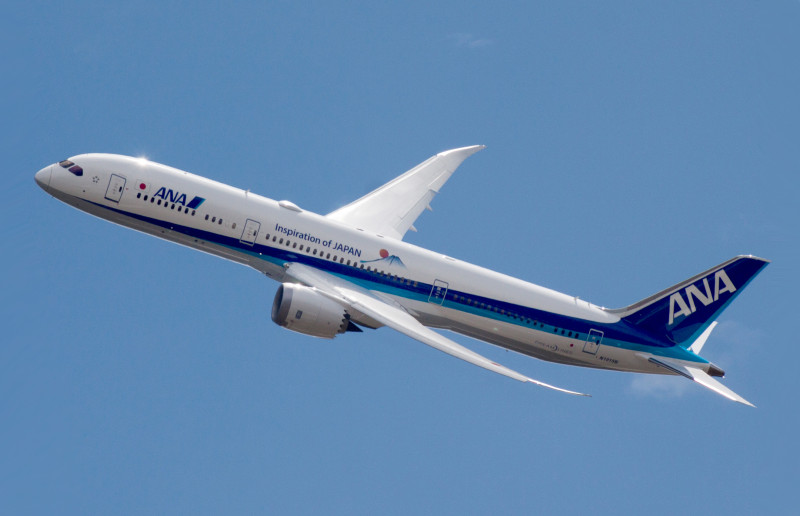
The Boeing Dreamliner is an American wide-body airliner developed by...
India officially the Republic of India is a South Asian...

The Boeing Company is a multinational corporation and one of...
The Boeing MAX is the latest iteration of the Boeing...
Trending

4 hours ago Kyle Dugger Returns to Bengals Practice Ahead of Crucial Ravens Matchup
4 hours ago GOP PAC Funds Socialist Third-Party Candidate to Challenge Sherrod Brown in Ohio Senate Race
4 hours ago Odafe Oweh Faces Criticism Over Stat Line Performance Concerns

4 hours ago Ciara Continues to Influence Global Music and Fashion Trends
4 hours ago Junior Caminero Hits Electrifying Clutch Home Run at Tropicana Field
5 hours ago Nathaniel Lowe Discusses Reds Strategy as ALCS Game Six Approaches
Popular

Ilhan Omar is a prominent American politician currently serving as...

Ken Paxton is an American politician and lawyer serving as...

Elon Musk is a visionary entrepreneur and engineer known for...

Michael Joseph Jackson the King of Pop was a highly...

Cristiano Ronaldo widely considered one of the greatest footballers captains...

MrBeast the professional name of Jimmy Donaldson is the most-subscribed...