


Mumbai, formerly Bombay, is the capital of Maharashtra, India, and its financial hub. With a city population of approximately 12.5 million and a metropolitan area exceeding 23 million, it's among the world's most populous. Situated on India's west coast, Mumbai boasts a deep natural harbor and is recognized as an alpha world city. It is also notable for having the highest concentration of billionaires in Asia.
1942: Quit India Movement
In 1942, the Indian independence movement fostered the Quit India Movement at the Bombay session of the Indian National Congress.


1946: Royal Indian Navy mutiny
In 1946, the Royal Indian Navy mutiny took place.
1947: Restructuring into Bombay State
After India's independence in 1947, the Bombay Presidency was restructured into Bombay State.
November 1948: Worst cyclone encountered
On 23 November 1948, Mumbai encountered its worst cyclone, with gusts reaching 151 km/h (94 mph), resulting in 38 deaths and 47 people missing.
April 1950: Expansion of municipal limits
In April 1950, the municipal limits of Mumbai were expanded by merging the Mumbai suburban and city districts to form the Greater Mumbai Municipal Corporation.
April 1952: Record high temperature
On 14 April 1952, the record high temperature of 42.2 °C (108.0 °F) was set.
1954: Maximum annual rainfall recorded
In 1954, the maximum annual rainfall ever recorded was 3,452 mm (136 in).
1955: Congress party demand for autonomous city-state
In 1955, during discussions in the Parliament of India, the Congress party demanded that the city be made an autonomous city-state.
May 1960: Maharashtra Day
Maharashtra Day on May 1, 1960, celebrates the formation of the Maharashtra state.
May 1960: Reorganisation of Bombay State
On 1 May 1960, Bombay State was reorganised on linguistic lines into separate states of Maharashtra and Gujarat, with Bombay as the capital of Maharashtra.
1960: Creation of Maharashtra with Mumbai as capital
In 1960, following the Samyukta Maharashtra Movement, a new state of Maharashtra was created with Mumbai as the capital.
January 1962: Record low temperature
On 27 January 1962, the record low temperature was 7.4 °C (45.3 °F).
June 1966: Formation of the Shiv Sena
On June 19, 1966, the Shiv Sena was formed by Bal Thackeray.
January 1975: Establishment of BMRDA
On 26 January 1975, the Bombay Metropolitan Region Development Authority (BMRDA) was established by the Government of Maharashtra.
August 1979: Establishment of New Bombay
In August 1979, a sister township of New Bombay was established by the City and Industrial Development Corporation.
1982: Great Bombay Textile Strike
In 1982, The Great Bombay Textile Strike which involved nearly 250,000 workers in more than 50 textile mills, resulted in the downfall of the sector.
1985: Shiv Sena adopts Hindutva plank
In 1985, Shiv Sena shifted from the 'Marathi cause' to a Hindutva plank and joined hands with Bhartiya Janata Party (BJP) that year.
May 1989: Commissioning of Jawaharlal Nehru Port
Jawaharlal Nehru Port was commissioned on 26 May 1989.
1989: BJP and Shiv Sena alliance
In 1989, the BJP formed an electoral alliance with the Shiv Sena to challenge the Congress in the Maharashtra Legislative Assembly elections.
October 1990: Bifurcation of Greater Bombay
On 1 October 1990, Greater Bombay was bifurcated to form the city and suburban revenue districts.
1991: Liberalisation of Indian economy
Mumbai witnessed an economic boom since the liberalisation of 1991, with the finance sector booming in the mid-nineties, and the information technology (IT), export, services, and outsourcing booming in the 2000s.
1991: Migrants to Mumbai
The number of migrants to Mumbai from outside Maharashtra during the 1991–2001 decade was 1.12 million.
1992: Hindu-Muslim riots
Following the demolition of the Babri Masjid in Ayodhya, the city was rocked by the Hindu-Muslim riots of 1992–93 in which more than 1,000 people were killed.
March 1993: Bombings at city landmarks
In March 1993, a series of 13 coordinated bombings at city landmarks resulted in 257 deaths and over 700 injuries.
November 1995: Official name change to Mumbai
In November 1995, the Government of India officially changed the city's English name to Mumbai at the insistence of the Marathi nationalist Shiv Sena party.
1995: Official name change to Mumbai
In 1995, the Government of India officially changed the English name of the city to Mumbai.
1995: Establishment of MHCC
In 1995, the Mumbai Heritage Conservation Committee (MHCC) was established to assist in the conservation of the city's heritage structures.
1998: Introduction of air-conditioned buses by BEST
In 1998, BEST introduced air-conditioned buses.
1999: Formation of the Nationalist Congress Party (NCP)
In 1999, several members left the Congress to form the Nationalist Congress Party (NCP) but later allied with the Congress to form the Democratic Front.
2000: End of MTNL monopoly
In 2000, the state-owned MTNL, which had held a monopoly over fixed line and cellular services up until then, began providing fixed line and mobile WLL services.
2000: Construction Acceleration
Since 2000, construction projects began taking the Mumbai skyline upwards, with a major acceleration when the Lower Parel area began developing.
2000: Opening of the Mumbai-Pune Expressway
The Mumbai–Pune Expressway opened in 2000, becoming the first expressway in India.
2001: Migrants to Mumbai
The number of migrants to Mumbai from outside Maharashtra during the 1991–2001 decade was 1.12 million.
March 2004: Mumbai Grand Prix
In March 2004, the Mumbai Grand Prix was part of the F1 powerboat world championship.
July 2005: Most rainfall recorded in a single day
On 26 July 2005, the most rainfall recorded in a single day was 944 mm (37 in).
2005: Refuse generation in Mumbai
As of 2005, the city generated a refuse of 7,800 t (7,700 long tons; 8,600 short tons), of which 40 t (39 long tons; 44 short tons) is plastic waste.
2005: Number of taxis and auto rickshaws in Mumbai
As of 2005, there were 56,459 black and yellow taxis and 106,000 auto rickshaws in Mumbai.
2005: Mumbai floods
The 2005 Mumbai floods caused 500-1000 deaths and financial losses of US$ 1.2 billion.
2006: Modernization and upgrade plan
A modernization and upgrade plan was initiated in 2006 to increase the capacity of the Chhatrapati Shivaji Maharaj International Airport.
2006: Bomb explosions on commuter trains
In 2006, 209 people were killed and over 700 injured when seven bombs exploded on the city's commuter trains.
2006: Mumbai's economic contributions
In 2006, Mumbai employed 10% of the nation's factory workforce, contributed to 25% of the industrial output, 33% of the income tax collections, 60% of the customs duty collections, 20% of the central excise tax collections, 40% of the foreign trade, and generated ₹40 billion in corporate tax.
2006: Kingfisher Airlines Tennis Open
In 2006, Mumbai had also played host to the Kingfisher Airlines Tennis Open, an International Series tournament of the ATP World Tour.
2006: ICC Champions Trophy Final
In 2006, Mumbai hosted the final of an ICC Champions Trophy at the Brabourne Stadium.
2006: Conditional Access System
In 2006, the Conditional Access System started by the Union Government met a poor response in Mumbai due to competition from its sister technology Direct-to-Home transmission service.
2007: Kingfisher Airlines Tennis Open
In 2007, Mumbai had also played host to the Kingfisher Airlines Tennis Open, an International Series tournament of the ATP World Tour.
2007: Daily passengers on Mumbai Suburban Railway
In 2007, Mumbai's suburban rail systems carried 6.3 million passengers per day.
2008: Daily bus passenger volume
In 2008, Brihanmumbai Electric Supply and Transport (BEST) buses carried over 5.5 million passengers per day.
2008: Mumbai named an alpha world city
In 2008, Mumbai was named an alpha world city.
2008: Coordinated terrorist attacks
In 2008, a series of ten coordinated attacks by armed terrorists for three days resulted in 173 deaths, 308 injuries, and severe damage to several heritage landmarks and prestigious hotels.
2008: Force India F1 Team Car Unveiling
In 2008, the Force India F1 team car was unveiled in Mumbai.
2008: Number of households in 2008
There were 4.2 million households in Mumbai in 2008.
2009: Skyscrapers in Mumbai
As of 2009, Mumbai has the highest number of skyscrapers in India, with 956 existing skyscrapers and 272 under construction.
2009: Daily water supply requirement
As of 2009, Mumbai required a daily supply of 3.5 billion liters of water, of which 700 million liters was lost through thefts, illegal connections, and leakages.
2010: Suburban rail network span
In 2010, Mumbai's suburban rail network spanned 319 km (198 mi), with 2,226 train services operating daily.
2010: Wealth distribution and income disparity in Mumbai
In 2010, the World Bank reported that the median income in Mumbai was ₹20,000, while the average income was ₹40,000, highlighting wealth distribution disparities in the city.
July 2011: Bomb explosions
In July 2011, three coordinated bomb explosions occurred at the Opera house, Zaveri Bazaar and Dadar, resulting in 26 deaths and 130 injuries.
2011: Population as per 2011 census
According to the 2011 census, Mumbai had a population of 12,442,373 inhabitants.
2011: Greater Mumbai population as per census
According to the 2011 census, the population of Greater Mumbai was 12,442,373.
2011: BEST bus fleet and routes
As of 2011, BEST operated 4,608 buses along 390 routes.
2011: Number of slum-dwellers as per 2011 census
As per the 2011 census, there were 5,633,709 slum-dwellers living in 1,135,514 households.
2011: ICC Cricket World Cup Final
In 2011, the final of the ICC Cricket World Cup was played at the Wankhede Stadium in Mumbai.
2012: University of Mumbai Ranking
In 2012, the University of Mumbai was ranked 41 among the top 50 engineering schools by Business Insider.
2012: Mumbai Gladiators First Season
In late 2012, Mumbai's first professional American football franchise, the Mumbai Gladiators, played its first season in Pune.
April 2013: Opening of Adlabs Imagica
In April 2013, Adlabs Imagica opened near Khopoli off the Mumbai-Pune Expressway.
May 2013: Number of auto rickshaws
As of May 2013, there were 106,000 auto rickshaws in Mumbai.
2013: Annual average PM2.5 concentration
According to the 2016 World Health Organization Global Urban Ambient Air Pollution Database, the annual average PM2.5 concentration in 2013 was 63 μg/m.
2013: Opening of the Eastern Freeway
In 2013, the Eastern Freeway, which connects South Mumbai with Thane, was opened.
2013: University of Mumbai Ranking
In 2013, the University of Mumbai was ranked fifth in the list of best universities in India by India Today and 10th among the top Universities of India in the QS World University Rankings.
2013: Indian Badminton League Final
Since its inaugural edition in 2013, the Indian Badminton League (IBL), now known as the Premier Badminton League is also visiting Mumbai since its inaugural edition in 2013 when the final was held in Mumbai's National Sports Club of India.
February 2014: New T2 terminal opened
In February 2014, the new T2 terminal at the Chhatrapati Shivaji Maharaj International Airport was opened.
February 2014: Mumbai Monorail opening
The Mumbai Monorail opened in early February 2014, operating on a single route.
March 2014: Number of private vehicles
As of March 2014, Mumbai had about 721,000 private vehicles.
June 2014: Mumbai Metro first line opening
The first line of the Mumbai Metro opened in June 2014.
2014: Internet users in Mumbai
As of 2014, Mumbai had the highest number of internet users in India with 16.4 million users.
2014: Brihanmumbai Municipal Corporation ranked for governance
In 2014, The Brihanmumbai Municipal Corporation was ranked ninth out of 21 cities for best governance & administrative practices in India, scoring 3.5 out of 10.
2015: Drop in bus ridership
In 2015, bus ridership dropped to 2.8 million in Mumbai.
2016: Mumbai declared India's noisiest city
According to the 2016 report of the Central Pollution Control Board, Mumbai is the noisiest city in India.
2017: Economy of the Mumbai Metropolitan Region
In 2017–18, estimates of the economy of the Mumbai Metropolitan Region ranged from $368 billion to $400 billion (PPP & metro GDP).
December 2019: Launch of Aerosol and Air Quality Research Facility
In December 2019, the Indian Institute of Technology Bombay, in partnership with the McKelvey School of Engineering at Washington University in St. Louis, launched the Aerosol and Air Quality Research Facility at Mumbai to study air pollution in Indian cities.
2019: Delhi–Mumbai Expressway construction
Construction of the Delhi–Mumbai Expressway began in 2019.
2019: Mumbai among world's top ten cities by number of billionaires
In 2019, Mumbai was ranked among the world's top ten cities based on the number of billionaires residing there.
2019: Rental cost of a one-bedroom apartment
In 2019, the median rental cost of a one-bedroom apartment in Mumbai proper was about ₹30,000.
2019: BJP and Shiv Sena alliance win national election
In the 2019 national election, all six parliamentary constituencies in Mumbai were won by the BJP and Shiv Sena in alliance.
2020: Projected number of households
In 2020, there were an estimated 6.6 million households in Mumbai.
2022: BMC revenue and expenditure
In 2022, the Brihanmumbai Municipal Corporation (BMC) had a revenue of ₹378.91 billion (US$4.5 billion) and an expenditure of ₹338.25 billion (US$4.0 billion).
2022: Konkan Expressway proposed
In 2022, the state government proposed the Konkan Expressway, which would traverse along the Konkan coast.
June 2023: Tall Buildings in Mumbai
As of June 2023, about 77% of the tallest buildings in India are in Mumbai, and the city commands premium real estate prices compared to other cities in India. Mumbai has a total of around 250 tall buildings out of which more than 100 are completed, and more than 90 were under construction.
October 2023: 141st IOC Session
Mumbai hosted the 141st IOC Session from 15 to 17 October 2023.
2023: Passengers handled
In 2023, The Chhatrapati Shivaji Maharaj International Airport handled 52.8 million passengers.
2023: Contribution to Maharashtra's GDP
In 2023–24, Mumbai contributed to 19.8% of the GDP of the state of Maharashtra.
January 2024: Inauguration of the Mumbai Trans Harbour Link
On January 12, 2024, the 21.8 km long Mumbai Trans Harbour Link was inaugurated, connecting Mumbai with Navi Mumbai.
2024: Maharashtra state assembly election results
In the 2024 state assembly election, out of the 36 constituencies in Mumbai, 15 were won by the BJP, 10 by Shiv Sena (UBT), six by the Shiv Sena, three by the Congress, and one each by the NCP and an independent.
June 2025: Opening of the Mumbai-Nagpur Expressway
The Mumbai–Nagpur Expressway opened in June 2025.
December 2025: Opening of the Navi Mumbai International airport
The Navi Mumbai International airport, built in the Ulwe suburb in Raigad district, opened in December 2025.
2026: Metro lines operational and planned
As of 2026, four lines of the metro are operational and eight are planned in Mumbai.
2026: BMC Operated Schools
In 2026, the BMC operated 1,135 schools in Mumbai, providing free education to nearly 293,000 students in eight languages.
2026: BJP-Shiv Sena alliance secured seats in municipal corporation elections
In the 2026 municipal corporation elections, out of the 227 seats, the BJP-Shiv Sena alliance secured 118 seats, with the BJP winning 89 seats.
2027: Planned completion of the Delhi–Mumbai Expressway
The Delhi–Mumbai Expressway is planned to be completed by 2027.
Mentioned in this timeline
India officially the Republic of India is a South Asian...
A bank is a regulated financial institution licensed to accept...
The World Bank is an international financial institution offering loans...
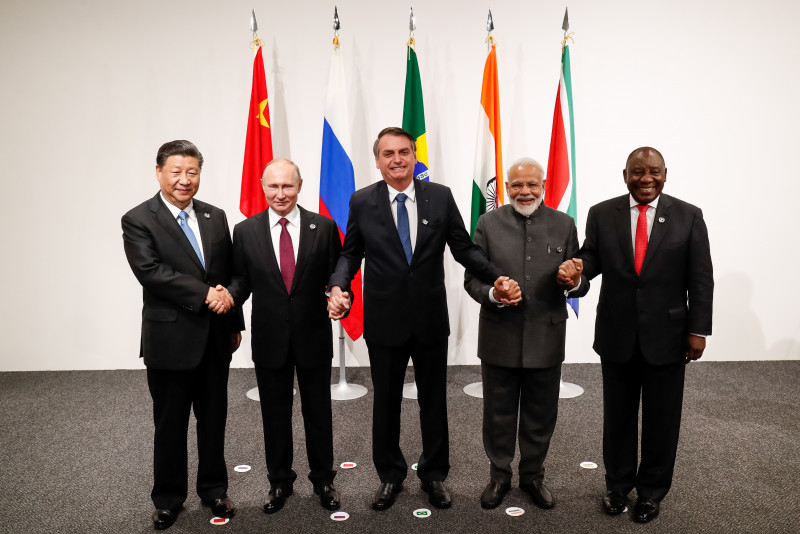
BRICS is an intergovernmental organization composed of Brazil Russia India...
Football commonly known as soccer in many regions is the...
The World Health Organization WHO is a specialized agency of...
Trending

4 hours ago Tennis Prediction Markets for Upcoming Professional Matches
5 hours ago Minnesota Wild Dominates Seattle Kraken in Commanding 5-1 Victory

5 hours ago Canelo Álvarez Arrives in Riyadh for Highly Anticipated Boxing Match Against Christian Mbilli
5 hours ago Police Investigate Discovery of Deceased Person Near Disneyland Resort Entrance in Anaheim

5 hours ago Venue and Timing Uncertain for WNBA Finals Game 6 Between Valkyries and Dream

6 hours ago LeBron James Highlights Taurean Prince Quotes Amidst Notable 76ers Performance Improvements
Popular
Ilhan Omar is a prominent American politician currently serving as...

Ken Paxton is an American politician and lawyer serving as...

Elon Musk is a visionary entrepreneur and engineer known for...
Barack Obama the th U S President - was the...
Michael Joseph Jackson the King of Pop was a highly...
Greg Abbott is the current and th Governor of Texas...