Rise to Success: Career Highlights of Barry Manilow


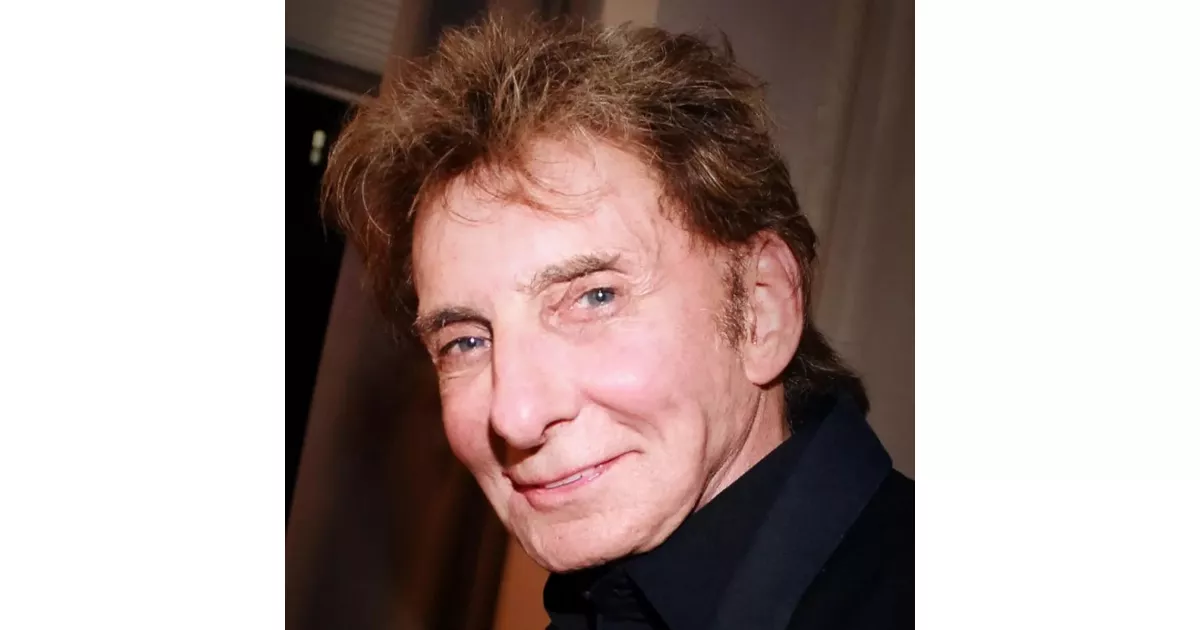
From career breakthroughs to professional milestones, explore how Barry Manilow made an impact.
Barry Manilow is a celebrated American singer-songwriter, whose career has spanned over six decades. He is best known for a string of hit songs that defined the pop music landscape of the 1970s and 1980s. Signature tracks such as "Mandy," "Copacabana," "Could It Be Magic," and "I Write the Songs" are still widely recognized and enjoyed today. Manilow's contributions have solidified his place as a prominent figure in American popular music.
1941: Original Release of "I Don't Want to Walk Without You"
In 1941, Jule Styne and Frank Loesser released the song "I Don't Want to Walk Without You". Barry Manilow would release a remake later in his career.


1964: Composition for 'The Drunkard'
In 1964, Barry Manilow met Bro Herrod, who requested him to arrange songs for 'The Drunkard.' Manilow composed an original score for the Off Broadway musical.
December 1965: Playboy's response
In December 1965, Barry Manilow credited the response he received from Playboy magazine as giving him the courage to leave his marriage and pursue a career in music.
1965: Original release of 'Let's Hang On!' by The Four Seasons
In 1965, The Four Seasons released their hit song 'Let's Hang On!'. Barry Manilow would release a cover version later in his career.
1967: Musical director for WCBS-TV series Callback
In 1967, Barry Manilow became the musical director for the WCBS-TV series Callback.
January 27, 1968: Premiere of Callback on WCBS-TV
On January 27, 1968, the WCBS-TV series Callback, for which Barry Manilow served as musical director, premiered.
1969: Signing with Columbia/CBS Music
In 1969, Barry Manilow was signed by Tony Orlando at Columbia/CBS Music and recorded with studio musicians under the name 'Featherbed' on Bell Records.
1971: Becomes Bette Midler's Pianist
In 1971, Bette Midler hired Barry Manilow as her pianist at the Continental Baths in New York City.
1972: Production of 'The Divine Miss M'
In 1972, Barry Manilow produced Bette Midler's debut album, 'The Divine Miss M'.
1972: Release of Brandy (You're a Fine Girl)
In 1972, Looking Glass released the song 'Brandy (You're a Fine Girl)' on Clive Davis's Epic label. This led to the Barry Manilow song 'Brandy' to be renamed 'Mandy'.
July 1973: Release of Debut Album 'Barry Manilow'
In July 1973, Bell Records released Barry Manilow's debut album, 'Barry Manilow,' featuring a mix of pop and rock music, including the song "I Am Your Child."
1973: Production of 'Bette Midler' and Grammy Nomination
In 1973, Barry Manilow produced Bette Midler's second album, 'Bette Midler,' and was nominated for a Grammy Award for Album of the Year for his production role on 'The Divine Miss M'.
August 20, 1974: Title change of 'Brandy' to 'Mandy'
On August 20, 1974, the song originally titled "Brandy", was changed to "Mandy" during the recording session for Barry Manilow's second album.
November 1974: Introduction of Arista Records
In November 1974, Clive Davis introduced Columbia Pictures' new record division, Arista, with a $10 million investment and a reorganization of legacy labels.
January 1975: Number 1 Hit with "Mandy"
In January 1975, Bell Records had its final number 1 hit with Barry Manilow's "Mandy", marking a breakthrough for Manilow.
March 22, 1975: Appearance on American Bandstand
On March 22, 1975, Barry Manilow appeared on American Bandstand to promote his second album, marking the beginning of a productive friendship with Dick Clark.
1975: End of collaboration with Bette Midler
In 1975, Barry Manilow concluded his work with Bette Midler.
March 2, 1977: Premiere of 'The Barry Manilow Special'
On March 2, 1977, 'The Barry Manilow Special,' featuring Penny Marshall as a guest, premiered on ABC to an audience of 37 million and won an Emmy for Outstanding Special–Comedy, Variety or Music.
1977: Release of 'Barry Manilow Live' Album
In 1977, Barry Manilow's triple-platinum album 'Barry Manilow Live' was released. It featured a medley of commercial jingles he had written and sung in the 1960s.
1978: 'The Second Barry Manilow Special' Nomination
In 1978, 'The Second Barry Manilow Special,' featuring Ray Charles, was nominated for four Emmys at the 30th Primetime Emmy Awards.
1978: Relationship with Garry Kief
In 1978, Barry Manilow began a relationship with TV executive Garry Kief, who later became his manager.
1978: Release of Copacabana Song
In 1978, Barry Manilow released the song "Copacabana", which later inspired the 1985 CBS film of the same name.
1978: Royal Albert Hall Concert Special
In 1978, a one-hour special from Barry Manilow's sold-out concert at the Royal Albert Hall aired in the UK.
February 11, 1979: HBO Airing of Greek Theater Concert
On February 11, 1979, a concert from Barry Manilow's Even Now Tour at the Greek Theater in Los Angeles aired on HBO's Standing Room Only series.
May 23, 1979: Airing of 'The Third Barry Manilow Special'
On May 23, 1979, ABC aired 'The Third Barry Manilow Special', with John Denver as his guest, which won an Emmy for Outstanding Choreography.
1979: Satirization in Song
In 1979, Barry Manilow's musical style was satirized in the song "I Need Your Help Barry Manilow" performed by Ray Stevens. The song references several of Manilow's hits in a comedic storyline.
1980: Release of 'Barry' Album
In 1980, Barry Manilow released the self-titled album 'Barry', which included hits such as "I Made It Through the Rain" and "Bermuda Triangle".
1980: One Voice Special Emmy Nomination
In 1980, Barry Manilow's One Voice special, featuring Dionne Warwick, was nominated for an Emmy for Outstanding Music Direction.
1981: Release of 'If I Should Love Again' Album
In 1981, Barry Manilow released the album 'If I Should Love Again', which featured the number 1 AC chart hits "The Old Songs" and "Somewhere Down The Road".
1982: Broadcast of Royal Albert Hall Concert
In 1982, a concert from Barry Manilow's show at the Royal Albert Hall was broadcast in England.
August 27, 1983: Open-Air Concert at Blenheim Palace
On August 27, 1983, Barry Manilow performed a landmark open-air concert at Blenheim Palace in Britain, attended by approximately 40,000 people.
December 1983: Endowment of Music Departments
In December 1983, Barry Manilow endowed the music departments at six major universities in the United States and Canada.
1984: Release of 2:00 AM Paradise Cafe and Showtime Documentary
In 1984, Barry Manilow released "2:00 AM Paradise Cafe", a jazz/blues album recorded live in the studio. In 1984, Showtime also aired a documentary showing Manilow recording the album with jazz legends like Sarah Vaughan and Mel Tormé. In 1984 and 1985, England aired two one-hour concert specials from his National Exhibition Centre (NEC) concerts.
1984: Release of When October Goes
In 1984, Barry Manilow released "When October Goes" from his album 2:00 AM Paradise Cafe, with lyrics by Mercer.
1984: Radio City Music Hall Box Office Record
In 1984, Barry Manilow's ten-night run at Radio City Music Hall set a box-office sales record of nearly $2 million, making him the top draw in the venue's history.
1985: Departure from Arista Records and Release of Manilow album
In 1985, Barry Manilow left Arista Records for RCA Records. He released the pop album "Manilow", and began performing songs and duets in multiple languages. In 1985, Japan aired a Manilow concert special where he played "Sakura" on the koto.
1985: Lead role in Copacabana film and soundtrack release
In 1985, Barry Manilow starred as Tony Starr in the CBS film "Copacabana", based on his 1978 song. A soundtrack album for the TV film, "Copacabana: The Original Motion Picture Soundtrack Album", was released on RCA Records.
1985: Starring in Copacabana TV Movie
In 1985, Barry Manilow starred in the television movie Copacabana, executive produced by Dick Clark.
October 1986: Lobbying Against Copyright Bill
In October 1986, Barry Manilow and others went to Washington, D.C. to lobby against a copyright bill concerning songwriter-producer source licensing for syndicated TV shows. They argued that it would negatively impact artists' negotiation power.
1987: Publication of Autobiography and Return to Arista Records
In 1987, McGraw-Hill published Barry Manilow's autobiography, "Sweet Life: Adventures on the Way to Paradise". Manilow also defended his music against critics. Additionally, in 1987 Manilow returned to Arista Records with the release of "Swing Street".
March 1988: Airing of Big Fun on Swing Street Special
In March 1988, CBS aired "Manilow's Big Fun on Swing Street" special. The special featured songs and special guests from his Swing Street and 2:00 am Paradise Cafe albums. The special won an Emmy for Outstanding Art Direction for a Variety or Music Program.
1988: Performance at AIDS Concert and Composition for Oliver & Company
In 1988, Barry Manilow performed at That's What Friends Are For: AIDS Concert '88. Also in 1988, Bette Midler's character in "Oliver & Company" sang "Perfect Isn't Easy", a new Manilow composition.
June 10, 1989: Final Performance of Barry Manilow at the Gershwin
June 10, 1989, marked the final performance of Barry Manilow's show, "Barry Manilow at the Gershwin", after 44 appearances at the Gershwin Theatre in New York City.
1989: Release of Barry Manilow album and shift in recording career
In 1989, Barry Manilow released the album "Barry Manilow", marking a shift towards covers and compilations in his recording career, ending his streak of albums of original self-written material.
1989: Release of Barry Manilow and start of cover tunes era
In 1989, Barry Manilow's album, "Barry Manilow" started a period where Manilow released a number of cover tunes.
1989: Benefit Concert for Hurricane Hugo Relief
In 1989, after Hurricane Hugo impacted the Charleston, South Carolina area, Barry Manilow held a benefit concert at the University of South Carolina's Carolina Coliseum in Columbia. Tickets sold out in three hours, and concertgoers were asked to bring canned food for donation. Mayor T. Patton Adams declared the day "Barry Manilow Day," and Manilow presented The Red Cross and The Salvation Army with checks of $42,500 each.
1990: Release of Christmas LP Because It's Christmas
In 1990, Barry Manilow released the Christmas LP "Because It's Christmas", featuring a recreation of "Jingle Bells" with Exposé.
1990: Japan airs National Eolia Special: Barry Manilow On Broadway
In 1990, Japan aired "National Eolia Special: Barry Manilow On Broadway" where Barry Manilow sang the title song "Eolia", used in a commercial for an air conditioner company.
1991: Production of Nancy Wilson's album With My Lover Beside Me
In 1991, Barry Manilow produced the album "With My Lover Beside Me" by Nancy Wilson, based on lyrics by Johnny Mercer. Manilow is also featured in a duet on the final track.
1991: Release of Showstoppers
In 1991, Barry Manilow released Showstoppers, a collection of Broadway songs.
February 19, 1992: Testimony in Support of Audio Home Recording Act
On February 19, 1992, Barry Manilow testified before the Subcommittee on Intellectual Property in support of H.R. 3204, The Audio Home Recording Act of 1991.
October 28, 1992: Signing of The Audio Home Recording Act of 1991 into law
On October 28, 1992, The Audio Home Recording Act of 1991 was signed into law by President George H. W. Bush, effective immediately after Manilow's Testimony in support of it.
1993: Airing of Barry Manilow: The Best of Me on PBS
In 1993, PBS aired "Barry Manilow: The Best of Me", which was taped at Wembley Arena in England earlier that year. A one-hour version was also played by the BBC.
January 15, 1994: Canceled Performance at Ethnic Pride and Heritage Festival
On January 15, 1994, three hours before showtime, Barry Manilow canceled a performance at an Ethnic Pride and Heritage Festival in Atlantic City, New Jersey. He stated that he had been informed the concert would be a nonpartisan event.
February 8, 1994: Lawsuit Against KBIG Radio Station
On February 8, 1994, Barry Manilow sued Los Angeles radio station KBIG (104.3 FM) for $13 million in damages and $15 million in punitive damages. He claimed that an advertisement suggesting listeners tune into KBIG because they do not play Manilow's music caused irreparable damage to his professional reputation. KBIG agreed to drop the commercial two days later.
1994: Co-writing Broadway-style music for Thumbelina
In 1994, Barry Manilow co-wrote the Broadway-style musical scores for Thumbelina with Don Bluth, Jack Feldman and Bruce Sussman.
1994: Release of Singin' with the Big Bands
In 1994, Barry Manilow released "Singin' with the Big Bands", an album featuring songs from the big band era.
1995: Co-writing Broadway-style music for The Pebble and the Penguin
In 1995, Barry Manilow co-wrote the Broadway-style musical scores for "The Pebble and the Penguin" with Don Bluth, Jack Feldman and Bruce Sussman.
December 1996: Airing of Barry Manilow: Live By Request on A&E
In December 1996, A&E aired "Barry Manilow: Live By Request". The broadcast attracted an estimated 2.4 million viewers, becoming A&E's most successful music program.
1996: Release of Summer of '78
In 1996, Barry Manilow released "Summer of '78", a collection of songs including "I Go Crazy", a hit for Paul Davis in 1978.
March 1997: Airing of Barry Manilow: The Summer of '78 on VH-1
In March 1997, VH-1 aired "Barry Manilow: The Summer of '78", a one-hour special of Manilow at the piano, being interviewed, and playing songs from his latest release.
July 1997: Settlement of Audio Volume Lawsuit
In July 1997, to settle the lawsuit filed by Arizona Court of Appeals Judge Philip Espinosa over the audio volume of a December 23, 1993, concert, it was reported that Barry Manilow donated $5,000 to the American Tinnitus Association.
November 23, 1997: Preview of Harmony: A New Musical at La Jolla Playhouse
On November 23, 1997, "Harmony: A New Musical", co-written by Barry Manilow and Bruce Sussman, finished its preview run at the La Jolla Playhouse. The musical is based on the story of the Comedian Harmonists.
1998: Recording tribute to Frank Sinatra with Manilow Sings Sinatra
In 1998, Barry Manilow recorded a tribute to Frank Sinatra, "Manilow Sings Sinatra", which was released months after Sinatra's death.
1998: Release of Manilow Sings Sinatra
In 1998, Barry Manilow released "Manilow Sings Sinatra", an album paying tribute to Frank Sinatra.
1999: Grammy Nomination for Manilow Sings Sinatra
In 1999, Barry Manilow's album, "Manilow Sings Sinatra" earned him a Grammy nomination for Best Traditional Pop Vocal Album at the 42nd Annual Grammy Awards.
April 11, 2000: Airing of Manilow Country on TNN
On April 11, 2000, The Nashville Network (TNN) aired the two-hour special "Manilow Country", featuring country stars singing Manilow hits with a country twist.
June 2000: Airing of Manilow Live! on DirecTV
In June 2000, DirecTV aired the two-hour concert special "Manilow Live!" which documented his current concert tour. Also that year, Barry Manilow worked with Monica Mancini on her Concord album The Dreams of Johnny Mercer.
February 2002: Release of Ultimate Manilow
In February 2002, Barry Manilow returned to the charts when Arista released a greatest hits album, "Ultimate Manilow".
May 18, 2002: Airing of Ultimate Manilow on CBS
On May 18, 2002, Barry Manilow returned to CBS with "Ultimate Manilow", his first special on the network since his Big Fun on Swing Street special in 1988. The special was nominated for an Emmy.
2005: Hurricane Katrina Relief Efforts
In 2005, following Hurricane Katrina, Barry Manilow matched every dollar donated to the American Red Cross through the Manilow Fund for Health and Hope website. The fund itself also matched the donations, tripling the original amount. $150,000 was raised and delivered to the American Red Cross in 48 hours.
2009: Honorary Clio Award
In 2009, Barry Manilow was awarded an Honorary Clio at the 50th Anniversary Clio Awards in Las Vegas for his 1960s work as a jingle writer and singer.
October 27, 2011: Contribution to Joplin, Missouri
On October 27, 2011, Barry Manilow visited Joplin, Missouri, after a tornado had destroyed a significant portion of the city. Through his Manilow Music Project, he contributed $300,000 to restore the musical program and instruments lost at the local high school.
September 23, 2025: Release of "Once Before I Go"
On September 23, 2025, Barry Manilow released the song "Once Before I Go," penned by Peter Allen and Dean Pitchford. It was released as a single from his upcoming album, What a Time.
Mentioned in this timeline

Home Box Office HBO is an American pay television service...
California is a U S state on the Pacific Coast...
Frank Sinatra nicknamed Chairman of the Board and Ol' Blue...
Al Gore served as the th U S Vice President...

CBS or CBS Broadcasting Inc is a major American commercial...
Arizona is a state in the Southwestern United States part...
Trending
3 hours ago Aaron Sorkin Discusses Casting Jesse Eisenberg for The Social Reckoning Sequel
3 hours ago US Air Force Withdraws Bombers From RAF Fairford Amid Security Threats

3 hours ago Chris Rock Discusses Wokeness and the Lack of Forgiveness in Modern Society

4 hours ago Education Department Extends Deadline for Student Loan Interest Rate Discount
4 hours ago Olivia Dean Faces Plagiarism Allegations Over Bill Withers Song Similarities

4 hours ago Novak Djokovic Defeats Zverev to Advance to China Open Semifinals
Popular

Ken Paxton is an American politician and lawyer serving as...

Shakira Isabel Mebarak Ripoll the Queen of Latin Music is...

Jameis Winston is an American football quarterback currently playing for...

Elon Musk is a visionary entrepreneur and engineer known for...

Bernie Sanders is a prominent American politician and the senior...
Michael Joseph Jackson the King of Pop was a highly...