Early Life and Education of Barry Manilow: A Complete Timeline


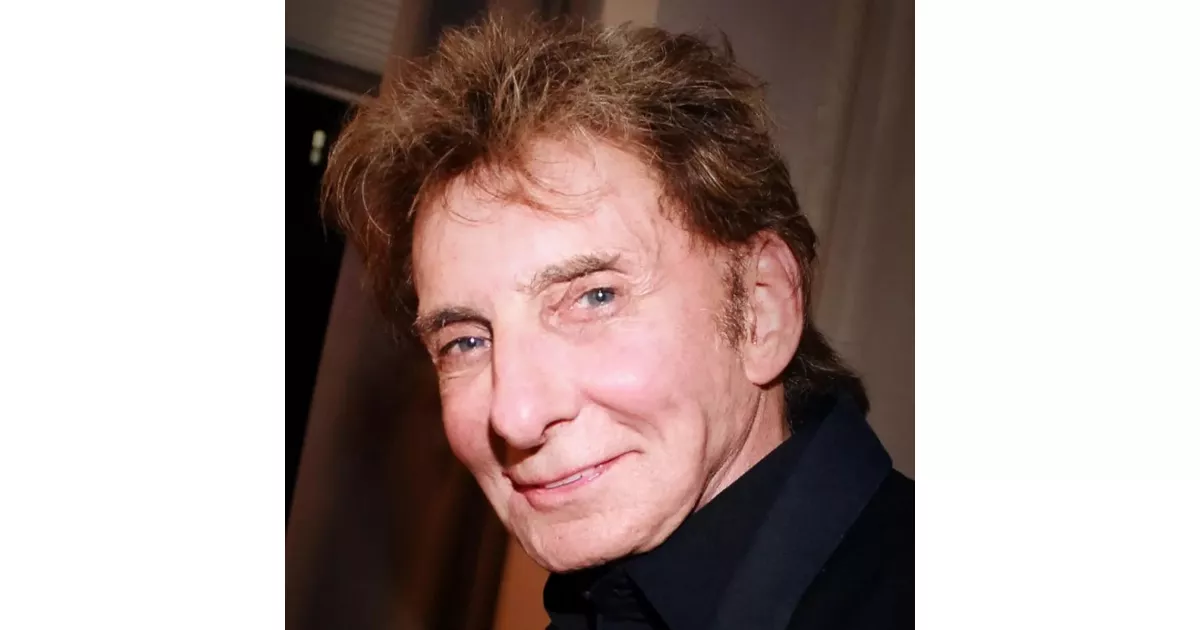
How education and upbringing influenced the life of Barry Manilow. A timeline of key moments.
Barry Manilow is a celebrated American singer-songwriter, whose career has spanned over six decades. He is best known for a string of hit songs that defined the pop music landscape of the 1970s and 1980s. Signature tracks such as "Mandy," "Copacabana," "Could It Be Magic," and "I Write the Songs" are still widely recognized and enjoyed today. Manilow's contributions have solidified his place as a prominent figure in American popular music.
June 17, 1943: Barry Manilow's Birth
On June 17, 1943, Barry Manilow, originally named Barry Alan Pincus, was born. He is an American singer and songwriter.


1961: Graduation from Eastern District High School
In 1961, Barry Manilow graduated from Eastern District High School in Williamsburg, Brooklyn. During high school, he met Susan Deixler, who he later married.
1964: Marriage to Susan Deixler
In 1964, Barry Manilow married Susan Deixler, his high school sweetheart. He later expressed that while he loved her, his ambition for a music career and his immaturity led to the straining of their relationship.
December 1965: Playboy's response
In December 1965, Barry Manilow credited the response he received from Playboy magazine as giving him the courage to leave his marriage and pursue a career in music.
1966: Annulment of Marriage
In 1966, Susan Deixler had her marriage to Barry Manilow annulled.
1978: Relationship with Garry Kief
In 1978, Barry Manilow began a relationship with TV executive Garry Kief, who later became his manager.
December 1983: Endowment of Music Departments
In December 1983, Barry Manilow endowed the music departments at six major universities in the United States and Canada.
1987: Publication of Autobiography and Return to Arista Records
In 1987, McGraw-Hill published Barry Manilow's autobiography, "Sweet Life: Adventures on the Way to Paradise". Manilow also defended his music against critics. Additionally, in 1987 Manilow returned to Arista Records with the release of "Swing Street".
June 22, 1989: Appearance on The Tonight Show
On June 22, 1989, Barry Manilow appeared on The Tonight Show with Johnny Carson to address claims made by an American tabloid that he was engaged to porn star Robin Byrd. He denied the rumors, stating they were just friends.
1989: Benefit Concert for Hurricane Hugo Relief
In 1989, after Hurricane Hugo impacted the Charleston, South Carolina area, Barry Manilow held a benefit concert at the University of South Carolina's Carolina Coliseum in Columbia. Tickets sold out in three hours, and concertgoers were asked to bring canned food for donation. Mayor T. Patton Adams declared the day "Barry Manilow Day," and Manilow presented The Red Cross and The Salvation Army with checks of $42,500 each.
December 23, 1993: Concert Audio Volume Lawsuit
On December 23, 1993, Arizona Court of Appeals Judge Philip Espinosa attended a Barry Manilow concert with his wife. The concert's audio volume led to a lawsuit claiming he suffered constant ringing in his ears (tinnitus).
July 1997: Settlement of Audio Volume Lawsuit
In July 1997, to settle the lawsuit filed by Arizona Court of Appeals Judge Philip Espinosa over the audio volume of a December 23, 1993, concert, it was reported that Barry Manilow donated $5,000 to the American Tinnitus Association.
September 23, 1997: Trial Date Set for Audio Volume Lawsuit
On September 23, 1997, the trial was set for the lawsuit filed by Arizona Court of Appeals Judge Philip Espinosa against Barry Manilow over the audio volume of a December 23, 1993, concert. Espinosa claimed he suffered tinnitus as a result.
2005: Hurricane Katrina Relief Efforts
In 2005, following Hurricane Katrina, Barry Manilow matched every dollar donated to the American Red Cross through the Manilow Fund for Health and Hope website. The fund itself also matched the donations, tripling the original amount. $150,000 was raised and delivered to the American Red Cross in 48 hours.
June 2006: Music Used to Deter Gangs
In June 2006, Australian officials used Barry Manilow's music to deter gangs of youths from congregating in a residential area late at night, playing it from 9:00 p.m. to midnight on Fridays, Saturdays, and Sundays.
October 27, 2011: Contribution to Joplin, Missouri
On October 27, 2011, Barry Manilow visited Joplin, Missouri, after a tornado had destroyed a significant portion of the city. Through his Manilow Music Project, he contributed $300,000 to restore the musical program and instruments lost at the local high school.
2014: Marriage to Garry Kief
In 2014, Barry Manilow married Garry Kief after same-sex marriage became legal in California. They kept their relationship private until the marriage became public news.
2015: Marriage Made Headlines
In 2015, Barry Manilow's marriage to Garry Kief became public knowledge after Suzanne Somers disclosed that they had privately exchanged vows. While no official paperwork was filed, they exchanged wedding bands.
April 2017: Publicly coming out
In April 2017, Barry Manilow officially came out as gay, expressing surprise and gratitude that his fan base was supportive of his marriage to Garry Kief.
2017: Manilow Comes Out as Gay
In 2017, Barry Manilow publicly came out as gay and stated that the failure of his marriage to Susan Deixler was not related to his sexual orientation.
February 2022: New Zealand authorities used music to deter protesters
In February 2022, New Zealand authorities employed a tactic similar to the one used in Australia in 2006. The authorities played Barry Manilow's music to deter protestors camped outside the country's parliament building to protest COVID-19 vaccine mandates.
December 22, 2025: Diagnosis of Lung Cancer
On December 22, 2025, Barry Manilow, a former cigarette smoker, announced that he had been diagnosed with early-stage lung cancer and would undergo surgery.
Mentioned in this timeline

Home Box Office HBO is an American pay television service...
California is a U S state on the Pacific Coast...
Frank Sinatra nicknamed Chairman of the Board and Ol' Blue...
Al Gore served as the th U S Vice President...

CBS or CBS Broadcasting Inc is a major American commercial...
Arizona is a state in the Southwestern United States part...
Trending
4 hours ago US Coast Guard Personnel Exchange Fire With Shooters Near Mexico Border
15 days ago Florida Records First Dengue Fever Death Amid Rising Case Numbers in Hillsborough County
4 hours ago Michael Douglas and Kathleen Turner Reveal Past Secret Affair During Romancing the Stone Filming

4 hours ago Jeremiah Smith Shatters Ohio State Receiving Records
5 hours ago John Wayne's Early Western Flop Recognized as a Cinematic Masterpiece

5 hours ago Justin Bieber Shares Heartwarming New Photos of Infant Son Jack
Popular

Ken Paxton is an American politician and lawyer serving as...

Shakira Isabel Mebarak Ripoll the Queen of Latin Music is...

Jameis Winston is an American football quarterback currently playing for...

Elon Musk is a visionary entrepreneur and engineer known for...
Bernie Sanders is a prominent American politician and the senior...

Michael Joseph Jackson the King of Pop was a highly...