


Bates College is a private liberal arts college located in Lewiston, Maine. The college is situated on an 813-acre campus including a nature preserve and coastal center. It has an annual enrollment of approximately 1,800 students, making it the smallest college in its athletic conference.
1903: Carroll Beedy graduates
In 1903 alumnus Carroll Beedy graduated from Bates College. He would later become United States Congress member.


1910: Endowment Reaches $1 Million
In 1910, Bates College's endowment reached $1 million, showcasing significant growth during the college's first half-century.
1911: Charles Clason graduates
In 1911 alumnus Charles Clason graduated from Bates College. He would later become United States Congress member.
1912: Vaughn Blanchard becomes an Olympian
In 1912 alumnus Vaughn Blanchard graduated from Bates College. He would later become an Olympian.
1913: Harlan Holden becomes an Olympian
In 1913 alumnus Harlan Holden graduated from Bates College. He would later become an Olympian.
1914: Donald Partridge graduates
In 1914 alumnus Donald Partridge graduated from Bates College. He would later become United States Congress member.
1920: Founding of the Outing Club
In 1920, the Outing Club was founded at Bates College. It is one of the oldest collegiate outing clubs in the country.
1921: First Intercontinental Debate
In 1921, Bates College's debate team participated in the first intercontinental collegiate debate in history, competing against the Oxford Union's debate team at the University of Oxford.
1922: Ray Buker becomes an Olympian
In 1922 alumnus Ray Buker graduated from Bates College. He would later become an Olympian.
September 1923: Oxford Debate in Lewiston
In September 1923, the University of Oxford's debate team held its first debate in the United States against Bates College in Lewiston.
1926: Art Sager becomes an Olympian
In 1926 alumnus Art Sager graduated from Bates College. He would later become an Olympian.
1928: John F. Davis Becomes Clerk of the Supreme Court
In 1928 alumnus John F. Davis graduated from Bates College. He would later become Clerk of the Supreme Court of the United States.
1930: Jeffery Lynn becomes an actor
In 1930 alumnus Jeffery Lynn graduated from Bates College. He would later become an actor.
1933: Arnold Adams becomes an Olympian
In 1933 alumnus Arnold Adams graduated from Bates College. He would later become an Olympian.
1936: Edmund Muskie Becomes U.S. Secretary of State
In 1936 alumnus Edmund Muskie graduated from Bates College. He would later become the 58th U.S. Secretary of State.
1939: Robert Kinney becomes CEO of General Mills
In 1939 alumnus Robert Kinney graduated from Bates College. He would later become the CEO of General Mills.
1940: Frank Coffin graduates
In 1940 alumnus Frank Coffin graduated from Bates College. He would later become United States Congress member.
1943: Lewis Millet graduates
In 1943 alumnus Lewis Millet graduated from Bates College. He would later become Medal of Honor recipients.
1943: Introduction of V-12 Navy College Training Program
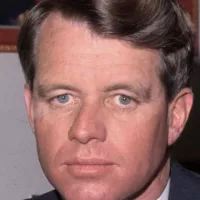
In 1943, the V-12 Navy College Training Program was introduced at Bates College. During this time the SS Bates Victory victory ship was named after the college and Robert F. Kennedy enrolled at the college.
1943: George Hammond Alumni
In chemistry, Bates College has played an important role in shaping ideas about inorganic chemistry and is considered the birthplace of inorganic photochemistry as its early manifestations were started at the college by a 1943 alumnus George Hammond who was later dubbed "the father of the movement".
1944: Robert F. Kennedy Graduates
In 1944 alumnus Robert F. Kennedy graduated from Bates College. He would later become U.S. Attorney General.
1955: Establishment of Bates College Museum of Art
Founded in 1955, the Bates College Museum of Art holds contemporary and historic pieces. It holds 5,000 pieces and objects of contemporary domestic and international art.
1956: Barry Greenfield becomes managing director at Fidelity Fund
In 1956 alumnus Barry Greenfield graduated from Bates College. He would later become the managing director at Fidelity Fund.
1958: First Aired WRBC
WRBC, the college radio station of Bates College, was first aired in 1958, starting as an AM station due to the efforts of rhetoric professor Brooks Quimby.
1960: Edmund Muskie participates in torch relay
In 1960, alumnus Edmund Muskie, then governor, participated in a torch relay from Augusta to Lewiston as part of the Winter Carnival celebration of the 1960 Winter Olympics.
1964: Creation of Colby-Bates-Bowdoin Consortium
In 1964, Bates College, along with Colby College and Bowdoin College, created the Colby-Bates-Bowdoin Consortium.
1967: Promotion of Teacher-Scholars
In 1967, President Thomas Hedley Reynolds promoted the idea of teacher-scholars at Bates College and secured the construction of numerous academic and recreational buildings.
1970: Bruce Stangle founds Analysis Group
In 1970 alumnus Bruce Stangle graduated from Bates College. He would later found Analysis Group.
1972: Jeffrey K. Tulis becomes a writer
In 1972 alumnus Jeffrey K. Tulis graduated from Bates College. He would later become a writer.
1973: Joseph Willett becomes CFO of Merrill Lynch
In 1973 alumnus Joseph Willett graduated from Bates College. He would later become the CFO of Merrill Lynch.
1974: Bob Goodlatte graduates
In 1974 alumnus Bob Goodlatte graduated from Bates College. He would later become United States Congress member.
1974: Steven Girvin Alumni
In physics, 1974 Bates College alumnus Steven Girvin credited his time at the college as pivotal in his development of the fractional quantum Hall effect, now a pillar in Hall conductance.
1977: Elizabeth Strout becomes a writer
In 1977 alumnus Elizabeth Strout graduated from Bates College. He would later become a writer.
1978: Paul Kazarian becomes CEO of Japonica Partners
In 1978 alumnus Paul Kazarian graduated from Bates College. He would later become the CEO of Japonica Partners.
1980: Michael Chu becomes CEO of L Catterton and Michael Bonney becomes CEO of Cubist Pharmaceuticals
In 1980, alumnus Michael Chu graduated from Bates College. He would later become CEO of L Catterton. In that same year, alumnus Michael Bonney also graduated, later becoming CEO of Cubist Pharmaceuticals.
1984: Brian McGrory becomes a writer
In 1984 alumnus Brian McGrory graduated from Bates College. He would later become a writer.
1984: SAT and ACT Optional
In 1984, Bates became one of the first liberal arts colleges to make the SAT and ACT optional in the admission process.
1986: Establishment of Olin Arts Center
In 1986, the F. W. Olin Foundation donated the Olin Arts Center to Bates College, housing the departments of Art and Music.
1989: Darrell Crate becomes CFO of Affiliated Managers Group
In 1989 alumnus Darrell Crate graduated from Bates College. He would later become the CFO of Affiliated Managers Group.
1989: Donald West Harward Presidency
In 1989, Donald West Harward took over the presidency of Bates College and built 22 new academic, residential, and athletic facilities.
1990: Maria Bamford Attends Bates College
From 1990 to 1992, Maria Bamford attended Bates College. She would later become an actor.
1990: Electronic Version of The Bates Student
Since 1990, an electronic version of The Bates Student newspaper has been available online.
1991: Corey Harris becomes a musician
In 1991 alumnus Corey Harris graduated from Bates College. He would later become a musician.
1992: Lisa Genova becomes a writer
In 1992 alumnus Lisa Genova graduated from Bates College. He would later become a writer.
1994: Ben Cline graduates
In 1994 alumnus Ben Cline graduated from Bates College. He would later become United States Congress member.
1996: Amy Geller becomes a documentarian
In 1996 alumnus Amy Geller graduated from Bates College. He would later become a documentarian.
1997: Mike Ferry becomes an Olympian
In 1997 alumnus Mike Ferry graduated from Bates College. He would later become an Olympian.
1998: Justin Freeman becomes an Olympian
In 1998 alumnus Justin Freeman graduated from Bates College. He would later become an Olympian.
2001: Economics Department Ranking
According to a 2001 study, Bates College's economics department was the most cited liberal arts department in the United States.
2002: Inauguration of Mount David Summit
In 2002, Bates College started holding the annual Mount David Summit, a platform for students to present undergraduate research, creative art, performance, and academic projects, held in Pettengill Hall.
April 2005: Athletic Program Ranked Top 5%
In April 2005, Bates College's athletic program was ranked in the top 5% of national athletic programs, recognizing its overall excellence.
2005: Andrew Byrnes becomes an Olympian
In 2005 alumnus Andrew Byrnes graduated from Bates College. He would later become an Olympian.
2006: Hayley Johnson becomes an Olympian
In 2006 alumnus Hayley Johnson graduated from Bates College. He would later become an Olympian.
2007: Bates Signs Climate Commitment
In 2007, Bates College signed onto the American College and University President's Climate Commitment, demonstrating its dedication to environmental sustainability.
April 2008: "The Commons" Dining Complex Completed
In April 2008, Bates College completed its new dining complex named "The Commons" at a cost of approximately $24 million. The 60,000 square feet complex is certified LEED Silver and incorporates various sustainable features.
2008: Highest Admit Rate
Bates College had its highest admit rate during the 2008–09 year, accepting 30.4% of applicants.
2008: Endowment Loses Value in Financial Crisis
During the 2008 financial crisis and the Great Recession, Bates College's endowment lost 31% of its market value, reflecting the economic challenges of the time.
2008: Financial Crisis Management
In 2008, President Elaine Tuttle Hansen led Bates College through the financial crisis.
2008: Bates Alumnus Wins Olympic Gold Medal
In 2008, one of Bates College's alumni won an Olympic gold medal in rowing for Canada at the Beijing Olympics.
2010: Endowment Outperforms Peers
From 2010 to 2018, the Bates endowment consistently outperformed peers in market returns, particularly against fellow NESCAC colleges and the Ivy League.
2011: Jared Golden graduates
In 2011 alumnus Jared Golden graduated from Bates College. He would later become United States Congress member.
2012: Most Expensive College
In 2012, Bates made national headlines for being named the most expensive college in the U.S., highlighting socioeconomic inequality among students.
2012: Clayton Spencer Assumes Presidency
In 2012, Clayton Spencer, previously a dean at Harvard University, became the president of Bates College and initiated diversity mandates, expanded recruitment efforts, and increased financial aid.
2012: Niche Grade for Dining Services
Since 2012, Bates College's dining services have continuously received the grade of 'A+' by Niche.
2013: Debate council ranked 5th nationally
In 2013, the Bates debate council was ranked 5th nationally, following its ranking of 9th in the world the previous year.
2014: Research and Development Spending
In 2014, Bates College spent $1.58 million on research and development.
2015: Dining Services Ranking
Bates College's dining services was ranked 6th in the nation in 2015 by The Princeton Review.
2015: Emily Bamford becomes an Olympian
In 2015 alumnus Emily Bamford graduated from Bates College. He would later become an Olympian.
2015: Faculty Compensation
In 2015, full-time professors at Bates College received an average total compensation of $123,066, placing faculty pay in the top 17% of all public and private universities.
2015: Princeton Review Ranking of WRBC
In 2015, the Princeton Review ranked WRBC as the 12th-best college radio station in the United States and Canada, making it the top college radio in the NESCAC.
2015: Men's Squash Team Wins National Championship
In 2015, the men's squash team at Bates won the national championship, marking a significant achievement. The winning student was also the first in the history of the athletic conference to be named All American all four years he played for the college.
2015: Women's Rowing Team Decorated
In the 2015 season, the women's rowing team was the most decorated rowing team in collegiate racing. In the same year, the men's rowing team showed the fastest improvement in rankings within its athletic conference, becoming the NESCAC Rowing Champion.
2016: Dining Services Ranking
Bates College's dining services was ranked 8th in the nation in 2016 by Niche.
2016: Zero Transfer Admissions
In 2016, Bates College had a year where no transfer applicants were accepted; all 170 applicants failed to gain admission.
2016: Women's Rowing Team Ranked First
In 2016, the Women's Rowing Team at Bates was ranked first in the NESCAC and first overall in NCAA Division III rowing, marking a significant achievement for the program.
2016: Men's Track Field Achieves Championship Streak
In 2016, the men's track field team became the first team in Maine history to achieve seven consecutive wins of the state championship.
2017: Socioeconomic Disparity Highlighted
According to The New York Times in 2017, 18% of Bates students came from the top 1% of the American upper class, with more than half from the top 5%, highlighting socioeconomic disparities at the college.
2017: College Raises $300 Million
From 2017 to 2022, Bates College raised around $300 million as part of a broader capital campaign, enhancing its financial resources.
November 2018: Congress Members Among Alumni
As of November 2018, Bates College has had 12 United States Congress members among its alumni.
2018: Bates Graduates Olympians
As of 2018, Bates College has graduated a total of 12 Olympians, including one who won a gold medal in rowing for Canada at the 2008 Beijing Olympics.
2018: Transfer Student Acceptance
During the 2018 admission rounds, Bates accepted seven transfer students from 205 applicants, yielding a 3.4% transfer acceptance rate.
2018: Endowment Outperforms Peers
From 2010 to 2018, the Bates endowment consistently outperformed peers in market returns, particularly against fellow NESCAC colleges and the Ivy League.
2019: Study on Fundraising and Endowment
According to a 2019–20 The Student/BCIC academic study, "Lackluster fundraising, poor governance, and divestments" from the 1960s to 1980s, "cost Bates hundreds of millions".
2019: Dinos Lefkaritis becomes an Olympian
In 2019 alumnus Dinos Lefkaritis graduated from Bates College. He would later become an Olympian.
2019: Bates Achieves Carbon Neutrality
In 2019, Bates College achieved complete carbon neutrality through campus-wide conservation efforts and specific initiatives outlined in its implementation plan.
2019: Academic Statistics for Class of 2019
In 2019, the average high school GPA for the incoming class at Bates College was an unweighted 3.71. The average SAT Score was 2135, and the average ACT score range was 28 to 32.
2022: College Raises $300 Million
From 2017 to 2022, Bates College raised around $300 million as part of a broader capital campaign, enhancing its financial resources.
2022: $345.7 Million Fundraising Campaign
From 2017 to 2022, Bates successfully raised $345.7 million as part of their fundraising campaign.
July 2023: Garry Jenkins Takes Office as President
In July 2023, Garry Jenkins officially took office as the president of Bates College, leading the central administration.
2023: Record Low Admission Rate
For the class of 2023, Bates College admitted 12.1% of all applicants, which was the lowest-ever admission rate for the college.
2023: Appointment of Garry Jenkins
In 2023, Garry Jenkins was appointed president of Bates College, becoming the first black president of the institution.
2025: Comprehensive Price for 2025-26 Academic Year
For the 2025–26 academic year, Bates College charged a comprehensive price (tuition, room and board, and associated fees) of $89,930.
2025: Class of 2025 Demographics
In 2025, Bates College's incoming class gender demographic was 47% male and 53% female, with 27% of U.S. students being students of color and 12% being first-generation college students.
2025: Forbes and Washington Monthly Rankings
In 2025, Forbes ranked Bates College 80th nationally and Washington Monthly ranked it 14th among liberal arts colleges for contribution to public good.
2026: Student-Faculty Ratio and Class Size
As of 2026, Bates College has a 9:1 student-faculty ratio and an average class size of about fifteen students.
2026: Bates Alumni Count Reaches 24,000
As of 2026, there are 24,000 Bates College alumni, including faculty. These alumni have made significant contributions in various fields.
Mentioned in this timeline
The United States of America is a federal republic primarily...
Robert F Kennedy RFK was a prominent American politician and...
The rapid advancement of artificial intelligence continues to dominate the...
The New York Times is a globally influential American newspaper...
A bank is a regulated financial institution licensed to accept...
Music involves arranging sounds to create form harmony melody rhythm...
Trending
3 hours ago Joey Porter Jr. Travels to Green Bay Amidst Ongoing Injury Status Concerns
19 hours ago Waymo Announces Plans to Launch First Canadian Robotaxi Service in Toronto by 2028
3 hours ago Dallas Cowboys Defense Holds Emergency Meeting Amidst Season Struggles

3 hours ago Grady Jarrett Shows Promising Form Returning To Atlanta With Chicago Bears
3 hours ago Matt LaFleur Leads Green Bay Packers Through Ongoing NFL Season Developments
3 hours ago Cris Collinsworth Analyzes Bengals Struggles and Sparks Controversy with SNF Comments
Popular

Ilhan Omar is a prominent American politician currently serving as...

Ken Paxton is an American politician and lawyer serving as...

Elon Musk is a visionary entrepreneur and engineer known for...

Michael Joseph Jackson the King of Pop was a highly...

Cristiano Ronaldo widely considered one of the greatest footballers captains...

Greta Thunberg is a Swedish climate activist who gained international...