


Carson City, Nevada, is the state's capital and 6th most populous city, with a population of 58,639 as of 2020. Located in Eagle Valley near the Sierra Nevada's Carson Range, about 30 miles south of Reno, it began as a stopover for California-bound immigrants. Its growth was spurred by the Comstock Lode silver strike. Carson City has been Nevada's capital since 1861 and was a significant hub for the Virginia and Truckee Railroad for a considerable amount of time. The city is named after mountain man Kit Carson.
1909: Death of William M. Stewart
Carson City lawyer William M. Stewart, who had escorted territorial governor James W. Nye from San Francisco, California, died in 1909.


1930: Carson City Population Decline
By 1930, Carson City's population had dropped to just over 1,500 people, and the city began advertising itself as "America's smallest capital."
July 19, 1931: Hottest temperature recorded
On July 19, 1931, the hottest temperature ever recorded in Carson City was 107 °F (41.7 °C).
December 12, 1932: Lowest Maximum Temperature
On December 12, 1932, the lowest maximum temperature ever recorded in Carson City was 5 °F or −15 °C.
January 1937: Second coldest month
January 1937 was the second coldest month in Carson City with a mean temperature of 14.9 °F (−9.5 °C).
January 21, 1937: Coldest temperature recorded
On January 21, 1937, the coldest temperature ever recorded in Carson City was −27 °F or −32.8 °C.
July 1937: Start of the wettest rain year
July 1937 marks the start of the wettest rain year with 19.36 inches (491.7 mm) of precipitation, lasting until June 1938.
June 1938: End of the wettest rain year
June 1938 marks the end of the wettest rain year, which began in July 1937, with a total of 19.36 inches (491.7 mm) of precipitation.
1939: Start of World War II
World War II began in 1939, which eventually contributed to the slow growth of Carson City's population.
1941: Start of World War II
World War II began in 1941, which eventually contributed to the slow growth of Carson City's population.
1945: End of World War II
World War II ended in 1945, after which Carson City slowly grew.
January 1949: Coldest Month
January 1949 was recorded as the coldest month in Carson City with an average temperature of 12.6 °F (−10.8 °C).
1950: Most precipitation in one day
On November 19, 1950, Carson City experienced the most precipitation in one day, with 3.12 inches or 79.2 millimeters.
July 1951: Start of the period with the most snowfall
July 1951 marks the start of the period with the most snowfall, 82.1 inches (2.1 m), lasting until June 1952.
June 1952: End of the period with the most snowfall
June 1952 marks the end of the period with the most snowfall, which began in July 1951, with a total of 82.1 inches (2.1 m).
December 1955: Most precipitation in one month
In December 1955, Carson City experienced the most precipitation in one month, with 10.39 inches or 263.9 millimeters.
1960: Carson City Population Reaches Former Size
By 1960, Carson City had reached its former 1880 mining boom-town era population size.
1960: Carson City's population compared to Ormsby County
By the 1960 census, all but 2,900 of Ormsby County's residents lived in Carson City.
1964: Last Democrat win before Obama
Before Barack Obama's victory in 2008, the last time a Democrat won Ormsby County/Carson City was in 1964.
1966: Statewide Referendum Approves Merger
In 1966, a statewide referendum approved the merger of Ormsby County and Carson City.
1968: Constitutional Amendment Passed
In 1968, the required constitutional amendment was passed, paving the way for the merger of Ormsby County and Carson City.
April 1, 1969: Ormsby County and Carson City Merge
On April 1, 1969, Ormsby County and Carson City officially merged to become the Consolidated Municipality of Carson City.
1969: Consolidation of Ormsby County with Carson City
In 1969, Ormsby County consolidated with Carson City, and the county simultaneously dissolved. The city is now governed by a five-member board of supervisors.
1969: Carson City and Ormsby County Merger
In 1969, after a referendum, the state legislature merged Carson City and Ormsby County into the Carson City Consolidated Municipality.
July 1971: Start of the driest rain year
July 1971 marks the start of the driest rain year with 3.48 inches (88.4 mm) of precipitation, lasting until June 1972.
June 1972: End of the driest rain year
June 1972 marks the end of the driest rain year, which began in July 1971, with a total of 3.48 inches (88.4 mm) of precipitation.
1984: Start of Average Temperature Increase
In 1984, the average temperature began increasing in Carson City.
1987: Creation of Bullfrog County
In 1987, the state government carved Yucca Mountain out of Nye County and created Bullfrog County, with Carson City as its county seat.
1989: Bullfrog County Deemed Unconstitutional
In 1989, a state judge found the creation of Bullfrog County unconstitutional, and its territory was retroceded to Nye County.
December 22, 1990: Lowest Maximum Temperature
On December 22, 1990, the lowest maximum temperature ever recorded in Carson City was 5 °F or −15 °C.
1990: Last time a Democratic Governor won the county
The last time Carson City voted for a Democratic governor was in 1990 when Bob Miller won every county.
1991: Adoption of Downtown Master Plan
In 1991, Carson City adopted a downtown master plan that restricted the height of new buildings near the Capitol.
2000: Household Data from 2000 Census
According to the 2000 census, there were 20,171 households in Carson City, with an average household size of 2.44 and an average family size of 2.97. The median age was 39 years.
July 2002: Start of the period with the least snowfall
July 2002 marks the start of the period with the least snowfall, 3.1 inches (0.079 m), lasting until June 2003.
June 2003: End of the period with the least snowfall
June 2003 marks the end of the period with the least snowfall, which began in July 2002, with a total of 3.1 inches (0.079 m).
2004: Presidential Election Results
In 2004, George W. Bush defeated John Kerry in Carson City with 57% of the vote to Kerry's 40%.
October 2005: Opening of the Jump Around Carson Bus System
In October 2005, Carson City's first modern bus system, Jump Around Carson, or JAC, opened to the public using a smaller urban bus.
February 2006: Completion of Phase 1 of the Carson City Freeway Project
In February 2006, Phase 1 of the Carson City Freeway Project, running from US 395 just north of the city to US 50, was completed.
2008: Amtrak Discontinues Thruway Bus to Sacramento
In 2008, Amtrak discontinued their connecting thruway bus service to Sacramento, California.
2008: Obama's Victory in Ormsby County/Carson City
In 2008, Barack Obama became the first Democrat since 1964 to win Ormsby County/Carson City, defeating John McCain by 204 votes.
September 24, 2009: Opening of Phase 2A of the Carson City Freeway Project
On September 24, 2009, Phase 2A of the Carson City Freeway Project, extending from Route 50 to Fairview Drive, was officially opened.
2010: Language Data from 2010 Census
As of 2010, 82.3% of Carson City residents age 5 and older spoke English at home as a first language, while 14.1% spoke Spanish.
2010: Census data from 2010
As of the 2010 census, Carson City had a population of 55,274 people, with a population density of 366 people per square mile, and a racial makeup of 81.1% White, 1.9% Black or African American, 2.4% Native American, 2.1% Asian, 0.2% Pacific Islander, 9.4% from other races, and 2.9% from two or more races.
2012: I-580 Extended into Carson City Limits
Prior to 2012, Carson City was one of only five state capitals not directly served by an interstate highway until I-580 was extended into the city limits in 2012.
2012: Notable Employers
The text mentions that a list of notable employers in Carson City would be provided from the fourth quarter of 2012.
2014: Significant Temperature Increase
Between 1984 and 2014, the average temperature in Carson City increased by 4.1 °F (2.3 °C).
August 2017: Completion of Phase 2B of the Carson City Freeway Project
In August 2017, Phase 2B of the Carson City Freeway Project, running from Fairview Drive to Route 50, was completed.
2019: Carson Montessori School Receives Governor's STEM Schools Designation
In 2019, Carson Montessori School received the Governor's STEM Schools Designation, an official recognition given to 25 schools statewide which causes a short ceremony attended by the governor during which receiving schools are assigned a 10-foot (3 m) banner.
2020: Population Data from 2020 Census
As of the 2020 census, the city had a population of 58,639, with a median age of 43.9 years, and a diverse age distribution.
2020: Ancestry Data from 2020
In 2020, the most reported ancestries in Carson City were Mexican (19.6%), English (17%), German (15.3%), Irish (14%), Italian (5.5%), and Scottish (3.8%).
July 2021: Hottest Month
July 2021 was recorded as the hottest month in Carson City with an average temperature of 77.6 °F (25.3 °C).
August 1, 2022: Highest Minimum Temperature
On August 1, 2022, Carson City recorded its highest minimum temperature of 75 °F (23.9 °C).
Mentioned in this timeline

Barack Obama the th U S President - was the...
George W Bush the rd U S President - is...
California is a U S state on the Pacific Coast...
John Forbes Kerry is an American politician and diplomat notable...
San Francisco is the fourth-most populous city in California and...
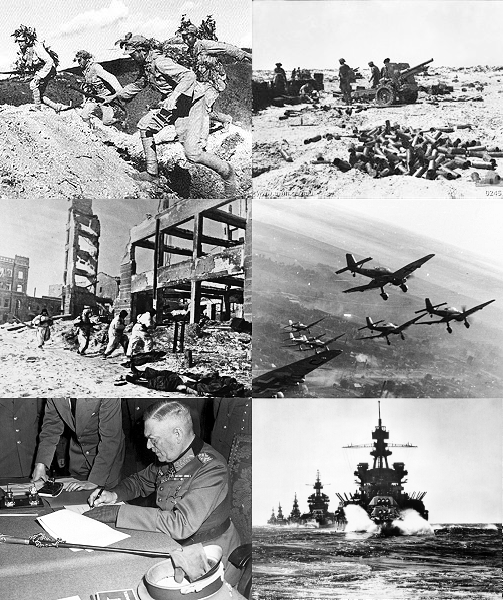
World War II - was a global conflict between the...
Trending
3 hours ago Maryland Terrapins Fire Head Football Coach Mike Locksley

3 hours ago Stefanos Tsitsipas Targets Grand Slam Glory Amidst Renaissance

3 hours ago Judge Judy Sheindlin Celebrates Her 84th Birthday

3 hours ago Concerns grow regarding New York Giants' decision to draft Francis Mauigoa
3 hours ago Amitabh Bachchan Advised Strict Rest Following Health Concerns

3 hours ago James Madison Football Continues To Be A Premier College Football Coaching Pipeline
Popular

Ilhan Omar is a prominent American politician currently serving as...
Ken Paxton is an American politician and lawyer serving as...

Elon Musk is a visionary entrepreneur and engineer known for...

Michael Joseph Jackson the King of Pop was a highly...

Cristiano Ronaldo widely considered one of the greatest footballers captains...

MrBeast the professional name of Jimmy Donaldson is the most-subscribed...