


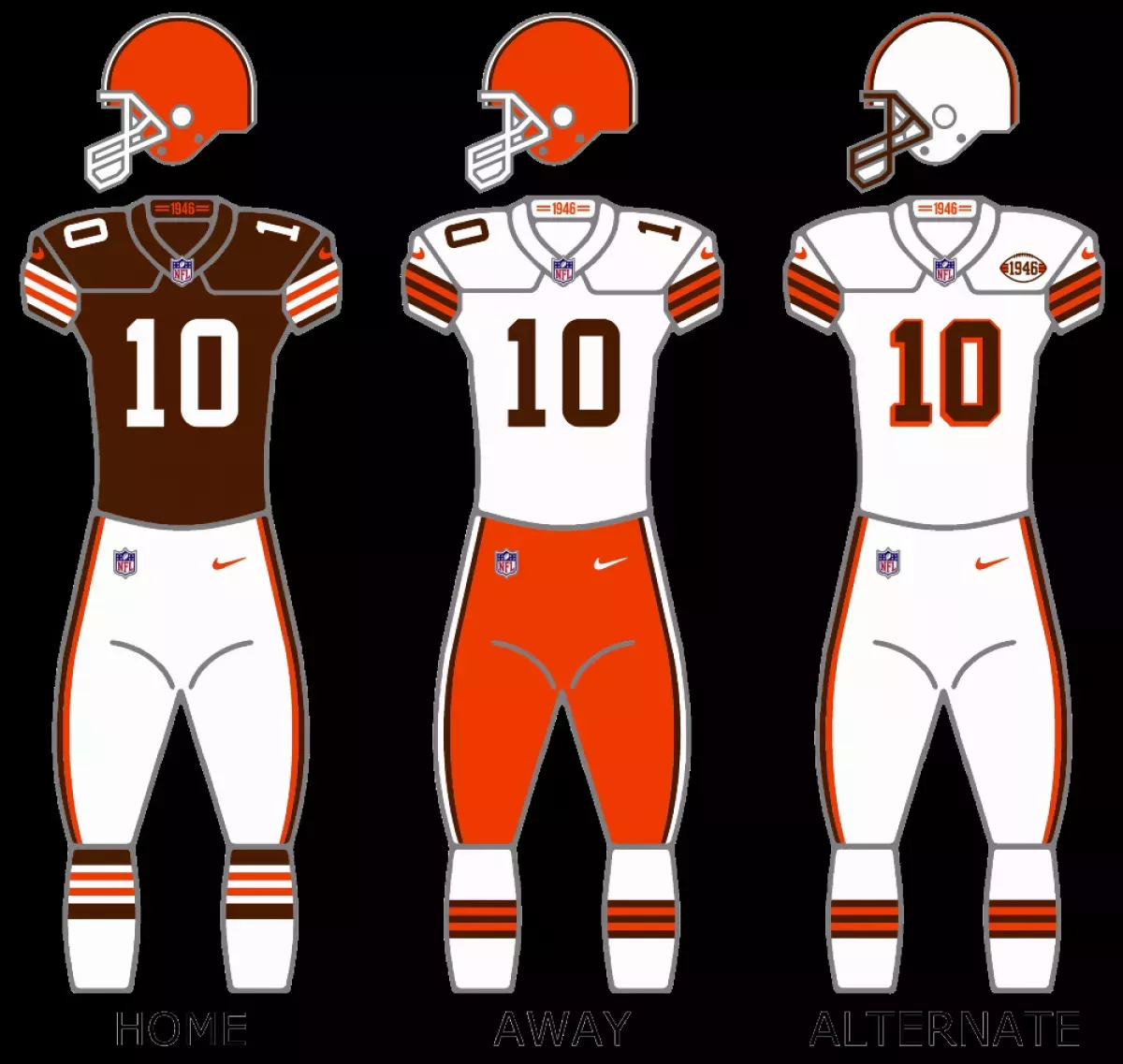
The Cleveland Browns are a professional American football team based in Cleveland, Ohio, competing in the NFL as a member of the American Football Conference (AFC) North division. Founded in 1944 by Paul Brown and businessman Arthur B. McBride, the franchise began play in 1946 as a member of the All-America Football Conference (AAFC). The Browns have a storied history, including a dominant run in the 1950s and 1960s with legendary running back Jim Brown, winning numerous league championships before the Super Bowl era. Despite their early success, the team has faced significant struggles in the modern era, undergoing a hiatus from 1996 to 1999 when the original franchise moved to Baltimore and became the Ravens. The team is known for its intensely loyal fan base, often referred to as the 'Dawg Pound,' and continues to strive for its first Super Bowl appearance while playing their home games at Huntington Bank Field.
1 day ago : Cleveland Browns Prepare for Training Camp as Quarterback Speculation Grows
As the Cleveland Browns approach training camp, uncertainty surrounds the quarterback position. Debates continue regarding potential future talents like Shedeur Sanders, while team performance rankings show mixed results across defensive and offensive positions.


1944: Founding of the Cleveland Browns
In 1944, taxicab magnate Arthur B. "Mickey" McBride founded the Cleveland Browns by securing a franchise in the newly formed All-America Football Conference (AAFC).
1946: Beginning of Franchise Play
After being founded two years prior, the Cleveland Browns began their competitive play in the AAFC in 1946.
1946: The Browns Begin AAFC Play
The Cleveland Browns officially commenced their competitive play in the All-America Football Conference in 1946 under their first coach, Paul Brown.
1949: Transition to the NFL
Following the folding of the All-America Football Conference after the 1949 season, the Cleveland Browns joined the National Football League.
1953: Ownership Transition of the Cleveland Browns
In 1953, the Cleveland Browns were sold by McBride and his partners to a consortium of Cleveland-based businessmen for the sum of $600,000, a record-breaking price for a professional sports franchise at the time.
1954: NFL Championship Victory
The Cleveland Browns secured an NFL championship title during the 1954 season.
1955: End of Championship Streak
By 1955, the Cleveland Browns concluded a remarkable six-year stretch in the NFL where they appeared in the league championship game every year, winning three titles between 1950 and 1955.
1955: Back-to-Back NFL Championship
Continuing their dominance in the league, the Cleveland Browns won another NFL championship in the 1955 season.
1957: Introduction of helmet numbers
Starting in 1957, the Cleveland Browns began painting players' numbers onto their helmets as a promotional design element.
1960: Conclusion of helmet number usage
By the year 1960, the Cleveland Browns concluded the practice of featuring players' numbers on their helmets.
1961: Art Modell Purchases the Browns
In 1961, Art Modell officially purchased the Cleveland Browns franchise.
1963: Termination of Paul Brown
Ahead of the 1963 NFL season, the team's owner Art Modell made the controversial decision to fire head coach Paul Brown, though the team remained competitive under the leadership of Jim Brown.
1964: 1964 NFL Championship Season
The Cleveland Browns achieved success by winning the NFL championship in the 1964 season.
1964: Cleveland Browns Championship Victory
The Cleveland Browns secured a professional football championship title in 1964, marking a significant high point for the franchise following the coaching changes of the previous year.
1965: Start of Post-Championship Era
Beginning in 1965, the team entered a period where they qualified for the NFL playoffs multiple times over three decades but failed to secure another championship.
1965: Creation of the unused CB logo
In 1965, the Cleveland Browns organization developed a CB logo, though it remained unused and did not become a permanent part of the team's visual identity.
1971: Playoff Appearance
The Cleveland Browns demonstrated a competitive return to form by securing a spot in the playoffs during the 1971 season.
1972: Consecutive Playoff Appearance
Building on their previous success, the Cleveland Browns achieved another playoff appearance in 1972 before entering a period of mid-decade mediocrity.
1979: Birth of the Kardiac Kids
The 1979 season marked the beginning of a revival for the team, as quarterback Brian Sipe led numerous dramatic, last-minute victories that earned the squad the nickname 'Kardiac Kids'.
1980: Kardiac Kids Success
During the 1980 season, the Cleveland Browns continued their trend of exciting, high-stakes finishes under Brian Sipe, though the team was ultimately unable to advance past the first round of the playoffs.
1985: Bernie Kosar Drafted
In 1985, the Cleveland Browns drafted quarterback Bernie Kosar, a move that would lead the team to three AFC Championship game appearances later that decade.
1991: Bill Belichick Hired as Head Coach
Prior to the start of the 1991 NFL season, the Cleveland Browns officially hired Bill Belichick to serve as their new head coach.
1994: 1994 Playoff Run
During the 1994 season, the Browns achieved their only winning season under Bill Belichick. The team successfully defeated the New England Patriots 20–13 in the Wild Card Round, though they were subsequently eliminated by the Pittsburgh Steelers in the Divisional Round with a 29–9 loss.
1994: Previous playoff win benchmark
The year 1994 serves as the historical marker for the franchise's last postseason victory before their win against the Pittsburgh Steelers in the 2020 Wild Card Round.
1995: Relocation Announcement and Coaching Change
In 1995, owner Art Modell announced the controversial relocation of the Browns to Baltimore, sparking legal negotiations that preserved the Browns' name and history for a future reactivated franchise. Additionally, following a disappointing 5–11 season in 1995, the organization fired head coach Bill Belichick.
1995: Relocation Announcement
In 1995, team owner Art Modell announced his controversial plan to relocate the Cleveland Browns franchise to Baltimore.
1995: Conclusion of Playoff Era
The year 1995 marked the end of a thirty-year span during which the Cleveland Browns qualified for the NFL playoffs 14 times without winning a title.
1996: Resolution of Relocation Dispute
Following legal pressure in 1996, a compromise was reached allowing the formation of the Baltimore Ravens while keeping the Browns' history, intellectual property, and team name in trust in Cleveland until the franchise's return.
1998: Expansion Draft Confirmation
In 1998, the NFL officially confirmed plans to hold an expansion draft to restock the roster for the Browns' return to league play the following year.
1999: Reactivation Deadline
As part of the settlement agreement following the 1995 relocation controversy, it was mandated that a reactivated Cleveland Browns franchise would return to the field no later than 1999, retaining the original team's colors, logos, and heritage.
1999: Cleveland Browns Reactivation
Following a three-year hiatus during the construction of Cleveland Browns Stadium, the Cleveland Browns were officially reactivated in 1999 under the ownership of Al Lerner and head coach Chris Palmer.
1999: Return to NFL Play
The Cleveland Browns resumed active play in the NFL in 1999, utilizing a roster built through an expansion draft, though the team is not officially categorized as an expansion franchise.
2000: 2000 NFL Season
During the 2000 NFL season, the Cleveland Browns struggled on the field, finishing the year with a record of 3–13.
2001: Butch Davis Begins Tenure as Head Coach
In 2001, Butch Davis was appointed as the head coach of the Cleveland Browns, leading the team to a 7–9 record during his inaugural season.
2002: Browns Earn 2002 Playoff Berth
During the 2002 season, the Cleveland Browns achieved a 9–7 record, which secured them a spot in the playoffs, although they were defeated 36–33 by the Pittsburgh Steelers in the Wild Card Round.
2002: Successful 2002 Season
During the 2002 season, the Cleveland Browns managed to achieve one of their rare winning seasons and secured a berth in the NFL playoffs.
2002: 2002 Playoff Appearance
In 2002, the Cleveland Browns achieved one of their rare successful campaigns since returning to the league, securing a playoff appearance.
2002: Previous playoff benchmark
The year 2002 marks the final season of the franchise's previous playoff appearance prior to their return to the postseason in 2020.
2003: Beginning of Playoff Drought
Starting in 2003, the Cleveland Browns entered a period of struggle that resulted in a 17-season playoff drought, which persisted until the 2020 season.
2003: 2003 Season Regression
The Cleveland Browns experienced a regression during the 2003 season, finishing with a 5–11 record.
2004: Butch Davis Resignation
Following a difficult 3–8 start to the 2004 season, head coach Butch Davis resigned, and Terry Robiskie took over to finish the season with a 1–4 record.
2005: Romeo Crennel Appointed Head Coach
Before the start of the 2005 season, Romeo Crennel was hired as the new head coach, and he subsequently led the team to a 6–10 finish that year.
2006: Browns 60th Anniversary Celebration
During the 2006 season, the Cleveland Browns marked their 60th anniversary by introducing a special commemorative team logo.
2006: 2006 Season Results
In the 2006 season, head coach Romeo Crennel led the Cleveland Browns to a 4–12 record.
2007: 2007 Winning Season
During the 2007 season, the Cleveland Browns posted a winning record of 10–6, though it was not enough to qualify the team for the playoffs.
2007: 2007 Season Performance and Rivalry Shift
In 2007, the Browns recorded a winning season, but the year was also notable for the Pittsburgh Steelers overtaking the Browns in their long-standing historical rivalry.
2008: Termination of Romeo Crennel
Following a 4–12 record in the 2008 season, head coach Romeo Crennel was fired by the organization.
2008: Detroit Lions 0-16 Record
In 2008, the Detroit Lions became the first team in the modern NFL era to finish a season with an 0–16 record, a feat that would later be matched by the Browns in 2017.
2009: Eric Mangini First Season
Eric Mangini began his tenure as head coach in 2009, leading the team to a 5–11 record.
2010: End of Mangini Era
After posting a second consecutive 5–11 season in 2010, head coach Eric Mangini was fired from the Cleveland Browns.
2011: Pat Shurmur Takes Over
Pat Shurmur took charge as head coach for the 2011 season, during which the team finished with a 4–12 record.
2012: Pat Shurmur Dismissal
After a 5–11 season in 2012, Pat Shurmur was fired from his position as head coach of the Cleveland Browns.
2012: Sale to Jimmy Haslam
In 2012, the Lerner family sold the Cleveland Browns franchise to businessman Jimmy Haslam, beginning a period of ownership marked by significant organizational turnover.
2013: Rob Chudzinski Tenure
Rob Chudzinski served as head coach for the 2013 season, concluding the campaign with a 4–12 record before being fired.
2014: Mike Pettine First Season
Mike Pettine began coaching the Cleveland Browns in 2014, leading the team to a 7–9 record.
February 24, 2015: Cleveland Browns Logo and Helmet Update
On February 24, 2015, the Cleveland Browns introduced updated logos and wordmarks, which included adjusting the shade of orange on the helmet and changing the facemask color from gray to brown.
2015: Mike Pettine Dismissal
Following a 3–13 record during the 2015 season, Mike Pettine was fired from his head coaching position.
2016: Hue Jackson and the Draft
In 2016, under head coach Hue Jackson, the team struggled, resulting in the acquisition of the number one overall draft pick used on Myles Garrett.
2017: Winless Season and Baker Mayfield Draft
During the 2017 season, the Browns suffered a winless 0–16 record, marking the worst two-year stretch in NFL history and securing the top draft pick, which they used to select Baker Mayfield.
2017: Winless 2017 Season
The 2017 season marked a low point for the franchise as the Browns finished with an 0–16 record, becoming only the second team in NFL history to achieve such a result.
2019: Freddie Kitchens tenure as head coach
In 2019, the Cleveland Browns hired Freddie Kitchens as head coach, but after the team finished with a 6–10 record, he was fired following the conclusion of the season.
2019: Conclusion of Playoff Drought
The year 2019 marked the final year of the Browns' 17-season playoff drought, which officially concluded when the team returned to the postseason in 2020.
2020: Playoff return and Kevin Stefanski hiring
Before the 2020 season, Kevin Stefanski was hired as head coach. The team finished 11–5 and earned their first playoff berth since 2002 by beating the Pittsburgh Steelers in week 17, followed by a Wild Card win against the Steelers and a Divisional Round loss to the Kansas City Chiefs.
2020: 2020 Playoff Success
The 2020 season served as a turning point for the franchise, ending a 17-season playoff drought with a winning record and the team's first playoff victory since their 1999 return.
2021: 2021 season record
During the 2021 season, the Cleveland Browns finished with an 8–9 record and failed to qualify for the postseason.
2021: Browns 75th Anniversary Celebration
In 2021, the Cleveland Browns organization celebrated its 75th anniversary with the creation and use of a specific commemorative logo.
2022: 2022 season record
In the 2022 season, the Cleveland Browns concluded their schedule with a 7–10 record and missed the postseason.
2023: 2023 Playoff Appearance
In 2023, the Cleveland Browns completed a successful campaign that resulted in both a winning record and a qualification for the NFL playoffs.
2023: Return to the postseason
In the 2023 season, the Browns finished with an 11–6 record to return to the playoffs, though their season ended with a 45–14 loss to the Texans in the Wild Card Round.
2024: Conclusion of Brownie Elf Midfield Era
The presence of the Brownie elf logo at midfield at Huntington Bank Field, which began via a fan poll, concluded in 2024.
2025: Return to Helmet Logo
For the 2025 season, the team transitioned back to the traditional helmet logo at midfield, although they maintained the Brownie elf logo on perimeter banners.
Mentioned in this timeline
The Buffalo Bills are a professional American football team located...

San Francisco is the fourth-most populous city in California and...
The Super Bowl is the annual championship game of the...

The Great Lakes are a chain of five large interconnected...
Football commonly known as soccer in many regions is the...
John Elway is a retired American football quarterback renowned for...
Trending

3 hours ago Upcoming Professional Tennis Match Prediction Markets and Tournament Coverage
3 hours ago Andy Burnham Poised to Become Britain's Next Prime Minister
3 hours ago Kevin O'Leary and Fox News Face Defamation Lawsuit Over Data Center Claims

3 hours ago Yulia Putintseva Competes in WTA Iasi Open Quarterfinals
3 hours ago Sheamus Faces WWE Departure Rumors and Potential AEW Move
3 hours ago National Hurricane Center Monitors Increasing Tropical Storm Activity and Gulf Low Pressure Systems
Popular

Lindsey Graham is a prominent American politician serving as the...

Cristiano Ronaldo widely considered one of the greatest footballers captains...

Mitch McConnell is a prominent American politician and the longest-serving...

Elon Musk is a visionary entrepreneur and engineer known for...

Candace Owens is an American conservative political commentator author and...

Bernie Sanders is a prominent American politician and the senior...