


The Cuban peso, also known as moneda nacional, is the official currency of Cuba. It is used for most everyday transactions within the country, while the Cuban convertible peso (CUC) was formerly used alongside it, mainly for tourism and some specific goods. As of 2021, Cuba unified its dual currency system, eliminating the CUC and leaving the Cuban peso as the sole official currency. The exchange rate has been subject to fluctuations and government controls. Its value has varied significantly over time, especially in relation to major international currencies like the US dollar.


October 29, 1914: Cuban peso established
On October 29, 1914, the Cuban peso was established by a Cuban law.
1915: Copper nickel coins minted
Beginning in 1915, 2, 5, 10, 20 and 40 centavos coins were occasionally minted.
1915: Coins introduced
In 1915, cupro-nickel 1, 2 and 5 centavos, silver 10, 20 and 40 centavos and 1 peso, and gold 1, 2, 4, 5, 10 and 20 peso coins were introduced.
1915: Cuban peso begins circulation
In 1915, the Cuban peso began circulating at parity with the U.S. dollar.
1915: First coins of Cuban peso minted
In 1915, the first coins of Cuban peso were minted.
1916: Gold coins and 2 centavos discontinued
In 1916, the gold coins and 2 centavos were not produced.
1934: Cuban silver certificates printed by US Treasury
From 1934, Cuban silver certificates were designed, engraved, and printed by the US Treasury's Bureau of Engraving and Printing.
1934: Government introduces silver certificates
In 1934, the Government introduced silver certificates (certificados de plata) in denominations of 1, 5, 10, 20 and 50 pesos.
1934: Large star design 1 peso discontinued
In 1934, the large star design 1 peso ceased production.
1935: Cuban silver certificates circulated
Cuban silver certificates circulated in Cuba from 1935.
1935: First banknotes (silver certificate) issued
In 1935, the first banknotes (silver certificate) were issued.
1936: 100 pesos silver certificates introduced
In 1936, 100 pesos silver certificates were introduced.
1936: Cuban silver certificates dated 1936
The eight series of notes were dated 1934, 1936, 1936A, 1938, 1943, 1945, 1948, and 1949.
1938: Cuban silver certificates dated 1938
The eight series of notes were dated 1934, 1936, 1936A, 1938, 1943, 1945, 1948, and 1949.
1939: ABC peso issued until 1939
The new silver peso showing a woman, representing the Cuban Republic, beneath a star (the "ABC peso") was issued until 1939.
1943: Cuban silver certificates dated 1943
The eight series of notes were dated 1934, 1936, 1936A, 1938, 1943, 1945, 1948, and 1949.
1944: 500 and 1000 pesos silver certificates introduced
In 1944, 500 and 1000 pesos silver certificates were introduced.
1945: Cuban silver certificates dated 1945
The eight series of notes were dated 1934, 1936, 1936A, 1938, 1943, 1945, 1948, and 1949.
1948: Cuban silver certificates dated 1948
The eight series of notes were dated 1934, 1936, 1936A, 1938, 1943, 1945, 1948, and 1949.
1949: Cuban silver certificates dated 1949
From 1934 to 1949 Cuban silver certificates were designed, engraved, and printed by the US Treasury's Bureau of Engraving and Printing.
1949: Banco Nacional de Cuba resumes paper money production
In 1949, the Banco Nacional de Cuba resumed paper money production, introducing notes in denominations of 1, 5, 10 and 20 pesos.
1950: Higher denomination notes introduced
In 1950, Banco Nacional de Cuba introduced notes in denominations of 50, 100, 500, 1000 and 10,000 pesos, but denominations above 100 pesos were not continued.
1952: Commemorative coins produced
In 1952, commemorative issues celebrating the fiftieth year of the republic. The last 10, 20, and 40 centavo coins were produced.
1953: Centennial of Jose Marti commemorative peso produced
In 1953, centennial of Jose Marti commemorative peso was produced.
1953: Silver commemorative coins issued
In 1953, silver 25 and 50 centavos commemorative coins were also issued.
1958: Copper nickel coins issued
From 1915 to 1958, brass 1 and 5 centavos were issued with copper nickel composition sporadically .
1959: Cuban peso and the US dollar had the same value
From 1915 to 1959, The Cuban peso and the US dollar had the same value.
1959: Peso parity with US dollar ends
In 1959, the parity between the Cuban peso and the U.S. dollar ended.
1960: Peso parity with US dollar ends
In 1960, the parity between the Cuban peso and the U.S. dollar ended.
1960: Peso loses value, socialist economy introduced
In 1960, the peso lost value due to the US embargo, and Fidel Castro introduced a socialist planned economy.
1960: Cuban peso and the US dollar had the same value
Until 1960, The Cuban peso and the US dollar had the same value.
August 7, 1961: New banknotes replace previous ones
On August 7, 1961, the Banco Nacional demonetised all previous banknotes and replaced them with new banknotes printed in Czechoslovakia.
1961: Last US produced coin
In 1961 the last US produced coin was the five centavo piece.
1961: Cuban peso pegged to Soviet ruble
In 1961, the Cuban peso was pegged to the Soviet ruble at the same exchange rate as with the US dollar.
1962: Cupro-nickel coins introduced
In 1962, cupro-nickel 20 and 40 centavos were introduced.
1963: Aluminum coins introduced
In 1963, aluminium 1 and 5 centavos were introduced.
1969: Aluminum coins introduced
In 1969, aluminium 20 centavos were introduced.
1981: INTUR coins introduced
From 1981, foreign currencies were exchanged for coins of the Instituto Nacional de Turismo (INTUR).
1981: INTUR Visitors' Coinage introduced
In 1981, cupro-nickel 5, 10, 25 and 50 centavos and 1 peso Visitors' Coinage were introduced by the National Institute of Tourism (INTUR).
1983: Aluminum and brass coins introduced
In 1983, aluminium 2 centavos and brass 1 peso were introduced.
1983: Three-peso note introduced
In 1983, the three-peso note was introduced.
1985: Foreign exchange certificates introduced
From 1985, foreign currencies were exchanged for foreign exchange certificates of the Banco Nacional de Cuba.
1985: Banco Nacional de Cuba issued foreign exchange certificates
In 1985, the Banco Nacional de Cuba issued foreign exchange certificates in denominations of 1, 3, 5, 10, 20, 50 and 100 pesos.
1988: INTUR aluminum coins introduced
In 1988, aluminium 1, 5, 10, 25 and 50 centavos Visitors' Coinage were introduced by the National Institute of Tourism (INTUR).
1989: INTUR Visitors' Coinage between 1988 and 1989
Between 1988 and 1989, the National Institute of Tourism (Instituto Nacional de Turismo, "INTUR") issued "Visitors' Coinage" for use by tourists.
1989: INTUR coins used for luxury goods
Until 1989, INTUR coins were used by visitors to buy some luxury goods not available for purchase in the national currency.
1990: Cupro-nickel coins introduced
In 1990, cupro-nickel 3 peso coins were introduced.
1991: Soviet Union's collapse causes economic adjustments
In 1991, the Soviet Union's collapse resulted in a difficult Special Period of economic adjustments.
1991: Soviet Union's collapse leads to "Special Period"
In 1991, the collapse of the Soviet Union resulted in what the Castro government called a "Special Period" of difficult economic adjustments for Cuba.
1992: Brass-plated-steel and nickel-clad-steel coins introduced
In 1992, brass-plated-steel 1 peso and nickel-clad-steel 3 peso coins were introduced.
1993: U.S. dollar made legal tender
In 1993, the U.S. dollar was made legal tender and the Cuban peso lost much of its value.
1994: Foreign exchange certificates replaced by CUC
After 1994, the foreign exchange certificates were replaced by the CUC or the convertible peso.
1994: Issue of CUC banknotes
From 1994, the Banco Nacional de Cuba and Banco Central de Cuba issued CUC banknotes in denominations of 1, 3, 5, 10, 20, 50 and 100 pesos. These CUC banknotes co-circulated with CUP banknotes.
1994: Cuban convertible peso co-circulates
From 1994, the Cuban peso co-circulated with the Cuban convertible peso (CUC), which was convertible to and fixed against the U.S. dollar.
1994: Convertible peso coins introduced
In 1994, coins were introduced in denominations of 5, 10, 25, and 50 centavos and 1 peso in nickel-plated steel.
1999: Bimetallic 5-peso coin introduced
In 1999, the rare bimetallic 5-peso coin was introduced.
2000: Revival of features of the socialist planned economy
After the Special Period, from 2000, the revival of economic stability also made possible the revival of features of the socialist planned economy.
2000: 1-centavo coin introduced
In 2000, the 1-centavo coin was introduced.
October 15, 2001: INTUR coins demonetized
On October 15, 2001 the INTUR coins were demonetized and were replaced by convertible pesos (CUC).
May 1, 2002: Demonetization of 1961 bank notes
On May 1, 2002, the 1961 series of Cuban peso banknotes were demonetized.
July 2004: 40 centavo coins withdrawn from circulation
Around July 2004, 40 centavo coins were withdrawn from circulation.
2004: Exchange rates fixed to US$1 = CUC 1 = CUP 25
From 2004, exchange rates fixed to US$1 = CUC 1 = CUP 25, which was available to the public.
2004: CUC replaces U.S. dollar as legal tender
In 2004, the CUC replaced the U.S. dollar as a legal tender, and a 10% penalty was applied when changing U.S. dollars to CUCs.
2005: Exchange rate of US$1.08/CUC applied
From 2005, an exchange rate of US$1.08/CUC applied.
2011: Exchange rates fixed to US$1 = CUC 1 = CUP 25
From 2011, exchange rates fixed to US$1 = CUC 1 = CUP 25, which was available to the public.
October 2013: Government announces intention to abolish multiple exchange rate system
In October 2013, the Cuban government announced its intention to abolish the multiple exchange rate system and to phase out the CUC.
2015: Reintroduction of peso notes
In 2015, 200, 500, and 1000 peso notes were reintroduced.
2017: Bi-metallic 5 pesos coin introduced
In 2017, the Banco Central de Cuba introduced bi-metallic 5 pesos coin.
December 2020: Monetary unification announced
On December 10, 2020, it was announced that "Day Zero" of monetary unification would occur on January 1, 2021.
2020: Delay of monetary unification
In 2020, fears over its financial fallout on state companies, delayed the "Day Zero" implementation of monetary unification.
2020: 10% penalty or tax when changing U.S. dollars to CUCs
Until 2020, a 10% penalty or tax was applied when changing U.S. dollars to CUCs.
2020: Exchange rates fixed to US$1 = CUC 1 = CUP 25
Until 2020, exchange rates fixed to US$1 = CUC 1 = CUP 25, which was available to the public.
2020: CUC banknotes issued until 2020
Until 2020, the Banco Nacional de Cuba and Banco Central de Cuba issued CUC banknotes in denominations of 1, 3, 5, 10, 20, 50 and 100 pesos. These CUC banknotes co-circulated with CUP banknotes.
2020: Cuban convertible peso co-circulates
Until 2020, the Cuban peso co-circulated with the Cuban convertible peso (CUC), which was convertible to and fixed against the U.S. dollar.
January 2021: Monetary unification abolishes CUC
From January 2021, Cuba implemented the monetary unification, abolishing the Cuban convertible peso (CUC) and setting a single official exchange rate.
2021: Shortage in foreign currency
During 2021, due to a shortage in foreign currency, it became difficult or impossible for private individuals and businesses to exchange CUP for hard currency at the official exchange rate of 24 CUP/USD.
2021: Monetary unification
In 2021, the convertible peso was retired as part of the monetary unification, making the current banknote series the only valid currency.
January 2022: Black market exchange rate soars
By January 2022, demand for hard currency drove a black market in currency exchange, with US$1 being worth around 100 CUP.
October 2022: Black market exchange rate reaches 200 CUP
In October 2022, the black market exchange rate reached 200 CUP per US$1.
February 2024: Black market exchange rate reaches 300 CUP
In February 2024, the black market exchange rate reached 300 CUP per US$1.
August 2025: Black market exchange rate reaches 400 CUP
In August 2025, the black market exchange rate reached 400 CUP per US$1.
December 18, 2025: New official exchange rate introduced
On December 18, 2025, Cuba introduced another official exchange rate, which started at 410 CUP/USD.
February 2026: Black market exchange rate reaches 500 CUP
In February 2026, the black market exchange rate reached 500 CUP per US$1.
February 2026: Informal market exchange rate soars
As of February 2026, demand for hard currency made official exchange rates unavailable in the informal market, where US$1 is worth over 500 CUP.
Mentioned in this timeline

The Union of Soviet Socialist Republics USSR existed from to...
A bank is a regulated financial institution licensed to accept...

A star is a self-gravitating luminous plasma spheroid exemplified by...
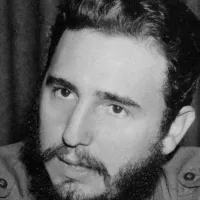
Fidel Castro was a Cuban revolutionary and politician who led...
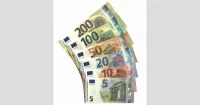
The euro is the official currency of the eurozone which...
Money functions as a fundamental social and economic tool serving...
Trending

4 hours ago Justin Bieber Launches Exclusive Immersive Audio Experience Pop-Up in Seoul

4 hours ago Chris Brown faces sentencing for London nightclub bottle attack

4 hours ago Beyoncé Reunites With Destiny's Child Members During Jay-Z Concert at SoFi Stadium

4 hours ago Stolen Car Crashes Into South Carolina Home During Police Chase

4 hours ago Paula Badosa Competes in Guangzhou Open Match

4 hours ago Alexandra Eala Competes at Toray Pan Pacific Open in Tokyo
Popular

Ilhan Omar is a prominent American politician currently serving as...

Ken Paxton is an American politician and lawyer serving as...

Elon Musk is a visionary entrepreneur and engineer known for...
Michael Joseph Jackson the King of Pop was a highly...

Barack Obama the th U S President - was the...

Greg Abbott is the current and th Governor of Texas...