Challenges in the Life of Ernest Hemingway in a Detailed Timeline


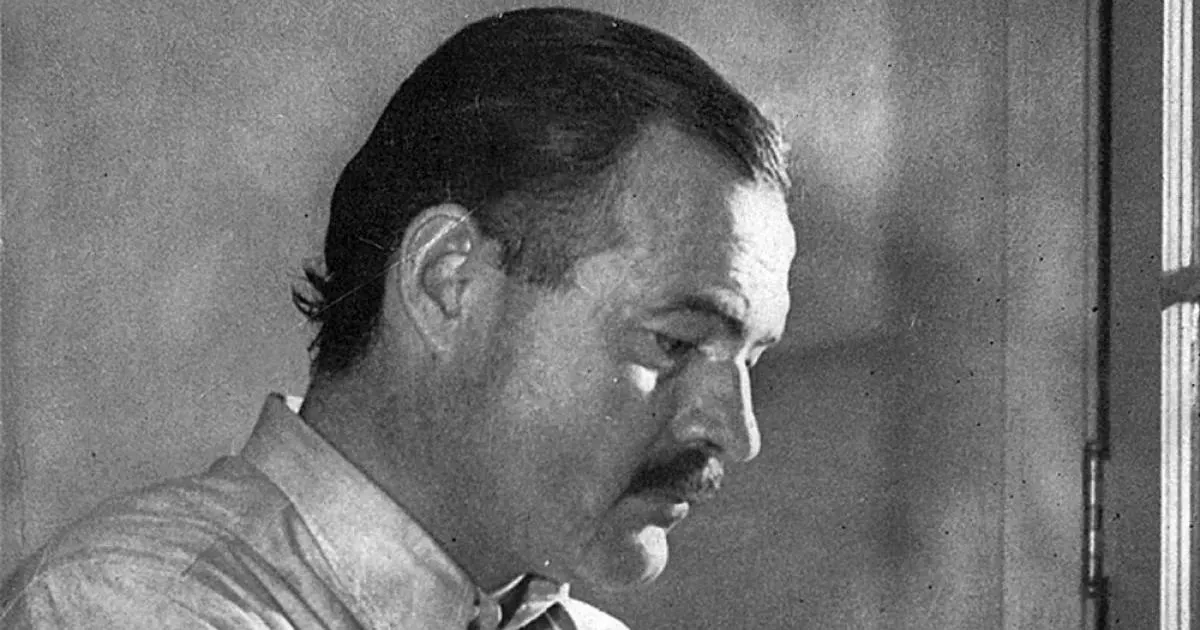
Resilience and perseverance in the journey of Ernest Hemingway. A timeline of obstacles and growth.
Ernest Hemingway (1899-1961) was a renowned American novelist, short-story writer, and journalist. His distinctive, concise writing style profoundly impacted 20th-century literature. He cultivated a persona of adventure and directness, contributing to his iconic status. He produced seven novels, six short-story collections, and two non-fiction works, many of which are considered American classics. Hemingway received the Nobel Prize in Literature in 1954 for his literary contributions and lasting influence.
1903: Hadley's father's suicide
In 1903, Hadley's father committed suicide, an event that Hemingway reflected upon after his own father's suicide in 1928, understanding how Hadley must have felt.


1918: Wounded in World War I
In 1918, while serving as an ambulance driver on the Italian Front in World War I, Ernest Hemingway was seriously wounded by shrapnel.
1919: Readjustment after the war
In 1919, Ernest Hemingway faced a difficult time of readjustment upon returning home from the war, grappling with maturity gained from the war and the need for recuperation.
December 1922: Loss of manuscripts in train station
In December 1922, Hadley, Ernest Hemingway's wife, lost a suitcase filled with his manuscripts at the Gare de Lyon train station, devastating him.
November 1930: Car Accident and Hospitalization
In November 1930, Hemingway broke his arm in a car accident after taking Dos Passos to the train station in Billings, Montana. He was hospitalized for seven weeks, during which Pauline cared for him, and it took a year for the nerves in his writing hand to heal.
1933: Books were burned in Berlin
In 1933, Ernest Hemingway's books were burned in Berlin.
January 1938: Return to Key West
In January 1938, Hemingway returned to Key West for a few months, a frustrating time during which he found it hard to write, worried over poor reviews for 'To Have and Have Not', bickered with Pauline, followed the news from Spain, and planned his next trip.
1939: Death of William Butler Yeats and Ford Madox Ford
In 1939, William Butler Yeats and Ford Madox Ford, literary friends of Hemingway, passed away, contributing to his depression.
1940: Death of F. Scott Fitzgerald
In 1940, F. Scott Fitzgerald, a literary friend of Hemingway, passed away, contributing to his depression.
1941: Death of Sherwood Anderson and James Joyce
In 1941, Sherwood Anderson and James Joyce, literary friends of Hemingway, passed away, contributing to his depression.
1942: Out of business as a writer
From 1942 to 1945, Hemingway said he "was out of business as a writer".
March 1944: Bullying and abusive behavior towards Martha
During a visit to Cuba in March 1944, Hemingway was bullying and abusive with Martha, possibly a manifestation of the depression that eventually destroyed him.
1945: Car Accident and Injuries
In 1945, Hemingway injured his knee and sustained another head wound in a car accident.
1946: Death of Gertrude Stein
In 1946, Gertrude Stein, a literary friend of Hemingway, passed away, contributing to his depression.
1946: Marriage to Mary Welsh and Ectopic Pregnancy
In 1946, Hemingway married Mary Welsh, who had an ectopic pregnancy five months later.
1947: Patrick's car accident and diagnosis
A 1947 car accident left Patrick with a head wound, severely ill and delirious. The doctor in Cuba diagnosed schizophrenia, and sent him for 18 sessions of electroconvulsive therapy.
1947: Death of Max Perkins
In 1947, Max Perkins, Hemingway's editor and friend, passed away, contributing to his depression.
January 1954: Survives two plane crashes in Africa
In January 1954, while on a sightseeing flight in Africa, Ernest Hemingway survived two plane crashes. The first crash resulted in injuries to his back and shoulder, and the second involved him having to break open the plane door to escape.
1954: Injured in plane crashes in Africa
In 1954, during a trip to Africa, Ernest Hemingway was seriously injured in two successive plane crashes.
1955: Bedridden with illnesses
In late 1955, Ernest Hemingway was bedridden with a variety of illnesses and ordered to stop drinking to mitigate liver damage.
July 25, 1960: Leaves Cuba for the last time
On July 25, 1960, Ernest Hemingway and Mary left Cuba for the last time due to Castro's plans to nationalize property owned by Americans.
December 1960: Received electroconvulsive therapy (ECT) at the Mayo Clinic
In December 1960, Ernest Hemingway received electroconvulsive therapy (ECT) at the Mayo Clinic, as many as 15 times.
1960: Retrospective view of Hemingway's behavior
Looking backward from 1960–61, it might be said that his behavior was a manifestation of the depression that eventually destroyed him
January 1961: Sent home from Mayo Clinic
In late January 1961, Ernest Hemingway was sent home from the Mayo Clinic "in ruins" after receiving electroconvulsive therapy (ECT).
1961: Finca Vigía expropriated by the Cuban government
After the 1961 Bay of Pigs Invasion, Finca Vigía, including Ernest Hemingway's collection of books, was expropriated by the Cuban government.
1961: Death by suicide
In 1961, Ernest Hemingway died by suicide at his house in Ketchum, Idaho.
1961: Diagnosed with hemochromatosis
In early 1961, Ernest Hemingway was diagnosed with hemochromatosis.
Mentioned in this timeline
The United States of America is a federal republic primarily...
The rapid advancement of artificial intelligence continues to dominate the...
The New York Times is a globally influential American newspaper...

China officially the People's Republic of China PRC is located...
A star is a self-gravitating luminous plasma spheroid exemplified by...
World War II - was a global conflict between the...
Trending

3 hours ago Elena Rybakina Faces Leylah Fernandez in Ningbo Open Tennis Final

4 hours ago Israel Considers Cryptocurrency Use to Counter Potential Economic Sanctions
4 hours ago WWE Legend Ric Flair Hospitalized Following Fall and Blood Clot Procedure

5 hours ago Ana de Armas Stuns in Louis Vuitton at Academy Museum Gala

5 hours ago Zendaya Launches Oscar Campaign for Best Actress Role in Dune 3

6 hours ago Rico Dowdle Listed as Questionable for Steelers Upcoming Matchup Against Saints
Popular

Ilhan Omar is a prominent American politician currently serving as...

Ken Paxton is an American politician and lawyer serving as...

Elon Musk is a visionary entrepreneur and engineer known for...

Michael Joseph Jackson the King of Pop was a highly...

Barack Obama the th U S President - was the...

Elizabeth Holmes is an American entrepreneur and the founder of...