


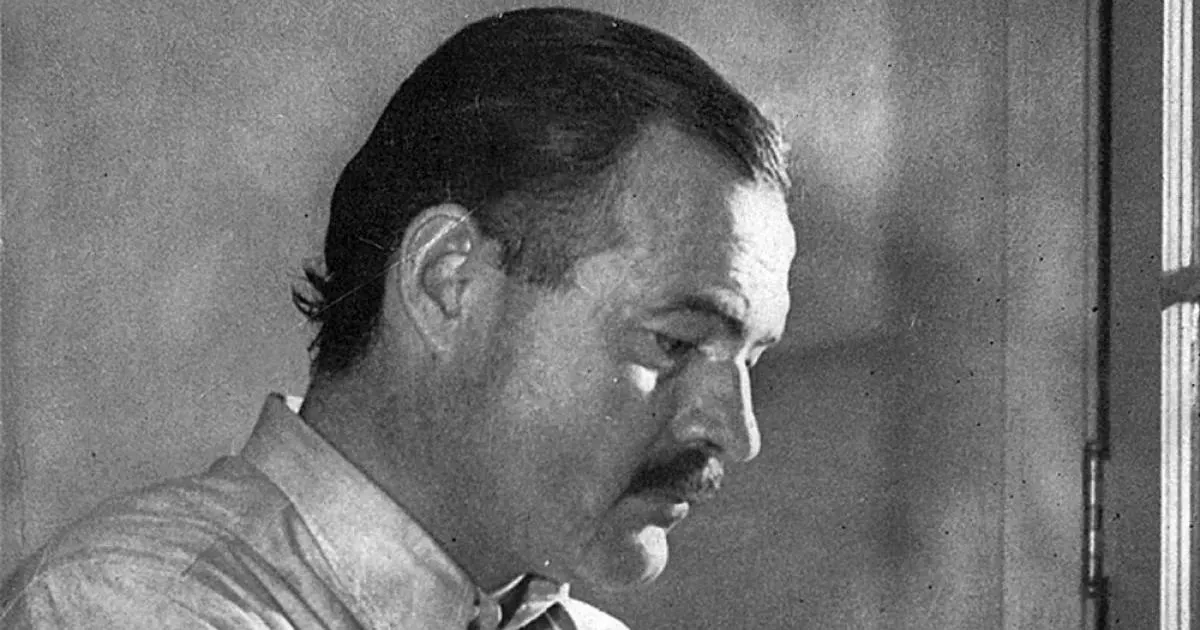
Ernest Hemingway (1899-1961) was a renowned American novelist, short-story writer, and journalist. His distinctive, concise writing style profoundly impacted 20th-century literature. He cultivated a persona of adventure and directness, contributing to his iconic status. He produced seven novels, six short-story collections, and two non-fiction works, many of which are considered American classics. Hemingway received the Nobel Prize in Literature in 1954 for his literary contributions and lasting influence.
1902: Birth of sister Ursula
In 1902, Ernest Hemingway's younger sister, Ursula, was born.


1903: Hadley's father's suicide
In 1903, Hadley's father committed suicide, an event that Hemingway reflected upon after his own father's suicide in 1928, understanding how Hadley must have felt.
1904: Birth of sister Madelaine
In 1904, Ernest Hemingway's younger sister, Madelaine, was born.
1909: Theodore Roosevelt's safari
In 1909, Theodore Roosevelt went on safari. His guide was the noted "white hunter" Philip Percival who also guided Ernest Hemingway on his safari.
1911: Birth of sister Carol
In 1911, Ernest Hemingway's younger sister, Carol, was born.
1913: Attended Oak Park and River Forest High School
In 1913, Ernest Hemingway began attending Oak Park and River Forest High School.
1915: Birth of brother Leicester
In 1915, Ernest Hemingway's younger brother, Leicester, was born.
1917: Edited school newspaper and yearbook
In 1917, during his last year at Oak Park and River Forest High School, Ernest Hemingway edited the school's newspaper and yearbook.
1918: Wounded in World War I
In 1918, while serving as an ambulance driver on the Italian Front in World War I, Ernest Hemingway was seriously wounded by shrapnel.
January 1919: Returned to the United States
In January 1919, Ernest Hemingway returned to the United States after serving with the Red Cross in Italy.
September 1919: Fishing trip in Michigan's Upper Peninsula
In September 1919, Ernest Hemingway went on a fishing and camping trip with high school friends to Michigan's Upper Peninsula, which inspired his short story "Big Two-Hearted River".
1919: Readjustment after the war
In 1919, Ernest Hemingway faced a difficult time of readjustment upon returning home from the war, grappling with maturity gained from the war and the need for recuperation.
September 1920: Moved to Chicago and worked for Cooperative Commonwealth
In September 1920, Ernest Hemingway moved to Chicago to live with friends and worked as an associate editor of the monthly journal Cooperative Commonwealth.
September 3, 1921: Marriage to Hadley Richardson
On September 3, 1921, Ernest Hemingway married Hadley Richardson.
December 1922: Loss of manuscripts in train station
In December 1922, Hadley, Ernest Hemingway's wife, lost a suitcase filled with his manuscripts at the Gare de Lyon train station, devastating him.
1922: Met Ezra Pound
In 1922, Ernest Hemingway met Ezra Pound at Sylvia Beach's bookstore Shakespeare and Company.
October 10, 1923: Birth of son John Hadley Nicanor
On October 10, 1923, Ernest Hemingway's son, John Hadley Nicanor, was born in Toronto.
1923: Visited Italy with Ezra Pound
In 1923, Ernest Hemingway visited Italy with Ezra Pound.
January 1924: Returned to Paris
In January 1924, Ernest Hemingway, Hadley, and their son returned to Paris.
1924: Lived on the same street as Ezra Pound
In 1924, Ernest Hemingway and Ezra Pound lived on the same street, forging a strong friendship.
1924: Second visit to the Festival of San Fermín in Pamplona
In 1924, Ernest Hemingway and his wife Hadley returned to Pamplona for a second time to experience the Festival of San Fermín.
June 1925: Third visit to the Festival of San Fermín in Pamplona
In June 1925, Ernest Hemingway visited the Festival of San Fermín in Pamplona for a third time, accompanied by a group of American and British expatriates.
1925: Publication of "In Our Time" and friendship with F. Scott Fitzgerald
In 1925, Ernest Hemingway's first collection of stories, "In Our Time", was published, and he formed a friendship with F. Scott Fitzgerald.

1926: Publication of The Sun Also Rises
In 1926, Ernest Hemingway's debut novel, "The Sun Also Rises", was published.
1926: The New York Times wrote of Hemingway's first novel, The Sun Also Rises
In 1926, The New York Times wrote of Ernest Hemingway's first novel, "The Sun Also Rises".
1926: Hadley became aware of the affair with Pfeiffer
In early 1926, Hadley became aware of Ernest Hemingway's affair with Pauline Pfeiffer. Hadley asked for separation.
January 1927: Divorced Hadley
In January 1927, Ernest Hemingway divorced Hadley.
October 1927: Publication of "Men Without Women"
In October 1927, Ernest Hemingway's collection of short stories, "Men Without Women", which included his boxing story "Fifty Grand", was published.
March 1928: Left Paris
In March 1928, Ernest Hemingway and his wife Pauline left Paris to move back to America.
September 27, 1929: Publication of A Farewell to Arms
On September 27, 1929, Hemingway's novel, 'A Farewell to Arms', was published. James Mellow believed it established Hemingway's stature as a major American writer.
1929: Publication of A Farewell to Arms
In 1929, Ernest Hemingway's novel "A Farewell to Arms", inspired by his experiences during the war, was published.
November 1930: Car Accident and Hospitalization
In November 1930, Hemingway broke his arm in a car accident after taking Dos Passos to the train station in Billings, Montana. He was hospitalized for seven weeks, during which Pauline cared for him, and it took a year for the nerves in his writing hand to heal.
November 12, 1931: Birth of Gloria Hemingway
On November 12, 1931, Hemingway's third child, Gloria Hemingway (later known as Gregory), was born in Kansas City.
1931: Clear signs that there would be another European war
Since 1931 it became clear that there would be another European war, and Hemingway predicted it would happen in the late 1930s
1932: Mention of Munitions Factory Explosion in "Death in the Afternoon"
In Ernest Hemingway's 1932 non-fiction book, "Death in the Afternoon", he recalls being sent to the scene of a munitions factory explosion in Milan where he helped retrieve the remains of female workers.
1933: Life in Key West
In 1933 Hemingway wrote that he had a fine house and kids were all well in Key West, but Mellow believes he was plainly restless
1933: Books were burned in Berlin
In 1933, Ernest Hemingway's books were burned in Berlin.
1934: Purchase of the Pilar
In 1934, Hemingway purchased a boat and named it the Pilar, subsequently sailing the Caribbean.
1934: Return to Key West and work on Green Hills of Africa
In early 1934, Hemingway returned to Key West and started writing Green Hills of Africa
1935: Criticism of the Labor Day Hurricane Response
In 1935, Hemingway criticized the government's response to the Labor Day Hurricane. After witnessing the disaster in Key West, he wrote an expose titled "Who Murdered the Vets?" for the New Masses.
1935: Publication of Green Hills of Africa
In 1935, Hemingway published Green Hills of Africa, receiving mixed reviews.
1935: Time in Bimini
In 1935, Hemingway spent a considerable amount of time in Bimini.
February 27, 1937: Departure for Spain to Cover the Spanish Civil War
On February 27, 1937, Hemingway sailed from New York with Martha Gellhorn to cover the Spanish Civil War for the North American Newspaper Alliance.
1937: Publication of To Have and Have Not
In 1937, while in Spain, Hemingway's novel 'To Have and Have Not' was published; it was the only novel he wrote during the 1930s.
January 1938: Return to Key West
In January 1938, Hemingway returned to Key West for a few months, a frustrating time during which he found it hard to write, worried over poor reviews for 'To Have and Have Not', bickered with Pauline, followed the news from Spain, and planned his next trip.
March 1939: Beginning of For Whom the Bell Tolls
In March 1939, Hemingway began writing 'For Whom the Bell Tolls'.
1939: Death of William Butler Yeats and Ford Madox Ford
In 1939, William Butler Yeats and Ford Madox Ford, literary friends of Hemingway, passed away, contributing to his depression.
July 1940: Completion of For Whom the Bell Tolls
In July 1940, Hemingway finished writing 'For Whom the Bell Tolls'.
November 20, 1940: Marriage to Martha Gellhorn
On November 20, 1940, Hemingway married Martha Gellhorn in Cheyenne, after his divorce from Pauline was finalized.
1940: Death of F. Scott Fitzgerald
In 1940, F. Scott Fitzgerald, a literary friend of Hemingway, passed away, contributing to his depression.
January 1941: Trip to China with Martha Gellhorn
In January 1941, Hemingway accompanied Martha Gellhorn to China, where she was on assignment for Collier's magazine. Hemingway sent in dispatches for the newspaper PM.
December 1941: US Entry into WWII and Hemingway's Activities in Cuba
In December 1941, after the attack on Pearl Harbor, the United States entered World War II. Hemingway, back in Cuba, refitted his boat the Pilar and patrolled for German U-boats. He also created a counterintelligence unit.
1941: Death of Sherwood Anderson and James Joyce
In 1941, Sherwood Anderson and James Joyce, literary friends of Hemingway, passed away, contributing to his depression.
1942: Out of business as a writer
From 1942 to 1945, Hemingway said he "was out of business as a writer".
September 1943: Martha leaves for Europe
In September 1943, Martha left for Europe to report for Collier's
March 1944: Bullying and abusive behavior towards Martha
During a visit to Cuba in March 1944, Hemingway was bullying and abusive with Martha, possibly a manifestation of the depression that eventually destroyed him.
May 1944: Hemingway becomes Collier's front-line correspondent
In May 1944, Hemingway became Collier's front-line correspondent and was in Europe until March 1945.
December 17, 1944: Reporting on the Battle of the Bulge
On December 17, 1944, Hemingway traveled to Luxembourg to report on The Battle of the Bulge. Upon arrival, he was hospitalized with pneumonia and recovered a week later, though most of the fighting was over.
March 1945: Final Meeting with Martha and Divorce
In March 1945, Hemingway saw Martha for the last time as he prepared to return to Cuba. Their divorce was finalized later that year. He had already asked Mary Welsh to marry him. Martha accused him of being a bully and told him that she was "through, absolutely finished".
March 1945: End of Hemingway's time in Europe as a correspondent
In March 1945, Hemingway's time in Europe as a front-line correspondent for Collier's came to an end.
1945: Car Accident and Injuries
In 1945, Hemingway injured his knee and sustained another head wound in a car accident.
January 1946: Start of work on The Garden of Eden
In January 1946, Hemingway began work on 'The Garden of Eden', finishing 800 pages by June.

1946: Death of Gertrude Stein
In 1946, Gertrude Stein, a literary friend of Hemingway, passed away, contributing to his depression.
1946: Marriage to Mary Welsh and Ectopic Pregnancy
In 1946, Hemingway married Mary Welsh, who had an ectopic pregnancy five months later.
1947: Patrick's car accident and diagnosis
A 1947 car accident left Patrick with a head wound, severely ill and delirious. The doctor in Cuba diagnosed schizophrenia, and sent him for 18 sessions of electroconvulsive therapy.
1947: Awarded Bronze Star for Bravery
In 1947, Hemingway was awarded a Bronze Star for bravery in recognition of his being "under fire in combat areas in order to obtain an accurate picture of conditions".
1947: Death of Max Perkins
In 1947, Max Perkins, Hemingway's editor and friend, passed away, contributing to his depression.
1950: Publishes Across the River and into the Trees
In 1950, Ernest Hemingway published "Across the River and into the Trees" which was written in Cuba and inspired by his platonic love affair with Adriana Ivancich. It received negative reviews.

September 1952: Publishes The Old Man and the Sea
In September 1952, Ernest Hemingway published "The Old Man and the Sea".

1952: Publication of The Old Man and the Sea
In 1952, Ernest Hemingway's novel "The Old Man and the Sea" was published to critical acclaim.
May 1953: Wins the Pulitzer Prize for The Old Man and the Sea
In May 1953, Ernest Hemingway won the Pulitzer Prize for "The Old Man and the Sea".
January 1954: Survives two plane crashes in Africa
In January 1954, while on a sightseeing flight in Africa, Ernest Hemingway survived two plane crashes. The first crash resulted in injuries to his back and shoulder, and the second involved him having to break open the plane door to escape.
October 1954: Receives the Nobel Prize in Literature
In October 1954, Ernest Hemingway received the Nobel Prize in Literature but did not attend the ceremony due to recuperation from plane accidents.
1954: Awarded the Nobel Prize for Literature
In 1954, Ernest Hemingway was awarded the Nobel Prize for Literature for his mastery of narrative and influence on contemporary style.
1954: Injured in plane crashes in Africa
In 1954, during a trip to Africa, Ernest Hemingway was seriously injured in two successive plane crashes.
1955: Bedridden with illnesses
In late 1955, Ernest Hemingway was bedridden with a variety of illnesses and ordered to stop drinking to mitigate liver damage.
October 1956: Returns to Europe and visits Pio Baroja
In October 1956, Ernest Hemingway returned to Europe and visited ailing Basque writer Pio Baroja, later being treated for liver disease and high blood pressure.
1959: Finished A Moveable Feast
In 1959, Ernest Hemingway finished "A Moveable Feast", which was scheduled to be released the following year.
1959: Researched bullfighting in Spain for Life magazine
In mid-1959, Ernest Hemingway visited Spain to research bullfighting for a series of articles commissioned by Life magazine. He asked A. E. Hotchner to help him.
July 25, 1960: Leaves Cuba for the last time
On July 25, 1960, Ernest Hemingway and Mary left Cuba for the last time due to Castro's plans to nationalize property owned by Americans.
December 1960: Received electroconvulsive therapy (ECT) at the Mayo Clinic
In December 1960, Ernest Hemingway received electroconvulsive therapy (ECT) at the Mayo Clinic, as many as 15 times.
1960: Celebrated 61st birthday in Cuba
In 1960, Ernest Hemingway celebrated his 61st birthday in Cuba.
1960: Retrospective view of Hemingway's behavior
Looking backward from 1960–61, it might be said that his behavior was a manifestation of the depression that eventually destroyed him
January 1961: Sent home from Mayo Clinic
In late January 1961, Ernest Hemingway was sent home from the Mayo Clinic "in ruins" after receiving electroconvulsive therapy (ECT).
July 2, 1961: Ernest Hemingway's death
On July 2, 1961, Ernest Hemingway, the American novelist, short-story writer, and journalist, died.
1961: Finca Vigía expropriated by the Cuban government
After the 1961 Bay of Pigs Invasion, Finca Vigía, including Ernest Hemingway's collection of books, was expropriated by the Cuban government.
1961: Death by suicide
In 1961, Ernest Hemingway died by suicide at his house in Ketchum, Idaho.
1961: Diagnosed with hemochromatosis
In early 1961, Ernest Hemingway was diagnosed with hemochromatosis.
1965: Mary Hemingway established the Hemingway Foundation
In 1965, Mary Hemingway established the Hemingway Foundation.
1976: Margaux Hemingway co-starred in Lipstick
In 1976, Ernest Hemingway's granddaughter, Margaux Hemingway, co-starred in the movie Lipstick with her younger sister Mariel.
1980: Hemingway scholars gathered to assess papers and formed Hemingway Society
In 1980, a group of Hemingway scholars gathered to assess the donated papers, subsequently forming the Hemingway Society.
1991: Medical records confirmed hemochromatosis
In 1991, medical records were made available confirming that Ernest Hemingway had been diagnosed with hemochromatosis in early 1961.
1996: Remembrance garden erected
In 1996, a remembrance garden to honor Ernest Hemingway was erected in front of Oak Park and River Forest High School.
2002: Fossil billfish named after Hemingway
In 2002, a fossil billfish was named Hemingwaya after Ernest Hemingway, who featured a marlin in "The Old Man and the Sea".
2010: Debate about the shotgun used in his suicide
In 2010, it was argued that Ernest Hemingway never owned a Boss shotgun and that the gun used in his suicide was actually made by W. & C. Scott & Son.
2017: Hemingway's Brain book published
In 2017, Andrew Farah's book Hemingway's Brain was published, which offers a forensic examination of Ernest Hemingway's mental illness.
Mentioned in this timeline
The United States of America is a federal republic primarily...
The rapid advancement of artificial intelligence continues to dominate the...
The New York Times is a globally influential American newspaper...
China officially the People's Republic of China PRC is located...
A star is a self-gravitating luminous plasma spheroid exemplified by...
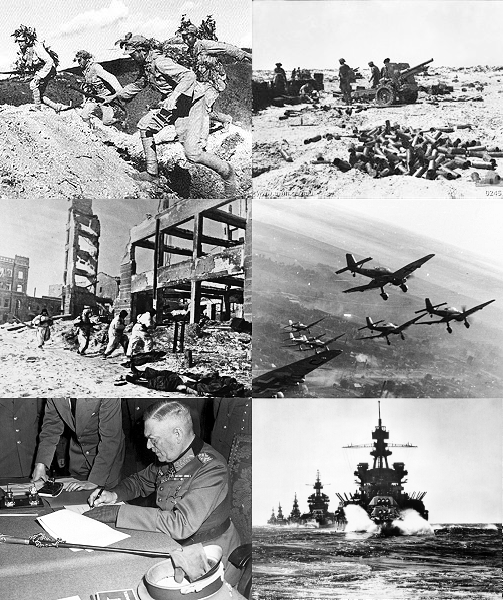
World War II - was a global conflict between the...
Trending
3 hours ago Israel Considers Cryptocurrency Use to Counter Potential Economic Sanctions
4 hours ago WWE Legend Ric Flair Hospitalized Following Fall and Blood Clot Procedure

4 hours ago Ana de Armas Stuns in Louis Vuitton at Academy Museum Gala

5 hours ago Zendaya Launches Oscar Campaign for Best Actress Role in Dune 3
5 hours ago Rico Dowdle Listed as Questionable for Steelers Upcoming Matchup Against Saints
5 hours ago Christian Bale's New Gothic Monster Romance Film Streams Now on Prime Video
Popular

Ilhan Omar is a prominent American politician currently serving as...

Ken Paxton is an American politician and lawyer serving as...

Elon Musk is a visionary entrepreneur and engineer known for...

Michael Joseph Jackson the King of Pop was a highly...
Barack Obama the th U S President - was the...

Elizabeth Holmes is an American entrepreneur and the founder of...