Career Timeline of Ernest Hemingway: Major Achievements and Milestones


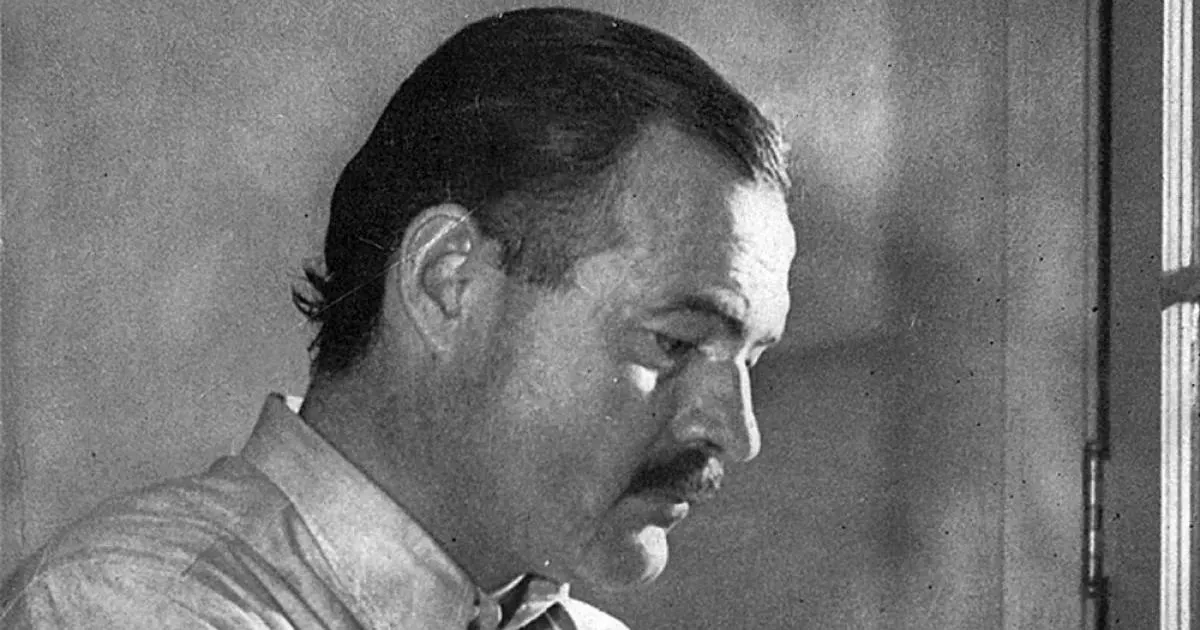
How Ernest Hemingway built a successful career. Explore key moments that defined the journey.
Ernest Hemingway (1899-1961) was a renowned American novelist, short-story writer, and journalist. His distinctive, concise writing style profoundly impacted 20th-century literature. He cultivated a persona of adventure and directness, contributing to his iconic status. He produced seven novels, six short-story collections, and two non-fiction works, many of which are considered American classics. Hemingway received the Nobel Prize in Literature in 1954 for his literary contributions and lasting influence.
1917: Edited school newspaper and yearbook
In 1917, during his last year at Oak Park and River Forest High School, Ernest Hemingway edited the school's newspaper and yearbook.


September 1920: Moved to Chicago and worked for Cooperative Commonwealth
In September 1920, Ernest Hemingway moved to Chicago to live with friends and worked as an associate editor of the monthly journal Cooperative Commonwealth.
1925: Publication of "In Our Time" and friendship with F. Scott Fitzgerald
In 1925, Ernest Hemingway's first collection of stories, "In Our Time", was published, and he formed a friendship with F. Scott Fitzgerald.

1926: Publication of The Sun Also Rises
In 1926, Ernest Hemingway's debut novel, "The Sun Also Rises", was published.
1926: The New York Times wrote of Hemingway's first novel, The Sun Also Rises
In 1926, The New York Times wrote of Ernest Hemingway's first novel, "The Sun Also Rises".
October 1927: Publication of "Men Without Women"
In October 1927, Ernest Hemingway's collection of short stories, "Men Without Women", which included his boxing story "Fifty Grand", was published.
September 27, 1929: Publication of A Farewell to Arms
On September 27, 1929, Hemingway's novel, 'A Farewell to Arms', was published. James Mellow believed it established Hemingway's stature as a major American writer.
1929: Publication of A Farewell to Arms
In 1929, Ernest Hemingway's novel "A Farewell to Arms", inspired by his experiences during the war, was published.
1932: Mention of Munitions Factory Explosion in "Death in the Afternoon"
In Ernest Hemingway's 1932 non-fiction book, "Death in the Afternoon", he recalls being sent to the scene of a munitions factory explosion in Milan where he helped retrieve the remains of female workers.
1934: Return to Key West and work on Green Hills of Africa
In early 1934, Hemingway returned to Key West and started writing Green Hills of Africa
1935: Publication of Green Hills of Africa
In 1935, Hemingway published Green Hills of Africa, receiving mixed reviews.
February 27, 1937: Departure for Spain to Cover the Spanish Civil War
On February 27, 1937, Hemingway sailed from New York with Martha Gellhorn to cover the Spanish Civil War for the North American Newspaper Alliance.
1937: Publication of To Have and Have Not
In 1937, while in Spain, Hemingway's novel 'To Have and Have Not' was published; it was the only novel he wrote during the 1930s.
March 1939: Beginning of For Whom the Bell Tolls
In March 1939, Hemingway began writing 'For Whom the Bell Tolls'.
July 1940: Completion of For Whom the Bell Tolls
In July 1940, Hemingway finished writing 'For Whom the Bell Tolls'.
January 1941: Trip to China with Martha Gellhorn
In January 1941, Hemingway accompanied Martha Gellhorn to China, where she was on assignment for Collier's magazine. Hemingway sent in dispatches for the newspaper PM.
December 1941: US Entry into WWII and Hemingway's Activities in Cuba
In December 1941, after the attack on Pearl Harbor, the United States entered World War II. Hemingway, back in Cuba, refitted his boat the Pilar and patrolled for German U-boats. He also created a counterintelligence unit.
1942: Out of business as a writer
From 1942 to 1945, Hemingway said he "was out of business as a writer".
May 1944: Hemingway becomes Collier's front-line correspondent
In May 1944, Hemingway became Collier's front-line correspondent and was in Europe until March 1945.
December 17, 1944: Reporting on the Battle of the Bulge
On December 17, 1944, Hemingway traveled to Luxembourg to report on The Battle of the Bulge. Upon arrival, he was hospitalized with pneumonia and recovered a week later, though most of the fighting was over.
March 1945: End of Hemingway's time in Europe as a correspondent
In March 1945, Hemingway's time in Europe as a front-line correspondent for Collier's came to an end.
January 1946: Start of work on The Garden of Eden
In January 1946, Hemingway began work on 'The Garden of Eden', finishing 800 pages by June.

1950: Publishes Across the River and into the Trees
In 1950, Ernest Hemingway published "Across the River and into the Trees" which was written in Cuba and inspired by his platonic love affair with Adriana Ivancich. It received negative reviews.

September 1952: Publishes The Old Man and the Sea
In September 1952, Ernest Hemingway published "The Old Man and the Sea".

1952: Publication of The Old Man and the Sea
In 1952, Ernest Hemingway's novel "The Old Man and the Sea" was published to critical acclaim.
1959: Finished A Moveable Feast
In 1959, Ernest Hemingway finished "A Moveable Feast", which was scheduled to be released the following year.
1959: Researched bullfighting in Spain for Life magazine
In mid-1959, Ernest Hemingway visited Spain to research bullfighting for a series of articles commissioned by Life magazine. He asked A. E. Hotchner to help him.
Mentioned in this timeline
The United States of America is a federal republic primarily...
The rapid advancement of artificial intelligence continues to dominate the...
The New York Times is a globally influential American newspaper...
China officially the People's Republic of China PRC is located...
A star is a self-gravitating luminous plasma spheroid exemplified by...
World War II - was a global conflict between the...
Trending
3 hours ago Report Reveals Trump Administration Deportation Figures Amidst Immigration Policy Analysis

4 hours ago Elena Rybakina Faces Leylah Fernandez in Ningbo Open Tennis Final
5 hours ago Israel Considers Cryptocurrency Use to Counter Potential Economic Sanctions
5 hours ago WWE Legend Ric Flair Hospitalized Following Fall and Blood Clot Procedure

5 hours ago Ana de Armas Stuns in Louis Vuitton at Academy Museum Gala

6 hours ago Zendaya Launches Oscar Campaign for Best Actress Role in Dune 3
Popular

Ilhan Omar is a prominent American politician currently serving as...

Ken Paxton is an American politician and lawyer serving as...

Elon Musk is a visionary entrepreneur and engineer known for...

Michael Joseph Jackson the King of Pop was a highly...
Barack Obama the th U S President - was the...

Elizabeth Holmes is an American entrepreneur and the founder of...