


Fidelity Investments, formally known as Fidelity Management & Research, is one of the world's largest asset management firms. Founded in 1946 by Edward C. Johnson II and headquartered in Boston, Massachusetts, the company provides a comprehensive suite of financial services, including investment management, retirement planning, brokerage services, and wealth management. Fidelity is well-known for its wide array of mutual funds, low-cost index funds, and advanced trading platforms for both individual and institutional investors. A pioneer in the financial services industry, the firm played a significant role in the democratization of investing by offering affordable retirement products and 401(k) management. As a privately held company, it remains a dominant force in the global capital markets, managing trillions of dollars in assets while emphasizing long-term investment strategies and technological integration to enhance the customer experience.
May 1, 1930: Incorporation of The Fidelity Fund
On May 1, 1930, The Fidelity Fund was officially incorporated in Massachusetts, marking the firm's inception with Edward C. Johnson II appointed as its president.


1946: Establishment of Fidelity Investments
In 1946, Fidelity Investments was founded under its original name, Fidelity Management & Research (FMR), marking the start of its history as an American financial services company.
1946: Corporate Restructuring to FMR
In 1946, the company underwent a corporate restructuring, adopting the new name Fidelity Management & Research (FMR) to reflect its evolving business operations.
May 2, 1963: Founding of Fidelity International Fund
On May 2, 1963, Ned Johnson founded the Fidelity International Fund, which was later renamed the Magellan Fund.
1965: Renaming to Magellan Fund
In 1965, the Fidelity International Fund was officially renamed the Magellan Fund.
1969: Formation of Fidelity International
In 1969, Fidelity Investments established Fidelity International (FIL) specifically to cater to and manage investment services for markets located outside of the United States.
December 31, 1971: End of Ned Johnson's management tenure
On December 31, 1971, Ned Johnson concluded his tenure as the manager of the Magellan Fund, a position he had held since 1963.
1973: Stock market crash impact
Starting in 1973, the Magellan Fund experienced a severe decline in investor interest due to the onset of a stock market crash.
1974: Continued stock market crash impact
During 1974, the Magellan Fund continued to suffer from the broader consequences of the stock market crash which hindered its sales operations.
May 31, 1977: Peter Lynch becomes manager
On May 31, 1977, Peter Lynch took over as the manager of the Magellan Fund, initiating a period of significant growth for the fund.
1980: Spin-off of Fidelity International
In 1980, Fidelity Investments completed the spin-off of Fidelity International, transforming it into a fully independent entity that is owned by its own employees.
1982: Introduction of 401(k) Products
In 1982, Fidelity Investments expanded its financial service offerings by introducing 401(k) products to its clients.
1984: Launch of Computerized Stock Trading
Fidelity Investments implemented computerized stock trading offerings for its customers in 1984, marking an early technological advancement in their service delivery.
May 31, 1990: Conclusion of Peter Lynch's management
On May 31, 1990, Peter Lynch stepped down as the manager of the Magellan Fund after achieving record-breaking annual returns.
1990: William Danoff Becomes Manager of Fidelity Contrafund
In 1990, William Danoff took over the management of Fidelity Contrafund, a role he has held since that time. The fund would eventually grow to become the largest actively managed mutual fund in the United States.
1993: Gift of Luxury Wine
As part of the unethical gift-giving uncovered later, staff members were provided with high-end wines, specifically the 1993 Château Pétrus, during the period leading up to the 2006 enforcement actions.
January 2001: Start of Document Alteration Period
Starting in January 2001, employees at 21 Fidelity branch offices began altering and destroying documents to manipulate internal inspection results.
July 2002: End of Document Alteration Period
By July 2002, the period during which at least 62 Fidelity employees destroyed or altered various regulatory documents, including new account applications and variable annuity forms, came to a conclusion.
September 2003: Launch of first exchange-traded fund
In September 2003, Fidelity Investments expanded its portfolio by launching its inaugural exchange-traded fund, the Fidelity Nasdaq Composite Index Tracking Stock Fund, ticker symbol ONEQ.
2004: SEC Settlement
In 2004, Fidelity Brokerage reached a $2 million settlement with the U.S. Securities and Exchange Commission regarding the destruction and alteration of internal documents that occurred between 2001 and 2002.
2004: Improper Gift Receipt Period
Throughout 2004, Fidelity employees received luxury gifts from Jefferies Group, including private chartered flights and tickets to major sporting events like the Super Bowl, Wimbledon, and the US Open, as well as various high-profile concerts.
2005: Harry W. Lange begins management
In 2005, Harry W. Lange assumed the role of manager for the Magellan Fund.
December 2006: Regulatory Fine for Gift Policy Violations
In December 2006, Fidelity Investments was ordered to pay a $42 million fine because employees accepted prohibited gifts from Jefferies Group salespeople, violating internal compliance policies.
February 2007: Additional Regulatory Penalty
Fidelity Investments incurred a further financial penalty of $3.75 million in February 2007 as a consequence of ongoing gift-related policy breaches.
February 2007: NASD Fines FMR Broker-Dealers
In February 2007, the NASD (a division of FINRA) imposed a $3.75 million fine on four broker-dealers affiliated with FMR for various regulatory failures, including registration, supervision, and e-mail retention violations, which the firms settled without admitting fault.
May 2007: NASD Fines Fidelity Broker-Dealers
In May 2007, the National Association of Securities Dealers (NASD) imposed a $400,000 fine on two Fidelity broker-dealers for the dissemination of misleading sales literature regarding Destiny I and II Systematic Investment Plans, which were marketed to military personnel. As part of the May 2007 resolution, the company was mandated to inform plan holders about the option to purchase additional shares without incurring further sales charges.
2007: Corporate Restructuring to FMR LLC
In 2007, the company underwent a formal change in its legal structure, transitioning into a limited liability company with FMR LLC established as the primary owning entity.
2008: Continued Legal Settlement
In 2008, the company faced an additional $8 million fine linked to the improper acceptance of gifts by staff members from external salespeople.
2010: Closure of Fidelity Ventures
During 2010, Fidelity Investments made the strategic decision to shutter its venture capital division, known as Fidelity Ventures.
2012: Start of Employee Embezzlement Period
Beginning in 2012, an employee initiated a scheme that resulted in the theft of $750,000 from 37 international client accounts over an eight-year duration.
2012: End of Harry W. Lange's management
In 2012, Harry W. Lange finished his term as the manager of the Magellan Fund.
2014: Abigail Johnson appointed President and CEO
In 2014, Abigail Johnson assumed the roles of president and CEO of Fidelity Investments, while also becoming chairman of Fidelity International. During this time, she shifted the company's strategic focus away from traditional open-ended mutual funds toward financial advisory services, brokerage, and venture capital.
2016: Reuters Investigation into F-Prime Capital Partners and Fidelity Investments
In 2016, a Reuters investigation uncovered potential conflicts of interest regarding the investment practices of Fidelity Investments and its subsidiary, F-Prime Capital Partners. The report highlighted instances where employees invested in pre-IPO startups through F-Prime at lower prices, followed by significant investments from Fidelity mutual funds once those companies went public, potentially inflating the value of insider holdings.
2018: Launch of Fidelity Digital Asset Services and Zero-Expense Mutual Funds
In 2018, Fidelity established Fidelity Digital Asset Services as a specialized entity for institutional cryptocurrency custody and trading, while simultaneously introducing a line of mutual funds featuring zero fees and expenses.
September 2019: Spin-off of Eight Roads Ventures
In September 2019, Fidelity Investments finalized the corporate spin-off of its venture capital arm, Eight Roads Ventures, marking a strategic shift in the organization's structure.
2020: Decommissioning of Wealth Lab
In 2020, Fidelity Investments officially ended the operations and support for the Wealth Lab platform, which the company had originally acquired in 2004.
2020: Conclusion of Employee Embezzlement Period
The unauthorized activity involving an employee stealing $750,000 from international client accounts concluded in 2020 after continuing for eight years.
April 2022: Fidelity Introduces Bitcoin to 401(k) Plans
In April 2022, Fidelity Investments initiated a program allowing employers to offer Bitcoin as an investment option within their employees' 401(k) retirement plans.
January 2023: Acquisition of Shoobx
In January 2023, Fidelity Investments expanded its Stock Plan Services business by acquiring Shoobx, a company specializing in automated financing and equity management software.
December 2024: Asset Management Milestones
As of December 2024, Fidelity Investments reported managing $5.9 trillion in discretionary assets and administering a total of $15.1 trillion in assets, establishing its position as one of the world's largest asset managers.
January 2025: FINRA Fine for Lax Supervision
In January 2025, Fidelity Investments was penalized with a $600,000 fine by the Financial Industry Regulatory Authority due to inadequate internal supervision practices.
April 2025: Launch of No-Fee Cryptocurrency Trading
In April 2025, Fidelity expanded its financial services by introducing no-fee cryptocurrency trading options specifically for individual retirement accounts, allowing clients to diversify their retirement portfolios with digital assets without incurring transaction fees.
May 2025: Federal Regulatory Fine and Censure
In May 2025, Fidelity Investments received a formal censure and a financial penalty from federal regulatory authorities due to systematic delays in executing customer transactions, which were significantly slower than required standards.
February 2026: Launch of Fidelity Digital Dollar (FIDD)
In February 2026, Fidelity announced plans to launch its own stablecoin, known as the Fidelity Digital Dollar (FIDD), which is scheduled to premiere on the Ethereum blockchain network.
April 2026: Fidelity Named Among America’s Most Trustworthy Companies
In April 2026, Fidelity Investments was officially recognized by Newsweek as one of "America’s Most Trustworthy Companies," highlighting the firm's standing in corporate integrity during that period.
Mentioned in this timeline

Ethereum is a decentralized open-source blockchain platform notable for its...

The stock market is where buyers and sellers trade stocks...

Cryptocurrency is a digital currency operating on a decentralized network...

The Super Bowl is the annual championship game of the...
Massachusetts officially the Commonwealth of Massachusetts is a state located...
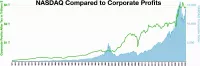
The Nasdaq Stock Market is an American stock exchange based...
Trending

5 hours ago Powerful El Niño Reaches Super Status Impacting California Winter Forecast

5 hours ago Trump Targets Russian Energy Sector With New Sanctions Bill
6 hours ago Concerns Rise Over President Trump's Hostility Toward Free Press and Journalists

6 hours ago Denver Broncos Set to Face Jacksonville Jaguars in Highly Anticipated Week 2 NFL Matchup

6 hours ago Texas Freezes New Permits and Funding for Public Flock Camera Installations
18 days ago Fidelity Investments Expands Tech ETF Strategy, Hires New Director, and Settles Data Breach Case
Popular

Stan Lee - was a pivotal figure in the comic...

Ken Paxton is an American politician and lawyer serving as...
Michael Joseph Jackson the King of Pop was a highly...

Kash Patel is an American lawyer who currently serves as...

Shakira Isabel Mebarak Ripoll the Queen of Latin Music is...

Mitch McConnell is a prominent American politician and the longest-serving...