


Fort Polk, now Fort Johnson, is a U.S. Army installation in Vernon Parish, Louisiana, positioned approximately 10 miles east of Leesville and 30 miles north of DeRidder.
1911: Birth of James H. Polk
James H. Polk, who would later be a four-star general, was born in 1911. In June 2025, Fort Polk was renamed in his honor.


November 1917: Original Activation of 5th Infantry Division
On 24 November 1917, the original activation of the 5th Infantry Division took place. The date of inactivation of the division at Fort Polk, on 24 November 1992, was exactly 75 years after the original activation.
August 1918: Departure to France
On 22 August 1918, during World War I, Evacuation Hospital #15 sailed aboard the "S.S. Mataika", departing the United States.
September 1918: Arrival in France
On 3 September 1918, Evacuation Hospital #15 arrived in France during World War I.
November 1918: End of Meuse-Argonne Forest Offensive
From 26 September 1918 through 11 November 1918, Evacuation Hospital #15 participated in the Meuse-Argonne Forest offensive, earning a battle streamer.
June 1919: Demobilization at Camp Lewis, Washington
On 28 June 1919, Evacuation Hospital #15, having served honorably during World War I, was demobilized at Camp Lewis, Washington, after returning to the United States aboard the "S.S. America".
1929: Death of Sergeant William Henry Johnson
Sergeant William Henry Johnson, a World War I veteran, passed away in 1929. In June 2023, Fort Polk was renamed in his honor.
October 1933: Reconstitution as Inactive Unit
On 1 October 1933, Evacuation Hospital #15 was organized as an inactive unit of the Regular Army.
1933: Start of James H. Polk's Career
In 1933, James H. Polk began his career, which would last until 1971. In June 2025, Fort Polk was renamed in his honor.
1936: Reconstitution as 15th Evacuation Hospital
In 1936, Evacuation Hospital #15 was reconstituted as the 15th Evacuation Hospital.
1939: Army Modernization
Prior to 1939, the Army was primarily an infantry force. As U.S. involvement in World War II became more likely, the Army recognized the need to modernize and conduct large-scale maneuvers, leading to the establishment of Fort Polk and the Louisiana Maneuvers.
September 1941: Louisiana Maneuvers
In August and September 1941, the Louisiana Maneuvers involved half a million soldiers in 19 Army divisions across 3,400 square miles. The maneuvers tested a new doctrine emphasizing mass and mobility, leading to the creation of sixteen armored divisions during World War II.
1941: Construction of Camp Polk
In 1941, the construction of Camp Polk began, with thousands of wooden barracks being built to support the Army as it prepared for battles in North Africa, Europe, and the Pacific during World War II. Soldiers at Polk participated in the Louisiana Maneuvers.
July 1943: Arrival of German POWs
In July 1943, Camp Polk began serving as a military prison for Germans captured during World War II. The first prisoners of war (POWs) came from the Afrika Korps and were housed in a fenced-in compound.
1944: POWs Labor and Exchange
In 1944, POWs at Camp Polk engaged in labor such as picking cotton, cutting rice, and lumber, and helping sandbag the Red River. Although not forced, those who worked earned scrip to buy necessities at their Post Exchange.
August 1950: 45th Infantry Division Training
In August 1950, the 45th Infantry Division of the Oklahoma Army National Guard became the first unit to train at Fort Polk in preparation for the Korean War. The division later suffered significant casualties during the war.
1955: Operation Sagebrush
In 1955, the U.S. military conducted Operation Sagebrush, a 15-day training exercise in Louisiana involving 85,000 troops. The exercise evaluated military operations in a nuclear environment and included the 1st Armored Division, the 82nd Airborne Division, and U.S. Air Force bombers and fighter planes.
February 1958: Termination of Construction Contract
In February 1958, the Department of the Army decided to deactivate Fort Polk and terminated an extensive housing construction project, which was underway by the Corps of Engineers. This termination led to legal disputes and the adoption of the Christian Doctrine by US courts.
June 1959: 1st Armored Division Reassigned
In June 1959, after Operation Sagebrush, the 1st Armored Division, equipped with M-48 Patton Tanks and helicopters, was reassigned from Fort Polk back to Fort Hood. Fort Polk was declared a permanent installation to continue testing mobility and combat strategies for the nuclear age.
1962: Conversion to Training Center
In 1962, Fort Polk converted to a basic training and advanced individual training (AIT) center. A jungle-like training area, known as Tigerland, was established to acclimatize infantry soldiers for combat in Vietnam, making Fort Polk a major deployment base for the war.
1971: End of James H. Polk's Career
In 1971, James H. Polk ended his career, which began in 1933. In June 2025, Fort Polk was renamed in his honor.
1972: 1/40th Armor Regiment at Fort Polk
From 1972 until 1987, Fort Polk hosted the 1st Battalion, 40th Armor Regiment. During that time 1/40th Armor participated in training exercises with the Louisiana Army National Guard and 5th Infantry Division units.
October 1974: 5th Infantry Division (Mechanized) Relocation
In October 1974, Fort Polk became the new home of the 5th Infantry Division (Mechanized), and basic training and AIT started to be phased out.
July 1975: Change in Command
In July 1975, Fort Polk changed from a Continental Army Command (CONARC) post and became a Forces Command (FORSCOM) member.
September 1975: Reactivation of 5th Infantry Division
In September 1975, the 5th Infantry Division (Mechanized) was reactivated and called Fort Polk home. This marked a transition from basic training to being the home of a reactivated division.
March 1976: Reactivation of 1st Battalion 61st Infantry
Effective March 21, 1976, the 1st Battalion 61st Infantry was reactivated and once again assigned to the 5th Division at Fort Polk.
1976: Infantry Training Center Closure
In the spring of 1976, the Infantry Training Center at Fort Polk closed, marking the end of the Vietnam War era for the post.
1983: 1/40 Armor Participation
In 1983, the 1/40 Armor took part in the Reforger 1984 exercises in Bavaria.
1984: 1/40 Armor Deployment
In 1984, the 1/40 Armor had two deployments to the National Training Center.
1985: 1/40 Armor Deployment
In 1985, the 1/40 Armor had two deployments to the National Training Center.
August 1987: Basic Training Exercises Conducted
From June to August 1987 the 95th Division (Tng) conducted basic training exercises of approximately 600 recruits at Fort Polk.
1989: 5th Infantry Division Participation
In 1989, the 5th Infantry Division participated in the Invasion of Panama, known as Operation Just Cause.
November 1992: Inactivation of 5th Infantry Division
In November 1992, the 5th Infantry Division (Mechanized) was inactivated at Fort Polk, exactly 75 years from its original activation date on November 24, 1917.
1992: Death of James H. Polk
James H. Polk, a four-star general, passed away in 1992. In June 2025, Fort Polk was renamed in his honor.
1993: 2nd Armored Cavalry Regiment Arrival
In 1993, the 2nd Armored Cavalry Regiment arrived at Fort Polk as the armored cavalry regiment of the XVIII Airborne Corps.
1993: JRTC Moved to Fort Polk
In 1993, the Joint Readiness Training Center (JRTC) moved from Fort Chaffee, Arkansas, to Fort Polk, tasking the post with preparing soldiers for conflict. Throughout the 1990s, Fort Polk based soldiers deployed to various locations including Haiti, Southwest Asia, Suriname, Panama, and Bosnia.
1995: Deployment to Haiti
In 1995, elements of the 2nd Armored Cavalry Regiment deployed to Haiti in support of Operation Uphold Democracy.
1996: Deployment to Bosnia
In 1996, elements of the 2nd Armored Cavalry Regiment deployed to Bosnia in support of Operation Joint Endeavor.
2002: Army's Position on Land Acquisition
In 2002, the Army stated a position of "No acquisition of land through purchase or withdrawal of public domain lands is proposed" concerning Fort Polk.
2003: Deployment to Iraq
In 2003, the 2nd ACR deployed to Iraq in support of Operation Iraqi Freedom (now known as Operation New Dawn).
May 2004: Announcement of Transformation
On May 14, 2004, the Army announced that the 2nd Armored Cavalry Regiment would be transformed into an Infantry-based Stryker Brigade and move to Fort Lewis, Washington.
2005: Reactivation of 1st Squadron, 40th Cavalry
In 2005, the 1/40 Armor was reactivated as the 1st Squadron, 40th Cavalry at Fort Richardson in Alaska.
2005: Concerns About Post Being 'At Risk'
In 2005, there were concerns that Fort Polk was "at risk," with a proposal to look at land expansion.
2006: Transfer Completion
In 2006, the transfer of the 2nd Armored Cavalry Regiment from Fort Polk to Fort Lewis was completed. The 2nd Stryker Cavalry Regiment was later moved to Vilseck, Germany.
2006: Deployment in Support of Operation Enduring Freedom
In 2006, while flagged as 4th Brigade, the brigade deployed in support of Operation Enduring Freedom.
December 2007: Deployment in Support of Operation Iraqi Freedom
In December 2007, the brigade, while flagged as 4th Brigade, deployed in support of Operation Iraqi Freedom.
2008: Land Expansion Plan Began
In 2008, Fort Polk began a land expansion plan, calling for the acquisition of 100,000 acres for large JRTC maneuvers and live fire operations.
January 2009: End of Operation Iraqi Freedom Deployment
In January 2009, the brigade concluded its deployment in support of Operation Iraqi Freedom.
2010: Deployment to Afghanistan
In fall 2010, the brigade deployed to Afghanistan.
2011: Return from Afghanistan
In fall 2011, the brigade returned to the U.S. from Afghanistan.
2012: First Parcel Purchased
In 2012, the first parcel of land was purchased as part of the Fort Polk land expansion plan.
2013: Troop Strength at Fort Polk
In 2013, Fort Polk had 10,877 troops stationed there, generating an annual payroll of $980 million. Louisiana officials lobbied the Army and the United States Congress to maintain troop strength at full capacity despite potential defense cuts.
February 2014: 3rd Brigade Combat Team Activation
In February 2014, the 3rd Brigade Combat Team, 36th Infantry Division was officially activated at Fort Polk. It was activated as the 3rd Brigade Combat Team, 10th Mountain Division, utilizing the assets of the inactivated 4th Brigade Combat Team, 10th Mountain Division.
May 2014: Land Acquisition Update
On 5 May 2014, Fort Polk issued a press release stating that 32,500 acres of the targeted 47,500, out of the 100,000 acres approved, had been acquired for land expansion.
November 2014: Grand Opening of New Fort Polk Commissary
On 12 November 2014, a grand opening for a new Fort Polk Commissary took place.
2016: Part of the 36th Infantry Division
From 2016 to 2019, the "Patriot Brigade" became part of the 36th Infantry Division (Army National Guard) as part of the Army's Associated Unit Pilot.
2017: Army Started Removing Feral Horses
In 2017, the Army started removing feral horses that roam training lands on and around Fort Polk, leading to debate about their fate.
2019: Return to the 10th Mountain Division
From 2016 to 2019, the "Patriot Brigade" became part of the 36th Infantry Division (Army National Guard) as part of the Army's Associated Unit Pilot and in 2019 the "Patriot Brigade" returned to the 10th Mountain Division when the Army's Associated Unit Pilot ended.
January 5, 2023: Direction for Implementation of Naming Commission Recommendations
On January 5, 2023, William A. LaPlante, the US under-secretary of defense for acquisition and sustainment (USD (A&S)), directed the full implementation of the recommendations of the Naming Commission, DoD-wide.
June 13, 2023: Fort Polk Redesignation Ceremony
On June 13, 2023, Fort Polk was officially redesignated as Fort Johnson, honoring Sgt. William Henry Johnson, a World War I Medal of Honor recipient.
June 2023: Fort Renamed in Honor of Sergeant William Henry Johnson
On 13 June 2023, Fort Polk was renamed to honor Sergeant William Henry Johnson (1892-1929), a World War I veteran from the New York National Guard unit known as the "Harlem Hellfighters".
June 2025: Announcement of Fort Polk Renaming
In June 2025, it was announced that Fort Johnson would be renamed back to Fort Polk in honor of Gen. James H. Polk, with the redesignation taking effect on June 11, 2025.
June 2025: Base Name Reversion and Renaming in Honor of Gen. James H. Polk
On 10 June 2025, it was announced that the base name would be reverted back to Fort Polk and renamed in honor of four star Gen. James H. Polk (1911-1992).
Mentioned in this timeline
The United States of America is a federal republic primarily...

Qatar is a country located on the Qatar Peninsula in...
Oklahoma is a U S state located in the South...
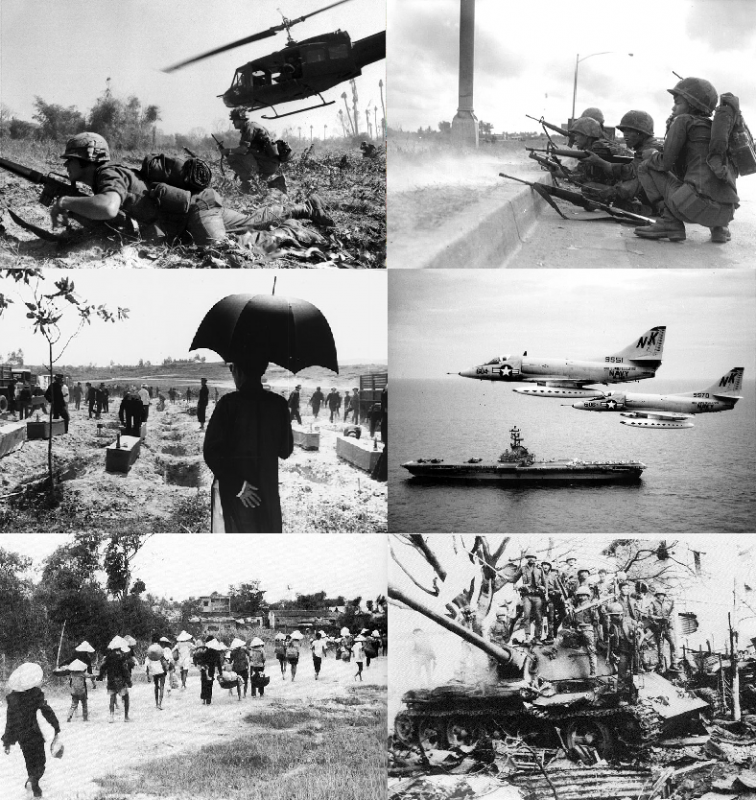
The Vietnam War was a conflict in Vietnam Laos and...

Germany officially the Federal Republic of Germany is located in...

Iraq officially the Republic of Iraq is a country in...
Trending
3 hours ago Haiti and Curaçao Advance to CONCACAF Nations League Quarterfinals
3 hours ago Chandler Simpson and Tyler Wells Return to Tampa Bay Rays Roster for ALDS

3 hours ago Lori Loughlin Launches LOLA Clothing Line and Embraces New Chapter

3 hours ago Adam Levine Coaches Fierce Competition on The Voice and Updates His Home Seating Style

3 hours ago Ben Kindel Poised for Stronger Performance with the Pittsburgh Penguins

3 hours ago Trent Grisham Secures Yankees ALDS Roster Spot Despite Hamstring Concerns
Popular

Ken Paxton is an American politician and lawyer serving as...

Jameis Winston is an American football quarterback currently playing for...

Shakira Isabel Mebarak Ripoll the Queen of Latin Music is...

Elon Musk is a visionary entrepreneur and engineer known for...

Bernie Sanders is a prominent American politician and the senior...

Cristiano Ronaldo widely considered one of the greatest footballers captains...