History of Germany in Timeline


Germany, officially the Federal Republic of Germany, is located in Western and Central Europe, bordered by nine countries including Denmark, Poland, and France. With over 82 million people, it's the most populous EU member. Berlin is the capital and largest city, while Frankfurt is its financial hub. The country stretches from the Baltic and North Seas in the north to the Alps in the south.
3 hours ago : Germany's power prices plummet amid renewables surge; wind output significantly rises in Q1.
Germany's power prices turned deeply negative due to a renewables surge. Wind energy output rose 27% in Q1, prompting calls for market design updates. The rapid growth of wind power necessitates adapting the market to these changes.


1904: Genocide in South West Africa
In 1904, the colonial government in German South West Africa (present-day Namibia) carried out the annihilation of the local Herero and Nama peoples as punishment for an uprising, marking the 20th century's first genocide.
1908: Genocide in South West Africa
In 1908, the colonial government in German South West Africa (present-day Namibia) continued the annihilation of the local Herero and Nama peoples as punishment for an uprising, marking the 20th century's first genocide.
1912: Babelsberg Studio established
In 1912, the renowned Babelsberg Studio in Potsdam was established, being the first large-scale film studio in the world.
November 1918: German Revolution
In November 1918, during the German Revolution, Wilhelm II and the ruling princes abdicated their positions, and Germany was declared a federal republic.
August 1919: Weimar Constitution Signed
On August 11, 1919, President Friedrich Ebert signed the democratic Weimar Constitution.
1919: Treaty of Versailles
In 1919, Germany's new leadership signed the Treaty of Versailles, accepting defeat by the Allies. This treaty was perceived as humiliating by Germans.
1920: Kapp Putsch
In 1920, conservative elements failed to overthrow the central government in the Kapp Putsch.
1924: Stabilization of Government
In 1924, a plan to restructure Germany's war reparations and the creation of a new currency helped stabilize the government and ushered in the Golden Twenties.
1927: Metropolis released
Director Fritz Lang's Metropolis released in 1927, is referred to as the first major science-fiction film.
1929: Great Depression Hits Germany
In 1929, the worldwide Great Depression hit Germany.
July 1932: Nazi Party Largest in Reichstag
In July 1932, the Nazi Party led by Adolf Hitler became the largest party in the Reichstag after the election.
January 1933: Hitler Appointed Chancellor
On January 30, 1933, President Hindenburg appointed Adolf Hitler as chancellor.
March 1933: Enabling Act
On March 23, 1933, the Enabling Act gave Hitler unrestricted legislative power, overriding the constitution, and marked the beginning of Nazi Germany.
1933: Nazi Rise to Power
In 1933, the Nazi Party rose to power in Germany, leading to the establishment of a totalitarian dictatorship, World War II, and the Holocaust.
1935: Nuremberg Laws Introduced
In 1935, the Nazi regime withdrew from the Treaty of Versailles and introduced the Nuremberg Laws which targeted Jews and other minorities. Germany also reacquired control of the Saarland in 1935.
1936: Berlin hosts the Summer Games and Winter Games
In 1936, Berlin hosted the Summer Olympic Games and the Winter Olympic Games were held in Garmisch-Partenkirchen.
1936: Remilitarization of the Rhineland
In 1936, Germany remilitarized the Rhineland.
March 1939: Occupation of Czechoslovakia
In March 1939, Germany occupied Czechoslovakia in violation of the Munich Agreement.
August 1939: Molotov-Ribbentrop Pact
In August 1939, Hitler's government negotiated the Molotov–Ribbentrop Pact that divided Eastern Europe into German and Soviet spheres of influence.
1940: Conquest of Denmark, Norway, Netherlands, Belgium, Luxembourg, and France
In the spring of 1940, Germany conquered Denmark, Norway, the Netherlands, Belgium, Luxembourg, and France, forcing the French government to sign an armistice.
1941: Invasion of Yugoslavia, Greece and the Soviet Union
In 1941, German troops invaded Yugoslavia, Greece and the Soviet Union, and Germany declared war on the United States.
1942: Control of Continental Europe and North Africa
By 1942, Germany and its allies controlled most of continental Europe and North Africa.
1944: Soviets Push into Eastern Europe
In 1944, the Soviets pushed into Eastern Europe; the Western allies landed in France and entered Germany.
May 1945: German Surrender
On May 8, 1945, following Hitler's suicide during the Battle of Berlin, Germany signed the surrender document, ending World War II in Europe and Nazi Germany.
1945: Trummerfilm
After 1945, many of the films of the immediate post-war period can be characterised as Trümmerfilm (rubble film).
1948: Marshall Plan
In 1948, West Germany became a major recipient of reconstruction aid under the American Marshall Plan.
May 1949: Formation of West Germany
On May 23, 1949, the western sectors of Germany, controlled by France, the United Kingdom, and the United States, were merged to form the Federal Republic of Germany (FRG), also known as West Germany.
October 1949: Formation of East Germany
On October 7, 1949, the Soviet Zone of Germany became the German Democratic Republic (GDR), also known as East Germany.
1949: Konrad Adenauer elected federal chancellor
In 1949, Konrad Adenauer was elected the first federal chancellor of Germany.
1949: Division of Germany
In 1949, after World War II and Allied occupation, Germany was organized into two separate polities: the Federal Republic of Germany (FRG), or West Germany, and the German Democratic Republic (GDR), or East Germany.
1949: Domination of the party system by CDU and SPD
Since 1949, the Christian Democratic Union (CDU) and the Social Democratic Party of Germany (SPD) have dominated the party system in Germany, with every chancellor being a member of one of these parties.
1949: Basic Law
The German political system operates under a framework laid out in the 1949 constitution known as the Grundgesetz (Basic Law).
1951: Berlinale film festival held
Since 1951, the Berlin International Film Festival known as "Berlinale", awarding the "Golden Bear", is held annually.
1954: FIFA World Cup victory
In 1954, the German men's national football team won the FIFA World Cup.
January 1957: Saarland Joins West Germany
On January 1, 1957, the Saarland joined West Germany.
1961: Construction of the Berlin Wall
In 1961, the Berlin Wall was built, preventing East German citizens from escaping to West Germany, and becoming a symbol of the Cold War.
1972: UEFA European Championship victory
In 1972, the German men's national football team won the UEFA European Championship.
1972: Munich hosts the Summer Games
Munich hosted the Summer Olympic Games of 1972.
1974: FIFA World Cup victory
In 1974, the German men's national football team won the FIFA World Cup.
1979: The Tin Drum wins Oscar
In 1979, The Tin Drum (Die Blechtrommel), a German production, won the Academy Award for Best Foreign Language Film (Oscar).
1980: UEFA European Championship victory
In 1980, the German men's national football team won the UEFA European Championship.
1989: Fall of Iron Curtain
In 1989, Hungary dismantled the Iron Curtain and opened its Austrian border, triggering a mass emigration of East Germans to West Germany. The Berlin Wall also fell in 1989, becoming a symbol of the fall of Communism.
October 1990: German Reunification
In October 1990, German reunification occurred with the accession of the five re-established states of the former GDR.
1990: Reduction of primary energy consumption
Germany has reduced its primary energy consumption by 11% between 1990 and 2015.
1990: FIFA World Cup victory
In 1990, the German men's national football team won the FIFA World Cup.
1990: German Unity Day
Since 1990, 3 October has been a national day of Germany, celebrated as the Tag der Deutschen Einheit (German Unity Day).
1990: Strong alliance with France and neighbouring countries
Since 1990, Germany has maintained a strong alliance with France and all neighbouring countries.
1994: Federal Constitutional Court ruling on the term "defence"
After a ruling of the Federal Constitutional Court in 1994, the term "defence" was defined not only to include the protection of Germany's borders, but also crisis reaction and conflict prevention.
1994: Berlin/Bonn Act
Based on the Berlin/Bonn Act of 1994, Berlin became the capital of Germany again, while Bonn obtained the unique status of a Bundesstadt (federal city).
1996: UEFA European Championship victory
In 1996, the German men's national football team won the UEFA European Championship.
1999: Relocation of Government Completed
In 1999, the relocation of the German government from Bonn to Berlin was completed.
2001: Women allowed to serve in all functions of service
Since 2001, women in Germany may serve in all functions of military service without restriction.
2002: Introduction of the Euro
Germany introduced the common EU currency, the euro, in 2002.
2002: Nowhere in Africa wins Oscar
In 2002, Nowhere in Africa (Nirgendwo in Afrika) won the Academy Award for Best Foreign Language Film ("Oscar").
2005: Angela Merkel Becomes Chancellor
In 2005, Angela Merkel became the first female chancellor of Germany.
2005: Ranking in research and development expenditure
Since 2005, Germany has ranked fourth in research and development expenditure.
2007: The Lives of Others wins Oscar
In 2007, The Lives of Others (Das Leben der Anderen) won the Academy Award for Best Foreign Language Film.
2007: The Left in the German Bundestag
Since 2007, the democratic socialist party, The Left, has been a constant presence in the German Bundestag.
2009: €50 Billion Stimulus Plan Approved
In 2009, the German government approved a €50 billion stimulus plan.
2011: Jewish community in Germany
In 2011, formal members of the Jewish community represented no more than 0.2% of the total German population, and 60% of them resided in Berlin.
2011: Suspension of compulsory military service
Until 2011, military service was compulsory for men at age 18 in Germany, but this has been officially suspended.
2012: Germany's television market size
As of 2012, Germany's television market is the largest in Europe, with over 38 million TV households.
2013: Beer Consumption
Germany's beer consumption per capita stood at 110 litres in 2013.
2013: Germany's music market size
In 2013, Germany was the second-largest music market in Europe, and fourth-largest in the world.
2013: Germany's positive influence
In 2013, global opinion polls from the BBC revealed that Germany is recognised for having the most positive influence in the world.
2013: Germany's health care system
In 2013, the World Health Organization (WHO) reported that Germany's health care system was 77% government-funded and 23% privately funded.
2014: Obesity study
A 2014 study showed that 52 percent of the adult German population was overweight or obese.
2014: Germany is the world's third leading destination for international study
In 2014, an OECD report stated that Germany was the world's third leading destination for international study.
2014: Germany's positive influence
In 2014, global opinion polls from the BBC revealed that Germany is recognised for having the most positive influence in the world.
2014: FIFA World Cup victory
In 2014, the German men's national football team won the FIFA World Cup.
2015: European Migrant Crisis
During the 2015 European migrant crisis, Germany took in over a million refugees and migrants.
2015: Reduction of primary energy consumption
Germany has reduced its primary energy consumption by 11% between 1990 and 2015.
2015: Contribution of tourism to GDP
In 2015, domestic and international travel and tourism directly contributed over €105.3 billion to German GDP.
2015: Germany as host to migrants
In 2015, the Population Division of the United Nations Department of Economic and Social Affairs listed Germany as host to the second-highest number of international migrants worldwide.
2016: Land Use
As of 2016, 51% of Germany's land area is devoted to agriculture, while 30% is forested and 14% is covered by settlements or infrastructure.
2016: Germany's Murder Rate
In 2016, Germany's murder rate stood at a low of 1.18 murders per 100,000 people.
2017: Germany divided into 401 districts
As of 2017, Germany is divided into 401 districts (Kreise) at the municipal level, consisting of 294 rural districts and 107 urban districts.
2017: Household recycling rate
As of 2017, Germany's household recycling rate is among the highest in the world, at around 65%.
2017: German military stationed in foreign countries
As of 2017, the German military had about 3,600 troops stationed in foreign countries as part of international peacekeeping forces.
2017: Germany accounts for 28% of the Eurozone economy
In 2017, Germany accounted for 28% of the eurozone economy according to the International Monetary Fund.
2017: FIFA Confederations Cup victory
In 2017, the German men's national football team won the FIFA Confederations Cup.
2017: Same-sex marriage legalized
Same-sex marriage in Germany has been legal since 2017.
2017: Frank-Walter Steinmeier as President
Since 2017, Frank-Walter Steinmeier is the president, head of state and invested primarily with representative responsibilities and powers.
2017: AfD in the German Bundestag
Since 2017, the right-wing populist party, Alternative for Germany (AfD), has been a staple in the German Bundestag.
2018: Renewable energy sources
In 2018, Germany met its power demands using 40% renewable sources.
2018: Ranking in science and engineering research papers
In 2018, Germany ranked fourth globally in terms of number of science and engineering research papers published.
2018: Overall crime rate falls to its lowest since 1992
In 2018, the overall crime rate in Germany fell to its lowest level since 1992.
2018: Michelin Guide
The 2018 Michelin Guide awarded eleven restaurants in Germany three stars.
February 2019: Average Monthly Temperatures
In February 2019, the average monthly precipitation was 30 litres per square metre.
April 2019: Average Monthly Precipitation
In April 2019, the average monthly precipitation was 30 litres per square metre in Germany.
June 2019: Average Monthly Temperatures
In June 2019, average monthly temperatures in Germany ranged from a high of 19.8 °C (67.6 °F) and average monthly hours of sunshine ranged to 300.
November 2019: Average Monthly Hours of Sunshine
In November 2019, the average monthly hours of sunshine in Germany was 45.
2019: Depression rate
In 2019, Germany had the third-highest rate of chronic depression among EU countries.
2019: Life expectancy
In 2019, Germany ranked 21st in the world in life expectancy according to the WHO, with 78.7 years for men and 84.8 years for women. The principal cause of death was cardiovascular disease, at 37%.
2019: Percentage of migrants
In 2019, Germany ranked seventh among EU countries in terms of the percentage of migrants in the country's population, at 13.1%.
2019: Germany as world's second-biggest aid donor
In 2019, Germany was the world's second-biggest aid donor after the United States.
2019: Germany was the world's seventh-largest consumer of energy
In 2019, Germany was the world's seventh-largest consumer of energy.
2019: Muslims with a migrant background
In 2019, there were an estimated 5.3–5.6 million Muslims with a migrant background (6.4–6.7% of the population), in addition to an unknown number of Muslims without a migrant background.
2019: Modernisation of East German Economy
Modernisation of the East German economy was scheduled to last until 2019.
January 2020: Average Monthly Temperatures
In January 2020, the average monthly temperatures in Germany ranged from a low of 3.3 °C (37.9 °F).
January 2020: Unemployment rate
The unemployment rate published by Eurostat in January 2020 amounts to 3.2%, which is the fourth-lowest in the EU.
February 2020: Average Monthly Temperatures
In February 2020, average monthly precipitation was 125 litres per square metre in Germany.
2020: Germany Fifth-Largest Arms Exporter
According to the Stockholm International Peace Research Institute, between 2020 and 2024, Germany was the fifth-largest exporter of major arms in the world.
2021: German military budget
In 2021, the German military budget was 53 billion euros.
2022: Largest religion
According to the 2022 census, Christianity is the largest religion in Germany at 49.7% of the population.
2022: Increase of military expenditure announced
In 2022, in response to the Russian invasion of Ukraine, Chancellor Olaf Scholz announced that German military expenditure would be increased, along with a one-time infusion of 100 billion euros.
2022: Migration background
In 2022, there were 23.8 million people in Germany, 28.7 percent of the total population, who had a migration background.
2022: Fertility rate
The fertility rate of 1.57 children born per woman (2022 estimates) is below the replacement rate of 2.1 and is one of the lowest in the world.
April 2023: Refugees from Ukraine
As of April 2023, over 1.06 million refugees from Ukraine were recorded in Germany.
2023: Population not members of any religious organisation
A study in 2023 estimated that 46.2% of the population are not members of any religious organisation or denomination and that a majority of the population no longer belongs to a Christian denomination.
2023: German census
According to the 2023 German census, Germany has a population of 84.7 million, making it the most populous member state of the European Union.
2023: Phase out of nuclear power plants
All German nuclear power plants were phased out in 2023.
2023: Mental health ratings
In 2023, 37.7% of adults rated their mental health as excellent or very good.
2023: German military spending
In 2023, German military spending according to NATO criteria amounted to $73.1 billion, or 1.64% of the country's GDP.
2023: Ranking in the quality-adjusted Nature Index
In 2023, Germany ranked third in the quality-adjusted Nature Index.
2023: Emission of greenhouse gases
In 2023, Germany was the 14th highest emitting nation of greenhouse gases.
2023: Contribution of the service and industrial sectors to total GDP
In 2023, Germany's service sector contributed approximately 72% of the total GDP, the industrial sector 27%, and the agricultural sector 1%.
2023: Ranking of the automotive industry
In 2023, the German automotive industry was the sixth-largest by production and largest by export value. Germany is home to Volkswagen Group, the world's second-largest automotive manufacturer by vehicle production.
May 2024: Bundeswehr Strength
As of May 2024, the Bundeswehr has a strength of 180,215 active soldiers and 80,761 civilians.
2024: Ranking of Germany as a visited country
As of 2024, Germany is the seventh-most-visited country.
2024: Healthcare spending
In 2024, Germany spent 12.27% of its GDP on health care.
2024: PPP-adjusted GDP per capita
In 2024, Germany's PPP-adjusted GDP per capita amounted to 115% of the EU average.
2024: Violent crime reached a 15-year high
In 2024, it was reported that violent crime in Germany reached a 15-year high, with overall crime rising as well.
2024: German companies in Fortune Global 500
In 2024, of the world's 500 largest stock market-listed companies by revenue in the Fortune Global 500, 29 were based in Germany. Prominent German companies include Mercedes-Benz, BMW, Volkswagen, Audi, Porsche, Siemens, Adidas, SAP, Bosch and BASF.
2024: German military spending fourth-highest in the world
In absolute terms, German military spending in 2024 was the fourth-highest in the world. In 2024, Germany reported $97.7 billion to NATO, exceeding said target at 2.12% of GDP.
2025: UNESCO World Heritage List
As of 2025, UNESCO inscribed 55 properties in Germany on the World Heritage List.
2025: Germany's largest trading partners
Germany's largest trading partners in 2025 were China, the United States and the Netherlands. Germany's main exports are vehicles, machinery, and chemical goods.
2025: Global Innovation Index Ranking
In 2025, Germany was ranked 11th in the Global Innovation Index.
2025: Friedrich Merz as chancellor
Since 2025, Friedrich Merz is the chancellor, head of government and exercises executive power through his Cabinet.
2030: Goals of reducing primary energy consumption
Germany has set itself goals of reducing primary energy consumption by 30% until 2030.
2050: Goals of reducing primary energy consumption
Germany has set itself goals of reducing primary energy consumption by 50% until 2050.
Mentioned in this timeline
Ukraine is a country in Eastern Europe the second largest...

The stock market is where buyers and sellers trade stocks...
The Union of Soviet Socialist Republics USSR existed from to...
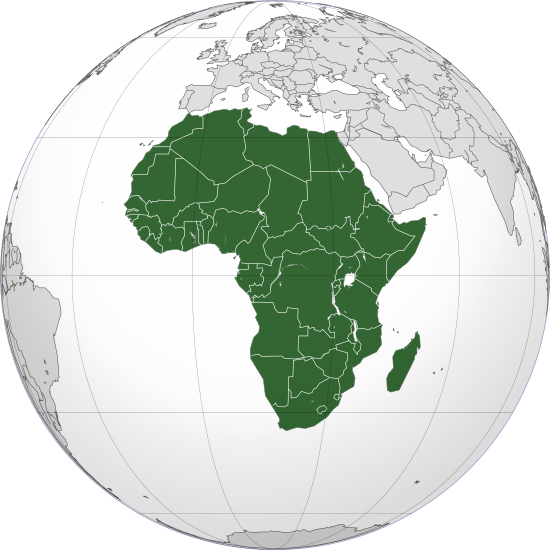
Africa is the second-largest and second-most populous continent home to...
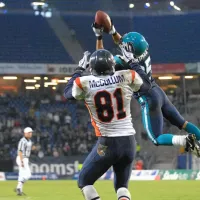
Football encompasses a variety of team sports centered around advancing...
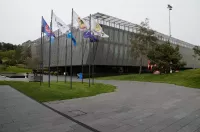
FIFA the F d ration Internationale de Football Association is...
Trending
15 minutes ago Congress Faces Shutdown Fight, DHS Funding Dispute, and Trump's Influence
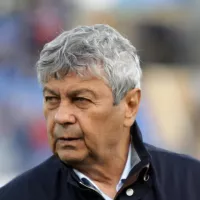
16 minutes ago Mircea Lucescu, legendary football coach, passes away at 80: Tributes and memories.
16 minutes ago Manuel Neuer faces criticism after Champions League loss; aims to overcome Real Madrid trauma.

16 minutes ago Aleksandar Pavlovi? Confident, in Control, and Available for FC Bayern Basketball
1 hour ago ICE agents involved in shooting near San Jose, leading to freeway closures: Updates
1 hour ago Stern Grove Festival Announces 2026 Lineup: Public Enemy, Al Green, Major Lazer!
Popular

Paula White-Cain is a prominent American televangelist and key figure...

William Franklin Graham III commonly known as Franklin Graham is...
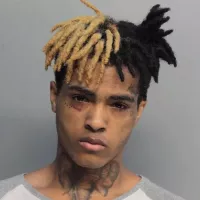
XXXTentacion born Jahseh Dwayne Ricardo Onfroy was a controversial yet...
Pam Bondi is an American attorney and politician She served...
Eric Swalwell is an American lawyer and politician currently serving...

Melania Trump a Slovenian-American former model has served as First...