Most Talked-About Controversies Linked to Gustavo Petro


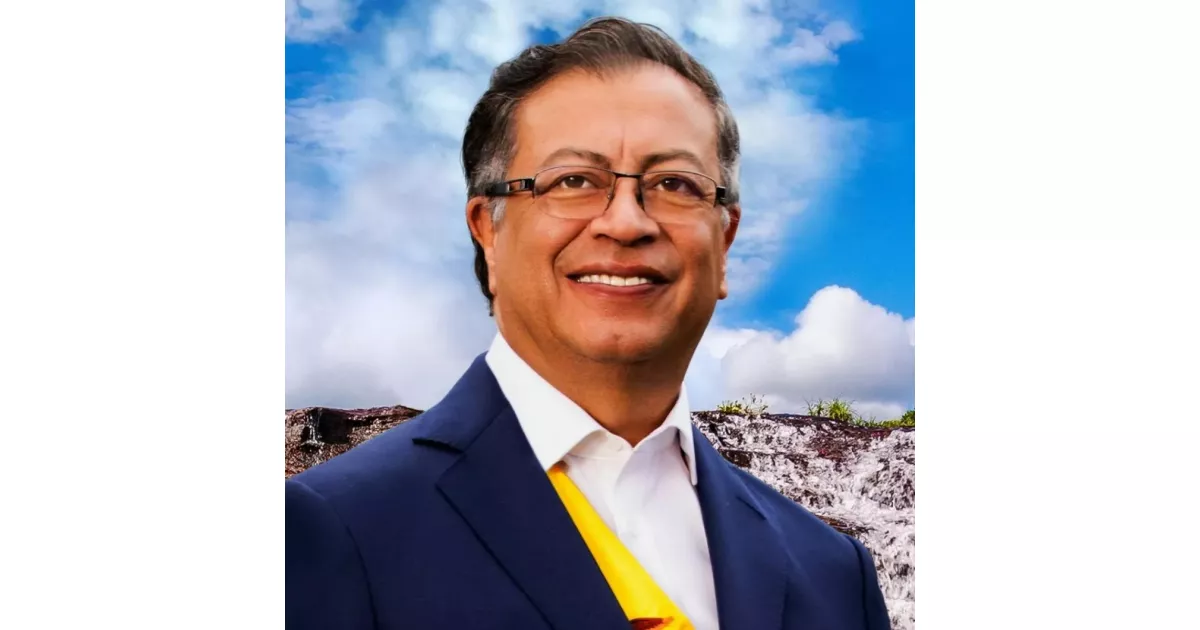
Controversies are a part of history. Explore the biggest scandals linked to Gustavo Petro.
Gustavo Petro is a Colombian politician and economist serving as the President of Colombia since 2022, marking the country's first left-wing government in modern history. A former member of the M-19 guerrilla movement, he transitioned into mainstream politics, serving as a senator and the Mayor of Bogotá. Petro’s political platform focuses on progressive reforms, including environmental sustainability, social equality, and the transition away from fossil fuels. He advocates for the implementation of the 2016 peace accords to end long-standing domestic conflicts and seeks to address systemic poverty through tax reform and land redistribution. His presidency represents a significant shift in Colombian politics, characterized by ambitious domestic policies aimed at economic restructuring and climate action, while navigating complex challenges in regional diplomacy and national security.
1970: Allegations of 1970 Election Fraud
During the 1970 election in Colombia, widespread allegations of fraud occurred, which eventually served as the primary motivation for the formation of the M-19 guerrilla movement.


1974: Formation of the M-19 Movement
In 1974, the 19th of April Movement (M-19) was established in Colombia as a guerrilla organization formed to challenge the National Front coalition.
1985: Arrest for M-19 affiliation
In 1985, Gustavo Petro was arrested by the Colombian army due to his involvement with the M-19 guerrilla group, a year marked by the violent attack on the Palace of Justice.
1985: Palace of Justice Siege and M-19 Activities
In 1985, the M-19 group, with which Petro was affiliated, carried out the assassination of 13 Colombian politicians during the Palace of Justice siege. During this period, the group was also involved in acts of violence and kidnappings, while Petro simultaneously led efforts to seize land to house displaced families, contributing to the development of the Bolívar 83 neighborhood.
February 1992: Venezuelan coup attempt
In February 1992, Lieutenant Colonel Hugo Chávez led a coup attempt in Venezuela, an event that resulted in his imprisonment before his eventual release.
1997: Antioquia CONVIVIR Liability Elimination
During 1997, Álvaro Uribe, serving as the governor of Antioquia, took action to eliminate the legal liability for eight specific CONVIVIR groups, an event noted by the Superintendency in their 2007 report to counter accusations made by Gustavo Petro.
2002: Allegations of Paramilitary Funding
In 2002, Gustavo Petro alleged that the paramilitary group United Self-Defense Forces of Colombia (AUC) provided financial support to the presidential campaign of Álvaro Uribe.
2005: Denunciation of Enilse López
In 2005, while serving in the Chamber of Representatives, Gustavo Petro publicly denounced Enilse López, a lottery businesswoman known as 'La Gata', for her alleged criminal associations.
2006: Admission of Financial Support
During his 2006 presidential reelection campaign, Álvaro Uribe admitted to receiving financial contributions from Enilse López, despite previously refuting Petro's earlier allegations.
2006: Election to the Senate and Parapolitics Scandal Exposure
In 2006, Gustavo Petro achieved a significant political milestone by being elected to the Colombian Senate, securing the second-highest voter turnout in the nation. During the same year, he gained prominence for exposing the parapolitics scandal, where he presented evidence and accused government members and supporters of colluding with paramilitary groups to gain influence in Colombia.
February 2007: Confrontation over the Parapolitics Scandal
In February 2007, Gustavo Petro engaged in a public dispute with President Álvaro Uribe regarding the demobilization of paramilitaries in Colombia. Petro challenged Uribe's neutrality and raised allegations concerning the president's brother, Santiago Uribe, and his historical ties to the Twelve Apostles paramilitary group. In response, President Uribe publicly labeled Petro a "terrorist in civilian clothing" and invited the political opposition to an open debate to address the accusations.
April 2007: Superintendency Rejection of Petro's Accusations
In April 2007, the Vigilance and Security Superintendency issued a formal communique refuting Gustavo Petro’s claims regarding the CONVIVIR groups. The agency clarified that while some groups were state-authorized in Sucre and Córdoba, they lacked such authorization in Antioquia, and specifically addressed historical paramilitary associations.
April 2007: Exposé on Paramilitarism and CONVIVIR
On 17 April 2007, Gustavo Petro delivered a significant two-hour congressional speech exposing deep-rooted ties between Colombian military figures, political leaders, drug traffickers, and paramilitary organizations. During this presentation, he challenged the actions of former Antioquia Governor Álvaro Uribe during the CONVIVIR era and provided photographic evidence linking Uribe's brother, Santiago, to drug trafficker Fabio Ochoa Vázquez.
May 2007: Espionage operation against Gustavo Petro
On May 7, 2007, the Colombian army apprehended two intelligence non-commissioned officers who were caught spying on Gustavo Petro and his family in Tenjo, Cundinamarca. The individuals initially identified themselves as agents of the Departamento Administrativo de Seguridad (DAS), though the agency's director, Andrés Peñate, later refuted this claim.
May 2009: Imprisonment of Enilse López
As of May 2009, Enilse López was officially imprisoned and under investigation due to her connections to the paramilitary group known as the United Self-Defense Forces of Colombia (AUC).
April 2016: Investigation into Petro's academic credentials
In April 2016, an investigation published by El Espectador revealed that Gustavo Petro had listed academic degrees on his résumé—specifically a specialization in Public Administration, a master’s in Economics, and a PhD in New Trends in Business Management—which he had not officially earned. Petro responded by clarifying that while he had completed the coursework for these programs, he failed to fulfill the final requirements such as theses or specific research components, leading to an controversy regarding the accuracy of his academic background.
January 2025: Diplomatic Dispute with the United States
In January 2025, following the start of Donald Trump's second term, a diplomatic dispute emerged between Colombia and the United States regarding deportation flights.
October 2025: U.S. Treasury Sanctions against Petro Administration
In October 2025, the U.S. Treasury added Gustavo Petro, his family members, and his interior minister to the Specially Designated Nationals (SDN) list, citing allegations of their involvement in the global illicit drug trade.
Mentioned in this timeline
Venezuela officially the Bolivarian Republic of Venezuela is a country...
Colombia is a country in South America with insular regions...
Israel is a Middle Eastern nation located on the eastern...
Italy officially the Italian Republic is a country in Southern...
War is defined as an armed conflict involving the armed...

Books are a means of storing information as text or...
Trending
4 hours ago Riot Games Announces VCT 2027 Global Tour and Manila Pacific Cup Host
5 hours ago Denzel Washington's Historic Colonial Revival Mansion In Los Angeles
5 hours ago Steve Kerr Advises Warriors Fans on Managing Expectations for Steph Curry's Playing Schedule

6 hours ago Jennifer Connelly and Paul Bettany Discuss Their Longstanding Marriage and Professional Projects

6 hours ago Demi Moore Stuns Fans With Ageless Makeup-Free Glowing Complexion Photo
5 hours ago Alexander Bublik Faces Backlash After Racket Smashing Incident and Injury
Popular
Ilhan Omar is a prominent American politician currently serving as...

Ken Paxton is an American politician and lawyer serving as...

Elon Musk is a visionary entrepreneur and engineer known for...

Michael Joseph Jackson the King of Pop was a highly...

Jameis Winston is an American football quarterback currently playing for...
Cristiano Ronaldo widely considered one of the greatest footballers captains...