Early Life and Education of Gustavo Petro: A Complete Timeline


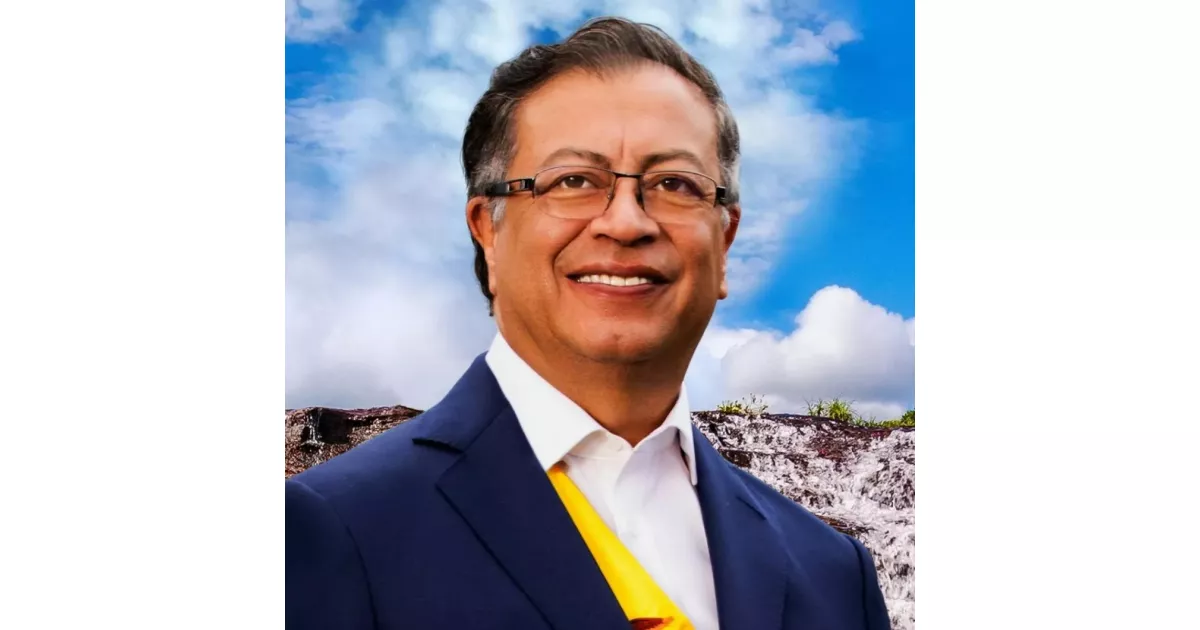
An overview of the childhood and early education of Gustavo Petro, highlighting the experiences that shaped the journey.
Gustavo Petro is a Colombian politician and economist serving as the President of Colombia since 2022, marking the country's first left-wing government in modern history. A former member of the M-19 guerrilla movement, he transitioned into mainstream politics, serving as a senator and the Mayor of Bogotá. Petro’s political platform focuses on progressive reforms, including environmental sustainability, social equality, and the transition away from fossil fuels. He advocates for the implementation of the 2016 peace accords to end long-standing domestic conflicts and seeks to address systemic poverty through tax reform and land redistribution. His presidency represents a significant shift in Colombian politics, characterized by ambitious domestic policies aimed at economic restructuring and climate action, while navigating complex challenges in regional diplomacy and national security.
April 1960: Birth of Gustavo Petro
In April 1960, Gustavo Francisco Petro Urrego was born, marking the beginning of the life of the future Colombian politician and economist.


1974: Formation of the M-19 Movement
In 1974, the 19th of April Movement (M-19) was established in Colombia as a guerrilla organization formed to challenge the National Front coalition.
1981: Election as Ombudsman of Zipaquirá
In 1981, while associated with the M-19 movement, Gustavo Petro was elected to serve as the ombudsman of the municipality of Zipaquirá.
1982: Graduation from Universidad Externado de Colombia
In 1982, Gustavo Petro successfully completed his undergraduate studies and earned a bachelor's degree in economics from the Universidad Externado de Colombia.
1984: Beginning of Councilman Tenure
Starting in 1984, Gustavo Petro began his service as a councilman, a position he held as part of his early political career during the 1980s.
1985: Arrest for M-19 affiliation
In 1985, Gustavo Petro was arrested by the Colombian army due to his involvement with the M-19 guerrilla group, a year marked by the violent attack on the Palace of Justice.
1985: Arrest and Imprisonment of Gustavo Petro
In 1985, Gustavo Petro was arrested by the Colombian army on charges of illegal arms possession. Following his arrest, he endured ten days of torture within the XIII Brigade stables and was subsequently sentenced to an 18-month prison term, an experience that led him to renounce armed resistance as a political strategy.
1985: Palace of Justice Siege and M-19 Activities
In 1985, the M-19 group, with which Petro was affiliated, carried out the assassination of 13 Colombian politicians during the Palace of Justice siege. During this period, the group was also involved in acts of violence and kidnappings, while Petro simultaneously led efforts to seize land to house displaced families, contributing to the development of the Bolívar 83 neighborhood.
1986: Conclusion of Councilman Tenure
Gustavo Petro concluded his tenure as a councilman in 1986, marking the end of that specific political role he held since 1984.
1987: M-19 Peace Negotiations
During 1987, the M-19 guerrilla movement, of which Gustavo Petro was a member, entered into formal peace negotiations with the Colombian government to resolve the ongoing internal conflict.
1991: Formation of the M-19 Democratic Alliance
In 1991, following the demobilization of the M-19 movement, Gustavo Petro and other former members established the M-19 Democratic Alliance, which successfully secured multiple seats in the Chamber of Representatives for the department of Cundinamarca.
February 1992: Venezuelan coup attempt
In February 1992, Lieutenant Colonel Hugo Chávez led a coup attempt in Venezuela, an event that resulted in his imprisonment before his eventual release.
July 1994: Meeting with Hugo Chávez
In July 1994, Gustavo Petro met with Hugo Chávez, who had recently been released from prison, during a conference focused on Bolivarian thought held at the Simón Rodríguez Cultural Foundation in Bogotá.
2006: Admission of Financial Support
During his 2006 presidential reelection campaign, Álvaro Uribe admitted to receiving financial contributions from Enilse López, despite previously refuting Petro's earlier allegations.
May 2007: Espionage operation against Gustavo Petro
On May 7, 2007, the Colombian army apprehended two intelligence non-commissioned officers who were caught spying on Gustavo Petro and his family in Tenjo, Cundinamarca. The individuals initially identified themselves as agents of the Departamento Administrativo de Seguridad (DAS), though the agency's director, Andrés Peñate, later refuted this claim.
May 2009: Imprisonment of Enilse López
As of May 2009, Enilse López was officially imprisoned and under investigation due to her connections to the paramilitary group known as the United Self-Defense Forces of Colombia (AUC).
April 2016: Investigation into Petro's academic credentials
In April 2016, an investigation published by El Espectador revealed that Gustavo Petro had listed academic degrees on his résumé—specifically a specialization in Public Administration, a master’s in Economics, and a PhD in New Trends in Business Management—which he had not officially earned. Petro responded by clarifying that while he had completed the coursework for these programs, he failed to fulfill the final requirements such as theses or specific research components, leading to an controversy regarding the accuracy of his academic background.
August 7, 2026: Presidential Transition of Colombia
On August 7, 2026, Abelardo de la Espriella is scheduled to officially succeed Gustavo Petro as the President of Colombia following the 2026 election. This transition follows Petro's formal acknowledgment of the election results and the commencement of the official handover process.
Mentioned in this timeline
Venezuela officially the Bolivarian Republic of Venezuela is a country...
Colombia is a country in South America with insular regions...
Israel is a Middle Eastern nation located on the eastern...
Italy officially the Italian Republic is a country in Southern...
War is defined as an armed conflict involving the armed...

Books are a means of storing information as text or...
Trending
4 hours ago Jennifer Connelly and Paul Bettany Discuss Their Longstanding Marriage and Professional Projects
4 hours ago Demi Moore Stuns Fans With Ageless Makeup-Free Glowing Complexion Photo
4 hours ago Riot Games to Sunset League of Legends Classic Mode in January 2027
5 hours ago Justin Bieber Named White Boy of the Year at Anthony Edwards' Believe That Awards

5 hours ago AJ Dybantsa Exits Wizards Preseason Finale Due to Ankle Injury

6 hours ago Alexander Bublik Causes Stir After Racket Meltdown During Tennis Match
Popular
Ilhan Omar is a prominent American politician currently serving as...

Ken Paxton is an American politician and lawyer serving as...

Elon Musk is a visionary entrepreneur and engineer known for...

Michael Joseph Jackson the King of Pop was a highly...

Jameis Winston is an American football quarterback currently playing for...

Cristiano Ronaldo widely considered one of the greatest footballers captains...