


Harley-Davidson, Inc., founded in 1903 and based in Milwaukee, Wisconsin, is a prominent American motorcycle manufacturer and lifestyle brand. Surviving the Great Depression alongside Indian Motorcycle, it navigated various economic challenges and competition to become an iconic brand. Known for its loyal customer base, Harley-Davidson fosters a strong community through global owner clubs, events, and a dedicated museum, solidifying its position in motorcycle history and culture.
1901: William S. Harley draws up plans for a small engine
In 1901, William S. Harley, at the age of 20, created plans for a small engine with a displacement of 7.07 cubic inches for use in a regular pedal-bicycle frame.


1903: Harley-Davidson Founded
In 1903, Harley-Davidson was founded in Milwaukee, Wisconsin. It became one of the two major American motorcycle manufacturers to survive the Great Depression, along with Indian Motorcycle Company.
1903: Work Begins on Improved Machine
In 1903, work began on a new and improved machine with a larger 24.74 cubic inch engine. Its loop-frame pattern was similar to the 1903 Milwaukee Merkel motorcycle. They also received help with their bigger engine from Ole Evinrude.
September 8, 1904: Harley-Davidson Competes in Motorcycle Race
On September 8, 1904, the prototype of the new loop-frame Harley-Davidson was assembled and competed in a Milwaukee motorcycle race held at State Fair Park. Edward Hildebrand rode it and placed fourth.
January 1905: Advertisements Placed in Automobile and Cycle Trade Journal
In January 1905, the company placed small advertisements in the Automobile and Cycle Trade Journal offering bare Harley-Davidson engines to the do-it-yourself trade.
1905: Single-Cylinder Models Produced
In 1905, Harley-Davidson produced single-cylinder models with 26.84-cubic-inch engines.
1906: First Factory Built
In 1906, Harley and the Davidson brothers built their first factory on Chestnut Street (later Juneau Avenue), at the current location of Harley-Davidson's corporate headquarters. The company produced about 50 motorcycles that year.
1906: Single-Cylinder Models Produced
In 1906, Harley-Davidson produced single-cylinder models with 26.84-cubic-inch engines.
1907: Factory Expansion and Incorporation
In 1907, William S. Harley graduated and the factory was expanded. Production increased to 150 motorcycles, and the company was officially incorporated in September. They also began selling their motorcycles to police departments. William A. Davidson joined the Motor Company.
1908: Motorcycle Production Numbers
In 1908, 450 motorcycles were produced.
1909: Motorcycle Production Numbers
In 1909, motorcycle production jumped to 1,149 machines.
1910: Limited Production of V-Twin Models
Between 1907 and 1910, very few V-Twin models were built by Harley-Davidson. These first V-Twins displaced 53.68 cubic inches and produced about 7 horsepower.
1911: Introduction of Improved V-Twin Model
In 1911, Harley-Davidson introduced an improved V-Twin model with a displacement of 49.48 cubic inches and mechanically operated intake valves.
1912: Introduction of Patented "Ful-Floteing Seat"
In 1912, Harley-Davidson introduced their patented "Ful-Floteing Seat", which was suspended by a coil spring inside the seat tube.
1913: Majority of Bikes Produced Were V-Twin Models
After 1913, the majority of bikes produced by Harley-Davidson were V-Twin models.
1913: New Factory Built
By 1913, the yellow brick factory had been demolished and a new five-story structure had been built on the site which took up two blocks along Juneau Avenue and around the corner on 38th Street.
1914: Dominance in Motorcycle Racing
After 1914, Harley-Davidson dominated motorcycle racing. Production that year swelled to 16,284 machines.
1915: British Military Adoption of Motorcycles
In 1915, the British military adopted motorcycles for military issue, first with the British Model H produced by Triumph Engineering Co Ltd.
1917: Launch of Bicycle Line
In 1917, Harley-Davidson launched a line of bicycles in hopes of recruiting more domestic customers for its motorcycles. Models included the traditional diamond frame men's bicycle, a step-through frame 3–18 "Ladies Standard", and a 5–17 "Boy Scout" for youth.
1917: United States Enters World War I
In 1917, the United States entered World War I and the military demanded motorcycles for the war effort. The U.S. military purchased over 20,000 motorcycles from Harley-Davidson.
1920: Largest Motorcycle Manufacturer in the World
By 1920, Harley-Davidson was the largest motorcycle manufacturer in the world, with 28,189 machines produced and dealers in 67 countries.
1921: Introduction of 74 Cubic Inch V-Twin
In 1921, Harley-Davidson introduced a new 74 cubic inch V-Twin engine.
1921: Otto Walker Sets Speed Record
In 1921, Otto Walker set a record on a Harley-Davidson as the first motorcycle to win a race at an average speed greater than 100 mph.
1921: Davis Machine Company Stops Manufacturing Bicycles
In 1921, the Davis Machine Company, which built bicycles for Harley-Davidson, stopped manufacturing bicycles.
1923: Discontinuation of Bicycle Line
In 1923, Harley-Davidson discontinued its bicycle line due to disappointing sales.
1925: Introduction of "Teardrop" Gas Tank
In 1925, Harley-Davidson added the "teardrop" gas tank.
1928: Addition of Front Brake
In 1928, Harley-Davidson added a front brake, although only on the J/JD models.
1929: Start of the Great Depression
In 1929, the Great Depression began shortly after the introduction of Harley-Davidson's 45 cu in model, leading to a significant drop in sales.
1929: Introduction of 45 Cubic Inch Flathead V-Twin
In the late summer of 1929, Harley-Davidson introduced its 45-cubic-inch flathead V-Twin, called the "D" model, to compete with the Indian 101 Scout and the Excelsior Super X.
1931: End of Production of "D" Model
The "D" model, first produced in 1929, was in production until 1931.
1933: Harley-Davidson Sales Decline
In 1933, Harley-Davidson's sales fell to 3,703, reflecting the impact of the Great Depression.
1934: Unveiling of New Lineup
In 1934, despite the Great Depression, Harley-Davidson unveiled a new lineup, which included a flathead engine and Art Deco styling.
1935: Addition of 80 Cubic Inches Flathead Engine
In 1935, an 80 cubic inches flathead engine was added to the Harley-Davidson product line, and the single-cylinder motorcycles were discontinued.
1936: Business Relations Severed with Sankyo Seiyaku Corporation
In 1936, Sankyo Seiyaku Corporation severed its business relations with Harley-Davidson and continued manufacturing the VL under the Rikuo name.
1936: Introduction of "Knucklehead" OHV Engines
In 1936, the 61E and 61EL models with the "Knucklehead" OHV engines were introduced, but valvetrain problems required a redesign and retrofitting of earlier engines.
1937: Flathead Engines Equipped with Dry-Sump Oil Recirculation Systems
In 1937, all Harley-Davidson flathead engines were equipped with dry-sump oil recirculation systems similar to the "Knucklehead" OHV engine. The revised 74 cubic inches V and VL models were renamed U and UL, the 80 cu in VH and VLH to be renamed UH and ULH, and the 45 cu in R to be renamed W.
1941: Introduction of 74-cubic-inch "Knucklehead"
In 1941, the 74-cubic-inch "Knucklehead" was introduced as the F and the FL, and the 80 cu in flathead UH and ULH models were discontinued.
1942: Production of Harley-Davidson XA
In 1942, Harley-Davidson produced the shaft-driven 750 cc Harley-Davidson XA. Production never entered full scale.
1942: Serial Numbers on WLAs produced during war
The WLAs produced during all four years of war production generally have 1942 serial numbers.
1943: Army-Navy "E" Award Received
In 1943, Harley-Davidson received an Army-Navy "E" Award for Excellence in Production during World War II.
1945: Second Army-Navy "E" Award Received
In 1945, Harley-Davidson received a second Army-Navy "E" Award for Excellence in Production during World War II.
1948: Adaption and Manufacture of DKW RT 125 Design
As part of war reparations, in 1948 Harley-Davidson adapted, manufactured, and sold the design of a small German motorcycle, the DKW RT 125.
1948: End of Flathead Models Production
In 1948, the 74-cubic-inchU & UL flathead models were produced up to this year.
1949: Resumption of WLA Production
In 1949, after stopping at the end of World War II, production of the WLA was resumed for use in the Korean War.
1952: End of WLA Production for Korean War
In 1952, WLA production for use in the Korean War ended.
1955: Production of Hummer Begins
In 1955, Harley-Davidson began producing the Hummer model.
1958: End of "Ful-Floteing Seat" Use
In 1958, Harley-Davidson stopped using "Ful-Floteing Seat" after using it since 1912.
1959: Production of Hummer Ends
In 1959, Harley-Davidson stopped producing the Hummer model.
1966: End of DKW RT 125 Design Production
In 1966, Harley-Davidson stopped selling DKW RT 125.
1973: Servi-Car Production Ends
In 1973, production of the Servi-Car, a three-wheeled delivery vehicle designed and built by Harley-Davidson, ended. Production started to help the company survive the Depression.
2002: Introduction of VRSC Platform
In 2002, Harley-Davidson broadened its offerings to include the more contemporary VRSC platform of motorcycles.
2014: Introduction of Street Platform
In 2014, Harley-Davidson broadened its offerings to include the middle-weight Street platform of motorcycles.
Mentioned in this timeline
The United States of America is a federal republic primarily...
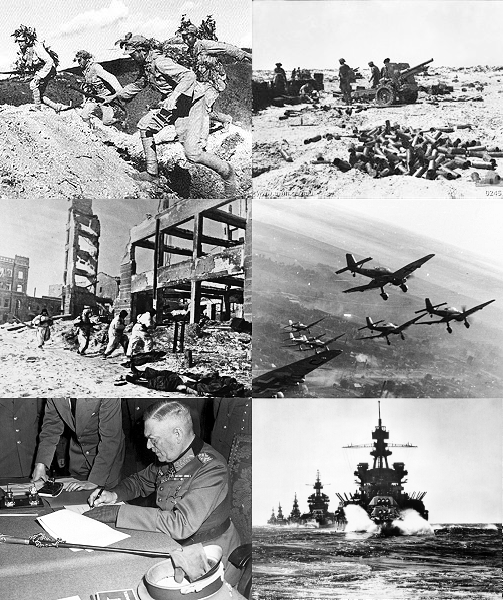
World War II - was a global conflict between the...
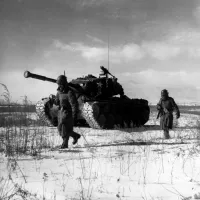
The Korean War - was a conflict between North Korea...
A tank is an armored fighting vehicle designed for front-line...
Chicago situated on Lake Michigan's western shore is the most...
World War I a global conflict between the Allies and...
Trending

3 hours ago Brock Bowers Becomes Second-Fastest Tight End to Reach Career Yards Milestone
3 hours ago Cam Skattebo Shares Confidence Ahead of Giants Matchup Against Commanders
3 hours ago D'Andre Swift Returns to Practice Amidst Fantasy Football Ranking Surge
4 hours ago Ja'Marr Chase and Tee Higgins Cleared for Bengals Upcoming Game
4 hours ago Tyler Warren Featured in NFL Week 5 Fantasy Football Projections and Lineup Advice
4 hours ago Kendre Miller Fantasy Football Outlook and Waiver Wire Value for Week 5
Popular

Ken Paxton is an American politician and lawyer serving as...

Cristiano Ronaldo widely considered one of the greatest footballers captains...

Michael Joseph Jackson the King of Pop was a highly...

Elon Musk is a visionary entrepreneur and engineer known for...

Shakira Isabel Mebarak Ripoll the Queen of Latin Music is...

Bernie Sanders is a prominent American politician and the senior...