Early Life and Education of Hillary Clinton: A Complete Timeline

Share: FB Share X Share Reddit Share Reddit Share
Hillary Clinton

Discover the defining moments in the early life of Hillary Clinton. From birth to education, explore key events.

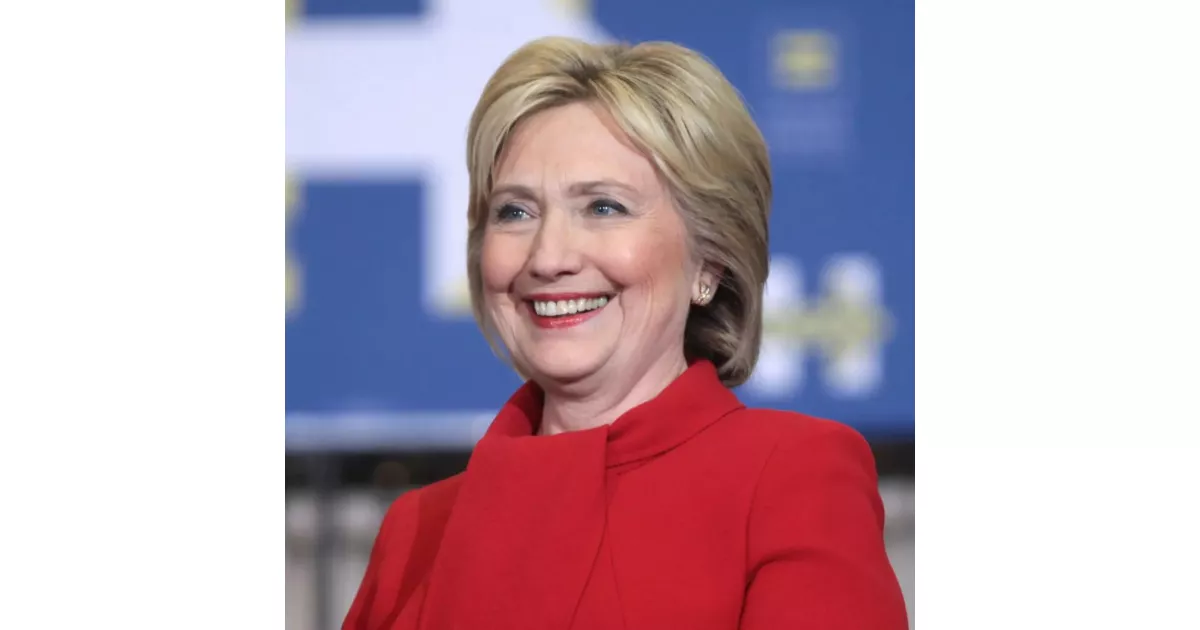
Hillary Diane Rodham Clinton is a prominent American politician, lawyer, and diplomat. She served as the 67th United States Secretary of State under President Barack Obama, a U.S. Senator for New York, and First Lady during Bill Clinton's presidency. As a member of the Democratic Party, Clinton made history as the first woman to secure a major party's presidential nomination in 2016 and the only woman to win the popular vote in a U.S. presidential election. Despite her popular vote victory, she lost the Electoral College to Donald Trump. Notably, she remains the only First Lady to have pursued elected office.

October 26, 1947: Hillary Clinton Born

On October 26, 1947, Hillary Diane Rodham Clinton, née Rodham, was born. She later became a prominent American politician, lawyer, and diplomat.

1960: Canvassing Chicago's South Side

In 1960, at age 13, Hillary Rodham helped canvass Chicago's South Side after the very close U.S. presidential election.

1961: Letter to NASA

Around 1961, inspired by U.S. efforts during the Space Race, Hillary Rodham sent a letter to NASA asking what she could do to become an astronaut, only to be informed that women were not being accepted into the program.

1962: Met Martin Luther King Jr.

In 1962, Hillary Rodham, with her Methodist youth group, saw and briefly met civil rights leader Martin Luther King Jr. when he gave a speech in Chicago's Orchestra Hall.

1964: Volunteered for Barry Goldwater Campaign

In 1964, Hillary Rodham volunteered to campaign for Republican candidate Barry Goldwater.

1965: Enrolled at Wellesley College

In 1965, Hillary Rodham enrolled at Wellesley College, where she majored in political science.

1965: Graduation from Maine South High School

In 1965, Hillary Rodham graduated from Maine South High School in the top five percent of her class.

1968: Supported Antiwar Presidential Nomination Campaign

By her junior year, in 1968, Hillary Rodham became a supporter of the antiwar presidential nomination campaign of Democrat Eugene McCarthy.

1968: Republican National Convention Attendance

In 1968, Hillary Rodham attended the Republican National Convention in Miami Beach, and after this event, she left the Republican Party for good.

1969: Graduation from Wellesley College

In 1969, Hillary Rodham graduated from Wellesley College.

1969: President of Wellesley College Government Association

In early 1969, Hillary Rodham held the position of president of the Wellesley College Government Association until early 1969.

1970: Worked at Washington Research Project

In the summer of 1970, Hillary Rodham was awarded a grant to work at Marian Wright Edelman's Washington Research Project, researching migrant workers' issues.

1971: Began Dating Bill Clinton

In the spring of 1971, Hillary Rodham began dating fellow law student Bill Clinton.

1972: Campaigning for George McGovern

During the summer of 1972, Hillary Rodham and Bill Clinton campaigned in Texas for unsuccessful 1972 Democratic presidential candidate George McGovern.

1973: Research Assistant on 'Beyond the Best Interests of the Child'

During her second year at Yale Law School in 1973, Hillary Rodham worked as a research assistant on the seminal work, 'Beyond the Best Interests of the Child'.

1973: Graduation from Yale Law School

In 1973, Hillary Rodham graduated from Yale Law School.

1973: Received Juris Doctor Degree from Yale

In 1973, Hillary Rodham received a Juris Doctor degree from Yale, having stayed on an extra year to be with Bill Clinton.

August 1974: Moved to Fayetteville, Arkansas

In August 1974, Hillary Rodham moved to Fayetteville, Arkansas, and became one of two female faculty members at the University of Arkansas School of Law. She followed her heart to Arkansas instead of staying in Washington, where career prospects were brighter, to be with Bill Clinton.

August 1974: Resignation of Richard Nixon

In August 1974, the work of the House Committee on the Judiciary, where Hillary Rodham advised during the Watergate scandal, culminated with the resignation of President Richard Nixon.

1974: Bill Clinton lost Arkansas congressional race

In 1974, Bill Clinton lost an Arkansas congressional race to incumbent Republican John Paul Hammerschmidt.

October 11, 1975: Hillary Rodham married Bill Clinton

On October 11, 1975, Hillary Rodham and Bill Clinton were married in a Methodist ceremony in their living room. She decided to retain the name Hillary Rodham, upsetting traditional mothers.

1975: Marriage to Bill Clinton

In 1975, Hillary Rodham married Bill Clinton, after which she moved to Arkansas.

November 1976: Bill Clinton elected Arkansas attorney general

In November 1976, Bill Clinton was elected Arkansas attorney general, and the couple moved to the state capital of Little Rock.

1976: Campaign organizer for Jimmy Carter

In 1976, Hillary Rodham temporarily relocated to Indianapolis to work as an Indiana state campaign organizer for Jimmy Carter's presidential campaign.

February 1977: Joined Rose Law Firm

In February 1977, Hillary Rodham joined the Rose Law Firm and specialized in patent infringement and intellectual property law while working pro bono in child advocacy.

1977: Appointed to board of directors of the Legal Services Corporation

In 1977, President Jimmy Carter appointed Hillary Rodham to the board of directors of the Legal Services Corporation.

November 1978: Bill Clinton elected governor of Arkansas

In November 1978, Bill Clinton was elected as governor of Arkansas.

1978: Engaged in trading of cattle futures contracts

During 1978, Hillary Rodham engaged in trading cattle futures contracts to supplement her income, generating nearly $100,000 from an initial $1,000 investment.

1978: Served on the Legal Services Corporation

From 1978 until the end of 1981, Hillary Rodham served on the board of the Legal Services Corporation.

1978: Cattle futures trading

In 1978, Hillary Clinton engaged in cattle futures trading, which later became a subject of controversy. Allegations arose that she engaged in a conflict of interest, but no formal investigation was made, and she was never charged with any wrongdoing.

January 1979: Became First Lady of Arkansas

In January 1979, Hillary Rodham became the First Lady of Arkansas, following her husband's election as governor.

1979: Appointed chair of the Rural Health Advisory Committee

In 1979, Bill Clinton appointed Hillary Rodham as the chair of the Rural Health Advisory Committee. She secured federal funds to expand medical facilities in Arkansas's poorest areas without affecting doctors' fees.

1979: First Lady of Arkansas

In 1979, Hillary Clinton became the First Lady of Arkansas.

1979: Cattle futures trading

In 1979, Hillary Clinton continued cattle futures trading, which later became a subject of controversy. Allegations arose that she engaged in a conflict of interest, but no formal investigation was made, and she was never charged with any wrongdoing.

1979: Made full partner in Rose Law Firm

In 1979, Hillary Rodham became the first woman to be made a full partner in Rose Law Firm.

February 27, 1980: Birth of Chelsea Clinton

On February 27, 1980, Hillary Rodham gave birth to Chelsea, the couple's only child.

November 1980: Bill Clinton lost his bid for re-election

In November 1980, Bill Clinton was defeated in his bid for re-election as governor.

1980: Served as chair of the board

From mid-1978 to mid-1980, Hillary Rodham served as the first female chair of the Legal Services Corporation board.

1981: End of term at Legal Services Corporation

Hillary Rodham's position at the Legal Services Corporation ended in 1981.

1981: End of First Lady of Arkansas Tenure

In 1981, Hillary Clinton's first tenure as the First Lady of Arkansas concluded.

1981: End of first term as First Lady of Arkansas

In 1981, Hillary Rodham's first term as First Lady of Arkansas ended.

1982: Joined the board of directors of the New World Foundation

From 1982 to 1988, Hillary Clinton was on the board of directors, sometimes as chair, of the New World Foundation, which funded a variety of New Left interest groups.

1982: Bill Clinton returned to the governorship of Arkansas

In 1982, Bill Clinton returned to the governorship of Arkansas after winning the election. Hillary began to use the name "Hillary Clinton" to assuage the concerns of Arkansas voters.

1983: Returns as First Lady of Arkansas

In 1983, Hillary Clinton once again became the First Lady of Arkansas.

1983: Named chair of the Arkansas Education Standards Committee

In 1983, Hillary Clinton was named chair of the Arkansas Education Standards Committee. She worked to reform the state's public education system.

1983: Started second term as First Lady of Arkansas

In 1983, Hillary Rodham began her second term as First Lady of Arkansas, following Bill Clinton's re-election as governor.

1985: Joined corporate board of directors of TCBY

From 1985 to 1992, Hillary Clinton held positions on the corporate board of directors of TCBY.

1985: Introduced Arkansas's Home Instruction Program for Preschool Youth

In 1985, Hillary Clinton introduced Arkansas's Home Instruction Program for Preschool Youth, a program that helps parents work with their children in preschool preparedness and literacy.

1986: Joined corporate board of directors of Wal-Mart Stores

From 1986 to 1992, Hillary Clinton held positions on the corporate board of directors of Wal-Mart Stores. She was the first female member on Wal-Mart's board, following pressure on chairman Sam Walton to name a woman to it.

1986: Accusations of conflict of interest

In 1986, Bill Clinton's Republican opponent in his gubernatorial reelection campaign accused the Clintons of conflict of interest because Rose Law did state business.

1988: Joined the board of the Arkansas Children's Hospital's Legal Services

From 1988–1992, Hillary Clinton was chairman of the board of the Children's Defense Fund and on the board of the Arkansas Children's Hospital's Legal Services.

1988: Named one of the 100 most influential lawyers in America

In 1988, Hillary Clinton was named by The National Law Journal as one of the 100 most influential lawyers in America.

1990: Joined corporate board of directors of Lafarge

From 1990 to 1992, Hillary Clinton held positions on the corporate board of directors of Lafarge.

1990: Considered running for governor

In 1990, Hillary Clinton considered running for governor when Bill Clinton thought about not running again. Private polls were unfavorable, and he ran and was reelected.

1991: Named one of the 100 most influential lawyers in America

In 1991, Hillary Clinton was again named by The National Law Journal as one of the 100 most influential lawyers in America.

August 1992: The Lady Macbeth of Little Rock

Beginning with Daniel Wattenberg's August 1992 The American Spectator article "The Lady Macbeth of Little Rock", Hillary's own past ideological and ethical record came under attack from conservatives.

1992: End of term on corporate boards

In 1992, Hillary Clinton ended her term on the corporate board of directors of TCBY, Wal-Mart Stores, and Lafarge.

1992: Sustained national attention

In 1992, Hillary Clinton received sustained national attention for the first time when her husband became a candidate for the Democratic presidential nomination. Before the New Hampshire primary, tabloid publications printed allegations that Bill Clinton had engaged in an extramarital affair with Gennifer Flowers.

1992: End of Second Tenure as First Lady of Arkansas

In 1992, Hillary Clinton's second tenure as the First Lady of Arkansas came to an end.

January 1993: Became First Lady of the United States

In January 1993, Hillary Rodham Clinton became the First Lady of the United States when Bill Clinton took office as president. She was the first in this role to have a postgraduate degree and her own professional career.

January 1993: Named chair of Task Force on National Health Care Reform

In January 1993, President Clinton named Hillary to chair a task force on National Health Care Reform, leading to the Clinton health care plan.

1993: First Lady of the United States

In 1993, Hillary Clinton became the First Lady of the United States, as the wife of Bill Clinton, a role she held until 2001.

1993: Establishment of Blind Trust

In 1993, when Bill Clinton became president, a blind trust was established.

April 1994: Approval Ratings Fell

In April 1994, Hillary Clinton's approval ratings fell to 44 percent.

September 1994: The proposal was abandoned

In September 1994, Hillary Clinton's National Health Care Reform proposal was abandoned after failing to gather enough support for a floor vote in either the House or the Senate.

1994: Healthcare plan contributed to the Democrats' defeat

In 1994, the Republican Party negatively highlighted the Clinton health care plan in their campaign for the midterm elections and saw strong success. Analysts and pollsters found the healthcare plan to be a major factor in the Democrats' defeat, especially among independent voters.

September 1995: Speech at the Fourth World Conference on Women in Beijing

In September 1995, Hillary Clinton delivered a speech at the Fourth World Conference on Women in Beijing, advocating for women's rights as human rights and denouncing practices that abused women worldwide, including in China.

1995: Publication of "Talking It Over" newspaper column begins

In 1995, Hillary Clinton began publishing a weekly syndicated newspaper column titled "Talking It Over", focusing on her experiences and the experiences of women, children, and families she met during her travels around the world.

1995: Characterized as a Rorschach test

In 1995, writer Todd S. Purdum of The New York Times characterized Hillary Clinton as a Rorschach test, an assessment echoed by feminist writer Betty Friedan.

January 1996: Book tour for "It Takes a Village"

In January 1996, Hillary Clinton embarked on a ten-city book tour and made numerous television appearances to promote her book, "It Takes a Village: And Other Lessons Children Teach Us." During this time, she faced questions regarding her involvement in the Whitewater and Travelgate controversies.

It Takes a Village, and Other Lessons Children Teach Us

January 26, 1996: Testimony before federal grand jury

On January 26, 1996, Hillary Clinton became the first spouse of a U.S. president to be subpoenaed to testify before a federal grand jury as part of the Whitewater controversy investigation.

June 1996: Discovery of improper White House access to FBI background reports

In June 1996, the "Filegate" scandal emerged, involving improper White House access to hundreds of FBI background reports on former Republican White House employees. Accusations were made that Hillary Clinton had requested these files, but a final report later found no substantial evidence of her involvement or misconduct.

1996: Supported Welfare Reform Act

In 1996, Hillary Clinton decided to support the Welfare Reform Act of 1996, which became the best political compromise available.

1997: Initiated Adoption and Safe Families Act

In 1997, Hillary Clinton initiated and shepherded the Adoption and Safe Families Act, which she regarded as her greatest accomplishment as the first lady.

1997: Grammy Award for Best Spoken Word Album

In 1997, Hillary Clinton received the Grammy Award for Best Spoken Word Album for the audio recording of her book "It Takes a Village: And Other Lessons Children Teach Us".

It Takes a Village, and Other Lessons Children Teach Us

November 1998: Urged to run for Senate

In November 1998, after Senator Daniel Patrick Moynihan announced his retirement, Hillary Clinton was urged by prominent Democratic figures to run for his open seat in the 2000 Senate election.

1998: Publication of "Dear Socks, Dear Buddy: Kids' Letters to the First Pets"

In 1998, Hillary Clinton published the book "Dear Socks, Dear Buddy: Kids' Letters to the First Pets" during her time as First Lady.

Dear Socks, Dear Buddy: Kids' Letters to the First Pets

1998: Lewinsky scandal and impeachment of President Clinton

In 1998, investigations revealed President Bill Clinton's extramarital affair with Monica Lewinsky, a White House intern. Hillary Clinton initially dismissed the allegations as a "vast right-wing conspiracy" but later acknowledged she was misled. The events surrounding the Lewinsky scandal led to President Clinton's impeachment by the House of Representatives, though he was later acquitted by the Senate.

September 1999: Purchase of home in Chappaqua, New York

In September 1999, after deciding to run for the U.S. Senate seat in New York, the Clintons purchased a home in Chappaqua, New York.

1999: Passage of the Foster Care Independence Act

In 1999, Hillary Clinton was instrumental in the passage of the Foster Care Independence Act, which doubled federal monies for teenagers aging out of foster care.

May 2000: Giuliani withdraws from Senate race

In May 2000, Rudy Giuliani withdrew from the New York Senate race due to health issues and personal matters, leaving Hillary Clinton to face Rick Lazio in the election.

November 7, 2000: Election to the U.S. Senate

On November 7, 2000, Hillary Clinton won the election to become a U.S. Senator for New York, defeating Rick Lazio with 55 percent of the vote.

November 2000: State dinner honoring the bicentennial of the White House

In November 2000, Hillary Clinton hosted a state dinner at the White House honoring the bicentennial of the White House.

2000: "It Takes a Village" sales figures

By 2000, Hillary Clinton's book, "It Takes a Village: And Other Lessons Children Teach Us", had sold 450,000 copies in hardcover and another 200,000 in paperback.

It Takes a Village, and Other Lessons Children Teach Us

2000: Publication of "An Invitation to the White House: At Home with History"

In 2000, Hillary Clinton published the book "An Invitation to the White House: At Home with History" during her time as First Lady.

An Invitation To The White House : At Home With History

2000: End of "Talking It Over" newspaper column

In 2000, Hillary Clinton's weekly syndicated newspaper column titled "Talking It Over" ended. The column had focused on her experiences and the experiences of women, children, and families she met during her travels around the world.

2000: Final report on Filegate issued

In 2000, the final Independent Counsel report on the Filegate controversy found no substantial or credible evidence that Hillary Clinton had any role or showed any misconduct in the matter.

2000: Final Whitewater report issued

In 2000, the final report on the Whitewater controversy was issued, stating that there was insufficient evidence that either Bill or Hillary Clinton had engaged in criminal wrongdoing.

2000: Income since 2000

Since 2000, Bill and Hillary Clinton had earned over $100 million, primarily from Bill's books, speaking engagements, and other activities.

January 3, 2001: Sworn in as U.S. Senator

On January 3, 2001, Hillary Clinton was sworn in as a U.S. Senator for New York. From January 3 to 20, she held the titles of First Lady and Senator simultaneously – a first in U.S. history.

October 2001: Vote for the USA Patriot Act

In October 2001, Hillary Clinton voted for the USA Patriot Act following the September 11 terrorist attacks.

2001: Began Senate term

In 2001, Hillary Clinton began her term as a U.S. Senator, maintaining a low public profile, building relationships with senators from both parties, forging alliances with religiously inclined senators, and becoming a member of several Senate committees and commissions.

2001: Support for U.S. military action in Afghanistan

In 2001, Hillary Clinton strongly supported the U.S. military action in Afghanistan, citing the opportunity to combat terrorism and improve the lives of Afghan women.

2001: Vote against Bush's tax cut package

In 2001, Hillary Clinton voted against President Bush's Economic Growth and Tax Relief Reconciliation Act.

2001: Afterword to "Beatrice's Goat"

In 2001, Hillary Clinton wrote an afterword to the children's book "Beatrice's Goat".

2001: Controversy over gifts sent to the White House

In early 2001, a controversy arose regarding gifts sent to the White House, with questions over whether furnishings were White House or personal property. The gifts were shipped to the Clintons' private residence during Bill Clinton's last year in office.

October 2002: Vote in favor of Iraq War Resolution

In October 2002, Hillary Clinton voted in favor of the Iraq War Resolution, authorizing President George W. Bush to use military force against Iraq.

2002: Served on the Senate Committee on Budget

In 2001 and 2002, Hillary Clinton served on the Senate Committee on Budget.

2003: Served on the Senate Committee on Armed Services

From 2003 to 2009, Hillary Clinton served on the Senate Committee on Armed Services.

2003: Formative role in founding Center for American Progress

In 2003, Hillary Clinton played a formative role in conversations that led to the founding of John Podesta's Center for American Progress.

2003: Views on Civil Rights and Vietnam War

In 2003, Hillary Clinton wrote that her views concerning the civil rights movement and the Vietnam War were changing in her early college years.

2003: Publication of "Living History"

In 2003, Simon & Schuster released Hillary Clinton's memoir "Living History". The book set a first-week sales record for a nonfiction work, selling over one million copies in the first month, and was translated into twelve foreign languages.

Living History
Living History

June 2004: Unveiling of White House portrait

In June 2004, Hillary Clinton's official White House portrait, painted by Simmie Knox, was unveiled in a ceremony at the White House.

2004: Advised Media Matters for America

In 2004, Hillary Clinton advised David Brock's Media Matters for America.

2004: Vote against the Federal Marriage Amendment

In 2004, Hillary Clinton voted against the Federal Marriage Amendment that sought to prohibit same-sex marriage.

February 2005: Visit to Iraq

In February 2005, Hillary Clinton visited Iraq, observing that the insurgency had failed to disrupt democratic elections and that parts of the country were functioning well. She also noted the strain on military forces and co-introduced legislation to increase the size of the U.S. Army.

2005: Call for investigation of Grand Theft Auto: San Andreas

In 2005, Hillary Clinton called for the Federal Trade Commission to investigate how hidden sex scenes appeared in the video game Grand Theft Auto: San Andreas, and she introduced the Family Entertainment Protection Act with Senators Joe Lieberman and Evan Bayh.

2005: Vote against John Roberts' confirmation

In 2005, Hillary Clinton voted against the confirmation of John Roberts as Chief Justice of the United States.

2005: Concerns with the USA Patriot Act Reauthorization Conference Report

In 2005, as the USA Patriot Act was up for renewal, Hillary Clinton expressed concerns with the USA Patriot Act Reauthorization Conference Report regarding civil liberties.

March 2006: Vote in favor of the USA PATRIOT Improvement and Reauthorization Act of 2005

In March 2006, Hillary Clinton voted in favor of the USA PATRIOT Improvement and Reauthorization Act of 2005.

2006: Vote against the Federal Marriage Amendment

In 2006, Hillary Clinton voted against the Federal Marriage Amendment that sought to prohibit same-sex marriage.

2006: Vote against Samuel Alito's confirmation

In 2006, Hillary Clinton voted against the confirmation of Samuel Alito to the U.S. Supreme Court, filibustering the latter.

2006: New York Observer survey on 'anti-Clinton literature'

In 2006, a survey by the New York Observer found "a virtual cottage industry" of "anti-Clinton literature" put out by Regnery Publishing and other conservative imprints.

April 2007: Clintons Liquidate Blind Trust

In April 2007, Bill and Hillary Clinton liquidated their blind trust to avoid ethical conflicts or political embarrassments as Hillary undertook her presidential race.

January 2008: Impact of 'choked up moment' on gender discussion

Following Hillary Clinton's "choked up moment" in January 2008, both The New York Times and Newsweek found that discussion of gender's role in the campaign had moved into the national political discourse.

2008: Guest appearance on Saturday Night Live

In 2008, Hillary Clinton made a guest appearance on Saturday Night Live.

Loading Video...

2009: End of term on Senate Committees

In 2009, Hillary Clinton's term ended on several Senate Committees including the Committee on Armed Services, the Committee on Environment and Public Works, the Committee on Health, Education, Labor and Pensions and the Special Committee on Aging.

December 2012: Hospitalization for Blood Clot

In December 2012, Hillary Clinton was hospitalized for a few days for treatment of a blood clot in her right transverse venous sinus. This was discovered during a follow-up examination for a concussion she sustained from fainting due to dehydration from a viral intestinal ailment.

2014: Reversal on Iraq War Resolution

By 2014 and 2015 Hillary Clinton had fully reversed herself on the Iraq War Resolution, saying she "got it wrong" and the vote in support had been a "mistake".

2015: Reversal on Iraq War Resolution

By 2014 and 2015 Hillary Clinton had fully reversed herself on the Iraq War Resolution, saying she "got it wrong" and the vote in support had been a "mistake".

2015: Guest appearance on Saturday Night Live

In 2015, Hillary Clinton made a guest appearance on Saturday Night Live to face-off with her doppelgängers.

Loading Video...

2016: Awareness of Wal-Mart role became a factor in loss of credibility

According to the journalist Dan Kaufman, awareness of Hillary Clinton's role in Wal-Mart later became a factor in her loss of credibility with organized labor, helping contribute to her loss in the 2016 election.

2016: Maintained Low Profile

Following her defeat in the 2016 presidential election, Hillary Clinton maintained a low profile.

2018: Chancellor position vacant at Queen's University Belfast

In 2018, the chancellor position at Queen's University Belfast had been vacant after the death of Thomas J. Moran, before Hillary Clinton filled it.

January 2023: Joins Columbia University as professor

In January 2023, Columbia University announced that Hillary Clinton would join the university as professor of practice at the School of International and Public Affairs and as a presidential fellow at Columbia World Projects.