History of Jerome Powell in Timeline


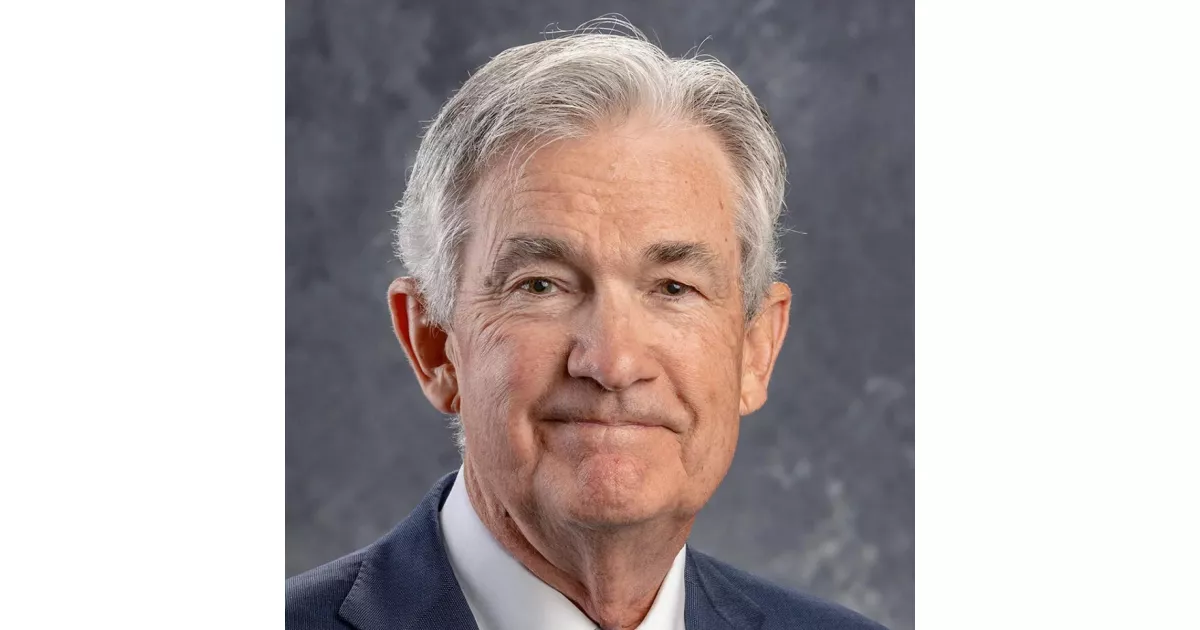
Jerome Powell is the 16th and current chair of the Federal Reserve, a position he has held since 2018. Prior to his role as the head of the central bank, Powell worked as both a lawyer and an investment banker in the private sector before transitioning to public service. As Fed chair, he is responsible for overseeing the nation's monetary policy, influencing interest rates, and regulating banks to promote economic stability and full employment.
February 4, 1953: Jerome Powell's Birth
On February 4, 1953, Jerome Hayden "Jay" Powell was born. He would later become the 16th chair of the Federal Reserve in 2018.


1971: Graduated from Georgetown Preparatory School
In 1971, Jerome Powell graduated from Georgetown Preparatory School.
1975: Graduated from Princeton University
In 1975, Jerome Powell received a Bachelor of Arts in political science from Princeton University, with his senior thesis titled "South Africa: Forces for Change."
1979: Graduated from Georgetown University Law Center
In 1979, Jerome Powell graduated from Georgetown University Law Center with a Juris Doctor, where he was also editor-in-chief of the Georgetown Law Journal.
1983: Moved to Werbel & McMillen
In 1983, Jerome Powell moved to the law firm of Werbel & McMillen.
1984: Worked at Dillon, Read & Co.
In 1984, Jerome Powell began working at investment bank Dillon, Read & Co., concentrating on financing, merchant banking, and mergers and acquisitions.
1985: Powell Marries Elissa Leonard
In 1985, Jerome Powell married Elissa Leonard at the Episcopal Washington National Cathedral.
1988: First member of opposition party nominated for position
In 2011, Powell's nomination was the first time since 1988 that a president nominated a member of the opposition party for such a position.
1990: Worked in the US Department of the Treasury
In 1990, Jerome Powell began working in the United States Department of the Treasury.
1990: Entered Public Service
In 1990, Jerome Powell entered public service, serving in the United States Treasury Department under President George H. W. Bush.
1990: Vice president at Dillon, Read & Co.
In 1990, Jerome Powell rose to the position of vice president at investment bank Dillon, Read & Co.
1992: Under Secretary of the Treasury for Domestic Finance
In 1992, Jerome Powell became the Under Secretary of the Treasury for Domestic Finance after being nominated by George H. W. Bush.
1993: Managing director for Bankers Trust
In 1993, Jerome Powell began working as a managing director for Bankers Trust.
1993: End of time at US Department of the Treasury
In 1993, Jerome Powell ended his time at the United States Department of the Treasury.
1995: Left Bankers Trust
In 1995, Jerome Powell left Bankers Trust after the bank suffered reputational damage.
1997: Partner at Carlyle Group
From 1997, Jerome Powell was a partner at the Carlyle Group.
2005: Launched Severn Capital Partners
In 2005, Jerome Powell left Carlyle Group and launched Severn Capital Partners, a boutique private equity firm.
2008: Managing Partner of Global Environment Fund
In 2008, Jerome Powell became a managing partner of the Global Environment Fund.
2010: Visiting Scholar at Bipartisan Policy Center
In 2010, Jerome Powell became a visiting scholar at the Bipartisan Policy Center, working on the United States debt-ceiling crisis.
2010: Powell on Board of Governors of Chevy Chase Club
In 2010, Jerome Powell was on the board of governors of Chevy Chase Club, a country club.
December 2011: Nominated to Federal Reserve Board of Governors
In December 2011, Jerome Powell was nominated to the Federal Reserve Board of Governors by President Barack Obama.
2011: Worked on the United States debt ceiling
In 2011, as a visiting scholar, Jerome Powell worked on getting Congress to raise the United States debt ceiling during the United States debt-ceiling crisis.
May 25, 2012: Took office as a Governor
On May 25, 2012, Jerome Powell took office as a member of the Federal Reserve Board of Governors.
September 2012: Skeptic of Quantitative Easing
In September 2012, Jerome Powell was a skeptic of round 3 of quantitative easing (QE3), but eventually voted for it.
2012: End of time as Visiting Scholar
In 2012, Jerome Powell ended his time as a visiting scholar at the Bipartisan Policy Center.
2012: Nomination to Federal Reserve Board of Governors
In 2012, President Barack Obama nominated Jerome Powell to the Federal Reserve Board of Governors.
2013: Endorsed financial regulation
In 2013, Jerome Powell endorsed financial regulation to end the problem of institutions that are too big to fail.
June 2014: Reappointed to Board of Governors
In June 2014, Jerome Powell was reappointed to the Federal Reserve Board of Governors for a full 14-year term.
April 2017: Assigned to head bank oversight committee
In April 2017, Jerome Powell was assigned to head the bank oversight committee.
July 2017: Remarks on Fannie Mae and Freddie Mac
In a July 2017 speech, Jerome Powell stated that the status quo regarding Fannie Mae and Freddie Mac was "unacceptable."
October 2017: Speech on Financial System Safety
In an October 2017 speech, Jerome Powell stated that higher capital and liquidity requirements and stress tests from the Dodd–Frank Wall Street Reform and Consumer Protection Act have made the financial system safer.
November 2, 2017: Nominated as Chairman of the Federal Reserve
On November 2, 2017, President Donald Trump nominated Jerome Powell to serve as the chairman of the Federal Reserve.
January 23, 2018: Senate Confirmation as Chair
On January 23, 2018, the Senate confirmed Jerome Powell's nomination to be Chair of the Federal Reserve.
February 5, 2018: Assumed Office as Chair
On February 5, 2018, Jerome Powell assumed office as chair of the Federal Reserve.
July 2018: Trump Criticizes Powell for Raising Interest Rates
In July 2018, Donald Trump expressed his displeasure with Jerome Powell for raising interest rates in a CNBC interview, marking the beginning of Trump's public criticism of Powell's monetary policy decisions.
2018: Elevated to Chair of the Federal Reserve
In 2018, President Donald Trump elevated Jerome Powell to Chair of the Federal Reserve.
January 2019: Powell States He Would Not Resign If Asked
In January 2019, Jerome Powell stated he would not resign if asked to do so by President Trump, amid ongoing pressure and criticism from the President regarding the Federal Reserve's monetary policy.
February 2019: White House Counsel Examines Firing Powell Request
In February 2019, Bloomberg News reported that the Office of White House Counsel examined Trump's request to potentially fire Powell. Trump had previously attributed a stock market decline and layoffs at General Motors to Powell's policies in November 2018.
October 2019: Return to Expanding Balance Sheet
In October 2019, as asset prices waned, Jerome Powell announced the Fed would return to expanding its balance sheet, which led to a global rally in assets.
2019: Powell's Estimated Net Worth
In 2019, based on public filings, Jerome Powell's net worth was estimated to be between $20 and $55 million. He also served on boards of charitable and educational institutions such as DC Prep, the Bendheim Center for Finance at Princeton University, and The Nature Conservancy. Furthermore, he was a founder of the Center City Consortium.
2019: Abandoned quantitative tightening
In early 2019, Jerome Powell abandoned quantitative tightening, leading to a recovery in asset prices.
2019: Wealth inequality not seen since the 1920s
The Fed's acceptance of asset price inflation from 2019 onwards resulted in levels of wealth inequality not seen in the United States since the 1920s.
March 2020: Trump Repeats Claim He Could Fire Powell
In March 2020, amid the onset of the COVID-19 pandemic in the United States, President Trump reiterated his claim that he could fire Powell, though he tempered his comments subsequently.
June 2020: Compared to Drug Dealer
In June 2020, Jim Grant likened Jerome Powell's policy to drug dealing, calling him "the Fed's Dr. Feelgood."
July 2020: bubble
In July 2020, CNBC host Jim Cramer said, "I'm sick and tired of hearing that we're in a bubble, that Powell's overinflating the price of stocks by printing money to keep the economy moving."
August 2020: Powell's Policy Called "Exuberantly Asymmetric"
In August 2020, Bloomberg News described Powell's policy as "exuberantly asymmetric", and Steven Pearlstein in The Washington Post noted Powell's strategy created a floor for stock and bond prices, but never a ceiling.
August 2020: Investors Warned of Speculative Bubble
In August 2020, investors Leon Cooperman and Seth Klarman warned of a dangerous "speculative bubble," with market psychology "unhinged from market fundamentals."
September 2020: Testimony on Wall Street
In a September 2020 testimony, Jerome Powell said: "Our actions were in no way an attempt to relieve pain on Wall Street."
November 2020: Powell as "Wall Street's Head of State"
In November 2020, Bloomberg News dubbed Powell "Wall Street's Head of State" due to the dominance and profitability of his actions on asset prices. This followed bipartisan reactions to the Federal Reserve's actions in early 2020 to address the COVID-19 pandemic.
November 19, 2020: Agreed to Return Unused Crisis Funds
On November 19, 2020, after disagreeing with Treasury Secretary Steve Mnuchin, Jerome Powell agreed to return unused crisis funds to the United States Treasury.
December 2020: Powell Defends High Asset Prices Using Fed Model
In December 2020, Powell defended high asset prices by invoking the controversial Fed model, leading Edward Yardeni to suggest this could create the greatest financial bubble in history.
December 2020: Powell's Monetary Policy: Loosest in History
In December 2020, Powell's monetary policy was measured as the loosest in the history of the Goldman Sachs US Financial Conditions Index (GSFCI) since 1987, creating simultaneous asset bubbles. Powell also won the 2020 Forbes Person Of The Year In Crypto.
2020: Stock market decline
In 2020, Jerome Powell faced a stock market decline as chair.
2020: Actions to Counter COVID-19 Impact
In early 2020, Jerome Powell launched an unprecedented series of actions to counter the financial market impact of the COVID-19 pandemic, including a dramatic expansion of the Fed's balance sheet and introduction of new tools.
January 2021: Financial Times Warned of Wealth Inequality
In January 2021, Edward Luce of the Financial Times warned that the Fed's use of asset purchases, and the resultant widening of wealth inequality under Jerome Powell, could lead to political and social instability in the United States.
February 2021: Richard Cookson's Commentary on Powell
In February 2021, Richard Cookson from Bloomberg provided commentary regarding Jerome Powell's actions and policies.
April 2021: Powell Reassures Concerns Over Housing Bubble
In April 2021, Jerome Powell addressed concerns about a potential housing bubble, stating that the conditions were unlike those preceding the Great Recession, citing an absence of "bad loans and unsustainable prices."
August 2021: Powell Expects Fed to Reduce Economic Support
In August 2021, Powell indicated that the Fed was likely to reduce economic support later in the year, while also acknowledging that his view of inflation as "transitory" was no longer accurate.
August 2021: Progressive Democrats Call for Powell's Replacement
In August 2021, progressive Democrats, including Alexandria Ocasio-Cortez, urged President Joe Biden to replace Powell, criticizing his handling of climate change risks to the financial system.
September 2021: Senator Warren Criticizes Powell's Financial Regulation Record
In September 2021, Senator Elizabeth Warren criticized Powell's financial regulation track record, calling him a "dangerous man to head up the Fed."
November 2021: CPI Reaches 6.8%
Following Biden's renomination of Powell, the Fed Chairman retired his previous words "transitory inflation," and indicated a reduction in quantitative easing (QE) and mortgage-backed security (MBS) purchases due to the 2021-2023 inflation surge, with the consumer price index (CPI) in November 2021 having reached 6.8%.
November 22, 2021: Powell Renominated for Second Term
On November 22, 2021, President Joe Biden renominated Jerome Powell for a second term as chair of the Federal Reserve.
2021: Navigating Inflation Surge
In 2021, Jerome Powell, as Federal Reserve Chair, navigated the beginning of the 2021-2023 inflation surge.
2021: Re-nomination as Chair of the Federal Reserve
In 2021, President Joe Biden re-nominated Jerome Powell as Chair of the Federal Reserve.
January 3, 2022: Powell's Nomination Returned to President Biden
On January 3, 2022, Powell's initial nomination expired and was returned to President Biden.
January 11, 2022: Hearings Held on Powell's Nomination
On January 11, 2022, hearings were held before the Senate Banking Committee regarding Jerome Powell's nomination for a second term as Federal Reserve chair.
March 16, 2022: Senate Committee Favourably Reports Powell's Nomination
On March 16, 2022, the Senate Banking Committee favorably reported Powell's nomination to the Senate floor with a 22–1 vote.
March 17, 2022: Federal Reserve Begins Rate Hike Cycle
On March 17, 2022, the U.S. Federal Reserve initiated its rate hike cycle, raising rates by 25 basis points in response to high inflation.
May 12, 2022: Senate Confirms Powell for Second Term
On May 12, 2022, the U.S. Senate confirmed Jerome Powell's nomination for another term as chair through May 2026 in an 80–19 vote.
May 23, 2022: Powell Sworn in for Second Term
On May 23, 2022, Jerome Powell was officially sworn in for his second term as chair of the Federal Reserve.
July 2022: US CPI Peaks at 9.1% Y/Y
In July 2022, the US CPI, a widely used measure of inflation, peaked at 9.1% year-over-year.
2022: Stock market decline
In 2022, Jerome Powell faced a stock market decline as chair.
2023: Navigating Inflation Surge
In 2023, Jerome Powell, as Federal Reserve Chair, continued to navigate the 2021-2023 inflation surge, and global trade instability.
April 2025: Trump Expresses Impatience for Powell's Termination
In April 2025, Donald Trump posted on Truth Social that "Powell's termination cannot come fast enough!", continuing his pattern of public criticism and raising the possibility of firing Powell.
July 2025: Powell Subject of Federal Investigation Related to Testimony
In July 2025, Jerome Powell became the subject of a federal investigation related to his congressional testimony. Politico reported that Russell Vought was investigating a renovation to the Eccles Building.
July 16, 2025: Reports of Trump Penning a Letter to Dismiss Powell Denied
On July 16, 2025, reports surfaced that President Trump had penned a letter to dismiss Powell as Fed Chair; however, Trump denied those reports to reporters at the White House.
September 2025: Polling Shows Americans Oppose Trump Replacing Fed Members
Polling from September 2025 found that 70% of Americans thought Trump should not replace Federal Reserve members who disagreed with him.
January 11, 2026: Powell States DOJ Served Federal Reserve with Subpoenas
On January 11, 2026, Jerome Powell stated that the Department of Justice had served the Federal Reserve with grand jury subpoenas two days earlier, threatening a criminal indictment related to his testimony in June 2025 before the Senate Banking Committee.
March 2026: Judge Quashes Grand Jury Subpoenas Against Powell
In March 2026, Judge James Boasberg quashed the grand jury subpoenas, citing "abundant evidence" that the subpoenas' purpose was to harass and pressure Powell to yield to the president.
May 2026: Senator Tillis Opposes Federal Reserve Nominations Until Legal Matter Resolved
In response to the investigation announcement, Republican U.S. Senator Thom Tillis announced that he would oppose any Federal Reserve nomination, including the vacancy of Powell's seat as chair in May 2026, until the legal matter was resolved.
January 31, 2028: End of term as a member of the Board of Governors
Jerome Powell's term as a member of the Board of Governors ends January 31, 2028.
Mentioned in this timeline
Donald John Trump is an American politician media personality and...
Barack Obama the th U S President - was the...
Alexandria Ocasio-Cortez AOC is a prominent American politician and activist...
Elizabeth Warren is a prominent American politician currently serving as...
Joseph Robinette Biden Jr served as the th U S...

CNBC is an American business news channel owned by Versant...
Trending

2 days ago Rafael Jódar competes in Mutua Madrid Open 2026, aiming for higher level.
15 days ago Trump's Attempt to Disrupt Ivanka's Wedding with Kushner, Revealed by Ex-Adviser

1 hour ago Mboko faces McNally in Madrid Open: Predictions and match analysis.
7 months ago Mckenna Grace and Mason Thames attend 'Regretting You' screening in Los Angeles.

2 hours ago Rublev Faces Kopriva at Madrid Open 2026: Predictions and Odds Overview

21 days ago Maldives Holds Triple-Ballot Election Amidst Governance Reforms: A Test for Democracy.
Popular
William Franklin Graham III known as Franklin Graham is an...

Kashyap Pramod Patel known as Kash Patel is an American...
Lindsey Graham is an American politician and attorney who has...
Paula White-Cain is a prominent American televangelist and key figure...
George Soros is a Hungarian-American investor and philanthropist with a...

Michael Joseph Jackson the King of Pop was a highly...