


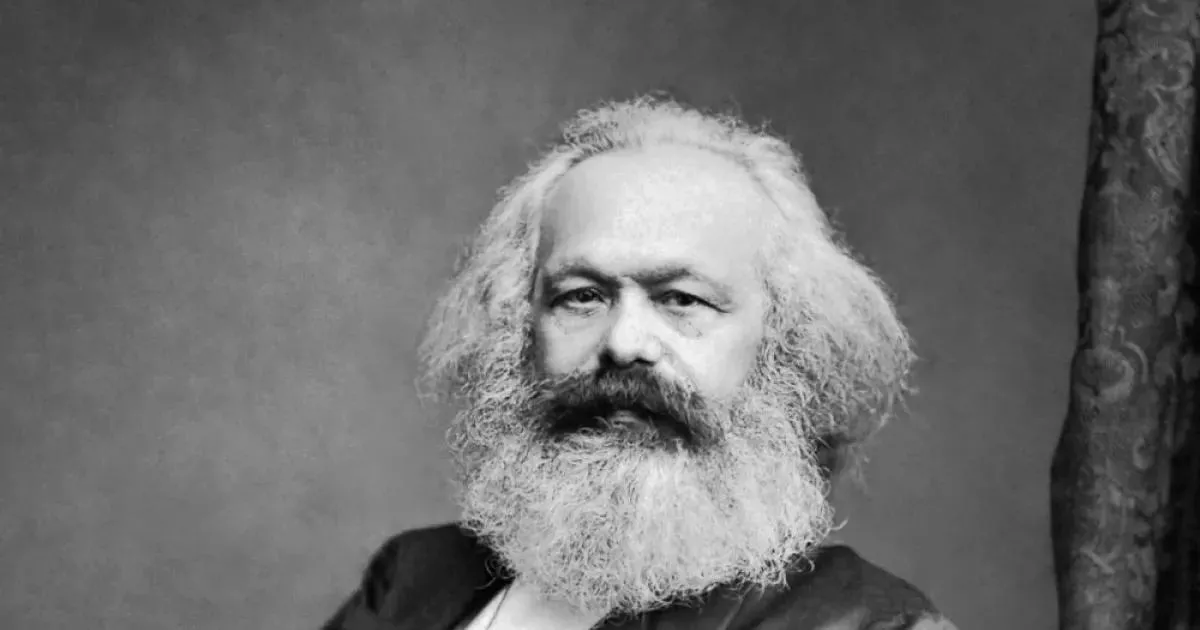
Karl Marx was a German philosopher, economist, and revolutionary socialist whose ideas profoundly impacted the 19th and 20th centuries. He is famous for "The Communist Manifesto" (1848) and "Das Kapital" (1867-1894), which critique capitalism through his theory of historical materialism. Marxism, the body of thought derived from his work, has significantly shaped political and economic ideologies worldwide, advocating for a classless society and challenging traditional power structures.
1905: Publication of Abridged Theories of Surplus Value
In 1905, a German-language abridged edition of Theories of Surplus Value, derived from Marx's Economic Manuscripts of 1861–1863, was published.


1910: Publication of Abridged Theories of Surplus Value
In 1910, a German-language abridged edition of Theories of Surplus Value, derived from Marx's Economic Manuscripts of 1861–1863, was published.
1911: Death of Jenny Laura (Marx) Lafargue
In 1911, Jenny Laura (Marx) Lafargue, one of Karl Marx's daughters, passed away.
1917: Impact of Marx's Ideas after Russian Revolution
In the aftermath of the 1917 Russian Revolution, Marx's ideas had a profound impact on world politics and intellectual thought. His followers have debated the interpretation and application of his concepts, leading to the development of various political theories and academic currents within Marxism.
1932: Publication of The German Ideology
In 1932, The German Ideology, a book co-written by Marx and Engels, was published posthumously. This work critiques Ludwig Feuerbach, Bruno Bauer, Max Stirner, Karl Grün, and other socialists, laying out their philosophy based on materialism. The book, though written in a satirical style, faced censorship and remained unpublished during Marx's lifetime.
1939: Publication of Grundrisse
In 1939, Marx's extensive notes and essays on capital, landed property, wage labor, the state, foreign trade, and the world market were published under the title Grundrisse der Kritik der Politischen Ökonomie, which translates to Outlines of the Critique of Political Economy. These notes, accumulated by 1857, reflect Marx's critique of capitalist production.
1951: English Translation of Abridged Theories of Surplus Value
In 1951, the German-language abridged edition of Theories of Surplus Value was translated into English and published in London.
November 1954: Marx and Family Reburied
In November 1954, Marx and his family were reburied at a new site nearby the original location.
March 1956: Unveiling of Marx's New Tomb
On March 14, 1956, a new tomb for Marx was unveiled. The tomb features the engraved message "Workers of All Lands Unite" from The Communist Manifesto, and "The philosophers have only interpreted the world in various ways—the point however is to change it" from the 11th "Thesis on Feuerbach".
1962: Allegations of Marx fathering a son
In 1962, allegations surfaced claiming that Karl Marx fathered a son named Freddy out of wedlock with his housekeeper, Helene Demuth. This claim is disputed due to a lack of documented evidence.
1963: Publication of Unabridged Theories of Surplus Value in Moscow
In 1963, the complete unabridged edition of Theories of Surplus Value was published as the "fourth volume" of Das Kapital in Moscow.
1971: Publication of Unabridged Theories of Surplus Value in Moscow
In 1971, the complete unabridged edition of Theories of Surplus Value was published as the "fourth volume" of Das Kapital in Moscow.
2007: Retrodiagnosis of Marx's skin disease
In 2007, dermatologist Sam Shuster retrodiagnosed Marx with hidradenitis suppurativa, a recurring infective skin condition, rather than liver problems. Shuster considered the potential psychosocial effects of the disease on Marx's mental state and its possible influence on his theory of alienation.
2013: UNESCO Adds Marx's Documents to Memory of the World Register
In 2013, UNESCO added two documents with Karl Marx's handwriting to its Memory of the World International Register. These documents include his annotated first edition of Das Kapital Volume 1 and a manuscript page from The Communist Manifesto, which are held at the International Institute of Social History in Amsterdam.
2017: Release of The Young Karl Marx Film
In 2017, The Young Karl Marx, a film depicting Marx's life and times, was released and received positive reviews for its historical accuracy and depiction of intellectual life.
May 2018: Unveiling of Marx Statue in Trier
In May 2018, a statue of Karl Marx, created by Chinese sculptor Wu Weishan and donated by the Chinese government, was unveiled in his birthplace of Trier, Germany, to mark the bicentenary of his birth. Jean-Claude Juncker defended Marx's memory.
2024: Value of Marx's Estate Adjusted for Inflation
In 2024, Marx's personal estate was re-evaluated, with its original value of £250 being equivalent to £38,095 in 2024. Also, Engels' estate, from which Marx's daughters received a significant portion, was valued at US$6.8 million in 2024.
Mentioned in this timeline
Germany officially the Federal Republic of Germany is located in...
Inflation in economics signifies a rise in the average price...
Moscow is the capital and largest city of Russia situated...
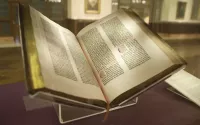
Books are a means of storing information as text or...

UNESCO is a specialized agency of the United Nations UN...
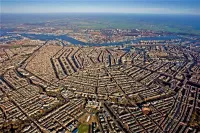
Amsterdam the capital and largest city of the Netherlands boasts...
Trending

3 hours ago Scottie Barnes NBA Fantasy Basketball and Player Prop Betting Outlook
3 hours ago Seattle experiences record-breaking dry October weather conditions

3 hours ago Anthony Black Cleared for Season Debut Against the New York Knicks

3 hours ago Quinn Hughes Nears Potential Contract Extension Agreement With Minnesota Wild
3 hours ago Xavier Worthy Thrives in Expanded Role for Kansas City Chiefs

3 hours ago Paul Reed Joins the Starting Lineup for NBA Team
Popular

Ilhan Omar is a prominent American politician currently serving as...

Ken Paxton is an American politician and lawyer serving as...

Elon Musk is a visionary entrepreneur and engineer known for...

Michael Joseph Jackson the King of Pop was a highly...
Barack Obama the th U S President - was the...
Greg Abbott is the current and th Governor of Texas...