Career Timeline of Ketanji Brown Jackson: Major Achievements and Milestones


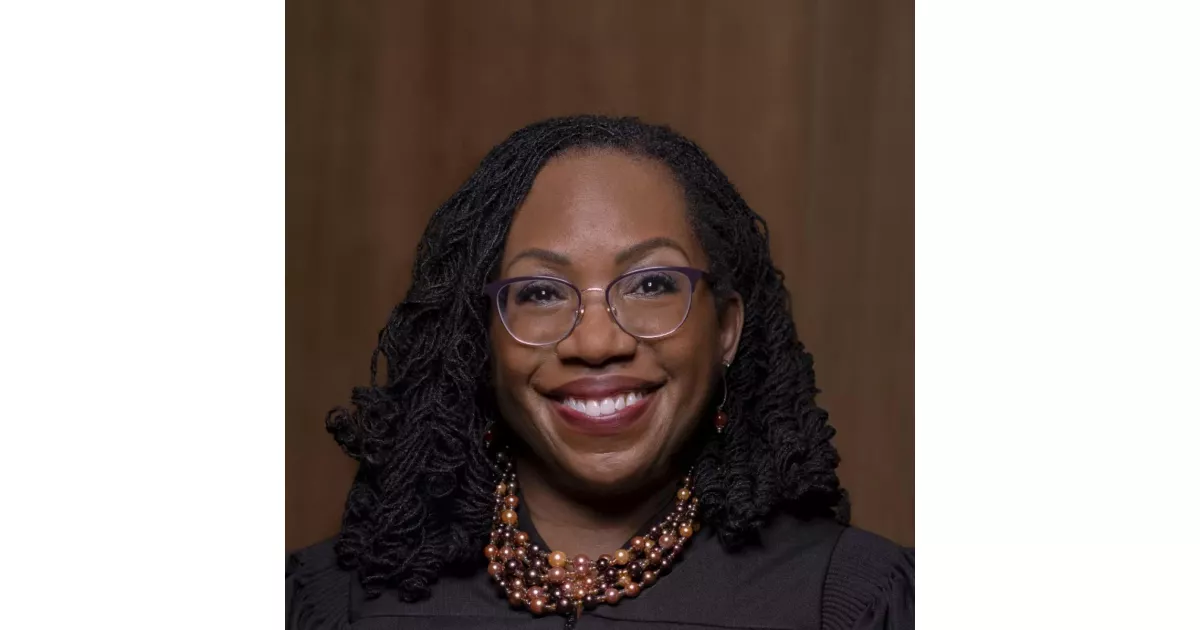
Discover the career path of Ketanji Brown Jackson, from the first major opportunity to industry-changing achievements.
Ketanji Onyika Brown Jackson is an American lawyer and jurist serving as an associate justice of the Supreme Court of the United States. Nominated by President Joe Biden, she was confirmed by the U.S. Senate in 2022. Jackson is the first Black woman, the first former federal public defender, and the sixth woman to hold this position. Her appointment marks a significant milestone in the Supreme Court's history.
1992: Staff Reporter and Researcher for Time Magazine
From 1992 to 1993, Ketanji Brown Jackson worked as a staff reporter and researcher for Time magazine.


1996: Law Clerk to Judge Patti B. Saris
From 1996 to 1997, Ketanji Brown Jackson was a law clerk to Judge Patti B. Saris of the U.S. District Court for the District of Massachusetts.
1997: Law Clerk to Judge Bruce M. Selya
From 1997 to 1998, Ketanji Brown Jackson was a law clerk to Judge Bruce M. Selya of the U.S. Court of Appeals for the First Circuit.
1998: Private Practice at Miller Cassidy Larroca & Lewin
In 1998, Ketanji Brown Jackson spent a year in private practice at the Washington, D.C., law firm of Miller Cassidy Larroca & Lewin, now part of Baker Botts.
1999: Law Clerk to Supreme Court Justice Stephen Breyer
From 1999 to 2000, Ketanji Brown Jackson clerked for Supreme Court Justice Stephen Breyer.
2000: Returned to Private Legal Practice at Goodwin Procter
From 2000 to 2002, Ketanji Brown Jackson returned to private legal practice at the law firm of Goodwin Procter.
2000: End of Clerkship with Justice Stephen Breyer
In 2000, Ketanji Brown Jackson ended her clerkship with Justice Stephen Breyer.
2002: Private Legal Practice at Feinberg & Rozen LLP
From 2002 to 2003, Ketanji Brown Jackson worked under Kenneth Feinberg at the law firm now called Feinberg & Rozen LLP.
2003: Assistant Special Counsel to the United States Sentencing Commission
From 2003 to 2005, Ketanji Brown Jackson was an assistant special counsel to the United States Sentencing Commission.
2003: Start of predecessor's term
In 2003, Michael E. Horowitz had served as Vice Chair of the United States Sentencing Commission until 2009.
2005: Assistant Federal Public Defender
From 2005 to 2007, Ketanji Brown Jackson was an assistant federal public defender in Washington, D.C.
2007: Appellate Specialist at Morrison & Foerster
From 2007 to 2010, Ketanji Brown Jackson was an appellate specialist in private practice at the law firm of Morrison & Foerster.
July 23, 2009: Nomination as Vice Chair of the United States Sentencing Commission
On July 23, 2009, President Obama nominated Ketanji Brown Jackson as vice chair of the United States Sentencing Commission.
November 5, 2009: Favorable Report by Senate Judiciary Committee
On November 5, 2009, the Senate Judiciary Committee favorably reported Ketanji Brown Jackson's nomination as vice chair of the United States Sentencing Commission by voice vote.
February 11, 2010: Confirmation by the Senate
On February 11, 2010, the Senate confirmed Ketanji Brown Jackson's nomination as vice chair of the United States Sentencing Commission by voice vote.
2010: Vice Chairwoman of the United States Sentencing Commission
In 2010, Ketanji Brown Jackson became the vice chairwoman of the United States Sentencing Commission, a position she held until 2014.
2010: End of Role as Appellate Specialist
In 2010, Ketanji Brown Jackson's role as an appellate specialist at Morrison & Foerster came to an end.
September 20, 2012: Nomination as United States District Judge
On September 20, 2012, President Obama nominated Ketanji Brown Jackson to serve as a United States district judge for the District of Columbia.
December 2012: Confirmation Hearing
In December 2012, U.S. Representative Paul Ryan introduced Ketanji Brown Jackson at her confirmation hearing, expressing his unequivocal praise for her intellect, character, and integrity.
February 14, 2013: Favorable Report from Senate Judiciary Committee
On February 14, 2013, the Senate Judiciary Committee favorably reported Ketanji Brown Jackson's nomination as a United States district judge by voice vote.
2013: Appointed as District Judge
In 2013, President Barack Obama appointed Ketanji Brown Jackson to serve as a district judge for the United States District Court for the District of Columbia.
2013: American Meat Institute v. U.S. Department of Agriculture
In 2013, in American Meat Institute v. U.S. Department of Agriculture, Jackson rejected the meat packing industry's request for a preliminary injunction to block a United States Department of Agriculture rule requiring them to identify animals' country of origin, finding that the rule likely did not violate the First Amendment.
2014: End of service on the Sentencing Commission
In 2014, Ketanji Brown Jackson served on the Sentencing Commission until 2014.
2014: End of term at the United States Sentencing Commission
In 2014, Ketanji Brown Jackson's term as vice chairwoman of the United States Sentencing Commission came to an end.
2014: Depomed v. Department of Health and Human Services Ruling
In 2014, in Depomed v. Department of Health and Human Services, Jackson ruled that the Food and Drug Administration (FDA) had violated the Administrative Procedure Act when it failed to grant pharmaceutical company Depomed market exclusivity for its orphan drug Gralise. She concluded that the Orphan Drug Act required the FDA to grant Gralise exclusivity.
2015: Pierce v. District of Columbia Ruling
In 2015, Jackson ruled in Pierce v. District of Columbia that the D.C. Department of Corrections violated the rights of a deaf inmate under the Americans with Disabilities Act because jail officials failed to provide the inmate with reasonable accommodations during his detention in 2012.
2016: Harvard Board of Overseers Member
In 2016, Ketanji Brown Jackson became a member of the Harvard Board of Overseers, a position she held until 2022.
2017: Presented at Edith House Lecture
In 2017, Ketanji Brown Jackson presented at the University of Georgia School of Law's 35th Edith House Lecture.
June 2018: Teen Pregnancy Prevention Program Cases
In April and June 2018, Jackson presided over two cases challenging the Department of Health and Human Services' decision to terminate grants for teen pregnancy prevention programs two years early. She ruled that the decision to terminate the grants early without explanation was arbitrary and capricious.
2018: Dismissal of Malaysia Airlines Flight 370 Lawsuits
In 2018, Jackson dismissed 40 wrongful death and product liability lawsuits stemming from the disappearance of Malaysia Airlines Flight 370. She ruled that under the doctrine of forum non conveniens, the suits should be brought in Malaysia, not the U.S.
2018: American Federation of Government Employees, AFL-CIO v. Trump Ruling
In 2018, Jackson invalidated provisions of three executive orders in American Federation of Government Employees, AFL-CIO v. Trump that would have limited the time federal employee labor union officials could spend with union members. The D.C. Circuit vacated this ruling on jurisdictional grounds in 2019.
2018: Presided over Mock Trial
In 2018, Ketanji Brown Jackson presided over a mock trial hosted by Drexel University's Thomas R. Kline School of Law "to determine if Vice President Aaron Burr was guilty of murdering" Alexander Hamilton.
2018: Panelist at National Constitution Center's Town Hall
In 2018, Ketanji Brown Jackson was a panelist at the National Constitution Center's town hall on Alexander Hamilton's legacy.
2019: Preliminary Injunction in Make The Road New York v. McAleenan
In 2019, Jackson issued a preliminary injunction in Make The Road New York v. McAleenan, blocking a Trump administration rule that would have expanded expedited removal without immigration court hearings for undocumented immigrants.
2019: Committee on the Judiciary v. McGahn Ruling
In 2019, Jackson ruled in favor of the House Committee in Committee on the Judiciary of the U.S. House of Representatives v. McGahn, compelling former White House Counsel Don McGahn to comply with a subpoena for an impeachment inquiry hearing. She held that senior-level presidential aides must appear for testimony even if the president orders them not to do so.
2019: Center for Biological Diversity v. McAleenan Ruling
In 2019, in Center for Biological Diversity v. McAleenan, Jackson held that Congress had stripped federal courts of jurisdiction to hear non-constitutional challenges to the United States Secretary of Homeland Security's decision to waive certain environmental requirements for border wall construction.
August 2020: D.C. Circuit Affirmed Part of Jackson's Decision
In August 2020, the D.C. Circuit affirmed part of Jackson's 2019 decision in Committee on the Judiciary of the U.S. House of Representatives v. McGahn.
2020: Biden's Pledge to Appoint a Black Woman
During the 2020 United States presidential election campaign, Joe Biden pledged to appoint a Black woman to the Supreme Court should a vacancy occur.
2020: Gave Martin Luther King Jr. Day Lecture
In 2020, Ketanji Brown Jackson gave the Martin Luther King Jr. Day lecture at the University of Michigan Law School.
2020: D.C. Circuit Affirms Dismissal
In 2020, the D.C. Circuit affirmed Jackson's ruling dismissing the lawsuits related to the disappearance of Malaysia Airlines Flight 370.
March 30, 2021: Nomination as United States Circuit Judge
On March 30, 2021, President Biden announced his intention to nominate Ketanji Brown Jackson as a United States circuit judge for the District of Columbia Circuit.
April 19, 2021: Nomination Sent to the Senate
On April 19, 2021, Ketanji Brown Jackson's nomination as a United States circuit judge for the District of Columbia Circuit was sent to the Senate.
April 28, 2021: Senate Judiciary Committee Hearing
On April 28, 2021, a hearing on Ketanji Brown Jackson's nomination as a United States circuit judge was held before the Senate Judiciary Committee, where she was questioned about rulings against the Trump administration.
June 4, 2021: McGahn Testified Behind Closed Doors
On June 4, 2021, Don McGahn testified behind closed doors under an agreement reached with the Biden administration, while the case remained pending.
June 17, 2021: End of service as a district judge
On June 17, 2021, Ketanji Brown Jackson's service as a district judge ended when she was elevated to the court of appeals.
2021: Support and Opposition to Potential Supreme Court Nomination
In 2021, Ketanji Brown Jackson's potential nomination to the Supreme Court was supported by civil rights and liberal advocacy organizations and opposed by Republican Party leaders and senators.
2021: Elevation to the United States Court of Appeals
In 2021, President Joe Biden elevated Ketanji Brown Jackson to the United States Court of Appeals for the District of Columbia Circuit.
2021: Joined U.S. Court of Appeals
Justice Jackson joined the U.S. Court of Appeals for the D.C. Circuit in the summer of 2021.
January 2022: Report on Legal Philosophy
In January 2022, The New York Times reported that Justice Jackson had "not yet written a body of appeals court opinions expressing a legal philosophy" because she had recently joined the U.S. Court of Appeals for the D.C. Circuit.
February 25, 2022: Nomination to the Supreme Court
On February 25, 2022, Ketanji Brown Jackson was nominated to the Supreme Court by President Joe Biden. She was later confirmed by the U.S. Senate and sworn into office in the same year.
June 29, 2022: End of Service as Circuit Judge
On June 29, 2022, Ketanji Brown Jackson's service as a circuit judge ended, the day before she was sworn in as an Associate Justice of the United States Supreme Court.
June 30, 2022: Sworn in as Associate Justice
On June 30, 2022, Ketanji Brown Jackson was sworn in as an Associate Justice of the Supreme Court at noon, becoming the first Black woman and the first former federal public defender to serve on the Supreme Court.
September 28, 2022: Assigned as Circuit Justice for the First Circuit
On September 28, 2022, Ketanji Brown Jackson was assigned as the circuit justice for the First Circuit.
2022: End of Service at the United States Court of Appeals
In 2022, Ketanji Brown Jackson ended her service at the United States Court of Appeals for the District of Columbia Circuit.
2022: Speculation of Supreme Court Nomination
In early 2022, news outlets speculated that President Biden would nominate Ketanji Brown Jackson to the U.S. Supreme Court to fill the seat vacated by Justice Breyer.
2022: Most Active Participant in Oral Arguments
Since joining the Court at the beginning of the 2022 term, Justice Jackson was the most active participant in oral arguments, speaking an average of 1,350 words per argument.
February 28, 2023: Authored First Majority Opinion
On February 28, 2023, Justice Jackson authored her first majority opinion for a unanimous court in Delaware v. Pennsylvania, which involved how unclaimed money from MoneyGrams are distributed among individual states.
June 1, 2023: Sole Dissenting Opinion in Glacier Northwest, Inc. v. Teamsters
On June 1, 2023, Justice Jackson wrote the sole dissenting opinion in Glacier Northwest, Inc. v. Teamsters, concerning the power of employers to sue labor unions regarding the destruction of employer property following a strike, arguing for further deference to the National Labor Relations Board.
June 13, 2024: Opinion in Starbucks Corporation v. McKinney
On June 13, 2024, Justice Jackson wrote an opinion, concurring in part and dissenting in part, in Starbucks Corporation v. McKinney, arguing that the majority failed to follow the NLRA's directives of court deference to NLRB authority in labor disputes.
July 8, 2025: Dissent in AFGE v. Trump
On July 8, 2025, in AFGE v. Trump, the Supreme Court issued an emergency order on Trump's federal workforce reorganization, ruling in Trump's favor 8–1, with Justice Jackson the lone dissenter, arguing that Trump's reorganization of the U.S. government was an illegal restructuring of the federal bureaucracy.
Mentioned in this timeline

Barack Obama the th U S President - was the...

Starbucks is an American multinational coffeehouse chain established in Seattle...
Joe Biden served as the th President of the United...

The White House located at Pennsylvania Avenue NW in Washington...

Washington D C the capital of the United States is...
Pennsylvania is a U S state located in the Mid-Atlantic...
Trending

4 hours ago Travis Barker Shares Hospital Photos with Wife Kourtney Kardashian by His Side

4 hours ago Ann Li faces Elina Svitolina at the 2026 Beijing tennis tournament

4 hours ago Keelan Harvick Joins Joe Gibbs Racing for Upcoming NASCAR ARCA Career Milestone

5 hours ago Murdoch Family Navigates Dynamic Media Landscape and Strategic Business Transitions

4 hours ago Critics Review Aaron Sorkin's New Film The Social Reckoning Featuring Jeremy Allen White

5 hours ago Senator Eric Schmitt Faces Criticism Following Viral Gaffe During Jack Smith Hearing
Popular

Ken Paxton is an American politician and lawyer serving as...

Elon Musk is a visionary entrepreneur and engineer known for...

Cristiano Ronaldo widely considered one of the greatest footballers captains...

Shakira Isabel Mebarak Ripoll the Queen of Latin Music is...

Bernie Sanders is a prominent American politician and the senior...

Jameis Winston is an American football quarterback currently playing for...