History of Maldives in Timeline


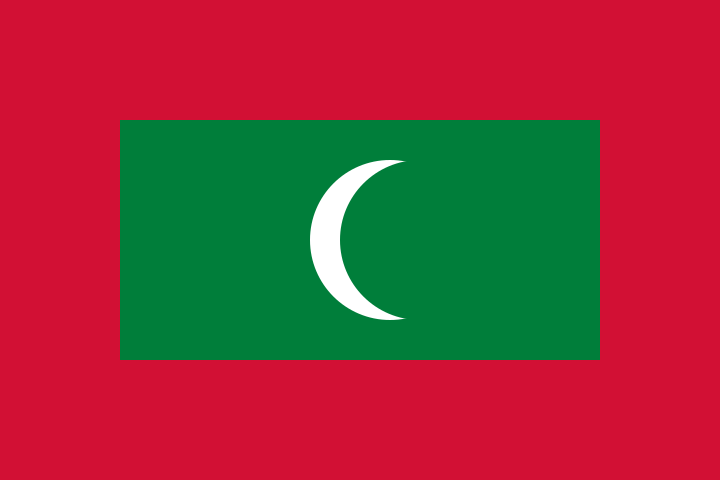
The Maldives, officially the Republic of Maldives, is an archipelagic nation in South Asia, situated in the eastern Arabian Sea within the northern Indian Ocean. Located southwest of Sri Lanka and India, approximately 750 kilometers from mainland Asia, the Maldives consists of a chain of 26 atolls that extend across the equator, from Ihavandhippolhu Atoll in the north to Addu Atoll in the south.
1932: Proclamation of the first Constitution
In 1932, the first Constitution was proclaimed in Maldives, leading to public unrest and the tearing up of the Constitution.


1932: Sultanate becomes elective
In 1932, the sultanate of Maldives became elective.
1953: Declaration of the First Republic
In 1953, the sultanate was suspended and the First Republic was declared in Maldives under President Mohamed Amin Didi.
1954: Restoration of the sultanate
In 1954, the restoration of the sultanate perpetuated the rule of the past in Maldives.
1957: Review of agreement with the United Kingdom
In 1957, the new prime minister, Ibrahim Nasir, called for a review of the agreement with the United Kingdom regarding their military presence.
1959: Formation of the United Suvadive Republic
In 1959, a secessionist movement in the southernmost atolls formed the independent United Suvadive Republic, led by Abdullah Afeef.
1960: Agreement with the United Kingdom for Gan facilities
In 1960, Maldives allowed the United Kingdom to continue using the Gan and Hithadhoo facilities for thirty years, receiving £750,000 for economic development.
July 1965: Agreement ending British authority
On 26 July 1965, an agreement was signed, formally ending British authority on the defence and external affairs of Maldives, leading to independence.
1965: Payment for economic development
From 1960 to 1965, Maldives received £750,000 from the United Kingdom for economic development.
1965: Independence from the United Kingdom
In 1965, Maldives gained independence from the United Kingdom.
1965: Formal title of the Sultan
Until 1965, the formal title of the Sultan was Sultan of Land and Sea, Lord of the twelve-thousand islands and Sultan of Maldives.
November 1967: Vote in parliament to decide Maldives future
In November 1967, a vote was taken in parliament, with 40 out of 44 members voting in favor of Maldives becoming a republic.
March 1968: National referendum on establishing a republic
In March 1968, a national referendum was held, with 93.34% of participants voting in favor of establishing a republic in Maldives.
November 1968: Declaration of the Republic
On November 11, 1968, the republic was declared in Maldives, ending the 853-year-old monarchy and replacing it with a republic under President Ibrahim Nasir.
1968: Establishment of a presidential republic
In 1968, a presidential republic was established in Maldives with an elected People's Majlis.
1968: Republican constitution came into force
In 1968, the republican constitution came into force.
1968: Old penal code
On 16 July 2015, the new penal code replaced the 1968 law.
1970: Constitution amended
In 1970, the republican constitution was amended.
October 1972: Opening of first resort
On October 3, 1972, the first resort in Maldives, Kurumba Maldives, welcomed its first guests.
1972: Tourism transformed economy
According to the Ministry of Tourism, the emergence of tourism in 1972 transformed the economy, moving rapidly from dependence on fisheries to tourism.
1972: Constitution amended
In 1972, the republican constitution was amended.
1972: First tourist resorts opened
The first tourist resorts were opened in 1972 with Bandos Island Resort and Kurumba Village (the current name is Kurumba Maldives), which transformed Maldives' economy.
1972: Increased number of resorts
The number of resorts increased from 2 to 92 between 1972 and 2007.
1975: Arrest and exile of Prime Minister Ahmed Zaki
In 1975, elected Prime Minister Ahmed Zaki was arrested and exiled to a remote atoll due to political infighting.
1975: Constitution amended
In 1975, the republican constitution was amended.
1976: Closure of British base
In 1976, the British base in Maldives was closed as part of the larger British withdrawal of permanently stationed forces 'East of Suez'.
December 1977: First accurate census
In December 1977, the first accurate census showed that 142,832 people living in Maldives.
1978: Gayoom begins his 30-year role as president
In 1978, Maumoon Abdul Gayoom began his 30-year role as president of Maldives, winning six consecutive elections without opposition.
1978: Nasir flees to Singapore
In 1978, with support for his administration faltering, Nasir fled to Singapore with millions of dollars from the treasury.
1980: Coup attempt by Nasir supporters
In 1980, a coup attempt by Nasir supporters tried unsuccessfully to topple the government of Maldives.
1982: Joined the Commonwealth
In 1982, the republic joined the Commonwealth.
1983: Coup attempt by Nasir supporters
In 1983, a coup attempt by Nasir supporters tried unsuccessfully to topple the government of Maldives.
November 1988: Failed coup d'état
In November 1988, a coup d'état led by Ibrahim Lutfee and Sikka Ahmed Ismail Manik was defeated by the National Security Services of Maldives, with assistance from the Indian Air Force and Navy in Operation Cactus.
1988: Authorities claim sea rise will cover nation
In 1988, Maldivian authorities claimed that sea rise would "completely cover this Indian Ocean nation of 1,196 small islands within the next 30 years."
1988: Coup attempt involving PLOTE mercenaries
In 1988, a coup attempt involved a mercenary force who seized the airport until Indian troops intervened to restore order in Maldives.
1996: Official progress monitor
Since 1996, Maldives has been the official progress monitor of the Indian Ocean Commission.
November 1997: New constitution
On 27 November 1997 it was replaced by another Constitution assented to by then-President Maumoon.
January 1998: Constitution in force
On 1 January 1998 the constitution came into force.
1998: Reefs would die
Before 1998, Maldivians never thought that this reef would die.
1998: Coral bleaching due to El Niño
In 1998, sea-temperature warming of as much as 5 °C (9.0 °F) due to a single El Niño phenomenon event caused coral bleaching and killed two-thirds of the nation's coral reefs.
2002: Maldives began to express interest
In 2002, Maldives began to express interest in the commission.
2003: Founding of the Maldivian Democratic Party
In 2003, Mohamed Nasheed founded the Maldivian Democratic Party (MDP) and pressured Maumoon into allowing political reforms.
December 2004: Indian Ocean tsunami devastates Maldives
On December 26, 2004, a tsunami following the Indian Ocean earthquake devastated Maldives, causing widespread damage and resulting in 108 deaths.
2004: Economic downturn following tsunami
In 2004, Maldives experienced an economic downturn following the tsunami.
2004: Corals regenerate
In 2004, scientists witnessed corals regenerating using electrified cones anywhere from 20–60 feet (6.1–18.3 m) below the surface to provide a substrate for larval coral attachment.
2007: 8,380,000 tourists had visited Maldives
As of 2007, over 8,380,000 tourists had visited Maldives.
2007: IPCC predicts sea level rise
In 2007, the Intergovernmental Panel on Climate Change's report predicted the upper limit of the sea level rise will be 59 centimetres (23 in) by 2100, which means that most of the republic's 200 inhabited islands may need to be abandoned.
August 2008: Current Constitution of Maldives ratified
On 7 August 2008, the current Constitution of Maldives was ratified by President Maumoon.
2008: Had not applied for membership
As of 2008 Maldives had not applied for membership.
2008: 89 resorts
As of 2008, 89 resorts in Maldives offered over 17,000 beds and hosted over 600,000 tourists annually.
2008: Approval of new constitution and first direct presidential elections
In 2008, a new constitution was approved, and the first direct presidential elections were held in Maldives, which were won by Nasheed.
2008: Constitution on Islam
The 2008 constitution says that the republic "is based on the principles of Islam" and that "no law contrary to any principle of Islam can be applied".
2009: Underwater cabinet meeting
In 2009, Mohamed Nasheed hosted "the world's first underwater cabinet meeting" to raise awareness of the threats posed by climate change.
2009: Nasheed speaks at International Climate Talks
In 2009, at the International Climate Talks, Nasheed made a statement regarding climate change.
2009: Reform process
In its 2011 Freedom in the World report, Freedom House declared Maldives "Partly Free", claiming a reform process that had made headway in 2009 and 2010 had stalled.
2010: Reform process
In its 2011 Freedom in the World report, Freedom House declared Maldives "Partly Free", claiming a reform process that had made headway in 2009 and 2010 had stalled.
2011: Freedom in the World report
In its 2011 Freedom in the World report, Freedom House declared Maldives "Partly Free", claiming a reform process that had made headway in 2009 and 2010 had stalled.
2011: Growth of social and political unrest
In late 2011, social and political unrest grew in Maldives, following opposition campaigns.
February 2012: Nasheed's resignation
In February 2012, Nasheed controversially resigned from office after a mutiny by police and army, and Vice-President Mohamed Waheed Hassan Manik was sworn in as president.
2012: Nasheed warns of underwater country
In 2012, former president Mohamed Nasheed said that if carbon emissions continued at the current rate, his country would be underwater in seven years.
2012: Human rights practices
The United States Bureau of Democracy, Human Rights and Labor claims in their 2012 report on human rights practices in the country that the most significant problems are corruption, lack of religious freedom, abuse, and unequal treatment of women.
2013: Contested presidential election results
In 2013, the Maldivian presidential election results were highly contested, and Abdulla Yameen assumed the presidency after a re-run vote.
July 2015: New penal code
On 16 July 2015, a new penal code came into effect, replacing the 1968 law.
2015: Assassination attempt on President Yameen
In late 2015, President Yameen survived an assassination attempt, and Vice-president Mohamed Jameel Ahmed was removed from office.
October 2016: Withdrawal from the Commonwealth
In October 2016, Maldives announced its withdrawal from the Commonwealth in protest at allegations of human rights abuse and failing democracy.
2016: Severe coral bleaching incident
In 2016, the coral reefs of Maldives experienced a severe bleaching incident, with up to 95% of coral around some islands dying.
November 2018: Ibrahim Mohamed Solih wins election
In November 2018, Ibrahim Mohamed Solih won the most votes in the election and was sworn in as the new president of Maldives.
2018: Following his election as president
Following his election as president in 2018, Ibrahim Mohamed Solih's administration sought to rejoin the Commonwealth after showing evidence of democratic reform.
2018: UN condemns crackdown
In 2018, the UN Human Rights chief termed the ruling Progressive Party of Maldives' tensions with opposition parties and the subsequent crackdown as an "assault on democracy".
April 2019: MDP wins parliamentary election
In April 2019, The Maldivian Democratic Party (MDP) of President Ibrahim Mohamed Solih won a landslide victory in the parliamentary election, taking 65 of 87 seats.
July 2019: Adeeb freed, then placed under travel ban
In July 2019, Adeeb was freed by courts in Male after his conviction on charges of terrorism and corruption was overruled, but he was then placed under a travel ban after the state prosecutor appealed the order in a corruption and money laundering case.
November 2019: Abdulla Yameen sentenced to prison
In November 2019, former president Abdulla Yameen was sentenced to five years in prison for money laundering.
2019: Signed treaty
In 2019, Maldives signed the UN treaty on the Prohibition of Nuclear Weapons.
2019: 1.7 million visitors
In 2019, over 1.7 million visitors came to the islands.
February 2020: Rejoined Commonwealth
On 1 February 2020, Maldives was readmitted to the Commonwealth.
February 2020: Readmission to the Commonwealth
On February 1, 2020, Maldives was readmitted to the Commonwealth after demonstrating evidence of reform and functioning democratic processes.
2020: Study on island adaptation to sea level rise
In 2020, a three-year study at the University of Plymouth found that tides move sediment to create a higher elevation, which could help low-lying islands adjust to sea level rise. The study also reported that sea walls were compromising islands' ability to adjust and that island drowning is inevitable for islands with coastal structures like sea walls.
January 2021: High Court upholds Yameen's jail sentence
In January 2021, the High Court upheld the jail sentence of former president Abdulla Yameen for money laundering.
November 2021: Supreme Court overturns Yameen's conviction
In November 2021, the Supreme Court overturned former president Abdulla Yameen's conviction for money laundering.
2022: Mega-yachts sought refuge
As a result of sanctions imposed upon the Russian oligarchs by the West in response to the 2022 Russian invasion of Ukraine, many of them sought refuge for their mega-yachts in Maldives.
2022: Population Census
In 2022, the Maldives population was recorded at 515,132, making it the second least populous country in Asia.
October 2023: Mohamed Muizzu sworn in as President
On 17 October 2023, Mohamed Muizzu was sworn in as the eighth President of the Republic of Maldives after winning the presidential election.
November 2023: Mohamed Muizzu becomes president
In November 2023, Mohamed Muizzu became the current president serving since November 17.
April 2024: PNC wins parliamentary election
In April 2024, President Mohamed Muizzu's pro-China People's National Congress (PNC) won 66 seats in the Maldivian parliamentary election, gaining a super-majority with its allies.
June 2024: Ban on Israeli passport holders
In June 2024, the government of Maldives decided to ban Israeli passport holders from entering the country, as a response to the ongoing Gaza war.
2024: PNC won a super-majority
At the 2024 parliamentary election, the People's National Congress (PNC) won a super-majority over the 93 constituencies.
2024: Yameen freed, new trial ordered
In 2024, ex-President Abdulla Yameen Abdul Gayoom was freed from his 11-year conviction, and the High Court ordered a new trial.
Mentioned in this timeline
India officially the Republic of India is a South Asian...
China officially the People's Republic of China PRC is located...
News encompasses current events communicated through various media including word...
Australia officially the Commonwealth of Australia is a country encompassing...
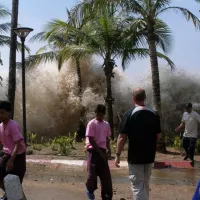
A tsunami is a series of powerful waves caused by...
Trains are a connected series of vehicles traveling on railway...
Trending
Capital One is a major American bank holding company established in headquartered in McLean Virginia It primarily operates in the...
1 year ago Youngkin Declares Virginia Screen-Free Week: Encouraging Families to Unplug and Reconnect.
19 days ago Jessica Pegula to face Starodubtseva in Charleston Open final for championship.

2 days ago Rafael Jódar competes in Mutua Madrid Open 2026, aiming for higher level.
15 days ago Trump's Attempt to Disrupt Ivanka's Wedding with Kushner, Revealed by Ex-Adviser
2 hours ago Mboko faces McNally in Madrid Open: Predictions and match analysis.
Popular
William Franklin Graham III known as Franklin Graham is an...
Kashyap Pramod Patel known as Kash Patel is an American...
Lindsey Graham is an American politician and attorney who has...
Paula White-Cain is a prominent American televangelist and key figure...
George Soros is a Hungarian-American investor and philanthropist with a...

Michael Joseph Jackson the King of Pop was a highly...