


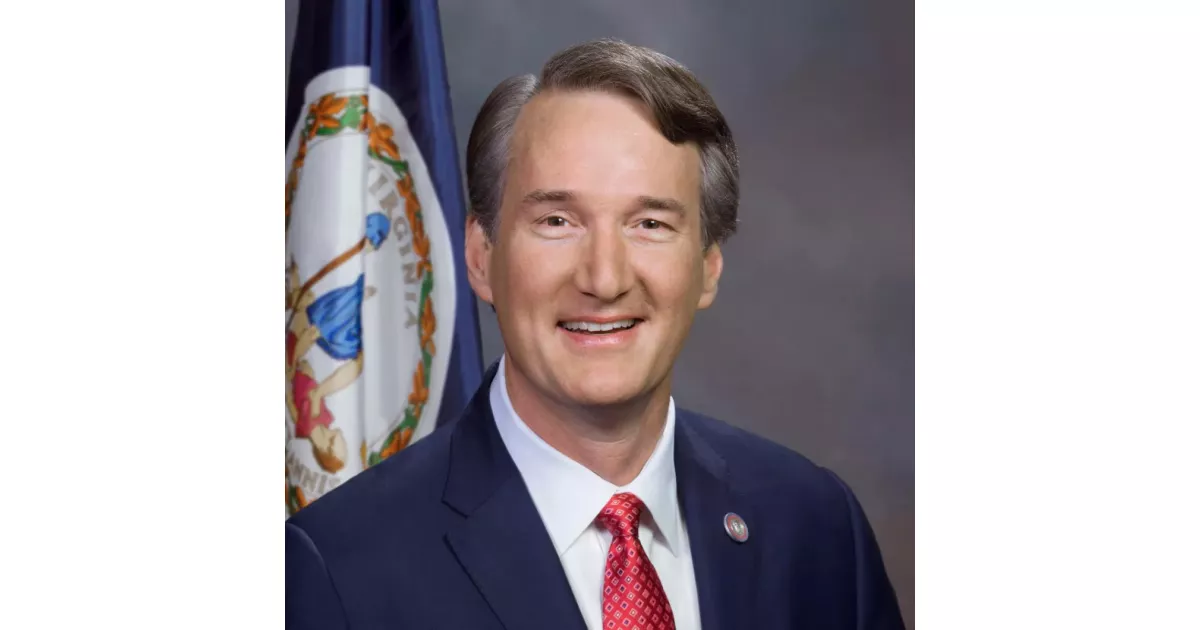
Glenn Youngkin is an American politician and businessman. He served as the 74th Governor of Virginia from 2022 to 2026. Prior to entering politics, Youngkin spent 25 years at The Carlyle Group, a private equity firm, eventually becoming its co-CEO in 2018. A member of the Republican Party, his election marked a shift in Virginia's political landscape.
December 9, 1966: Glenn Youngkin Born
On December 9, 1966, Glenn Allen Youngkin was born. He later became a politician and businessman, serving as the 74th governor of Virginia.


1985: Graduation from Norfolk Academy
In 1985, Glenn Youngkin graduated from Norfolk Academy in Norfolk, Virginia. He had received numerous high school basketball honors.
1985: VBA Gubernatorial Debate History
On July 12, 2021, Youngkin declined to face McAuliffe in the Virginia Bar Association debate, citing his objection to the moderator. The VBA had held a gubernatorial debate every election year since 1985.
1990: Graduation from Rice University
In 1990, Glenn Youngkin graduated from Rice University with a Bachelor of Arts in managerial studies and a Bachelor of Science in mechanical engineering.
1990: Joined First Boston
In 1990, after graduating from Rice, Glenn Youngkin joined the investment bank First Boston, where he worked on mergers and acquisitions and capital market financing.
1992: Left Credit Suisse First Boston
In 1992, Glenn Youngkin left Credit Suisse First Boston (formerly First Boston) to pursue an MBA.
1994: MBA from Harvard Business School
In 1994, Glenn Youngkin earned a Master of Business Administration (MBA) degree from Harvard Business School.
1994: Joined McKinsey & Company
In 1994, after receiving his MBA, Glenn Youngkin joined the management consulting firm McKinsey & Company.
August 1995: Joined The Carlyle Group
In August 1995, Glenn Youngkin joined the Washington, D.C. private-equity firm The Carlyle Group.
1999: Named Partner and Managing Director
In 1999, Glenn Youngkin was named a partner and managing director of Carlyle.
2000: Managed UK Buyout Team
From 2000 to 2005, Glenn Youngkin managed The Carlyle Group's United Kingdom buyout team.
2005: Managed Global Industrial Sector Investment Team
From 2005 to 2008, Glenn Youngkin managed The Carlyle Group's global industrial sector investment team.
2006: Daniel G. LeBlanc's nomination rejected
In 2006, Daniel G. LeBlanc, an AFL–CIO chief nominated by Tim Kaine to serve as Secretary of the Commonwealth, was rejected by Republicans.
April 2008: Focused on Carlyle's Strategy
In April 2008, Carlyle's founders asked Glenn Youngkin to step back from deal-making to focus on the firm's broader strategy.
2008: Moved to Broader Strategy Role
In 2008, Carlyle's founders asked Glenn Youngkin to step back from deal-making to focus on the firm's broader strategy.
2009: Republicans Prevailing in Virginia
Before the 2021 election, Republicans had not prevailed in a statewide race in Virginia since 2009.
2009: Chaired Operating Committee
In 2009, Glenn Youngkin chaired a seven-person operating committee at Carlyle, which oversaw the non-deal, day-to-day operations of the firm. Youngkin and Daniel Akerson also joined the firm's executive committee.
2009: First Republican Governor since McDonnell
In 2021, Glenn Youngkin became the state's first Republican governor since Bob McDonnell in 2009.
2010: Youngkins help found Holy Trinity Church
In 2010, Glenn Youngkin and his wife helped found Holy Trinity Church, which initially met in their basement in McLean, Virginia.
2010: Joined Carlyle's Management Committee
In 2010, Glenn Youngkin joined the management committee at The Carlyle Group.
March 2011: Became COO
In March 2011, Glenn Youngkin became chief operating officer of the Carlyle Group.
June 2014: Stepped down as COO
Glenn Youngkin was chief operating officer of the Carlyle Group from March 2011 until June 2014.
June 2014: Became Co-President and Co-COO
In June 2014, Glenn Youngkin and Michael J. Cavanagh became the co-presidents and co-chief operating officers of The Carlyle Group.
2014: McAuliffe's Governorship
Terry McAuliffe had previously served as governor from 2014 through 2018.
May 2015: Became President and COO
In May 2015, Michael J. Cavanagh left The Carlyle Group, leaving Glenn Youngkin as president and COO of the firm.
2016: McAuliffe vetoes "Beloved Bill"
In 2016, Governor McAuliffe vetoed the "Beloved Bill", which would have allowed parents to opt their children out of educational material they deemed sexually explicit. The bill originated following a conservative activist's concern about the inclusion of "Beloved" in her son's AP English class.

October 2017: Named Co-CEO
In October 2017, The Carlyle Group announced that Glenn Youngkin and Kewsong Lee would become co-CEOs effective January 1, 2018.
2017: McAuliffe vetoes "Beloved Bill" again
In 2017, Governor McAuliffe again vetoed the "Beloved Bill", which would have allowed parents to opt their children out of educational material they deemed sexually explicit. The bill originated following a conservative activist's concern about the inclusion of "Beloved" in her son's AP English class.
January 1, 2018: Became Co-CEO
On January 1, 2018, Glenn Youngkin and Kewsong Lee became co-CEOs of The Carlyle Group.
2018: Donated to Cruz's Campaign
Glenn Youngkin had previously donated to Ted Cruz's 2018 re-election campaign.
2018: Became Co-CEO
In 2018, Glenn Youngkin became co-CEO at The Carlyle Group, a private equity firm, after spending 25 years with the company.
2018: Marcus-David Peters Killing
In 2018, the killing of Marcus-David Peters in Richmond, lead to the creation of the Marcus alert system.
2018: End of McAuliffe's Governorship
Terry McAuliffe had previously served as governor from 2014 through 2018.
September 2020: Retired from The Carlyle Group
Glenn Youngkin retired from The Carlyle Group at the end of September 2020, after serving as co-CEO for about 30 months.
2020: Comments on 2020 Election
Before the Republican convention, Youngkin "toed a delicate line when asked if Biden was legitimately elected". Amanda Chase, who advanced conspiracy theories about the 2020 presidential election, acted as a campaign surrogate for Youngkin after losing the Republican primary to him.
2020: Youngkin founds Virginia Ready Initiative
In 2020, Glenn Youngkin and his wife founded a nonprofit organization called Virginia Ready Initiative. The initiative focuses on connecting unemployed people in Virginia with job-training programs and potential employers.
2020: Northam Signs Bill on Transgender Student Policies
In 2020, Governor Northam signed a bill regarding policies for transgender students, requiring that they address common issues in accordance with evidence-based best practices and protect students from bullying and harassment. However, the bill did not specify the exact policies, leading to later disputes over whether Youngkin's policies met these criteria.
2020: Northam signed bipartisan bill
In 2020, Northam signed a bipartisan bill that required that policies pertaining to transgender students be in compliance throughout all school districts with "model policies" developed by the Virginia Department of Education.
2020: Early release program expansion signed into law
In 2020, Ralph Northam, Youngkin's predecessor, signed legislation that expanded the early release program. It allowed inmates in Virginia to earn time off their sentences through good behavior credits, raising the cap on how many credits could be earned for most inmates. These credits could be used by inmates convicted of violent crimes to reduce any concurrent or consecutive sentences that had been imposed for nonviolent crimes.
2020: Trump's False Claims
In 2020, Trump made false claims about the election which led to Youngkin campaigning for both sides of the Republican party.
2020: Northam signs law affirming transgender students
In 2020, a state law was signed by Youngkin's predecessor, Ralph Northam, requiring that all Virginia public schools adopt regulations affirming of transgender students. Youngkin has been critical of these protections, including opposing teachers using preferred pronouns and transgender girls playing on girls' sports teams.
2020: George Floyd Protests
In 2020, the George Floyd Protests happened which led to the Marcus alert system creation.
2020: Early release program expansion approved by Northam
In 2020, the expanded early release program was approved by Governor Northam, going into effect on July 1, 2022. The newly available credits applied retroactively, potentially releasing approximately 550 inmates convicted of violent crimes.
2020: Voter Coalition
Youngkin's victory in the 2021 election was attributed to a coalition of voters, including suburban residents who had supported Joe Biden in 2020 and Trump supporters.
January 2021: Declared Candidacy for Governor
In January 2021, Glenn Youngkin declared that he would seek the Republican Party of Virginia's nomination for governor of Virginia.
April 2021: Officials clarify Virginia Math Pathways Initiative design
In April 2021, officials within the Northam administration clarified that the Virginia Math Pathways Initiative was not designed to eliminate advanced math classes at any grade level. This clarification came after concerns were raised regarding the program's potential impact on advanced math courses.
May 10, 2021: Won Republican Nomination
On May 10, 2021, Glenn Youngkin won the Republican nomination at the party's state convention after multiple rounds of ranked-choice voting.
July 12, 2021: Declined Virginia Bar Association Debate
On July 12, 2021, Glenn Youngkin declined to face Terry McAuliffe in the Virginia Bar Association debate due to an objection to the moderator.
July 2021: Youngkin on Abortion Rights
In July 2021, while running for governor, Youngkin was caught on a hot mic stating that he would "start going on offense" against abortion rights if elected but would largely avoid the topic until then to win independent votes.
August 2021: Youngkin proposes tax cuts during campaign
In late August 2021, during his campaign, Glenn Youngkin proposed a series of tax cuts, including eliminating the grocery tax, suspending the gas tax increase, offering a one-time income tax rebate, doubling the standard income tax deduction, cutting the retirement tax on veterans' income, requiring voter approval for local real estate property tax increases, and offering a tax holiday for small businesses. These proposals would have totaled $1.8 billion in one-time tax cuts and $1.4 billion in recurring tax cuts. He proposed paying for the cuts with the state's budget surplus.
September 2021: Youngkin's net worth estimated at $440 million
As of September 2021, Glenn Youngkin's estimated net worth was $440 million. He contributed $20 million of his own money to his race for governor.
November 2, 2021: Defeated McAuliffe
On November 2, 2021, Glenn Youngkin defeated Terry McAuliffe in the Virginia gubernatorial election, with a margin of 50.6% to 48.6%.
December 2021: Slow Cabinet Assembly
According to The Washington Post, Youngkin assembled his cabinet at a slower pace than prior Virginia governors. Commenting on this process, the publication wrote in December 2021, "The slow pace has turned the quadrennial parlor game of predicting Cabinet picks into a far more protracted and opaque process.
December 20, 2021: Began Nominating Cabinet
Glenn Youngkin began nominating his sixteen-member cabinet on December 20, 2021, but did not finish the process until after his inauguration.
2021: Implementation of the Marcus Alert System
In 2021, Certain localities in Virginia began adopting the Marcus alert system.
2021: Youngkin's Height in 2021
In 2021, Glenn Youngkin stated his height as 6 feet 5 inches. During his time as a college basketball player, his height was listed as 6 feet 7 inches.
2021: Won Republican Primary
In 2021, Glenn Youngkin won the Republican primary for governor of Virginia and defeated former Democratic governor Terry McAuliffe in the general election.
2021: "Beloved Bill" becomes focal point of gubernatorial election
In 2021, the "Beloved Bill" became one of the focal points of Virginia's gubernatorial election, with Youngkin identifying reviving the bill as one of the key promises of his campaign. The bill originated following a conservative activist's concern about the inclusion of "Beloved" in her son's AP English class.
January 2022: Virginia Ceases Contact Tracing
In January 2022, the Virginia Department of Health, under Youngkin's authority, became one of the first states to cease efforts at contact tracing every positive case of COVID-19, citing the increased difficulty of contact tracing the Omicron variant.
January 19, 2022: Youngkin finished his cabinet nominations
On January 19, 2022, Glenn Youngkin completed his cabinet nominations by choosing a chief diversity officer. This position was initially created by his predecessor, Ralph Northam, due to a scandal, suggesting Youngkin's delay caused speculation about potentially removing the role.
January 21, 2022: Youngkin set up an email tipline
On January 21, 2022, Governor Youngkin established an email tipline for reporting "divisive practices" in Virginia schools, concurrent with his executive order against school mask mandates.
January 26, 2022: Youngkin's spokesperson defended the tipline
On January 26, 2022, a spokesperson for Youngkin tweeted that critics of the tipline had mischaracterized it and described the tipline as "a customary constituent service."
February 3, 2022: Youngkin explained administration response to tipline complaints
On February 3, 2022, Youngkin mentioned his administration was "responding" to complaints submitted to the tipline, without detailing potential actions against teachers.
February 16, 2022: Youngkin Signs Bill Making Masking Optional
On February 16, 2022, Youngkin signed a bill that made masking optional in all public schools throughout Virginia, which passed along mostly party lines and took effect on March 1.
February 21, 2022: Extension of State of Emergency
On February 21, 2022, Youngkin extended a limited state of emergency that had been implemented by the Northam administration to increase hospital capacity and allow medical professionals licensed in other states to practice in Virginia. The extension was originally set to last until February 21, 2022 but was renewed through March 22 of that year.
March 23, 2022: Federal Judge Ruling on Mask Mandates
On March 23, 2022, a federal judge decided the lawsuit by ruling that school districts in Virginia could choose to require masking in areas frequented by the plaintiffs. The ruling did not overturn Youngkin's executive order or the state law and only applies to school systems attended by the plaintiffs.
April 2022: Youngkin signs bill on sexually explicit content review
In early April 2022, Youngkin signed a bill allowing Virginia school parents to review and opt their children out of any educational material containing "sexually explicit content," with alternative material provided. Democrats criticized the bill for taking control over education away from local school systems and for its broad definition of "sexually explicit content".
May 2022: Youngkin Scales Back Telework Policy
In May 2022, Youngkin announced that on July 5 of that year, he would be scaling back the telework policy for Virginia's executive branch employees, which had been expanded two years earlier by Northam in response to the pandemic. Under Youngkin's policy, those employees can telework with varying levels of approval depending on the number of days.
May 2022: Youngkin urges political diversity in college hiring
In May 2022, Youngkin sent a letter to the Council of Presidents overseeing Virginia colleges and universities, urging mandatory political diversity in their hiring practices. He also introduced a budget amendment requiring state public colleges and universities to promote "free speech and diversity of thought on [their] campuses."
May 2022: Youngkin Calls for Federal Intervention
In May 2022, following the leaked draft opinion of Dobbs v. Jackson Women's Health Organization, Youngkin joined Maryland Governor Larry Hogan in calling on the federal government to intervene against protests targeting the homes of conservative Supreme Court Justices living in Virginia and Maryland.
June 2022: Youngkin Introduces Budget Amendment
In June 2022, Youngkin responded to the protests by introducing an amendment to the state budget that, if adopted, would have made it a felony in Virginia to participate in any protest seeking to intimidate or influence a judge. However, the budget amendment was defeated after receiving bipartisan opposition in the state legislature.
July 1, 2022: Expanded early release program takes effect
On July 1, 2022, the expanded early release program approved in 2020 took effect. About 550 inmates convicted of violent crimes were set to be released due to the retroactive application of the new credits.
July 2022: Youngkin's amendment prevents inmate release
In July 2022, Youngkin's amendment, approved shortly before the inmates' planned release, prevented the release of approximately 550 inmates convicted of violent crimes, who had been informed of their impending release.
August 2022: Revising Virginia's educational standards
In August 2022, Youngkin enlisted the Thomas B. Fordham Institute to assist in revising Virginia's educational standards for history and social sciences. Subsequently, the Virginia Department of Education released a proposal for those revisions, which aimed to simplify and improve the state's educational standards, but it faced considerable opposition.
August 2022: Attempt to Withdraw from Regional Greenhouse Gas Initiative
In August 2022, the Youngkin administration announced its intention to withdraw Virginia from the Regional Greenhouse Gas Initiative by the end of 2023 without legislative approval, despite likely legal challenges.
September 2022: Youngkin administration announced repeal of transgender students regulations
In September 2022, the Youngkin administration declared the repeal of regulations for transgender students in Virginia schools, reversing a bipartisan bill from 2020.
October 2022: Youngkin Opposes COVID-19 Vaccine Mandate for Schools
In October 2022, after the Centers for Disease Control and Prevention recommended that the COVID-19 vaccine be added to each state's list of required immunizations for schoolchildren, Youngkin stated that he would oppose any effort by the legislature to implement the recommendation.
October 2022: Youngkin Administration Places Model Policies on Hold
In October 2022, the Youngkin administration put its model policies on hold pending further review, which were initially set to take effect that month.
November 2022: Lawsuit concluded with settlement
In November 2022, the lawsuit concluded with a settlement that granted the media outlets access to 350 of the emails, representing a small portion of the total number. The Youngkin administration revealed that it had closed down the tipline in September.
December 2022: Mask Mandate Settlement
Following an appeal by the Youngkin administration, a settlement was reached in December 2022. The settlement allows mask mandates under similar terms to those established by the March court ruling.
December 2022: Settlement Reached on Mask Mandates
In December 2022, the Youngkin administration reached a settlement with plaintiffs in the ACLU lawsuit regarding mask mandates. The settlement allows mask mandates to be implemented in areas frequented by the plaintiffs, but also allows alternative seating or class assignments for any student impacted by such a mandate who does not want to wear a mask.
2022: Youngkin Campaigns for Republicans
During the 2022 United States elections, Youngkin campaigned for Republicans in other states, supporting candidates who both embraced and rejected Trump's false claims about the 2020 election.
2022: Youngkin fails to enact local real estate tax proposal
During the 2022 legislative session, Youngkin failed to enact a proposal that would have required Virginia localities with rising real estate values to gain approval through public referendums for any increases in revenue resulting from local real estate taxes or else lower their local real estate tax rates.
2022: Allocation for School Construction and Maintenance
In 2022, $1.25 billion was allocated in the biennial state budget for school construction and maintenance. Although this exceeded the amount proposed in Northam's outgoing budget, it is still a fraction of the $25 billion estimated by the Virginia Department of Education as necessary to fully replace the state's oldest schools.
2022: 74th Governor of Virginia
In 2022, Glenn Youngkin became the 74th Governor of Virginia.
2022: Youngkin introduced amendment to limit early inmate release
In 2022, Glenn Youngkin introduced an amendment to the state budget, limiting the number of inmates eligible for an expanded early release program. The program allowed inmates to earn time off for good behavior. The amendment made inmates convicted of violent crimes fully ineligible for the expanded program.
2022: Youngkin donates first and second quarter gubernatorial salary to charities
In 2022, Governor Youngkin donated his salary for the first quarter to the Virginia Law Enforcement Assistance Program and his salary for the second quarter to the Virginia Veterans Services Foundation.
2022: Youngkin signs legislation regarding voter roll maintenance and absentee ballot reporting
In 2022, Governor Youngkin signed bipartisan legislation requiring the removal of deceased voters from Virginia's electoral rolls on a weekly basis, changing from the previous monthly basis. Also in 2022, Youngkin signed legislation altering the reporting of absentee ballots, requiring them to be reported precinct-by-precinct instead of as part of a single, at-large precinct.
2022: Bill to Reverse Admissions Reforms in Governor's Schools
In 2022, Youngkin advocated for a bill to reverse reforms in admissions processes at Governor's Schools like Thomas Jefferson High School and Maggie L. Walker Governor's School, which aimed to increase racial diversity. The bill, which characterized the use of geographic and socioeconomic factors as proxy discrimination, passed in the House but failed in the Senate. Separately, in 2022 Youngkin signed a bill banning Governor's Schools from discriminating based on race, sex, color, ethnicity, or national origin.
2022: Youngkin signs state budget with tax cuts
In 2022, Youngkin signed a $165 billion state budget featuring $4 billion in tax cuts. The budget included an increase in the standard deduction for personal income tax, one-time tax rebates, and a partial elimination of Virginia's grocery tax. It also included a tax exemption for military pensions and made a portion of the earned income tax credit refundable.
2022: Signing of Biennial State Budget
In 2022, Youngkin signed a biennial state budget allocating $19.2 billion to education, a record for the state even when adjusted for inflation. This figure surpassed the $16.95 billion initially proposed by Republicans. This budget commitment was part of a compromise with Democrats, who agreed to enact several of Youngkin's tax cut proposals in exchange for increased education spending.
2022: Bill Bans Ticket Quotas
In 2022, Youngkin signed a bill banning law enforcement agencies in Virginia from using quotas for ticket-writing or arrests. The bill also states that the number of arrests made or summonses issued by a law-enforcement officer shall not be used as the sole criterion for evaluating the law-enforcement officer's job performance.
2022: Youngkin Signs Bill Downscaling Marcus Alert System
In 2022, Youngkin signed a bill downscaling the Marcus alert system, exempting Virginia localities with populations of under 40,000 from having to adopt the system due to cost concerns. This exemption applies to about 67% of Virginia localities and over 19% of the state's population.
2022: Medical Marijuana Reform
In 2022, Youngkin signed legislation allowing patients to immediately purchase medical marijuana upon receiving a certificate from a registered medical provider, eliminating the prior requirement to register with the State Board of Pharmacy due to long wait times.
2022: Proposed Changes to School Funding
In 2022, Youngkin supported revising the funding model for Virginia public schools. He proposed that per pupil funding for students attending lab schools should go to the institutions operating those schools rather than to the public school boards of the districts where the students reside. However, this amendment was not adopted by the General Assembly.
2022: Youngkin vetoes bill on landlord code violations
In 2022, Youngkin vetoed a bipartisan bill that would have given judges the ability to mandate that landlords address code violations. He called the legislation "unnecessary" and said that tenants should share responsibility with landlords for maintaining safe living conditions.
2022: Abortion Rights in Virginia
In 2022, after Roe v. Wade was overturned, Virginia remained the only Southern state not to restrict abortion. Youngkin advocated for abortion restrictions but was unsuccessful due to Democratic control of the Virginia Senate during the first two years of his term.
2022: Democrats oppose budget signed by Youngkin
In 2022, although the budget signed by Youngkin passed with bipartisan support, several Democrats opposed it, arguing that too much of the state's record surplus was spent on tax cuts at the expense of funding for affordable housing, mental health services, gun violence prevention, and transportation.
2022: Marijuana Penalties and Regulations
In 2022, as part of a bipartisan budget deal signed by Youngkin, Virginia made possessing between four ounces and one pound of marijuana in public a Class 3 misdemeanor for a first-time offense. The budget deal also banned the sale of cannabis products shaped as animals, humans, vehicles, or fruits, to protect against accidental consumption by children.
2022: Expansion of Virginia Preschool Initiative
In 2022, the Virginia Preschool Initiative was expanded as part of the biennial state budget. This expansion lowered the age eligibility to include three-year-olds and raised the income threshold to 300% of the federal poverty line. Previously the initiative only served children aged four or older from families earning less than the federal poverty line.
2022: Re-establishment of Lab Schools in Virginia
In 2022, the state budget signed by Youngkin included $100 million for re-establishing lab schools in Virginia. Additionally, an amendment was introduced by Youngkin to remove the requirement that all lab schools act as teacher training programs. This amendment also opened lab school partnerships to be formed with community colleges or certain private universities.
2022: State budget includes investment in Virginia Housing Trust Fund
In 2022, the state budget signed by Youngkin included a $150 million investment in the Virginia Housing Trust Fund, which is devoted to providing affordable housing in the state. This was half the total investment proposed by Northam. Youngkin has expressed opposition to further investments in affordable housing.
2022: Youngkin receives honorary degree from the College of William and Mary
In early 2022, Glenn Youngkin received an honorary degree from the College of William and Mary.
2022: Inauguration
Youngkin was inaugurated two years into the ongoing COVID-19 pandemic. His first week in office coincided with the January 14–17, 2022 North American winter storm. On the night of his inauguration, Youngkin held a celebratory event at the Richmond Main Street Station.
March 2023: Policies Under Review
In March 2023, the Youngkin administration confirmed that the model policies were still under review and that no implementation date had been determined at the time.
2023: Democrats Maintain Control
In 2023, Democrats maintained a majority in the Virginia Senate and won back control of the Virginia House of Delegates in the 2023 election. This blocked Youngkin from enacting abortion restrictions.
2023: Youngkin's agreement to move Washington Wizards and Washington Capitals to Alexandria fails
In 2023, Youngkin announced an agreement with Ted Leonsis, the owner of Washington Wizards and Washington Capitals, to move the teams to Alexandria, VA. Virginia taxpayers were set to pay $1.35 billion for new stadiums, but the agreement did not gain approval from state lawmakers or local politicians, ultimately dooming the project.
2023: THC Limit on Cannabis Products
In 2023, Youngkin signed a bill that bans the sale in Virginia of products containing more than 0.2 milligrams of THC or 0.3% total THC; the bill includes an exception for products containing 25 times more CBD than THC.
2023: Youngkin Administration reverses course on voting rights for former felons
In 2023, it was reported that Governor Youngkin's administration quietly reversed the course of his predecessors, reinstating procedural hurdles to the franchise restoration process for former felons, which dramatically decreased the number of ex-felons granted the franchise. The administration responded that reviewing applications on a case-by-case basis was in line with the state constitution but did not specify the criteria being considered.
2023: Provisions of bill on sexually explicit content review take effect
In 2023, the provisions of the bill signed by Youngkin in April 2022, allowing Virginia school parents to review and opt their children out of any educational material containing "sexually explicit content", took effect.
2023: Attempt to Withdraw from Regional Greenhouse Gas Initiative
In August 2022, the Youngkin administration announced its intention to withdraw Virginia from the Regional Greenhouse Gas Initiative by the end of 2023 without legislative approval, despite likely legal challenges.
March 2024: Youngkin signs bill codifying same-sex marriage
In March 2024, Glenn Youngkin signed a bill codifying same-sex marriage in Virginia law. This action addresses the state's constitutional amendment from 2006 that defined marriage as heterosexual, which would require further amendment if Obergefell v. Hodges were overturned for the state law to take full effect.
2024: Desire to Block California's Vehicle Emissions Standards
Around August 2022, Youngkin announced his desire to block a law set to take effect in 2024, which would require that Virginia follow California's vehicle emissions standards.
2024: Virginia regains Top State for Business title
In 2024, Virginia regained the CNBC title as the Top State for Business. The state had lost its top spot during Youngkin's first year in office due to worse scores in the "life, health and inclusion" and "workforce" categories. Virginia had earned the spot twice in a row during Northam's governorship.
2024: Veto of Legislation to Permit Commercial Sales of Marijuana
In 2024, Youngkin vetoed legislation to permit commercial sales of marijuana in Virginia.
2024: Executive Order on Mobile Phone Use in Schools
On June 9th, 2024, Youngkin signed an executive order prohibiting mobile phone use during classtime within public schools, with exceptions for lunch time and time between class periods.
May 2025: Youngkin receives honorary Doctor of Humanities from Liberty University
In May 2025, Glenn Youngkin received an honorary Doctor of Humanities from Liberty University.
2025: Ineligible for Re-election
Due to term limits set in Virginia's constitution, Youngkin was ineligible to run for re-election in 2025. He was succeeded by Democrat Abigail Spanberger.
2025: Executive Order on Mobile Phone Use in Schools
On May 30th, 2025 Youngkin signed an executive order completely prohibiting mobile phone use within public schools.
July 2026: Full Implementation of Marcus Alert System
By July 2026, when first established by Northam, the Marcus alert system requires that mental health professionals be involved in responding to any mental health crises reported to 911.
2026: End of Term
Glenn Youngkin served as the 74th governor of Virginia from 2022 to 2026.
2026: Youngkin plans vacation after governorship
In 2026, Glenn Youngkin mentioned that he and his wife would go on vacation to an undisclosed location after his tenure as governor ended.
2026: Youngkin Reflects on Tenure
In 2026, Youngkin stated that he had few regrets during his time as governor, despite not achieving many of his policy goals due to Democratic control in the Virginia General Assembly.
2050: Net Zero Carbon Emissions Target
Youngkin stated he would not have signed Virginia's Clean Economy Act (which calls for Virginia's carbon emissions to reach net zero by 2050) because he believes it would increase utility prices.
Mentioned in this timeline
Donald John Trump is an American politician media personality and...
Basketball is a team sport played on a rectangular court...
Joe Biden served as the th President of the United...
California is a U S state on the Pacific Coast...
Ted Cruz born Rafael Edward Cruz is an American politician...
College basketball is played by student-athletes at universities and colleges...
Trending
3 hours ago Updates on NFL Injury Reports and Roster Changes Across Several Teams
3 hours ago Hashi Market Opens First West Coast Grocery Store in Cupertino
3 hours ago Mike Tomlin Receives Praise Following Steelers Departure and Coaching News
3 hours ago Justin Hartley Returns as Colter Shaw in Action-Packed Tracker Season 4
3 hours ago DeMar DeRozan Makes Impactful Denver Nuggets Debut With Circus Shot Performance
3 hours ago Nick Saban Docuseries Premieres Celebrating Football Legacy
Popular

Ken Paxton is an American politician and lawyer serving as...

Jameis Winston is an American football quarterback currently playing for...

Cristiano Ronaldo widely considered one of the greatest footballers captains...

Michael Joseph Jackson the King of Pop was a highly...
Elon Musk is a visionary entrepreneur and engineer known for...
Shakira Isabel Mebarak Ripoll the Queen of Latin Music is...