Mario Andretti's Success and Achievements in Timeline


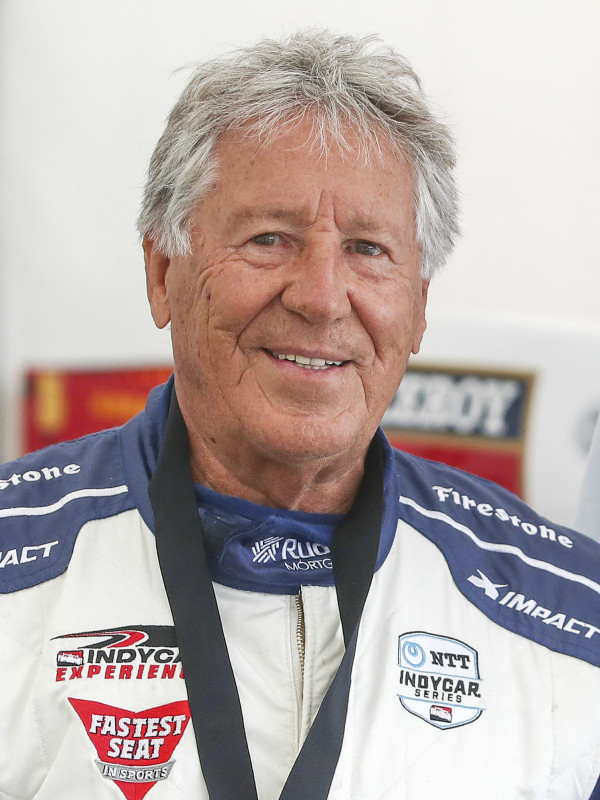
A success timeline featuring the most significant achievements of Mario Andretti.
Mario Andretti is a highly accomplished American former racing driver, renowned for his success in multiple disciplines. He won the Formula One World Drivers' Championship in 1978 and secured 12 Grand Prix victories. Andretti also excelled in American open-wheel racing, claiming four IndyCar National Championship titles, including the prestigious Indianapolis 500 in 1969. His achievements extend to stock car racing, where he won the Daytona 500 in 1967. Furthermore, Andretti demonstrated his versatility by winning the 12 Hours of Sebring three times, solidifying his legacy as one of the most versatile and accomplished racers in history.
1960: Early success in sportsman racing
From 1960 to 1961, Mario Andretti won 21 out of 46 modified stock car races.


1961: Early success in sportsman racing
From 1960 to 1961, Mario Andretti won 21 out of 46 modified stock car races.
March 1962: Midget race victory
In March 1962, Mario Andretti won a midget race, which he called "my first victory of any consequence."
1963: Success in ARDC series
In 1963, Mario Andretti raced in over one hundred events, scored 29 top-five finishes in 46 ARDC races, finished third in the 1963 ARDC season standings, and won three feature races on Labor Day.
1964: Big break with DVL
Midway through the 1964 season, Mario Andretti got his big break with DVL after impressing Clint Brawner, finishing 11th in the season standings and being named IndyCar Rookie of the Year.
1965: Andretti-Brawner Domination
From 1965 to 1969, the Andretti-Brawner combination attracted technical and financial support from Firestone and Ford, leading to Andretti winning three USAC IndyCar titles.
1965: First Full Season with DVL and Indianapolis 500
In 1965, Mario Andretti's first full season with DVL, he finished third at the Indianapolis 500, earning him the Rookie of the Year award. He also won his first IndyCar race at the Hoosier Grand Prix and became the youngest IndyCar champion at age 25.
1966: Andretti-Brawner Domination
From 1966 to 1969, at the peak of his statistical dominance, Andretti won 29 of 85 USAC championship races.
1966: Second USAC title
In 1966, Mario Andretti won his second USAC title in open-wheel racing.
1967: Best Season Performance
In 1967, Mario Andretti competed in eight out of 22 races, won round 12 at Mosport, and finished seventh in the standings.
1967: Loss of the USAC Championship
In 1967, Mario Andretti lost the USAC championship to A. J. Foyt after a series of unfortunate events, including running out of fuel and a controversial move by Foyt's sponsor. Andretti did receive his first Driver of the Year award in 1967.
1967: Daytona 500 win and Sebring victory
In 1967, Mario Andretti won the Daytona 500 with Holman-Moody and also secured his first major sportscar racing victory at the 12 Hours of Sebring with Ford.
1969: Daytona 500 Win
Along with A. J. Foyt, Mario Andretti is one of two drivers to ever win NASCAR's most prestigious race, the Daytona 500, without being a full-time stock car driver in 1969.
1969: Andretti-Brawner Domination
From 1965 to 1969, the Andretti-Brawner combination attracted technical and financial support from Firestone and Ford, leading to Andretti winning three USAC IndyCar titles.
1969: Third USAC title and Indianapolis 500 win
In 1969, Mario Andretti won his third USAC title and the Indianapolis 500.
1969: Third Title and Athlete of the Year
In 1969, Mario Andretti won nine races, including the Indianapolis 500 and the Pikes Peak International Hill Climb. He secured his third USAC title and was named ABC's Wide World of Sports Athlete of the Year. His IndyCar prize money of $365,165 was the largest single-season haul in the history of American sports to that point.
March 1971: First podium since March 1971
In March 1971, Mario Andretti secured his first podium finish since March 1971 at the Dutch Grand Prix, marking a significant moment in the season.
1971: Maiden Formula One victory
In 1971, Mario Andretti secured his maiden Formula One victory at the season-opening South African Grand Prix, debuting for Ferrari.
1971: Joined Scuderia Ferrari
Mario Andretti signed with Scuderia Ferrari in 1971 and achieved his maiden Grand Prix win at Kyalami.
1972: Third Sebring victory
In 1972, Mario Andretti achieved his third Sebring victory.
1974: Dirt Track Title
In 1974, Mario Andretti won the dirt track title after winning three out of five races.
1976: Return to Lotus and Japanese Grand Prix win
In 1976, Mario Andretti moved back to Lotus, winning the season-ending Japanese Grand Prix and helping develop the 78.
1977: Four Grand Prix wins and third in Championship
In 1977, Mario Andretti won four Grands Prix, finishing third in the World Drivers' Championship.
1977: Andretti takes pole at Zolder
In 1977, the Lotus 78 proved to be one of the fastest cars, and Andretti won four races, taking pole at Zolder by 1.54 seconds, which infuriated Chapman, who wanted to conceal the car's capabilities from competitors.
1978: Andretti wins five races, speculation about team orders
In 1978, Mario Andretti dominated, winning five of the next eight races, while teammate Peterson secured second place with two wins. Lotus achieved four 1-2 finishes, all won by Andretti, leading to speculation about Chapman ordering Peterson to yield. Peterson denied these orders, but then followed Andretti in a 1-2 finish at Zandvoort.
1978: Win at Trenton
In 1978, Mario Andretti won one race at Trenton and collected eight top-five finishes in nineteen races from 1976 to 1978.
1978: World Drivers' Championship title
In 1978, Mario Andretti won the Formula One World Drivers' Championship after achieving six victories.
1978: Formula One World Championship
In 1978, Mario Andretti won the Formula One World Drivers' Championship with Lotus.
1978: Championship Negotiations and Team Dynamics
In 1978, before winning his Formula One World Drivers' Championship, Andretti dealt with team dynamics. Ronnie Peterson was signed as the highest-paid driver, leading to negotiations for equal pay and bonuses for Andretti. Enzo Ferrari's offer to double Andretti's salary was withdrawn after Chapman intervened. Chapman promised team orders to benefit Andretti if Lotus led 1-2.
1980: Andretti wins at Michigan in CART.
In 1980, Mario Andretti won one race at Michigan in CART competition.
1982: Andretti joins CART full-time.
In 1982, Andretti joined CART full-time, finishing third in the season standings with six podiums in 11 races.
1983: Andretti takes maiden win at Elkhart Lake
In 1983, Andretti developed the Lola T700 into a decent car. He secured the team's first win at Elkhart Lake and another in Las Vegas, achieving eight top-five finishes in 13 starts.
1983: Third place with Newman/Haas
In 1983, Mario Andretti finished third again with Newman/Haas.
1984: Andretti wins fourth IndyCar title
In 1984, Andretti started with a win at Long Beach but faced electrical issues at the Indianapolis 500. Despite trailing early, he won five of eight races, including the Michigan 500. He secured his fourth IndyCar title, beating Sneva by 13 points. He was also voted Driver of the Year for the third time.
1984: Fourth IndyCar title
In 1984, Mario Andretti won his fourth IndyCar title, 15 years after his previous and his first sanctioned by CART.
1993: Victory at Phoenix
In 1993, Mario Andretti's victory at Phoenix made him the oldest winner in IndyCar history, aged 53, and the first driver to win a race in four different decades.
2000: Induction into International Motorsports Hall of Fame
In 2000, Mario Andretti was inducted into the International Motorsports Hall of Fame.
Mentioned in this timeline
IMAX is a high-resolution cinema system distinguished by its large...
The United States of America is a federal republic primarily...
California is a U S state on the Pacific Coast...
Jay Leno is an iconic American comedian writer and television...
Los Angeles California's most populous city and Southern California's hub...
The Daytona is a -mile NASCAR Cup Series race held...
Trending
3 hours ago Salt Lake City Reveals Major Downtown Sports and Entertainment District Development Plans
3 hours ago Laura Bozzo hospitalized amid growing concerns over her health status
4 hours ago Busy Philipps Opens Up About Daughter's Brain Tumor Diagnosis and Surgeries
4 hours ago Pope Leo Shows Steady Improvement Following Recent Lung Surgery at Gemelli Hospital
4 hours ago Philadelphia Eagles Sign Quarterback Joe Milton from Cowboys Practice Squad
6 hours ago Severe Thunderstorm Warnings Issued Across Rochester and Kansas City Regions
Popular
Ilhan Omar is a prominent American politician currently serving as...

Ken Paxton is an American politician and lawyer serving as...
Elon Musk is a visionary entrepreneur and engineer known for...

Michael Joseph Jackson the King of Pop was a highly...
Jameis Winston is an American football quarterback currently playing for...
Cristiano Ronaldo widely considered one of the greatest footballers captains...