Major Controversies Surrounding Mohammad Bagher Ghalibaf: A Detailed Timeline


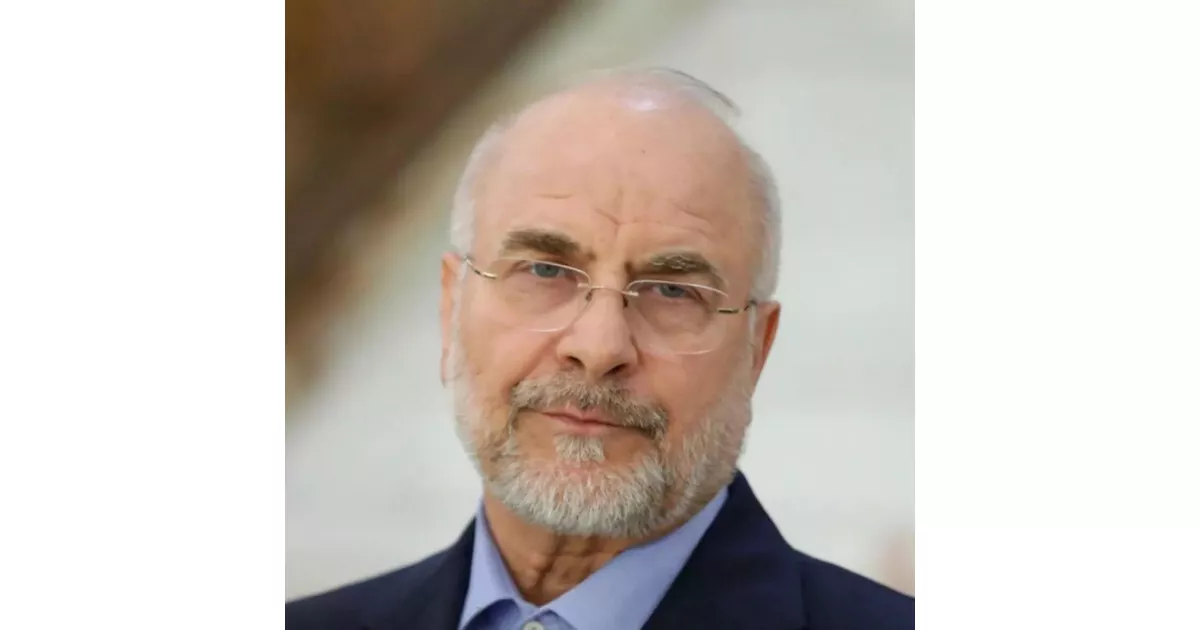
A closer look at the most debated and controversial moments involving Mohammad Bagher Ghalibaf.
Mohammad Bagher Ghalibaf is an Iranian politician and former IRGC Brigadier General, currently serving as Speaker of the Parliament of Iran since 2020. In April 2026, amidst the 2026 Iran War, he was responsible for strategic matters within Iran, while others managed tactical war efforts and daily state functions. He also led the Iranian delegation in ceasefire talks with the U.S., hosted by Pakistan, in April 2026.
July 1999: Ghalibaf Signs Threatening Letter During Student Protests
During the July 1999 student protests, Ghalibaf, as commander of the IRGC Air Force, signed a threatening letter to President Khatami, indicating military intervention if the government did not suppress the student movement.


1999: Threatening Letter to President Khatami
As Commander of the IRGC Air Force in 1999, Ghalibaf was among the IRGC commanders who sent a threatening letter to President Mohammad Khatami during the pro-democracy student protests, suggesting they would take action if the protests were not suppressed.
2000: Chief of Police Command
From 2000 to 2005, Ghalibaf was the chief of the Police Command of the Islamic Republic of Iran, marked by accusations of suppressing protestors and arresting intellectuals.
October 2002: Announcement of Moral Security Plan
In October 2002, Ghalibaf announced that he would present the moral security plan, emphasizing the enforcement of its requirements against violators.
2002: Summoning and Detention of Intellectuals and Journalists
In 2002 and 2004, during Ghalibaf's tenure as Chief of Police, dozens of intellectuals, journalists, political activists, and bloggers were summoned, interrogated, or temporarily detained, leading to protests from the Minister of Culture and Islamic Guidance and the Writers' Association of Iran.
2002: Comments on Siamak Pourzand's Arrest
In 2002, Ghalibaf commented on Siamak Pourzand’s arrest, claiming that Pourzand engaged in anti-cultural activities and supplied information to Reza Pahlavi.
2003: Statements During Student Protests
During the 2003 Iranian student protests, Ghalibaf reportedly made statements about using force against students, including using gas to "finish the job" and threatening to "crush" anyone who entered the dormitory.
2003: Alleged Intent to Suppress Students
During the 2013 presidential election debates, Hassan Rouhani revealed that Ghalibaf stated in 2003, "Students should come so we can use gas to finish the job," indicating an intent to suppress student protests.
2003: Ghalibaf Involved in Crackdown on Student Demonstrations
In 2003, as Chief of the National Police, Ghalibaf was involved in the crackdown on renewed student demonstrations at Tehran University.
2004: Summoning and Detention of Intellectuals and Journalists
In 2002 and 2004, during Ghalibaf's tenure as Chief of Police, dozens of intellectuals, journalists, political activists, and bloggers were summoned, interrogated, or temporarily detained, leading to protests from the Minister of Culture and Islamic Guidance and the Writers' Association of Iran.
2004: Comments on Moral Security
In 2004, Ghalibaf commented on moral security, stating that the political significance of improper hijab may outweigh its moral significance, and emphasized the need for a clear distinction between proper and improper hijab based on regulations.
2009: Ghalibaf's Administration Supports Crackdown on Green Movement Protests
As Mayor of Tehran during the 2009 Green Movement Iranian presidential election protests , Ghalibaf's administration supported the security crackdown.
May 2013: Threats to Use Force at Universities
In May 2013, an audio recording revealed Ghalibaf threatening to allow law enforcement forces to enter universities and use force, stating he would "crush" anyone who came to the dormitory.
2013: Ghalibaf Admits to Street Violence
In a leaked 2013 audio recording, Ghalibaf admitted to personally participating in street-level violence, including beating protesters with wooden sticks.
2013: Ghalibaf Boasts of Using Gunfire Against Protesters
In the same 2013 leaked recording, Ghalibaf boasted of bypassing Supreme National Security Council protocols to order the use of gunfire against protesters in 2003.
2014: Alleged Widespread Violations by Tehran Municipality
In 2014, the report outlines several widespread violations by the Tehran Municipality, including the payment of 60 billion tomans in aid and the granting of land to the Imam Reza Charity owned by Ghalibaf’s wife, as well as 47 secret bank accounts.
March 2016: Failed Investigation of Tehran Municipality
On March 16, 2016, some members of parliament initiated a plan to investigate the Tehran Municipality, but they failed to secure the necessary votes, and Ghalibaf thanked the parliamentarians for rejecting the investigation.
September 2016: Report on Municipal Property Transfers
In September 2016, a report in Shargh newspaper and later on the Memari News website revealed the transfer of municipal properties to city managers at discounted prices, leading to the imprisonment of the Memari News website editor after being sued by Ghalibaf.
2016: Planned Investigation into Tehran Municipality Halted
In 2016, an investigation was planned to examine the performance of the Tehran Municipality during Ghalibaf’s tenure as mayor. However, the investigation was halted due to a vote of opposition from parliament members. A bribe of 65 billion tomans was allegedly used to stop the investigation.
January 2017: Plasco Building Fire and Collapse
In January 2017, the Plasco Building in Tehran collapsed after a massive fire, resulting in firefighter fatalities and widespread criticism of the Tehran Municipality under Ghalibaf's leadership for alleged negligence and mismanagement of the crisis.
January 2017: Allegations of Contract Misuse
On January 15, 2017, Mohammad Ali Najafi stated that Ghalibaf signed two contracts worth 1.43 billion tomans, but only a fraction of the funds were properly used by the company, with the rest allegedly used for election purposes.
2017: Yas Holding Company Scandal
In 2017, a scandal involving the Yas Holding Company, accused of embezzling funds from Tehran Municipality for overpriced infrastructure projects during Ghalibaf's mayorship, took place.
July 2020: Investigation into Tehran Municipality performance revealed
In July 2020, Mostafa Mir-Salim revealed a planned 2016 investigation into the Tehran Municipality's performance during Ghalibaf's mayorship, which was halted due to opposition in parliament, allegedly due to a 65 billion tomans bribe.
April 2022: LayetteGate Scandal Erupts
In April 2022, photos surfaced showing Ghalibaf's wife and family returning from a luxury shopping trip in Turkey with 20 pieces of luggage, sparking the "LayetteGate" scandal and calls for his resignation.
2022: Leaked Audio on Yas Holding Company Scandal
In early 2022, a leaked audio recording was published by Radio Farda, which purported to show former IRGC Major General Mohammad Ali Jafari and Brigadier General Sadegh Zolghadr-Nia discussing the Yas Holding Company case, mentioning Ghalibaf's efforts to cover up the scandal.
February 2024: Canadian Residency Application of Ghalibaf's Son Refused
In February 2024, Canadian Minister of Immigration, Refugees and Citizenship Marc Miller announced that the permanent residency application of Eshagh Ghalibaf, Mohammad Bagher Ghalibaf's son, was refused.
December 2025: Protests Erupt and Escalate
In late December 2025 and escalated in early 2026, demonstrations began leading to lethal force, nationwide internet shutdowns, and tens of thousands of arrests, with high estimates of civilian deaths.
2025: Ghalibaf Calls for Punishment Against Protestors
During the 2025–2026 Iranian protests, Ghalibaf called for punishment against protestors, whom he called enemies and terrorists, being described by Time as having a reputation for sycophancy and corruption.
2025: Calls for Punishment of Protestors
During the 2025–2026 Iranian protests, Ghalibaf called for the punishment of protestors, whom he called enemies and terrorists.
2025: Ghalibaf Involved in State Response to Iranian Protests
Ghalibaf, as Speaker of the Islamic Consultative Assembly of Iran, was a prominent government figure in the state response to the 2025–2026 Iranian protests, which human rights groups and international media organisations described as a brutal crackdown and massacre of demonstrators.
2026: Ghalibaf Calls for Punishment Against Protestors
During the 2025–2026 Iranian protests, Ghalibaf called for punishment against protestors, whom he called enemies and terrorists, being described by Time as having a reputation for sycophancy and corruption.
2026: Involvement in Iranian Protests
Ghalibaf was involved in the Iranian protests of 2025-2026, calling for the punishment of protestors.
2026: Ghalibaf Involved in State Response to Iranian Protests
Ghalibaf, as Speaker of the Islamic Consultative Assembly of Iran, was a prominent government figure in the state response to the 2025–2026 Iranian protests, which human rights groups and international media organisations described as a brutal crackdown and massacre of demonstrators.
2026: Protests Escalate
In late December 2025 and escalated in early 2026, demonstrations began leading to lethal force, nationwide internet shutdowns, and tens of thousands of arrests, with high estimates of civilian deaths.
Mentioned in this timeline
Barack Obama the th U S President - was the...
The United States of America is a federal republic primarily...

The Guardian is a British daily newspaper founded in as...
The rapid advancement of artificial intelligence continues to dominate the...
A bank is a regulated financial institution licensed to accept...
Iran formerly known as Persia is a sovereign state in...
Trending
3 hours ago Oregon Quarterback Dylan Raiola Benched Following Performance Struggles Against UCLA
4 hours ago Ryan Day Supports Son RJ Day at High School Senior Night
5 hours ago Vivek Ramaswamy's Nuclear Startup Atlas Atomics Reaches $1.9 Billion Valuation
5 hours ago José Mourinho Defends Kylian Mbappé Against Ridiculous Criticism at Real Madrid
5 hours ago Oregon QB Dante Moore Ruled Out Against UCLA; Dylan Raiola Named Starter

5 hours ago Robert Lewandowski's Team Secures Remarkable Comeback Win in Major League Soccer
Popular

Ken Paxton is an American politician and lawyer serving as...
Cristiano Ronaldo widely considered one of the greatest footballers captains...

Michael Joseph Jackson the King of Pop was a highly...

Elon Musk is a visionary entrepreneur and engineer known for...
Shakira Isabel Mebarak Ripoll the Queen of Latin Music is...
Bernie Sanders is a prominent American politician and the senior...