History of Supplemental Security Income in Timeline


Supplemental Security Income (SSI) is a United States federal program funded by general tax revenues, not Social Security taxes. It is designed to provide monthly cash assistance to individuals with limited income and resources who are aged 65 or older, blind, or disabled, including children with disabilities. To qualify, applicants must meet strict financial requirements regarding countable income and assets, as well as non-financial criteria related to their age, disability status, or blindness. SSI is distinct from Social Security Disability Insurance (SSDI), as eligibility is based on financial need rather than prior work history. In many states, SSI recipients also automatically qualify for Medicaid to help cover healthcare expenses. The program serves as a vital safety net, aiming to meet the basic needs for food, clothing, and shelter for some of the most vulnerable members of society.
1935: Enactment of the original Social Security Act
In 1935, the original Social Security Act was enacted, providing the legislative foundation for state-run welfare programs including Aid to the Blind, Aid to the Permanently and Totally Disabled, and Aid to the Elderly that preceded the SSI program.


1956: Introduction of Social Security Disability Insurance Benefits
Starting in 1956, the Social Security Administration began administering a national adult disability program known as Social Security Disability Insurance Benefits (DIB) for insured workers funded through FICA payroll taxes.
1967: 1967 Amendments to Social Security Disability Criteria
In 1967, new amendments were established to define disability status more strictly, requiring that an individual be unable to perform both their previous occupation and any other form of substantial gainful work existing in the national economy, based on factors like age, education, and experience.
October 30, 1972: Signing of the Social Security Amendments of 1972
On October 30, 1972, President Richard Nixon officially signed the Social Security Amendments of 1972 into law, which established the Supplemental Security Income (SSI) program to federalize and standardize welfare assistance for the blind, disabled, and elderly.
1972: Establishment of SSI Initial Benefit Levels
In 1972, the Supplemental Security Income (SSI) program set its initial benefit levels to be approximately equivalent to the average monthly retirement benefit provided to retired workers under the Social Security system.
1972: Creation of the SSI program
In 1972, the Supplemental Security Income (SSI) program was officially established through the Social Security Amendments of 1972, serving as a component of Title 16 of the Social Security Act.
January 1974: Official Launch of the SSI Program
In January 1974, the Supplemental Security Income (SSI) program officially commenced operations by consolidating state-run welfare programs under federal management, with the Social Security Administration appointed to oversee the program.
August 1974: Legislation for Automatic Benefit Increases
In August 1974, Congress passed legislation mandating that SSI benefits be automatically adjusted by the same percentage and at the same schedule as Social Security retirement, survivors, and disability benefits.
1974: Establishment of Initial Resource Limits
In 1974, the Supplemental Security Income program set initial resource limits at $1,500 for individuals and $2,500 for couples, which were not adjusted for inflation.
1974: Commencement of SSI operations
The Social Security Administration officially began the operation of the Supplemental Security Income program in 1974, providing essential cash payments to eligible elderly and disabled individuals.
1976: Northern Mariana Islands Becomes U.S. Territory
In 1976, the Northern Mariana Islands officially became a U.S. territory, with the governing covenant specifically including the region's residents in the Supplemental Security Income (SSI) eligibility pool, even though the program had already commenced.
1987: First Resource Limit Adjustment
As of 1987, the resource limits for Supplemental Security Income were increased to $1,800 for individuals and $2,700 for couples.
1988: Second Resource Limit Adjustment
In 1988, the Supplemental Security Income resource limits underwent another increase, reaching $1,900 for individuals and $2,850 for couples.
1989: Third Resource Limit Adjustment
By 1989, the Supplemental Security Income resource limits were raised to their current levels of $2,000 for individuals and $3,000 for couples.
1989: Establishment of Static Resource Limits
Since 1989, the SSI program maintained fixed resource limits of $2,000 for individuals and $3,000 for married couples, which remained unchanged for decades.
1990: Sullivan v. Zebley Supreme Court Decision
In 1990, the Supreme Court ruled in Sullivan v. Zebley that the Social Security Administration's process for determining disability in children was improper. The court mandated that the SSA must evaluate how specific health impairments affect a child's overall functioning rather than just categorical criteria, significantly expanding benefit eligibility.
August 22, 1996: Enactment of the Welfare Reform Act of 1996
On August 22, 1996, the Welfare Reform Act of 1996 took effect, establishing new guidelines for immigrant eligibility for Supplemental Security Income (SSI), requiring individuals to have been legal residents before this date to qualify for benefits.
1996: Enactment of Fugitive Felon and Parole/Probation Provisions
In 1996, Congress passed legislation that allowed the Social Security Administration to suspend Supplemental Security Income benefits and issue overpayment charges to individuals who had outstanding warrants for felonies or violations of parole or probation.
1996: Enactment of the Personal Responsibility and Work Opportunity Reconciliation Act (PRWORA)
In 1996, the Personal Responsibility and Work Opportunity Reconciliation Act (PRWORA) was enacted, which implemented significant restrictions regarding noncitizen eligibility for Supplemental Security Income (SSI), ultimately leading to a shift in the demographic composition of SSI recipients.
2000: Increased Enforcement of SSI Benefit Suspension
Starting in 2000, the Social Security Administration significantly ramped up the enforcement of the 1996 provisions by entering into agreements with local law enforcement agencies to compare and match their respective databases for individuals with outstanding warrants.
December 19, 2014: Signing of the ABLE Act of 2014
On December 19, 2014, the Achieving a Better Life Experience (ABLE) Act was signed into law, establishing tax-advantaged ABLE accounts under Section 529A of the Internal Revenue Code to allow individuals with disabilities to save money without losing eligibility for Supplemental Security Income.
2019: Infant Mortality Study
Research published in 2019 revealed that infant mortality rates among children applying for SSI benefits are approximately five times higher than those observed in the general child population.
2020: Study on SSI Child Beneficiary Hardships
A 2020 study highlighted that children receiving SSI benefits face significantly higher rates of poverty, material hardship, and poor schooling outcomes, as well as increased risks of mortality and hospitalization compared to the general population of children.
2020: Social Security Advisory Board Representative Payee Study and Forum
In 2020, the Social Security Advisory Board conducted a policy forum and commissioned a study concerning the Social Security Administration's representative payee program. The study highlighted the logistical difficulties in selecting and monitoring payees for millions of beneficiaries, ultimately recommending an increase in staffing and the implementation of specialized field staff roles to manage the workload.
2020: Poverty Threshold Benefit Evaluation
In 2020, the poverty threshold in the United States was approximately $1,084 per month, a figure used by the Biden administration to illustrate the need for increasing Supplemental Security Income (SSI) benefits.
2021: Proposed Adjustment to SSI Resource Limits
In 2021, the Biden administration proposed updating resource limits to $4,300 for individuals and $8,600 for married couples to account for inflation and price growth that occurred since 1989.
2021: Establishment of Substantial Gainful Activity (SGA) Thresholds
In 2021, the Social Security Administration set the monthly gross income limit for Substantial Gainful Activity (SGA) at $1,310 for most disabled individuals, while establishing a higher threshold of $2,190 for legally blind individuals under SSDI, noting that this specific blind threshold does not apply to SSI.
April 2022: United States v. Vaello Madero Supreme Court Ruling
In April 2022, the U.S. Supreme Court delivered a ruling in United States v. Vaello Madero, determining that the exclusion of Puerto Rico residents from the SSI program is constitutional due to the fact that the territory is exempt from most federal tax obligations.
2024: Demographic Analysis of SSI Recipients
In 2024, data revealed that African Americans comprised approximately 25 percent of the adult Supplemental Security Income (SSI) population. Additionally, among recipients aged 75 and older, the demographic breakdown included 20 percent Asian American, 16 percent African American, and 21 percent Hispanic individuals, highlighting the program's reach among minority groups.
May 2025: SSI Program Enrollment Milestone
As of May 2025, the Supplemental Security Income (SSI) program reached a significant milestone by providing essential financial benefits to over seven million American citizens.
2025: Supplemental Security Income Beneficiary Count
As of May 2025, the total number of individuals receiving Supplemental Security Income (SSI) benefits reached 7,409,168.
2025: California 2025 SSI/SSP Benefit Adjustment
In 2025, the state of California increased cash assistance through its State Supplementation Program (SSP), resulting in a total monthly SSI benefit of $1,206.94 for an individual and $2,057.83 for a couple.
2026: 2026 SSI Benefit Adjustments
As of 2026, the Supplemental Security Income program provides federal cash assistance with monthly payments reaching up to $994 for individuals and $1,491 for couples to assist with essential living expenses such as food, shelter, and clothing.
2026: Comparison of SSI and Social Security Benefits
As of 2026, the maximum monthly SSI benefit for an individual reached $994, which represents approximately 48 percent of the $2,071 average monthly benefit received by retired workers under the Social Security retirement program.
2026: Disparity between SSI Benefits and Federal Poverty Standards
In 2026, the maximum Supplemental Security Income (SSI) benefit for an individual is set at $994 per month, which falls significantly below the federal poverty standard of approximately $1,304 per month for 2026.
Mentioned in this timeline
The United States of America is a federal republic primarily...

California is a U S state on the Pacific Coast...

Puerto Rico is a self-governing Caribbean archipelago and an unincorporated...

Richard Nixon the th U S President served from -...
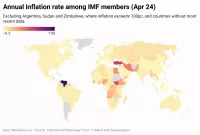
Inflation in economics signifies a rise in the average price...

The Social Security Administration SSA is an independent U S...
Trending

3 hours ago Lionel Messi Announces Emotional Retirement from the Argentine National Football Team
4 hours ago Analysis of Ryan Gravenberch Red Card and Premier League Refereeing Decisions

4 hours ago Ryan Coogler's The X-Files Reboot Officially Picked Up for Series at Hulu
4 hours ago Sporting CP Faces RC Lens in UEFA Champions League Matchup
4 hours ago Justices Sotomayor and Gorsuch Condemn Constitutional Absurdity in Recent Immigration Prosecution Case

5 hours ago Anna Faris Discusses Chuck Lorre's Initial Reluctance and Past Chris Pratt Affair Rumors
Popular

Ken Paxton is an American politician and lawyer serving as...

Ilhan Omar is a prominent American politician currently serving as...

Cristiano Ronaldo widely considered one of the greatest footballers captains...

Jameis Winston is an American football quarterback currently playing for...

Michael Joseph Jackson the King of Pop was a highly...

Elon Musk is a visionary entrepreneur and engineer known for...