


USS Boxer (CV-21) was an Essex-class aircraft carrier of the United States Navy, named after HMS Boxer. Launched on December 14, 1944, she was one of 24 ships in her class and played a significant role in naval operations.
1905: Previous USS Boxer Training Ship
In 1905, the last ship to bear the name Boxer had been a training ship.


1942: Essex-class Ships Laid Down
After 1942, the Essex-class ships were laid down, only Bon Homme Richard followed the original "short bow" design.
March 1943: Production of "long-hull" Designs Began
After March 1943, the production of the "long-hull" designs of the Essex-class ships began, lengthening the bow above the waterline into a "clipper" form.
1943: USS Boxer Ordered
In 1943, USS Boxer, one of 24 Essex-class ships to be completed, was ordered.
December 1944: USS Boxer Launched
In December 1944, the USS Boxer was launched and christened by the daughter of a US Senator from Louisiana.
April 1945: USS Boxer Commissioned
On 16 April 1945, the USS Boxer was commissioned under the command of Captain D. F. Smith and began sea trials and a shakedown cruise.
August 1945: Joined Pacific Fleet
In August 1945, USS Boxer joined the Pacific Fleet at San Diego.
August 1946: End of Tour as Task Force 77 Flagship
On 23 August 1946, the USS Boxer ended her tour as the flagship of Task Force 77. During this tour, she visited Japan, Okinawa, the Philippines, and China.
September 1946: USS Boxer Returns to San Francisco
On 10 September 1946, USS Boxer returned to San Francisco and embarked Carrier Air Group 19 flying the Grumman F8F Bearcat fighter.
1947: Peacetime Patrols and Training Missions
Throughout 1947, USS Boxer began a series of peacetime patrols and training missions off the coast of California.
March 1948: First All-Jet Aircraft Launch
On 10 March 1948, a North American FJ-1 Fury launched from USS Boxer, marking the first all-jet aircraft launch from an American carrier, leading to subsequent tests of jet aircraft carrier doctrine.
1949: Battle Drills and Training Carrier
Throughout 1949, USS Boxer participated in numerous battle drills and acted as a training carrier for jet aircraft pilots.
January 1950: Dispatched to Far East
On 11 January 1950, USS Boxer was dispatched to the Far East, joining the 7th Fleet and making a goodwill visit to South Korea.
June 1950: Return to San Diego and Korean War Outbreak
On 25 June 1950, the same day as the outbreak of the Korean War, USS Boxer returned to San Diego, overdue for maintenance but unable to complete it before being dispatched again.
July 1950: Record-Breaking Pacific Crossing
In July 1950, USS Boxer made a record-breaking crossing of the Pacific Ocean, leaving Alameda, California, on 14 July 1950 and arriving at Yokosuka, Japan, on 23 July, in 8 days and 7 hours, carrying supplies and aircraft for the Korean War.
March 1951: Began Operations in Korea
On 29 March 1951, USS Boxer rejoined Task Force 77 and began operations in Korea, with Naval Reserve pilots launching strikes against Chinese ground forces along the 38th parallel.
October 1951: End of Duty in Korea
On 24 October 1951, USS Boxer ended her duty of airstrikes against Chinese ground forces along the 38th parallel.
1951: Appearance in Film
In 1951, the USS Boxer appears in the film Submarine Command, with William Bendix and William Holden, then carrying a complement of helicopters.
February 1952: Departed for Third Tour in Korea
In February 1952, USS Boxer departed California for her third tour in Korea, with Carrier Air Group 2 embarked.
August 1952: Fire Aboard USS Boxer
On 5 August 1952, a fire broke out on the hangar deck of USS Boxer, resulting in casualties and damage to aircraft. Emergency repairs were conducted in Yokosuka from 11 to 23 August. She returned to the Korean theatre from 28 August to 2 September.
October 1952: Re-designated as Attack Aircraft Carrier
In October 1952, USS Boxer was re-designated CVA-21, denoting an "attack aircraft carrier."
March 1953: Steamed for Korea Again
On 30 March 1953, following extensive repairs, USS Boxer steamed for Korea again and resumed operations a month later.
July 1953: Korean Armistice
In July 1953, an armistice was reached at Panmunjom, ending major combat operations in Korea. USS Boxer provided close air support for UN troops during the final weeks of the war.
November 1953: Remained in Korean Waters
In November 1953, USS Boxer remained in Korean waters until this time.
1954: Pacific Tour
Throughout 1954, the USS Boxer conducted a relatively uneventful tour of the Pacific. That tour included being dispatched along with the USS Essex to the South China Sea, between Indochina and the Philippines, while the United States considered whether to use carrier aircraft to support French troops during the Battle of Dien Bien Phu.
1955: Pacific Tour
In late 1955, the USS Boxer conducted another tour in the Pacific which was similarly uneventful.
1956: Converted to Anti-Submarine Warfare Carrier
In early 1956, USS Boxer was converted to an anti-submarine warfare carrier and re-designated CVS-21 and completed another tour of the western Pacific in late 1956.
1956: Pacific Tour
In early 1956, the USS Boxer conducted another tour in the Pacific which was similarly uneventful.
1957: Experimenting with Attack Helicopters
In late 1957, the navy began experimenting with a carrier operating entirely with attack helicopters, and USS Boxer was used to test the concept.
1958: Operation Hardtack Flagship
In 1958, USS Boxer served as the flagship during Operation Hardtack, a series of nuclear weapons tests in the central Pacific. Later that year, she was transferred to the Atlantic Fleet and became part of a new amphibious assault squadron.
January 1959: Reclassified as Landing Platform Helicopter
On 30 January 1959, USS Boxer was reclassified LPH-4, denoting a "Landing Platform Helicopter."
1962: Cuban Missile Crisis
During the 1962 Cuban Missile Crisis, USS Boxer was on station in the Caribbean as an amphibious assault carrier.
August 1964: Humanitarian Mission to Hispaniola
On 29 August 1964, USS Boxer, with two LSD ships, was dispatched to Hispaniola on a humanitarian mission to aid Haiti and the Dominican Republic after Hurricane Cleo.
1964: Operation Steel Pike
In 1964, USS Boxer undertook her first tour to the Mediterranean when she took part in Operation Steel Pike, the largest amphibious exercise in history.
April 1965: Returned to Dominican Republic
On 27 April 1965, USS Boxer returned to the Dominican Republic with Helicopter Squadron 264 and Marines, evacuating about 1,000 US nationals during a revolution as part of Operation Powerpack.
February 1966: Boxer recovers AS-201
On 26 February 1966, USS Boxer recovered AS-201, an unmanned test flight for the Apollo program. The capsule, launched from Cape Kennedy, Florida, on a Saturn 1B rocket, landed 200 miles east of Ascension Island and was retrieved by one of Boxer's helicopters on 26 February 1966.
March 1966: Boxer designated recovery ship for Gemini 8
From 16-17 March 1966, USS Boxer was the designated Atlantic prime recovery ship for Gemini 8. However, USS Leonard F. Mason recovered the spacecraft and two crewmen after it encountered problems on 16-17 March 1966.
1966: Transport Vessel for Vietnam War
In early 1966, USS Boxer made a second trip to Vietnam when she transported Marine Corps aircraft to South Vietnam.
December 1969: USS Boxer Decommissioned
In December 1969, after 25 years of service, the USS Boxer was decommissioned and subsequently sold for scrap.
March 1971: Boxer sold for scrap
On 13 March 1971, USS Boxer was sold for scrap by the Defense Reutilization and Marketing Service and later scrapped at the Brooklyn Navy Yard.
Mentioned in this timeline
The United States of America is a federal republic primarily...

California is a U S state on the Pacific Coast...
Submarine is a coming-of-age comedy-drama directed by Richard Ayoade based...
San Francisco is the fourth-most populous city in California and...

The rapid advancement of artificial intelligence continues to dominate the...
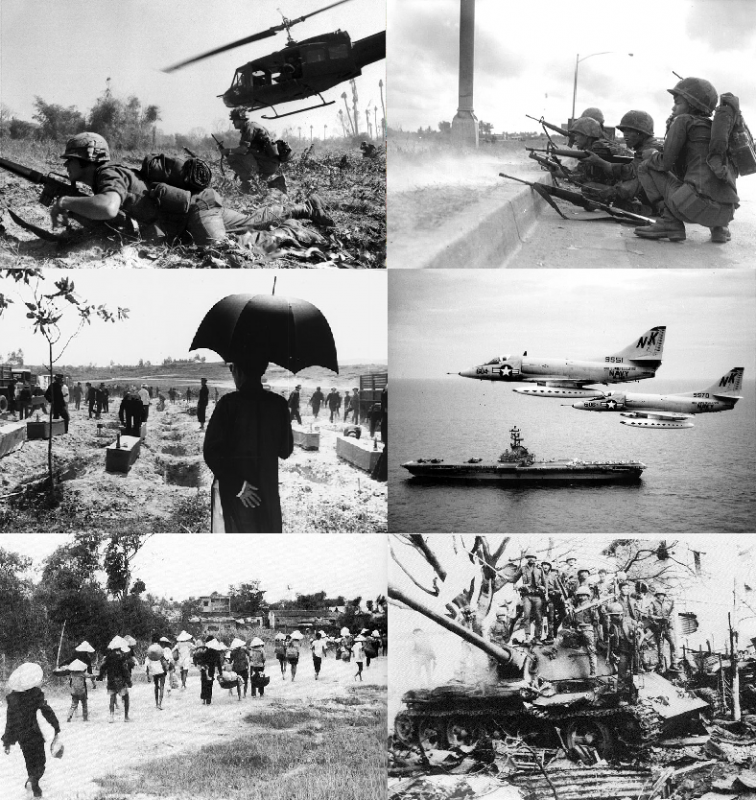
The Vietnam War was a conflict in Vietnam Laos and...
Trending
4 days ago Ty France Emerges as Key X-Factor for Padres in 2026 MLB Playoffs
4 hours ago Abner Uribe Faces Critical Matchup Against Fernando Tatis Jr. in Brewers-Padres Series

4 hours ago Fernando Tatis Jr. Surges Through Second Half With Electric Performance

4 hours ago Miranda Lambert Discusses Career Evolution and New Hits

4 hours ago Noah Schnapp and Janette Manrara Star in New London Theatre Production Affluenza

4 hours ago Colorado Avalanche Offensive Prospects and Early Season Game Performance
Popular

Jameis Winston is an American football quarterback currently playing for...

Ken Paxton is an American politician and lawyer serving as...

Shakira Isabel Mebarak Ripoll the Queen of Latin Music is...

Elon Musk is a visionary entrepreneur and engineer known for...

Sylvester Stallone is an iconic American actor screenwriter and filmmaker...

Bernie Sanders is a prominent American politician and the senior...